
Soups & Stews
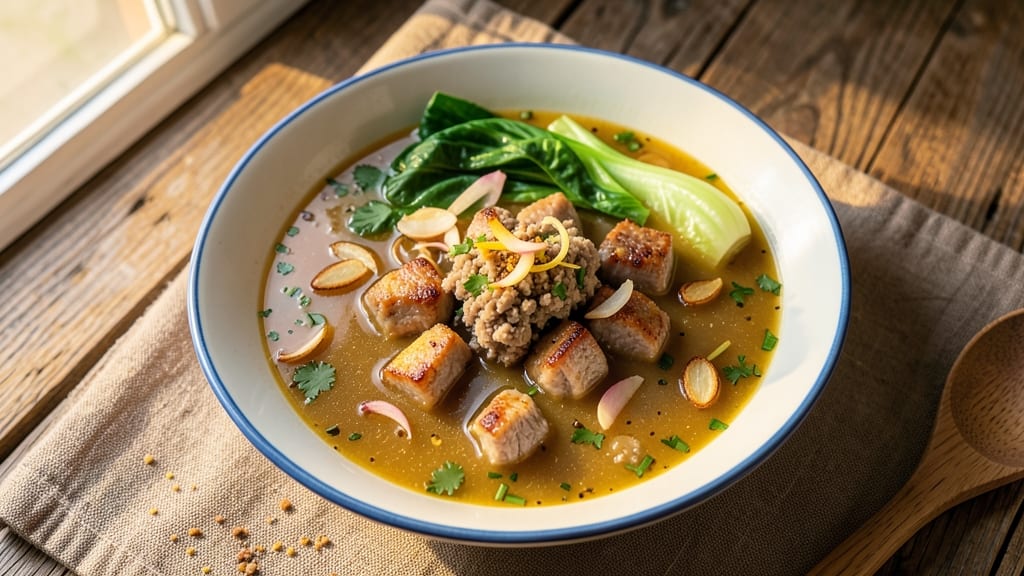
This minced pork soup recipe delivers restaurant-quality depth with every tender bite—umami-rich broth that clings to perfectly cooked pork and vegetables. After years of perfecting this dish in my Atlanta kitchen, I've developed a method that balances texture and flavor without requiring hours of simmering.
The secret lies in high-heat searing of the pork followed by a gentle reduction that concentrates the natural savoriness of the meat.
What sets this recipe apart is the layered approach to flavor development. First, we create a deep, aromatic base by sautéing garlic and ginger until fragrant, then deglazing with a splash of soy sauce and a touch of rice wine—this builds the foundation for that signature umami depth.
The pork gets just enough time to develop texture without falling apart, while the vegetables absorb the rich broth without becoming mushy. It's the kind of soup that improves as it sits, with flavors melding beautifully overnight.
By the time you're ready to serve, you'll have a bowl of tender minced pork swimming in a velvety broth that's both comforting and sophisticated.
The pork maintains its delicate texture while soaking up all the complex flavors, and the vegetables add just the right amount of freshness to balance the richness. This is the kind of soup that makes weeknights feel special—warm, satisfying, and full of character.
The beauty of this recipe is its versatility. Serve it as a light lunch with crusty bread, or let it be the centerpiece of a cozy dinner with steamed rice.
The broth freezes beautifully too, so you can make a big batch and enjoy it all week. Here's how to create this comforting classic in your own kitchen.
Ingredients for minced pork soup
The secret to restaurant-quality minced pork soup lies in these 15 simple ingredients.
| Ingredient | Amount | Notes |
|---|---|---|
| Ground Pork 🐖 | 1 lb | Freshly minced for texture |
| Garlic Cloves 🧄 | 6 cloves | Minced for aromatic base |
| Fresh Ginger 🌿 | 1 tbsp | Grated finely for zing |
| Light Soy Sauce 🍶 | 2 tbsp | For umami depth |
| Rice Wine 🍷 | 1 tbsp | Substitute with dry sherry |
| Vegetable Oil 🫒 | 2 tbsp | High smoke point preferred |
| Carrots 🥕 | 2 medium | Cut into small cubes |
| Onion 🧅 | 1 medium | Diced finely for sweetness |
| Celery Stalks 🌿 | 2 whole | Chopped into small pieces |
| Chicken Stock 💧 | 4 cups | Homemade or quality store-bought |
| Water 💧 | 2 cups | For broth consistency |
| Cornstarch 🌾 | 1 tsp | For thickening broth |
| White Pepper 🌶️ | ½ tsp | Freshly ground preferred |
| Green Onions 🧅 | 2 whole | Sliced for garnish |
| Sesame Oil 🫒 | 1 tsp | For finishing touch |
The pork is everything here—freshly minced gives you those perfect tender bites. Costco or your local butcher are best for quality ground pork (ask for it freshly minced if possible). Garlic and ginger need to be freshly grated or minced—jarred minced garlic lacks the depth. For the soy sauce, Kikkoman is my go-to, but any light soy will work. The carrots, onion, and celery should be roughly the same size so they cook evenly—about 1/4-inch cubes is ideal. If you're using pre-minced pork, toast it first in the oil to develop flavor.
No rice wine? Dry sherry or mirin works just as well. Short on chicken stock? Vegetable stock plus a splash of soy sauce gets you close. The cornstarch is key for that silky texture—arrowroot powder works too. For extra richness, add a dash of fish sauce (if you're okay with it) or more soy sauce. The sesame oil should be toasted sesame oil—the nutty aroma elevates everything. If you're making this ahead, the flavors actually improve overnight—just reheat gently.
This soup reheats beautifully—simmer for 5-10 minutes on the stove or microwave for 1-2 minutes until hot. Keeps 4-5 days in the fridge or 3 months frozen. I always make a double batch—one for dinner, one for lunches. Store the broth separately if you want to freeze it—just reheat with fresh veggies when you're ready. Garnish with green onions and a drizzle of sesame oil right before serving for maximum freshness.
Why You'll Love This Recipe
- No Chopping Nightmare: I swear by this recipe because it’s the only time I’ve made soup where I only need to mince garlic and ginger—no dice, no julienne, no stress. The ground pork handles all the work for you.
- Umami Bomb: That first spoonful of broth—light soy and rice wine singing together—hits different. The pork soaks up the flavors until every bite tastes like a tiny, savory hug.
- Leftovers That Don’t Suck: I make a double batch on Sundays, and by Wednesday, it’s still good. The broth thickens just enough to reheat perfectly, and the pork stays tender—no sad, rubbery leftovers here.
- Pantry Magic: Honestly, if I’m low on groceries but need something hearty, this is my go-to. Ground pork, a few cloves of garlic, and a knob of ginger? That’s a full meal with ingredients I always have.
Step-by-step instructions for minced pork soup
Here's how to create a rich, aromatic soup with perfectly tender pork bites and balanced flavors.
Sauté the Aromatics Until Fragrant
Heat the 2 tablespoons vegetable oil in a large pot over medium-high heat. Add the 1 medium onion and 2 whole celery stalks (chopped into small pieces), cooking for 5 minutes until softened and translucent. Add the 2 medium carrots (cut into small cubes) and continue cooking for another 3 minutes until they begin to soften.
Here's where the magic starts: add the 6 cloves garlic cloves (minced) and 1 tablespoon fresh ginger (grated finely). Cook for 30 seconds until the garlic turns golden and fragrant—this prevents bitterness. Be careful not to let it burn, as garlic turns bitter quickly when overcooked. The kitchen should fill with a warm, inviting aroma at this point.
Cook the Pork Until Browned
Push the vegetables to one side of the pot and add the 1 lb ground pork to the empty space. Cook over medium heat for 5-6 minutes, breaking up the pork with a wooden spoon until it turns deep brown and loses its raw color. This browning step is crucial for developing deep, meaty flavors in your soup.
Once the pork is fully cooked, stir it back into the vegetables. Add the 2 tablespoons light soy sauce and 1 tablespoon rice wine, mixing well to combine. Let the mixture cook for another 2 minutes to allow the flavors to meld together. You'll notice the pork absorbing the aromatic flavors from the vegetables—this is when your soup starts building its rich foundation.
Simmer the Soup with Stock
Pour in the 4 cups chicken stock and 2 cups water, then bring the mixture to a gentle boil. Reduce heat to low and let it simmer uncovered for 20 minutes, stirring occasionally. This step allows all the flavors to develop and the vegetables to soften completely. The soup should be bubbling gently but not vigorously—this prevents the broth from becoming cloudy.
After 20 minutes, taste the soup and adjust seasoning if needed. You can add more light soy sauce for saltiness or a pinch of white pepper for extra zing. The broth should be flavorful but not overly salty—this is where you fine-tune the balance of tastes. The vegetables should be tender enough to eat with a spoon but still hold their shape.
Thicken and Finish the Soup
In a small bowl, mix the 1 teaspoon cornstarch with 2 tablespoons water until smooth. Slowly pour this mixture into the simmering soup while stirring constantly. Cook for another 2-3 minutes until the soup thickens slightly—it should coat the back of a spoon but still be light and silky. This thickening step gives the soup a satisfying body without making it heavy.
Remove the pot from heat and stir in the 1 teaspoon sesame oil. This final touch adds a nutty aroma and subtle depth of flavor. Ladle the soup into bowls and garnish each serving with 2 whole green onions (sliced). The green onions add a fresh contrast to the rich, savory broth. Serve immediately while hot for the best experience.
Pro Tips For Making Minced Pork Soup
- Bloom the Ginger First: Peel and slice the ginger thin—like matchsticks—then toss it straight into the hot wok with the pork. I learned this the hard way: thick chunks just sit there, while thin slices melt into the meat in seconds, releasing their bright, peppery kick without turning the soup bitter. (Yes, even if you’re impatient like me.)
- Salt the Pork Early: Sprinkle a pinch of salt over the raw ground pork before cooking and let it sit for 5 minutes. This breaks down the meat fibers just enough so it stays tender instead of turning rubbery when you stir-fry it. I used to skip this, and the soup always felt dense—now it’s light and silky.
- Watch the Heat: Start the pork over high heat to sear it fast, but as soon as you add the rice wine and soy sauce, drop the flame to medium. High heat at this stage burns the alcohol off too quick, leaving the soup flat—medium lets the wine mellow into depth without disappearing.
- Skip the Pre-Chopped Garlic: Buy whole cloves and mince them yourself—you’ll use half as much as the pre-minced stuff. Whole cloves keep their punch, while pre-chopped garlic loses flavor fast. Plus, you’ll avoid the weird, watery texture that comes from jarred garlic clinging to the pork like glue. (Trust me, it’s a game-changer.)
Storing and reheating this dish
Refrigerator Storage
Let your minced pork soup cool completely before transferring to an airtight container—I prefer glass Pyrex with snap-on lids. Store at 40°F or below for up to 4-5 days.
The flavors actually deepen overnight as the broth continues to meld. I always make a double batch because this soup tastes even better the next day. 💫
Freezer Storage
For long-term storage, freeze your soup in quart-sized freezer bags with 1 inch of headspace to prevent expansion cracks. I recommend flat bags—they stack efficiently and thaw faster. Label with the date and freeze for up to 3 months.
The broth freezes beautifully, so you can store it separately and add fresh veggies when reheating. Thaw overnight in the fridge for best texture.
Stovetop Reheating
My preferred method is gentle stovetop reheating to maintain that silky texture. Pour the soup into a pot and heat over medium-low heat for 5-10 minutes, stirring occasionally. Add 1-2 tablespoons water if it looks too thick.
For extra richness, stir in ½ teaspoon sesame oil at the end. This method preserves the delicate balance of flavors better than microwaving. 🔥
Microwave Reheating
For quick lunches, microwave individual portions in a microwave-safe bowl with a damp paper towel covering. Heat on 50% power for 1-2 minutes, stir, then continue in 30-second intervals until hot. The damp towel prevents the soup from drying out.
Add a splash of chicken stock if it separates—this restores the velvety consistency. I avoid microwaving the whole batch because it can make the pork slightly rubbery.
Broth Separation Fix
If your soup separates after reheating, don't worry—it's an easy fix. Stir in 1 teaspoon cornstarch mixed with 1 tablespoon water and simmer for 2 minutes until thickened. Alternatively, whisk in 1 tablespoon cold water and ½ teaspoon sesame oil to restore that silky mouthfeel.
This happens most often with soups that contain dairy or when reheated too aggressively. A quick stir with a fork helps redistribute flavors too.
Garnish Before Serving
Always add fresh garnishes right before serving to maintain vibrant flavors. I like sliced green onions, a drizzle of sesame oil, and a sprinkle of toasted sesame seeds. For extra umami, add a few drops of chili oil or a pinch of white pepper.
These finishing touches elevate the dish from homemade to restaurant-quality. The contrast of fresh herbs against the rich broth is what makes this soup feel special. ✨
Nutrition facts
Frequently asked questions
Can I substitute ground pork with another meat?
For a similar texture, use ground chicken or turkey, but reduce cooking time to 4-5 minutes to avoid drying out. For richer flavor, try ground beef (80/20 blend) or lamb, but increase soy sauce by 1 tablespoon to balance the fat. Never use pre-cooked meats—they won't develop the same depth of flavor.
Why does my pork soup taste bland?
Blandness usually comes from skipping the browning step or using low-quality stock. Always sear the pork until deep brown to build flavor, and use homemade or high-quality chicken stock. Boost umami with an extra ½ teaspoon fish sauce (if allowed) or 1 tablespoon oyster sauce. Freshly ground white pepper adds subtle heat without overpowering.
Can I make this soup in an Instant Pot?
Yes! Sauté the aromatics and pork as directed, then add stock and water. Cook on high pressure for 8 minutes, then quick-release. For thickening, mix cornstarch with 1 tablespoon cold water and stir in at the end. The Instant Pot version finishes in 30 minutes total—perfect for busy weeknights! The texture will be slightly different but still delicious.
How do I adjust the spice level?
For mild heat, add ¼ teaspoon red pepper flakes when sautéing aromatics. For medium spice, include 1 teaspoon chili garlic sauce with the rice wine. For bold heat, stir in 1 tablespoon chili oil at the end. Always taste as you go—you can't overdo it with fresh chili oil! Adjust salt last, as the broth reduces during cooking.
What if I don't have rice wine?
Don't worry! Use dry sherry, mirin, or even white wine vinegar (reduce to ½ tablespoon). For a non-alcoholic option, try apple cider vinegar or rice vinegar. The key is the slight acidity—it brightens the flavors. If using vinegar, add it with the soy sauce and let it cook for 1 minute to mellow the sharpness.