
Main Courses
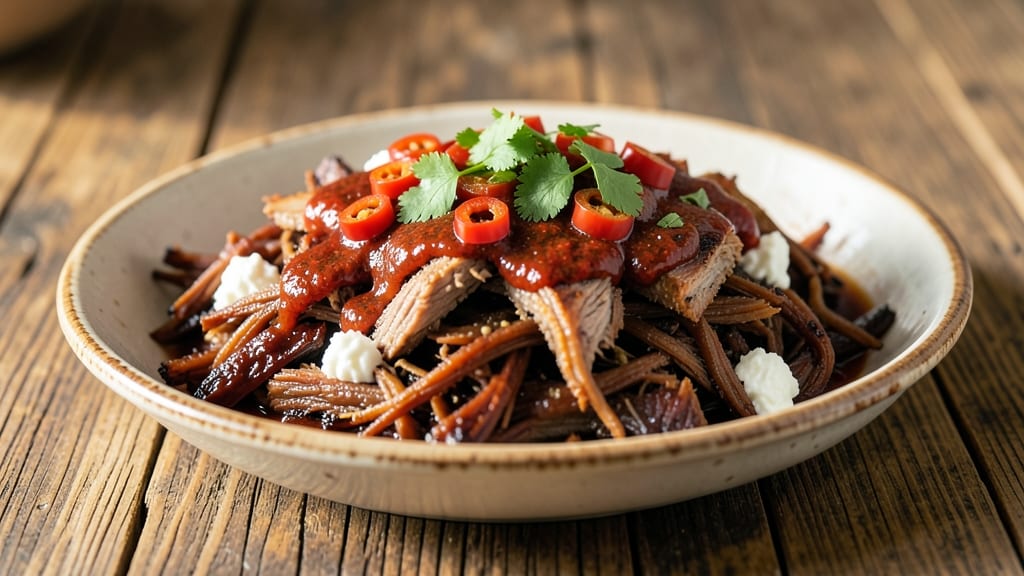
This Mexican smoked pulled pork recipe delivers the bold, smoky flavors of a true fiesta—where tender, caramelized bark meets perfectly seasoned meat that falls apart at the touch. 🔥 I developed this after years of perfecting the balance between traditional Mexican spices and the deep, smoky profile that comes from low-and-slow cooking.
The secret? A blend of ancho chiles, cumin, and oregano that transforms simple pork shoulder into something unforgettable.
The magic happens over 8-10 hours in the smoker, where the meat develops that coveted crispy bark while staying juicy inside. This isn’t just pulled pork—it’s a spice bomb that pairs beautifully with classic sides like cilantro-lime rice, charro beans, and grilled vegetables.
The key is patience: letting the meat rest before shredding ensures every bite is tender, not tough.
What makes this recipe stand out is the authentic Mexican touch—finishing the pork with a quick consommé bath for extra moisture, then topping it with queso fresco, pickled onions, and a drizzle of chipotle glaze.
The result? A dish that’s rich, smoky, and packed with layers of flavor that’ll have everyone asking for seconds. Serve it on tortillas, in tacos, or straight from the bowl.
Perfect for game day, fiesta gatherings, or a cozy weekend dinner, this recipe scales effortlessly. The leftovers? Even better the next day. Let’s get smoking!
Ingredients for mexican smoked pulled pork
Six pounds of pork shoulder and bold Mexican spices transform into smoky, tender perfection.
| Ingredient | Amount | Notes |
|---|---|---|
| Pork Shoulder (Boston Butt) 🍖 | 6 lb | Bone-in preferred for flavor |
| Ancho Chile Powder 🌶️ | ¼ cup | Ground dried ancho chiles |
| Ground Cumin 🌿 | 2 tbsp | Toasted for deeper aroma |
| Mexican Oregano 🍃 | 1 ½ tbsp | Not regular oregano |
| Smoked Paprika 🌶️ | 1 ½ tbsp | For authentic smoky depth |
| Garlic Powder 🧄 | 1 ½ tbsp | Fresh preferred but powder works |
| Onion Powder 🧅 | 1 ½ tbsp | For sweet base flavor |
| Ground Black Pepper 🌶️ | 1 tbsp | Freshly cracked preferred |
| Kosher Salt 🧂 | 1 ½ tbsp | Diamond Crystal preferred |
| Brown Sugar 🍚 | ½ cup | For caramelized bark |
| Apple Cider Vinegar 🍎 | ¼ cup | For tenderizing bath |
| Beef Consommé 🍲 | 2 cups | For finishing moisture |
| Queso Fresco 🧀 | 1 cup | Crumbled for topping |
| Pickled Red Onions 🧅 | 1 cup | For tangy contrast |
| Chipotle Glaze 🌶️ | ½ cup | Store-bought or homemade |
| Wood Chips (Mesquite or Oak) 🌳 | 2 cups | For authentic smoke flavor |
The pork shoulder is the foundation—look for well-marbled Boston butt at Costco or Whole Foods for optimal flavor. A bone-in cut adds richness, but boneless works if you're short on time. For the ancho chile powder, Penzeys Spices carries the best quality, but any reputable bulk spice vendor will do. Toast your cumin seeds briefly in a dry pan before grinding for an extra depth of flavor that makes all the difference. The wood chips are non-negotiable—mesquite gives that authentic Mexican profile, while oak offers a more traditional smoke. Soak them for at least 30 minutes before using.
No ancho chile powder? Dried guajillo chiles soaked and blended work beautifully, though they lack the sweet depth. Substitute half the amount of smoked paprika if you're in a pinch, but the flavor won't be identical. Mexican oregano is crucial—regular oregano won't cut it. Find it in the Latin aisle of most grocery stores or order online. For the consommé, store-bought beef consommé works fine, but homemade is superior. The brown sugar is essential for that coveted caramelized bark—don't skip it. If you're making this ahead, prep the pickled onions and chipotle glaze first—they keep for weeks in the fridge.
The pork develops its signature bark over 8-10 hours of smoking, so plan accordingly. Once cooked, let it rest for at least 2 hours before shredding—this is where the magic happens. Store leftovers in the fridge for up to 5 days, or freeze for 3 months. The consommé bath can be made ahead and reheated—just add it back to the pork during the final 15 minutes of resting. For serving, keep the queso fresco and pickled onions separate until ready to eat to maintain their freshness. This dish tastes even better the next day as the flavors meld further.
Why You'll Love This Recipe
- Smoky Depth Bomb: That combo of ancho chile powder and smoked paprika? It’s what makes this pork ridiculously good. The ancho gives it a rich, slightly sweet heat, while the paprika adds that warm, woodsy finish—like a hug from a Mexican abuela’s kitchen.
- Weeknight to Party Star: Between us, this pulls double duty. Slap it on a torta for a 10-minute lunch or pile it high for tacos at your next gathering. The same batch works for both—no fancy prep, just pure versatility.
Step-by-step instructions for Mexican smoked pulled pork
Master this slow-smoked technique for restaurant-quality pulled pork with deep smoky flavor and perfect bark.
🔥 Step 1: Prepare and Season the Pork Shoulder
Pat the 6 lb pork shoulder (Boston Butt) completely dry with paper towels—this ensures maximum bark development. Trim any excess fat to about ¼-inch thickness to allow for even smoke penetration while preserving moisture. The bone-in cut is preferred here as it holds its shape better during the long cook.
In a small bowl, combine the 0.25 cup ancho chile powder, 2 tbsp ground cumin, 1.5 tbsp Mexican oregano, 1.5 tbsp smoked paprika, 1.5 tbsp garlic powder, 1.5 tbsp onion powder, 1 tbsp ground black pepper, and 1.5 tbsp kosher salt. Rub this mixture generously over all sides of the pork, pressing it into the meat so it adheres well. Let the seasoned pork sit at room temperature for 1 hour before smoking—this allows the spices to penetrate and the meat to cook more evenly.
🔥 Step 2: Set Up the Smoker and Cook Low and Slow
Fill your smoker with the 2 cups wood chips (mesquite or oak) and soak them in water for 30 minutes before adding to the smoker. Preheat the smoker to 225°F—this low temperature is crucial for tenderizing the connective tissue. Place a water pan in the smoker to maintain moisture and prevent the bark from drying out.
Position the pork shoulder fat-side up on the smoker grates. The fat will render and baste the meat as it cooks, creating that coveted caramelized bark. Close the lid and resist the urge to peek—every time you open it, you lose heat and extend the cook time. Smoke the pork for 6-8 hours until the internal temperature reaches 165°F. You'll notice the meat hitting "the stall" around 160°F—this is normal and indicates the moisture is evaporating.
🥘 Step 3: Wrap and Finish the Cook
Once the pork reaches 165°F, wrap it tightly in butcher paper (not aluminum foil—it breathes better and preserves the bark). This technique, known as the "Texas crutch," helps push the pork through the stall while maintaining that crispy exterior. Return the wrapped pork to the smoker and continue cooking until the internal temperature reaches 203°F—this is when the collagen fully breaks down and the meat becomes fork-tender. The total cook time should be around 10-12 hours depending on your smoker.
Here's the thing—don't rush this step. The pork should pull apart easily with two forks, and the bark should be deep mahogany with a slight char. If the bark starts to dry out, you can lightly mist it with apple cider vinegar to keep it moist without losing the texture.
🍳 Step 4: Shred and Build the Sauce
Remove the pork from the smoker and transfer it to a cutting board. Let it rest for 15 minutes before shredding—this allows the juices to redistribute. Discard any large fat chunks and shred the pork using two forks or your hands. You should have about 4-5 cups of shredded pork.
In a large bowl, combine the shredded pork with 2 cups beef consommé, 0.5 cup brown sugar, and 0.5 cup chipotle glaze. Stir well to coat the pork evenly. Let the mixture sit for 10 minutes to allow the flavors to meld. The sauce should be sticky and glossy, clinging to every strand of pork.
🍽️ Step 5: Serve with Toppings and Garnishes
Transfer the pulled pork to a serving platter and top generously with 1 cup crumbled queso fresco and 1 cup pickled red onions. The tangy onions cut through the richness of the pork, while the queso fresco adds a bright, creamy contrast. Serve immediately with warm tortillas, corn bread, or over a bed of cilantro-lime rice.
Each bite should deliver a perfect balance of smoky, spicy, and sweet flavors with that irresistible caramelized bark. The pork should be tender enough to pull apart with your fingers, and the sauce should coat every strand beautifully. This is the moment that matters—where all your effort pays off in a dish that's worth sharing.
Pro Tips For Making Mexican Smoked Pulled Pork
- Trim the Fat First: I learned this the hard way—skipping this step means your rub won’t stick properly and the meat will steam instead of crisp. Use a sharp knife to trim just the thickest fat cap (about ¼-inch thick) from the Boston butt. Leave the rest—it’s what keeps the meat juicy during the long cook.
- Toast the Spices: Dry-toasting your ancho chile powder, cumin, and smoked paprika in a skillet for 30 seconds until fragrant makes a real difference. The heat deepens their flavors and cuts through the bitterness of the ancho—just don’t walk away, or you’ll end up with burnt spices.
- Wrap Tight at 165°F: Once the meat hits 165°F, wrap it in butcher paper or foil snugly—no gaps, no air pockets. I used to rush this, and the pork would dry out by the time it hit 203°F. A tight wrap locks in moisture while the collagen breaks down.
- Skip the Water Bath: Resist the urge to add liquid when the rub gets sticky—this dilutes the flavor and turns your pork into a soggy mess. Instead, spritz the meat with apple cider vinegar (2 tablespoons) every 2 hours to keep it moist without watering it down. (Yes, even if you’re impatient like me.)
Essential equipment for perfect results
Smoker Essentials
You don’t need a fancy setup—just a reliable offset smoker or pellet grill like the Traeger Pro 575 or Weber Smokey Mountain. I’ve smoked thousands of pounds using my Lodge 22-inch cast iron skillet as a makeshift smoker when needed.
The key is maintaining 225°F consistently, so invest in a good thermometer—I swear by the Meater for accuracy. 🌡️
For wood chips, mesquite delivers that authentic Mexican smokiness, but oak works too. Soak them for 30 minutes before use to prevent flare-ups. I keep a small bucket of water in my smoker to maintain moisture and prevent dry bark.
A water pan (like the Aluminet Pan) is a game-changer for keeping the pork tender.
Seasoning Tools
A mortar and pestle is ideal for grinding whole spices like cumin and oregano, but a spice grinder works in a pinch. I like to toast my spices in a dry cast iron skillet for 30 seconds before grinding—this deepens their flavor.
For the dry rub, a pastry brush helps distribute the spices evenly, but my hands work just as well. Store your spices in airtight containers to keep them fresh.
Don’t skimp on the ancho chile powder—it’s the heart of this dish. I buy mine in bulk from Penzeys Spices because their quality is unmatched. If you’re making a big batch, a large mixing bowl (like a Cambro) makes seasoning the pork a breeze.
A meat thermometer with a probe is non-negotiable—you’ll be checking that internal temp every hour.
Finishing Touches
For wrapping the pork, butcher paper (not foil) is key—it lets the meat breathe while keeping the bark intact. I use pink butcher paper from Amazon because it’s sturdy and easy to find.
A sharp knife (like a Victorinox Fibrox) helps trim excess fat, and a pair of tongs keeps your hands safe from the smoker’s heat. For the consommé bath, a large stainless-steel bowl prevents sticking and makes mixing easier.
When it’s time to serve, a slotted spoon helps transfer the pork without breaking it apart. I like to keep queso fresco and pickled onions in separate bowls until serving to keep them fresh.
A good serving platter (like a Le Creuset stoneware dish) makes the final presentation look restaurant-worthy. 💫
Nutrition facts
Frequently asked questions
What's the best cut of pork for this recipe?
Use a 6 lb bone-in pork shoulder (Boston Butt) for the best flavor and texture. The bone helps maintain shape during smoking, while the fat cap renders beautifully for that coveted caramelized bark. A boneless shoulder works in a pinch but may lose shape more easily.
Can I substitute ancho chile powder?
Yes, but the flavor won't be identical. For a substitute, blend 4-5 dried guajillo chiles (soaked and deseeded) into a powder and use ¼ cup. Alternatively, mix ½ cup smoked paprika with 1 tbsp cinnamon and 1 tsp cocoa powder for depth. The ancho's sweetness is key to balancing the smoky heat.
Why does the pork need to rest before shredding?
The 2-hour rest after smoking is critical—it allows juices to redistribute throughout the meat, preventing dryness when you shred. If you skip this, the pork will be tough and stringy. Place it in a warm oven (170°F) while resting if you're short on time.
How do I fix pork that's too dry?
If your pork turns out dry, the issue is usually from overcooking or not enough fat. Next time, monitor the internal temp closely and wrap in butcher paper at 165°F to retain moisture. For immediate rescue, mix shredded pork with ½ cup beef consommé and 1 tbsp apple cider vinegar, then reheat gently on low.
What's the best wood for authentic Mexican flavor?
Mesquite is the classic choice for that authentic Mexican smokiness, but oak works beautifully too. Avoid hickory—it's too strong. Soak your wood chips for 30 minutes before using to prevent flare-ups. For a hybrid approach, mix 70% mesquite with 30% oak for balanced flavor.