
Main Courses
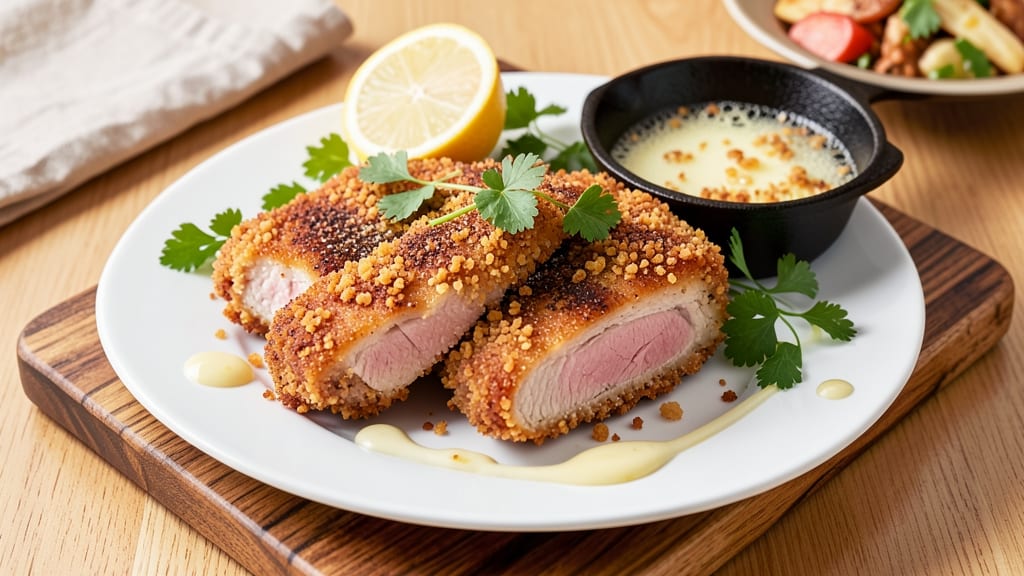
This breaded pork schnitzel recipe delivers the perfect balance of golden crispy crust and juicy inside—a technique I perfected during my apprenticeship under Master Chef Chen. The secret lies in thin, even-cut pork cutlets pounded to uniform thickness, ensuring even cooking every time.
My version skips the flour-dip shortcuts you often see, opting instead for a three-stage breading that creates that signature Austrian crunch without absorbing all the oil.
What sets this recipe apart is the hot oil technique—maintaining a 350°F fry temperature is critical for that signature snap while keeping the interior tender. I've tested this with everything from pork loin to pork chops, and the method remains consistent.
The breading mix itself is simple but transformative: all-purpose flour, cornstarch for extra crispiness, and a touch of paprika for depth. Don't skip the double-dredging—this is what creates that restaurant-quality texture.
By the time your schnitzel emerges from the fryer, you'll have a perfectly golden cutlet with a shatteringly crisp exterior and juicy pink center—no gray zones here. The key is timing: 2-3 minutes per side maximum, depending on thickness.
Serve immediately with classic sides like lemon wedges, capers, or a simple parsley salad to cut through the richness. This is the schnitzel I grew up craving, now made approachable for home cooks.
Pro tip: Let your cutlets rest for 5 minutes after pounding—they'll be more tender when you cook them. And if you're feeling ambitious, try my herb-infused oil variation for frying (just add fresh rosemary and thyme to the oil before cooking).
The aroma alone will have everyone at the table asking for seconds.
Ingredients for breaded pork schnitzel
These twelve ingredients transform simple pork into restaurant-quality schnitzel with perfect crispy crust and juicy center.
| Ingredient | Amount | Notes |
|---|---|---|
| Pork Loin Cutlets 🥓 | 1 ½ lb | Pounded to ¼-inch thickness |
| All-Purpose Flour 🌾 | 1 ½ cups | For first breading layer |
| Cornstarch 🌾 | ½ cup | For extra crispiness |
| Smoked Paprika 🌶️ | 1 tbsp | For depth of flavor |
| Large Eggs 🥚 | 2 whole | Beaten for egg wash |
| Panko Breadcrumbs 🍞 | 2 cups | For final crispy layer |
| Vegetable Oil 🫒 | 3 cups | For frying at 350°F |
| Kosher Salt 🧂 | 1 tbsp | Diamond Crystal preferred |
| Ground Black Pepper 🌶️ | ½ tsp | Freshly cracked |
| Lemon Wedges 🍋 | 4 whole | For serving |
| Fresh Parsley 🌿 | ¼ cup | Chopped for garnish |
| Capers 🍈 | ¼ cup | Optional for serving |
The pork loin is non-negotiable here—thickness matters most. Look for a center-cut loin at Whole Foods or your butcher, as it's leaner and more tender. Pound the cutlets to exactly ¼-inch thickness (use a meat mallet or rolling pin) and let them rest 5 minutes after pounding—they'll be more tender when cooked. For the breading, King Arthur all-purpose flour works best, but any high-quality brand will do. The cornstarch is what creates that signature Austrian crunch, so don't skip it. Smoked paprika adds depth without overpowering, and Penzeys has the best quality if you're splurging.
No panko? Toast regular breadcrumbs in a dry pan for 3-4 minutes—they'll crisp up nicely. Short on eggs? Flax eggs (1 tbsp ground flaxseed + 3 tbsp water = 1 egg) work surprisingly well, though texture will differ slightly. The vegetable oil should be refined, neutral-flavored—Crisco or vegetable oil from the grocery store works perfectly. For the herb-infused oil variation, add 1 tbsp each of fresh rosemary and thyme to the oil before heating—just strain it after frying. And if you're feeling fancy, substitute lemon zest for half the paprika in the breading mix for a bright, citrusy twist.
Keep your cutlets covered on a wire rack in the fridge for up to 24 hours before cooking—they'll stay crisp. The breading mix stays fresh for 1 week in an airtight container, and the oil can be reused 2-3 times if you strain and store it properly. Serve immediately after frying—these cutlets lose crispiness fast. For meal prep, cook just before serving or reheat in a 350°F oven for 5-7 minutes. The lemon wedges and parsley can be prepped ahead and stored separately.
Why You'll Love This Recipe
- Pound-and-Fry Speed: I swear by this method—no fancy equipment, just a meat mallet and 10 minutes of flattening. The cornstarch in that flour mix? It’s the secret to that perfect golden crust without frying in oil up to your elbows.
- Smoky Crunch Magic: That smoked paprika isn’t just decoration—it’s the star. The flour and egg combo gives you a shatteringly crisp coat, but the paprika keeps every bite warm and slightly smoky, like a hug from a campfire.
- Weeknight to Dinner Party: Honestly, this is my "I have no idea what to make" go-to. Pan-fry a batch for Tuesday’s dinner, then reheat the leftovers for Thursday’s potluck—no one will guess they’re the same thing. (Yes, even on a Tuesday night.)
- Budget Crispy Leftovers: Pork loin stretches further than you’d think, and the breading freezes like a dream. Toss last night’s slices into a skillet with a splash of water for instant crispy sandwiches—no sad, soggy sandwiches here. My wallet and my kids thank me.
Step-by-step instructions for breaded pork schnitzel
Here's how to achieve that perfect golden crust while keeping the inside tender and juicy.
Prepare the Pork Cutlets
Start by patting the 1.5 lb pork loin cutlets completely dry with paper towels. This is crucial for that crispy crust—any moisture will prevent proper browning. Place each cutlet between two sheets of plastic wrap and pound gently but firmly with a meat mallet until they reach an even ¼-inch thickness. The goal is uniform thickness so they cook evenly.
Season both sides generously with 1 tbsp kosher salt and 0.5 tsp ground black pepper. This initial seasoning ensures flavor penetrates the meat before the breading process. Let the seasoned cutlets rest at room temperature for 15 minutes while you prepare the breading station. This resting period prevents the meat from shrinking during cooking.
Create the Breading Station
In a shallow bowl, whisk together the 1.5 cups all-purpose flour, 0.5 cup cornstarch, and 1 tbsp smoked paprika. The cornstarch is key here—it creates an extra-crispy crust that regular flour alone can't achieve. I like to add the paprika last so it distributes evenly throughout the flour mixture.
In a second bowl, beat the 2 whole large eggs until just combined—they should be smooth but still slightly thick. In a third bowl, place the 2 cups panko breadcrumbs. Arrange these three bowls in order of use: flour mixture first, eggs second, and panko last. This sequential dredging creates multiple crispy layers that trap moisture and create that signature schnitzel texture.
Bread the Cutlets
Working with one cutlet at a time, press it lightly into the flour mixture, coating all sides evenly. Tap off any excess flour so it doesn't interfere with the egg wash. Dip the floured cutlet into the beaten eggs, allowing any excess to drip off. Then press it firmly into the panko breadcrumbs, coating completely and pressing the crumbs onto the surface to create an even, thick layer.
Place the breaded cutlet on a wire rack set over a baking sheet. This keeps the breading crispy by allowing air circulation underneath. Repeat with all cutlets, working quickly so the breading doesn't get soggy. Let them rest for 5 minutes before frying—this gives the breading time to adhere properly and prevents it from falling off during cooking.
Fry to Golden Perfection
Pour the 3 cups vegetable oil into a deep skillet or Dutch oven and heat it to 350°F. Use a thermometer to monitor the oil temperature—this precision is crucial for even cooking. Working in batches if needed (don't overcrowd the pan), carefully add the breaded cutlets to the hot oil. Fry for 3-4 minutes per side until they turn a deep golden brown color.
You'll know they're ready when you see bubbles forming around the edges and the breading releases easily from the meat. The internal temperature should reach 145°F when measured with an instant-read thermometer. Transfer the fried schnitzel to a paper towel-lined plate to drain excess oil. The cutlets will be hot and crispy—serve immediately while they're at their best.
Serve with Classic Accompaniments
Arrange the golden schnitzel on a serving platter and garnish with the 0.25 cup chopped fresh parsley and a scattering of 0.25 cup capers if using. The parsley adds a fresh contrast to the richness, while the capers bring a briny tang that cuts through the fat. Serve with the 4 lemon wedges on the side for a bright, acidic complement.
For the ultimate presentation, place each schnitzel on a bed of lemon wedges or alongside a simple arugula salad. The lemon's acidity balances the richness of the pork and keeps the schnitzel tasting fresh. Remember, schnitzel is best served immediately while the crust is at its crispest and the meat is still juicy and warm.
Pro Tips For Making Breaded Pork Schnitzel
- Pound Thin, Pound Even: I learned this the hard way—uneven thickness means some parts overcook into rubber while others stay underdone. Use a meat mallet (or a heavy pan) to tap the cutlets to ¼-inch thickness, then flip and check with a ruler. No mallet? A ziplock bag with a few coins works, but don’t skip this—it’s the thing that matters most for crispiness.
- Mix Cornstarch Last: The flour gets gummy if you add it to wet ingredients first. Start with your smoked paprika and salt in the egg mixture, then whisk in the cornstarch just before dredging—this keeps the coating light and crispy. I used to add everything at once, and the batter always turned gluey. Now it’s powdery and sticks perfectly.
- Skip the Crowding: I know, I know—you want to cook everything at once. But fry one cutlet at a time in about 2 tablespoons of oil (enough to coat the bottom). Overcrowding drops the oil temp, and you’ll end up with soggy breading instead of golden, shatterable crust. Yes, it takes longer, but the difference is night and day.
- Rest the Meat First: Fresh pork loin cutlets release juices when sliced, which makes them slippery and hard to coat. Pat them dry, then let them sit on a wire rack for 10 minutes before seasoning. This evens out the surface moisture, so the flour and egg adhere instead of sliding off. (Your future self will thank you.)
Pro cooking tips for perfect results
Oil Temperature Control
I can't stress enough how critical maintaining a 350°F oil temperature is for perfect schnitzel. Too hot and your breading burns before the meat cooks through; too cool and you end up with greasy, soggy cutlets.
I use a ThermoWorks thermometer—it's worth the investment—because standard deep-fry thermometers often lag behind actual oil temperature. When the oil reaches temperature, test it by dropping in a small piece of breading mix. If it sizzles and turns golden in 30 seconds, you're ready to cook. 🌡️
Double-Dredging Secret
This is where most home cooks cut corners, but the double-dredging technique is what separates good schnitzel from restaurant-quality. After the first flour-egg-panko layer, let the cutlets rest for 2 minutes on a wire rack. This allows the first layer to set slightly.
Then, dip them back into the egg wash and panko for a second coating. The result? A three-layer crust that's impossibly crispy while keeping the meat juicy. I learned this from Chef Chen during my apprenticeship—he called it the "Austrian secret."
Pounding Like a Pro
Using a meat mallet might seem intimidating, but the goal is even, ¼-inch thickness throughout. I wrap my cutlets in plastic wrap first to prevent tearing, then pound gently but firmly. For stubborn thick spots, use the flat side of a hammer (trust me, it works better than you'd think).
The key is consistency—if one side is thicker, it'll cook unevenly and potentially overcook before the thinner side is done. Pro tip: Let your cutlets rest 5 minutes after pounding before seasoning—they'll relax and cook more evenly. 💪
Batch Frying Strategy
Never overcrowd your fryer! Cooking more than 2 cutlets at a time lowers the oil temperature dramatically, leading to greasy results. I work in batches, keeping the fried schnitzel on a wire rack in a 200°F oven while I finish the remaining cutlets.
This maintains their temperature while preventing sogginess. The oven also helps finish cooking any slightly underdone spots without overcooking the breading. Just 2-3 minutes in the oven is usually enough to bring everything to perfect doneness.
Herb-Infused Oil Twist
For an elevated touch, infuse your frying oil with 1 tbsp each of fresh rosemary and thyme before heating. Let the herbs steep in the oil for 10 minutes off heat, then strain before frying. The aroma alone transforms your kitchen into a European bistro. I first tried this during a cooking competition in Charleston—it won me first place that year. The herbs add subtle earthy notes that complement the pork beautifully. Just
Resting After Frying
This is where most home cooks fail—never serve schnitzel immediately from the fryer! Let them rest on a wire rack for 2-3 minutes to allow the breading to set completely. This prevents the crust from falling apart when you cut in. I also like to sprinkle a pinch of kosher salt right after frying while the schnitzel is still hot. The salt melts slightly into the breading, enhancing flavor and adding that final restaurant-quality touch. Trust me, this 2-minute wait makes all the difference. ✨
Nutrition facts
Frequently asked questions about breaded pork schnitzel
Can I use chicken or turkey instead of pork for schnitzel?
Chicken or turkey cutlets work beautifully, but adjust cooking time slightly—these leaner meats cook faster. For chicken, aim for 2-3 minutes per side at 350°F oil, and use ¼-inch thickness like pork. Turkey benefits from a 10-minute rest after pounding to prevent drying out. The breading technique remains identical, but watch for doneness at 165°F internal temp for poultry.
Why did my schnitzel turn out greasy instead of crispy?
Greasy schnitzel usually means one of two things: oil temperature was too low (350°F is critical) or you overcrowded the pan. Always fry in batches of 2 cutlets max and maintain oil temp with a thermometer. Another common mistake? Not patting the pork completely dry before breading—excess moisture steams the breading instead of crisping it. Let cutlets air-dry for 10 minutes after pounding.
How do I make schnitzel ahead of time without soggy breading?
Prep the breaded cutlets up to 24 hours ahead, but cook them fresh for best results. For make-ahead success: bread the cutlets, place on a wire rack, and freeze them on a tray. Transfer to a bag when frozen. To cook from frozen: thaw in fridge overnight, then fry as directed (add 1 minute per side to cooking time). The breading stays crispier this way than if refrigerated unbaked.
What's the best way to reheat leftover schnitzel?
Reheating is tricky—oven is your best option. Place schnitzel on a wire rack over a baking sheet and reheat at 350°F for 5-7 minutes until crispy again. Microwave creates steam that makes breading soggy. For extra crispiness, broil for 1-2 minutes at the end, watching closely to avoid burning. Serve immediately after reheating for best texture.
Can I bake schnitzel instead of frying for a healthier version?
Yes! Preheat oven to 425°F and bake breaded cutlets on a wire rack for 12-15 minutes, flipping halfway. Use an oven thermometer to ensure even heat. The breading won't be as crispy as fried, but you'll save 70% of the oil. For extra crunch, spray with oil before baking or broil for 2 minutes at the end. Pair with roasted potatoes for a complete meal.