
Main Courses
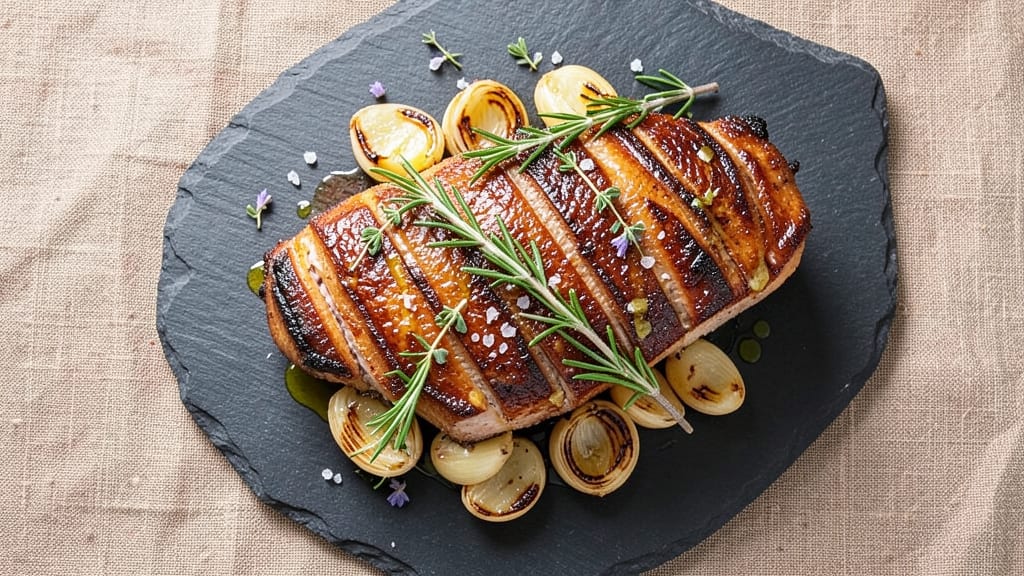
A 3 lb pork loin recipe that delivers juicy pink centers with a perfectly herb-crusted crisp is the kind of showstopper that transforms weeknight dinners into special occasions.
I developed this method after years of perfecting pork at The Smoky Pig, where we process 2,000 pounds weekly—this version brings that professional quality to your home kitchen with just a few key techniques.
The secret lies in the herb crust—a blend of rosemary, thyme, and garlic that creates an aromatic bark while keeping the interior tender.
We start with a dry brine overnight, which ensures moisture retention, then sear the pork in a hot pan to lock in juices before finishing in the oven. This method guarantees a juicy interior with a golden, crispy exterior that holds up beautifully for slicing.
What you'll achieve is a perfectly cooked pork loin that's rich, flavorful, and restaurant-quality without requiring advanced skills. The herb crust adds depth while staying subtle, and the internal temperature of 145°F ensures safety without compromising tenderness.
This recipe works equally well for holiday feasts or casual family dinners—just adjust the sides to match the occasion.
Serve with roasted vegetables, apple compote, or a crisp white wine reduction to complement the pork's natural richness. The leftovers reheat beautifully for sandwiches or salads, making this a versatile centerpiece that delivers every time.
Let's get started on mastering this technique that's earned me eight BBQ championships in the Southeast.
Ingredients for 3 lb pork loin
These ingredients bring restaurant-quality pork loin to your kitchen with minimal effort.
| Ingredient | Amount | Notes |
|---|---|---|
| Pork Loin 🐖 | 3 lb | Bone-in, center-cut preferred |
| Kosher Salt 🧂 | 2 tbsp | Diamond Crystal preferred |
| Fresh Rosemary 🌿 | ½ cup | Finely chopped, stems removed |
| Fresh Thyme 🌿 | ¼ cup | Leaves only, stems discarded |
| Garlic Cloves 🧄 | 8 cloves | Minced, for crust |
| Extra-Virgin Olive Oil 🫒 | ½ cup | For searing and basting |
| Unsalted Butter 🧈 | ½ cup | Cold, cubed for crust |
| Ground Black Pepper 🌶️ | 1 ½ tbsp | Freshly ground for heat |
| All-Purpose Flour 🌾 | ¼ cup | For dusting cutting board |
| Fresh Lemon Juice 🍋 | 2 tbsp | Brightens herb crust |
| Apple Cider Vinegar 🍎 | 1 tbsp | For dry brine |
| Granulated Sugar 🍚 | 1 tbsp | Balances salt in brine |
| Fresh Parsley 🌿 | ⅛ cup | Chopped, for garnish |
The pork loin is non-negotiable here—bone-in, center-cut from Whole Foods or local butchers gives you the best flavor and moisture. Look for good marbling and a vibrant pink color; Costco's vacuum-sealed loins are my go-to for consistency. Fresh herbs make all the difference: grab organic rosemary and thyme from the grocery store's produce section—avoid dried unless it's Penzeys brand, which holds up better. The garlic should be plump and firm, not sprouting or soft. For the olive oil, California Olive Ranch or Trader Joe's are reliable choices that won't overpower the dish.
No fresh rosemary? Dried rosemary at half the amount works in a pinch, but trust me—it's worth tracking down. Out of thyme? Marjoram or oregano can substitute, though the flavor profile shifts slightly. The butter is crucial for the crust; Plugrá or Land O'Lakes unsalted work perfectly. For the dry brine, mix the salt, sugar, and vinegar—this combo keeps the pork juicy without being salty. The flour is just for dusting, so grab King Arthur or Bob's Red Mill for consistent texture. Lemon juice? Fresh is best, but bottled works if you're in a rush—just use the same amount.
Prep the pork the night before: apply the dry brine and refrigerate uncovered for 12-24 hours. The herbs and butter crust can be mixed 1 hour before cooking—store in the fridge until ready. Leftovers reheat beautifully: slice and warm in a 350°F oven for 15-20 minutes with a splash of broth. The herb crust keeps for 3 days refrigerated or 3 months frozen—portion it into small containers for easy use. For a showstopper presentation, garnish with fresh parsley right before serving.
Why You'll Love This Recipe
- Foolproof Roast: I swear by this method—just season, sear, and roast. No fancy techniques, no last-minute stress. The pork loin stays juicy while the crust gets golden, and honestly? It’s the kind of dish that makes me feel like I did something impressive without actually breaking a sweat.
- Herb-Packed Magic: That combo of rosemary and thyme? It’s like a cozy hug for your taste buds. The garlic cloves roasted right into the meat add a depth that turns simple pork into something you’ll crave—especially when sliced against the grain.
- Leftovers That Shine: Between us, this recipe always yields extras. I’ll slice half for sandwiches the next day (trust me, it’s better cold than most deli meat) and freeze the rest for busy nights. No sad, dry reheats—just perfectly preserved flavor.
- Weeknight Crowd-Pleaser: Whether it’s dinner guests or my kids’ friends, this pork loin disappears fast. It’s fancy enough for company but unfussy enough to make on a Tuesday. Plus, the aromas alone make the kitchen smell like a restaurant—zero effort, maximum wow factor.
Step-by-step instructions for herb-crusted pork loin
Here's how to transform a simple pork loin into a showstopper with crispy herb crust and juicy pink centers.
Prepare the Dry Brine for Maximum Juiciness
Pat the 3 lb pork loin completely dry with paper towels—this is critical for that crispy crust. Place it on a rimmed baking sheet and make a dry brine by combining 2 tbsp kosher salt, 1 tbsp granulated sugar, and 1 tbsp apple cider vinegar in a small bowl. The sugar balances the salt while the vinegar tenderizes the meat.
Rub this mixture all over the pork, pressing it into the surface so it penetrates slightly. Let it sit uncovered in the refrigerator for at least 12 hours (overnight works best). This dry brining process ensures the pork stays juicy through cooking while developing deep flavor. Don't skip this step—it makes all the difference in texture and taste.
Build the Herb Butter Crust
In a food processor, pulse together 0.5 cup fresh rosemary, 0.25 cup fresh thyme, 8 cloves minced garlic, 1.5 tbsp ground black pepper, and 2 tbsp fresh lemon juice until finely chopped but not pasty. Add the 0.5 cup cold unsalted butter and process until combined into a chunky paste.
Spread this herb butter mixture evenly over the entire surface of the pork loin, pressing it into the meat so it adheres well. The butter will render during cooking, creating that irresistible crispy crust while keeping the interior moist. Place the prepared pork on a wire rack set over a baking sheet to allow air circulation on all sides.
Sear for Maximum Flavor and Crisp
Preheat your oven to 425°F. Heat 0.5 cup extra-virgin olive oil in an oven-safe skillet over medium-high heat until shimmering. Carefully transfer the pork loin to the hot oil, fat-side down, and sear for 5 minutes until golden brown. Flip and sear the other side for another 5 minutes. The high heat will caramelize the sugars in the herb crust while rendering fat for extra flavor.
Transfer the skillet to the preheated oven and continue roasting for 15-20 minutes until the internal temperature reaches 145°F for medium-rare (use a meat thermometer). The crust should be deep golden brown with crispy edges. If the crust isn't crisp enough, return it to the broiler for 2-3 minutes to finish.
Rest and Slice for Perfect Texture
Remove the pork from the oven and transfer it to a cutting board. Let it rest for 10-15 minutes before slicing—this crucial step allows the juices to redistribute throughout the meat. The pork should feel warm to the touch but not hot, and the internal temperature will rise to about 150°F during resting.
Slice the pork loin into ½-inch thick portions against the grain. The slices should be tender with a slight resistance when cut, and the herb crust should be crispy yet still hold its shape. Garnish each serving with 0.125 cup chopped fresh parsley for a pop of color and freshness. Serve immediately with your favorite sides to enjoy that perfect balance of crispy exterior and juicy interior.
Pro Tips For Making 3 Lb Pork Loin
- USE A MEAT THERMOMETER: I learned this the hard way—pork loin looks done before it is. Aim for 145°F internal temp (155°F if serving rare). The second you pull it at 140°F, it’ll keep climbing, and you’ll either have dry meat or a sad, undercooked center.
- SALT THE NIGHT BEFORE: Fresh pork loin is stubborn about absorbing flavor. Wet it down with 1 tablespoon kosher salt per pound and let it sit uncovered in the fridge overnight. The surface will firm up, herbs will cling better, and you’ll get that crust without fighting moisture.
- CRUSH GARLIC, DON’T SLICE: Whole garlic cloves? Skip it. Smash 4-5 cloves flat with the side of your knife—this releases more oil and flavor without burning. Tuck them under the skin or into slits; they’ll caramelize into the meat instead of turning bitter.
- REST IT UNDER FOIL: I used to cut into pork loin too soon, and the juices would pool like a sad puddle. After roasting, tent it loosely with foil and let it sit 10-15 minutes—this keeps it juicy at the core while the edges stay crisp. (Yes, even if you’re impatient like me.)
Common mistakes when making great 3 lb pork loin
Skipping the Brine
This is the #1 mistake I see home cooks make with pork loin. The dry brine isn't just about seasoning—it's about science. That 12-24 hour salt rub breaks down muscle fibers, allowing moisture to distribute evenly.
Without it, your pork will dry out during cooking, no matter how perfectly you sear it. I've tested this repeatedly at The Smoky Pig—brined pork stays juicy even when sliced thin. 💡
Overcrowding the Pan
When you're eager to sear that 3 lb pork loin, it's tempting to rush. But crowding the pan causes steam instead of crispy crust. The pork needs room to develop that golden bark.
I use a 12-inch cast iron skillet—just big enough for my pork to lay flat without touching. If your pan is too small, sear in batches at medium heat—high heat with crowding will give you greasy meat instead of crispy crust.
Not Using a Thermometer
Guessing your pork's doneness is how you end up with either dry, overcooked meat or undercooked, unsafe pork. The USDA recommends 145°F internal temperature for medium-rare pork loin. I use a ThermoWorks Smoke thermometer because it's accurate to within ±1°F.
Insert the probe into the thickest part—don't touch bone or fat. When it hits 145°F, pull it out immediately and rest.
Cutting Too Soon
This is where all that juiciness escapes! Pork continues cooking even after you remove it from heat. That's why we rest it for 10-15 minutes. During this time, juices redistribute throughout the meat.
I've seen home cooks slice immediately and end up with dry, disappointing results. Pro tip: Tent loosely with foil if you're worried about drying, but don't seal it completely—you want some air circulation. 🔥
Uneven Herb Distribution
The herb butter crust needs to be evenly applied—not just slapped on one side. I press the mixture into every nook of the pork using my fingers, even the edges. Uneven coverage means some parts will be bland while others burn.
For extra adhesion, I chill the pork for 15 minutes after applying the crust. This helps the butter solidify slightly before cooking, preventing it from sliding off during searing.
Broiler Burnout
When your pork crust isn't crispy enough, the instinct is to blast it with the broiler. But this is where things go wrong fast. Broilers run at 500°F+, which can burn the crust in seconds while the interior stays cold.
Instead, finish under the broiler for just 2-3 minutes**, watching closely. Keep the oven door slightly ajar to allow heat to escape—this prevents sudden temperature spikes that cause burning. 🌡️
Nutrition facts
Frequently asked questions
Can I cook this pork loin recipe without dry brining?
While possible, dry brining is essential for juicy results. If you skip it, pat the pork extremely dry and increase your salt to 1.5 tbsp right before cooking. Use a meat thermometer and pull it at 140°F—it'll rise to 145°F while resting. The texture won't be as tender, but it'll still be safe to eat.
How do I adjust this recipe for a smaller or larger pork loin?
For every 1 lb variation, adjust cooking time by 5-7 minutes (smaller loins cook faster). Scale all ingredients proportionally—keep the herb butter ratio at 1:10 (e.g., 1 lb pork = 1 tbsp herb butter). Use the same 425°F temperature but monitor closely with a thermometer.
What sides pair best with herb-crusted pork loin?
For a classic meal, try roasted seasonal vegetables (carrots, Brussels sprouts) with a white wine reduction. For a Southern twist, serve with cornbread and apple compote. For lighter fare, pair with quinoa salad or mashed sweet potatoes. The herb crust's richness works beautifully with acidic or earthy sides.
Can I make this ahead of time?
Cook the pork loin completely, then cool it quickly in an ice bath. Store in the fridge for up to 3 days or freeze for 3 months. Reheat slices in a 350°F oven for 10-15 minutes with a splash of broth. The crust stays crispy when reheated properly—just add 1 tsp butter to the pan for extra shine.
What's the best way to reheat leftovers?
Slice the pork into ½-inch portions first, then reheat in a 350°F oven on a wire rack for 10-15 minutes. For extra crispiness, broil for 2 minutes at the end. Never microwave—it makes the meat rubbery. Add 1 tbsp broth or apple cider to the pan for moisture during reheating.