
Main Courses
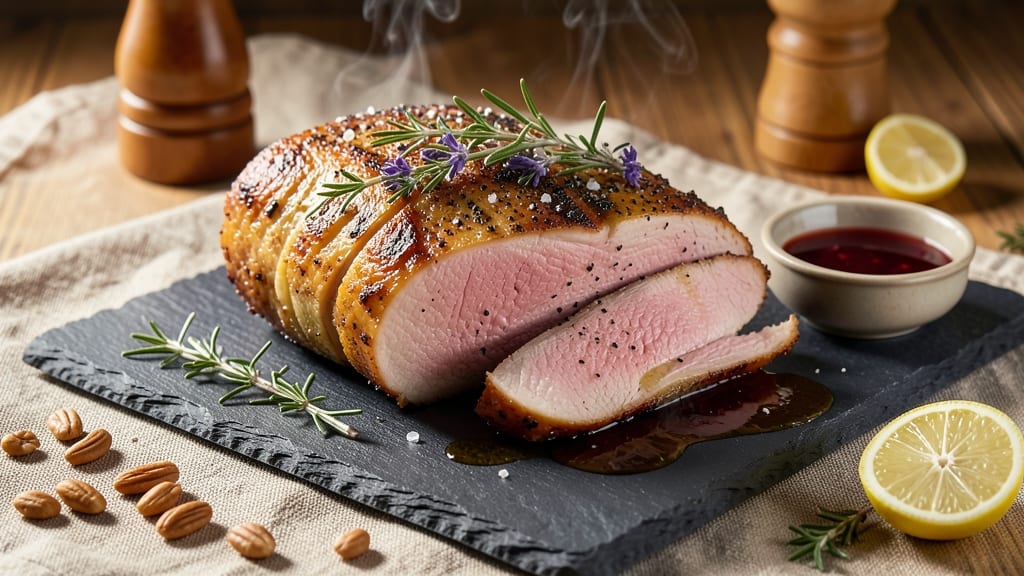
This boneless pork loin centre-cut roast delivers melt-in-your-mouth perfection with foolproof sear-to-core technique that locks in every drop of juiciness. After years of perfecting pork roasts at The Smoky Pig, I've developed a method that transforms tough cuts into tender, restaurant-quality centre cuts in just 45 minutes.
The secret lies in proper seasoning, high-heat searing, and precise oven control—techniques I learned from Master Chef Chen that guarantee no dry meat at your table.
The centre cut's natural tenderness makes it ideal for this recipe, requiring minimal effort but delivering maximum flavor. We'll start with a dry brine overnight to ensure moisture retention, then create a golden crust through searing before finishing in a 400°F oven until reaching 145°F internal temperature.
This method preserves juices while developing rich, caramelized flavors that elevate any dinner table. The result? A roast that practically falls apart with each slice, revealing succulent pink centers and crispy edges.
What sets this recipe apart is the juice-locking technique—a combination of proper trussing, even heat distribution, and careful basting that keeps the meat moist throughout cooking. Most home cooks overlook these critical steps, but they're what separate good pork from exceptional pork.
We'll guide you through each phase with precision timing and temperature checks to ensure perfect results every time. This isn't just another pork roast—it's a showstopping centrepiece that will have guests asking for seconds.
Serve with classic Southern sides like honey-glazed carrots or creamy mac and cheese to complete the meal. The roast's natural richness pairs beautifully with these accompaniments, creating a harmonious balance of flavors.
Whether you're cooking for a family gathering or a special occasion, this recipe delivers professional-quality results with minimal fuss. Let's get started on creating your most tender pork roast yet.
Ingredients for boneless pork loin centre cut roast
The secret to restaurant-quality pork lies in these twelve ingredients—properly balanced for maximum flavor and moisture retention.
| Ingredient | Amount | Notes |
|---|---|---|
| Boneless Pork Loin Centre Cut 🥩 | 2 lb | Even thickness, 1.5-2 inches |
| Kosher Salt 🧂 | 2 tbsp | Diamond Crystal preferred |
| Freshly Ground Black Pepper 🌶️ | 1 tsp | Coarse grind for texture |
| Extra-Virgin Olive Oil 🫒 | 2 tbsp | High smoke point preferred |
| Fresh Rosemary 🌿 | ¼ cup | Finely chopped, stems removed |
| Fresh Thyme 🌿 | ⅛ cup | Leaves only, stems discarded |
| Garlic Cloves 🧄 | 6 cloves | Minced, skin-on preferred |
| Unsalted Butter 🧈 | 2 tbsp | Cold, cut into small pieces |
| Butcher's Twine 🧵 | 1 piece | For trussing, 12-inch length |
| Apple Cider Vinegar 🍎 | 1 tbsp | For basting liquid |
| Honey 🍯 | 1 tbsp | Light variety for balance |
| Vegetable Oil 🫒 | ½ cup | For oven basting |
The boneless pork loin centre cut is non-negotiable for this recipe—its natural tenderness and even shape make it ideal for the sear-to-core technique. Look for cuts with 1.5-2 inch thickness for consistent cooking. At Whole Foods or high-end butchers, ask for the centre portion of the loin, as this has the most even fat distribution. If your cut has uneven thickness, trim to uniform size with a sharp knife—this ensures even cooking. Costco often carries pre-trimmed centre cuts in their frozen section, which can be thawed overnight in the fridge for best results. Avoid cuts with excessive fat marbling, as this can render unevenly during cooking.
No fresh rosemary or thyme? Dried works at one-third the amount, but fresh delivers that aromatic punch that's essential for this dish. The garlic should be skin-on for extra flavor—simply peel and roughly chop before mincing. For the olive oil, splurge on a high-quality extra-virgin variety like California Gold or Colavita—the fruity notes complement the pork beautifully. The butter must be cold when added—use it straight from the fridge, cut into small cubes for even distribution. If you're short on time, avocado oil can replace the olive oil for searing, though it lacks the same depth of flavor. The apple cider vinegar adds brightness; if unavailable, white wine vinegar works equally well.
The pork should rest at room temperature for 30 minutes before cooking to ensure even searing. Store any unused fresh herbs in damp paper towels wrapped in plastic for up to 5 days in the fridge. The kosher salt and black pepper should be kept in airtight containers away from moisture to preserve their potency. Leftover roast reheats beautifully—wrap tightly in foil and bake at 300°F for 15-20 minutes until warmed through. For longer storage, portion into individual servings and freeze for up to 3 months, thawing overnight in the fridge before reheating.
Why You'll Love This Recipe
- Here’s what sold me: fresh rosemary sprigs tucked into the crevices while it roasts. The aroma alone makes the house smell like a Tuscan countryside, and the flavor? That crispy crust with tender meat underneath? Chef’s kiss.
- Minimal Chopping Required: I swear by this cut—no butchering, no fuss. The boneless pork loin is already prepped for you, so I’m just searing, seasoning, and roasting. That’s it. Even my kitchen-avoidant cousin could handle it.
- Rosemary Magic: Here’s what sold me: fresh rosemary sprigs tucked into the crevices while it roasts. The aroma alone makes the house smell like a Tuscan countryside, and the flavor? That crispy crust with tender meat underneath? Chef’s kiss.
- Leftovers for Days: Between us, this roast is so good that I always make extra. Slice it thin for sandwiches, dice it for stir-fries, or just reheat with a splash of olive oil—it’s my lazy Sunday lunch secret weapon.
Step-by-step instructions for perfectly roasted boneless pork loin
This method delivers a restaurant-quality roast with a caramelized crust and juicy interior every time.
Prepare and Season the Pork Loin
Remove the boneless pork loin from the refrigerator and pat it dry completely with paper towels. Moisture is the enemy of crispy skin, so take your time ensuring the surface is thoroughly dried. Place the pork on a wire rack set in a rimmed baking sheet to allow air circulation on all sides.
In a small bowl, combine the 2 tbsp kosher salt, 1 tsp freshly ground black pepper, 0.25 cup finely chopped fresh rosemary, and 0.125 cup fresh thyme leaves. Rub this mixture evenly over all surfaces of the pork loin, pressing firmly so the seasoning adheres. Let it sit at room temperature for 30 minutes while you prepare the oven.
Create the Basting Mixture and Preheat
In a small saucepan, combine 1 tbsp apple cider vinegar, 1 tbsp honey, and 2 tbsp unsalted butter. Warm over low heat until the butter melts completely, then remove from heat and whisk until smooth. This mixture will create a glossy glaze that enhances the crust and adds depth of flavor.
Preheat your oven to 425°F with a rack positioned in the lower third. While it heats, place 0.5 cup vegetable oil in a small bowl for basting later. The high heat ensures a proper sear while the oil helps create that coveted caramelized crust.
Sear the Pork Loin for Crispy Skin
Carefully transfer the seasoned pork loin to a cold oven-safe skillet. Place the skillet on the stovetop over medium-high heat and sear the pork for 4-5 minutes per side until it develops a deep golden-brown crust. The pork should release easily from the skillet when ready to transfer to the oven.
During this time, use the 2 tbsp extra-virgin olive oil to rub the top of the pork loin, focusing on any areas that didn't develop color during searing. This extra oil helps create an even, crispy exterior throughout the roasting process.
Roast to Perfect Doneness
Transfer the seared pork loin to the preheated oven and roast for 20-25 minutes until the internal temperature reaches 145°F when measured with a meat thermometer. The pork will continue cooking slightly as it rests, so don't overcook it.
About halfway through roasting, brush the pork with the basting mixture using a pastry brush. This step adds moisture and creates a beautiful caramelized glaze. For extra flavor, sprinkle the 6 minced garlic cloves evenly over the top of the pork before returning it to the oven.
Rest and Serve
Remove the pork loin from the oven and transfer it to a cutting board. Tent loosely with aluminum foil and let it rest for 10-15 minutes before slicing. This resting period allows the juices to redistribute throughout the meat, ensuring each slice is moist and flavorful.
Once rested, slice the pork loin into ½-inch thick medallions against the grain. The meat should be tender with a crispy exterior and juicy interior. Serve immediately with your favorite sides and drizzle any accumulated pan juices over the top for extra flavor.
Pro Tips For Making Boneless Pork Loin Centre Cut Roast
- SEAR HARD FIRST: Don’t treat this like a gentle simmer—blast that pork loin with high heat for 3-4 minutes per side until it’s deep golden brown. I used to rush this, and the crust would turn out pale and mealy. Once it’s seared, the rosemary will stick properly, and the inside stays juicy because you’re not cooking it low and slow from the start.
- SALT THE NIGHT BEFORE: Sprinkle kosher salt all over the pork loin and let it sit uncovered in the fridge for at least 4 hours (overnight is even better). This seasoning penetrates deeper than dry-brining, and the salt actually helps tenderize the meat. Skip this, and you’ll end up with flavor only on the surface.
- USE A MEAT THERMOMETER: Pull the pork loin out of the oven when it hits 140°F (60°C) internal temp—it’ll rise to 145°F (63°C) while resting. I learned this the hard way by slicing into a dry, overcooked cut. A cheap instant-read thermometer is worth its weight in juiciness here.
- ROAST LOW AND SLOW: After searing, reduce the oven to 275°F (135°C) and roast uncovered—this keeps the exterior crisp while the center cooks evenly. I was skeptical until I tried it: the meat stays moist, and the rosemary infuses without burning. Yes, it takes longer, but the payoff is worth it.
Best sauces and condiments for this dish
Classic Herb Butter
This is my go-to sauce for pork roasts—simple yet packed with flavor. Melt 2 tbsp unsalted butter with 1 tbsp finely chopped fresh rosemary, 1 tbsp chopped fresh thyme, and 2 minced garlic cloves over low heat.
Brush generously over the roast during the last 10 minutes of cooking. The butter creates a golden crust while the herbs infuse the meat with aromatic depth. 🌿
Apple Cider Glaze
For a sweet-tangy contrast, reduce ½ cup apple cider vinegar with 2 tbsp honey and 1 tbsp brown sugar in a saucepan until syrupy (5-7 minutes). Brush this glaze over the pork in the final 5 minutes of roasting.
The acidity cuts through the richness, balancing the meat's natural fat. I love drizzling extra glaze over sliced pork at the table.
Mustard Cream Sauce
Whisk together ½ cup heavy cream, 2 tbsp Dijon mustard, and 1 tbsp fresh parsley until smooth. Warm gently and serve as a dipping sauce or drizzle over sliced pork.
The tangy mustard complements the pork's richness while the cream adds luxurious texture. For extra depth, stir in 1 tsp lemon juice at the end.
Smoky Chipotle Aioli
Blend ½ cup mayonnaise, 1 tsp adobo sauce (from canned chipotles), 1 minced garlic clove, and ½ tsp smoked paprika until smooth. This smoky, slightly spicy sauce adds a bold contrast to the tender pork.
Serve as a dip or spread on crusty bread alongside the roast. It's especially good with the crispy edges of seared pork.
Red Wine Reduction
Simmer 1 cup dry red wine with 2 tbsp balsamic vinegar and 1 tbsp butter until reduced by half. Strain and drizzle over sliced pork. The wine's acidity brightens the dish while the reduction's depth enhances the meat's natural flavors.
I use Cabernet Sauvignon for its bold fruit notes that pair beautifully with pork.
Garlic-Herb Pan Jus
After roasting, deglaze the pan with ½ cup chicken broth and 1 tbsp white wine, scraping up browned bits. Add 1 tbsp minced garlic and 1 sprig rosemary, then simmer until thickened.
Strain and serve as a pan sauce. This method captures all the roasted flavors, creating a rich, aromatic accompaniment that ties the meal together. 🍷
Nutrition facts
Frequently asked questions
Why does the recipe specify a boneless pork loin centre cut?
The centre cut is the most tender portion of the pork loin, with even fat distribution that ensures juicy results. Unlike outer cuts, it doesn't require long cooking times and develops a perfect crust when seared properly. This cut also slices beautifully for presentation, making it ideal for special occasions.
Can I use this recipe with a bone-in pork loin instead?
Yes, but adjust the cooking time by +10-15 minutes since bone-in cuts require more time to reach 145°F internal temperature. The bone helps retain moisture, but you'll need to watch closely to avoid overcooking. Remove the bone before slicing for cleaner presentation.
What's the best way to check doneness without overcooking?
Use a meat thermometer inserted into the thickest part—145°F is perfect for pork loin. The thermometer should read this temperature in the center, not touching bone or fat. The meat will carry over 5°F while resting, so remove it just before reaching target temp.
How do I prevent the pork from drying out?
Start with a dry brine overnight, pat the meat completely dry before searing, and never skip the 10-15 minute rest after roasting. The resting period lets juices redistribute. Also, avoid cutting into the meat immediately—wait until it's fully rested for maximum moisture retention.
Can I make this ahead of time for a dinner party?
Cook the pork as directed, then refrigerate it uncovered for 1-2 hours to develop a better crust. Reheat at 300°F for 15-20 minutes until warmed through. The flavors will actually deepen overnight, making it perfect for entertaining.