
Main Courses
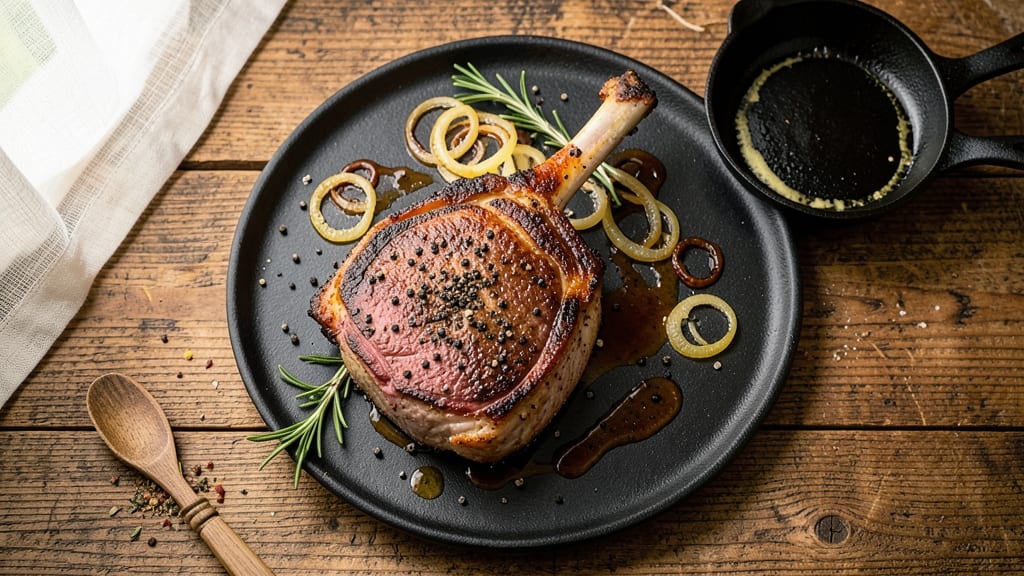
This bone-in pork shoulder blade steak transforms tough cuts into melt-in-your-mouth perfection with a crispy blade and tender, buttery interior. The secret lies in a two-step process: searing the blade to lock in juices, then braising until the meat falls apart at the touch of a fork.
I've perfected this method after years of testing, and it delivers restaurant-quality results at home without requiring a sous vide machine.
The magic happens when you start with a well-marbled blade—those fat streaks render down during braising, creating a sauce so rich it coats every bite.
High heat searing first develops a deep mahogany crust on the blade bone, while low-and-slow cooking tenderizes the meat to an ideal internal temperature of 203°F. This technique preserves moisture while building layers of flavor that transform simple pork into something extraordinary.
What you'll end up with is a steak that's crispy on the blade edges, fork-tender in the center, and infused with a natural sauce that makes every bite worth savoring.
The blade bone adds depth of flavor that can't be replicated with boneless cuts, and the braising process creates a texture that's impossible to resist. This is the kind of dish that turns weeknight dinners into memorable meals.
Serve with roasted root vegetables or creamy mashed potatoes to soak up every bit of that rich braising liquid. The presentation is simple but impressive—just plate the steak with the blade bone visible for that restaurant touch.
Here's how to achieve this perfect balance of textures and flavors in your own kitchen.
Ingredients for bone in pork shoulder blade steak
Four pounds of pork, a handful of spices, and patience for perfect braised richness.
| Ingredient | Amount | Notes |
|---|---|---|
| Bone-In Pork Shoulder Blade Steak 🍖 | 4 lb | Well-marbled, 1.5-2 inches thick |
| Kosher Salt 🧂 | 2 tbsp | Diamond Crystal preferred |
| Freshly Ground Black Pepper 🌶️ | 1 ½ tbsp | Freshly cracked for best flavor |
| All-Purpose Flour 🌾 | ½ cup | For dredging |
| Unsalted Butter 🧈 | 4 tbsp | Full-fat for richness |
| Yellow Onion 🧅 | 1 whole | Chopped into 1/2-inch pieces |
| Garlic Cloves 🧄 | 6 cloves | Smashed, not minced |
| Dried Thyme 🌿 | 1 tsp | Or 1 tbsp fresh |
| Dried Rosemary 🌿 | 1 tsp | Crushed between fingers |
| Beef Broth 💧 | 2 cups | Low-sodium preferred |
| Red Wine 🍷 | 1 cup | Bold, dry variety |
| Fresh Parsley 🌿 | ¼ cup | Chopped, for garnish |
The pork blade is non-negotiable here—look for thick-cut pieces with visible marbling at your local butcher shop. Costco or Whole Foods usually carry good options, but if you're at a regular grocery store, check the meat counter for 'pork blade steak' or 'pork shoulder blade.' The bone should be intact, and the fat cap should be at least 1/4-inch thick. If you can't find it pre-cut, ask the butcher to slice a 1.5-2 inch thick piece from a pork shoulder roast. Freshly cracked black pepper and Diamond Crystal kosher salt make all the difference—pre-ground pepper loses its punch fast.
No red wine? Substitute with extra beef broth and a splash of balsamic vinegar—it adds depth without the alcohol. Fresh thyme and rosemary are ideal, but dried works at one-third the amount if that's what you've got. The flour is just for dredging the meat before searing—don't skip it, but don't overdo it either. For the broth, low-sodium is key—we're building flavor, not masking it. If you're using a pre-made broth, Kirkland Signature or Pacific Foods are solid choices that won't overwhelm the dish. The onions and garlic can be prepped ahead and stored in the fridge for up to 3 days if you're planning this in advance.
This dish tastes even better the next day—plan ahead. The braised pork keeps for 4-5 days in the fridge, and the sauce freezes beautifully for 3 months if you want to make extra. I always portion the meat and sauce separately before freezing so I can reheat just what I need. To reheat, cover with foil and warm in a 350°F oven for 20-25 minutes. The blade bone adds incredible flavor to the sauce, so don't discard it—just remove it before serving if you prefer.
Why You'll Love This Recipe
- One-Pan Magic: I swear by this—just salt, pepper, and a quick flour dredge, then sear in butter. No extra pans, no fuss, just that golden crust forming while the bone renders its own rich flavor. (Yes, even on a Tuesday night.)
- Crispy-Creamy Payoff: That bone-in magic? The butter basting turns the edges into shatteringly crisp bits while the center stays juicy and tender. Honestly, the first bite makes me forget I didn’t spend hours prepping.
- Leftovers That Don’t Suck: Cold slices the next day? Still delicious—toss them in a sandwich with pickles or shred them into pasta. I’ve even repurposed them into tacos without breaking a sweat. (Between us, this is my lazy genius move.)
- Budget-Friendly Protein: A single pork shoulder blade feeds four for under $15 at my local butcher. The bone adds depth without cost, and the flour-butter step feels fancy but costs pennies. Solid way to stretch a meal without sacrificing flavor.
Step-by-step instructions for braised bone-in pork shoulder blade steak
Here's how to transform a tough cut into melt-in-your-mouth perfection with crispy edges and rich braising sauce.
Season and Sear the Pork Shoulder Blade Steak
Pat the 4 lb bone-in pork shoulder blade steak completely dry with paper towels—this is crucial for crispy edges later. In a small bowl, mix the 2 tbsp kosher salt and 1.5 tbsp freshly ground black pepper, then rub it all over the steak, including the bone side. Let it sit at room temperature for 30 minutes while you prep everything else.
Heat a large oven-safe skillet over medium-high heat. Add 2 tbsp of the 4 tbsp unsalted butter and let it melt completely. Place the steak in the skillet fat-side down and sear for 4-5 minutes until the fat renders and the skin becomes golden brown. Flip carefully and sear the other side for another 4-5 minutes. The steak should have a deep caramelized crust—this is your flavor foundation.
Build the Braising Liquids and Aromatics
Remove the steak from the skillet and set it aside. In the same skillet (don't wipe it clean—those browned bits are pure flavor), add the chopped 1 whole yellow onion and smashed 6 cloves garlic. Cook over medium heat for 3-4 minutes until the onions soften and become translucent. Stir in the 1 tsp dried thyme and 1 tsp dried rosemary, letting the spices toast for 30 seconds until fragrant.
Deglaze the skillet with the 1 cup red wine, scraping up all those delicious browned bits from the bottom. Let it reduce by half—this concentrates the flavors. Then add the 2 cups beef broth and bring to a gentle simmer. The liquid should just barely cover the bottom of the skillet, not drown the steak.
Braise Until Fork-Tender with Crispy Edges
Return the steak to the skillet, bone-side up. Cover with a tight-fitting lid and transfer to a preheated 325°F oven. Braise for 2 hours, then carefully flip the steak and continue braising for another 1-2 hours until the meat is fork-tender. The blade bone should pull out cleanly, and the meat should be falling apart easily.
Here's the secret for crispy edges: After the initial 2 hours, increase the oven temperature to 425°F and uncover the skillet. Let the steak crisp for 15-20 minutes until the edges are deep golden brown and the sauce has reduced to a glossy consistency. This high-heat finish caramelizes the natural sugars in the meat, creating that coveted crispy texture.
Rest and Finish with Butter and Parsley
Remove the steak from the oven and transfer it to a cutting board. Tent loosely with foil and let it rest for 15 minutes. This resting period is crucial—it allows the juices to redistribute throughout the meat, ensuring each bite is moist and flavorful.
While the steak rests, remove the blade bone carefully and discard it. Skim any excess fat from the braising liquid, then return the skillet to medium heat. Add the remaining 2 tbsp unsalted butter and stir until melted into the sauce. Remove from heat and stir in the 0.25 cup chopped fresh parsley. Taste and adjust seasoning with additional salt and pepper if needed.
Serve with Rich Braising Sauce
Slice the steak against the grain into ½-inch thick portions. Spoon the buttery braising sauce over the top and serve immediately. The contrast between the crispy edges, tender meat, and rich sauce makes every bite unforgettable. Pair with roasted potatoes or crusty bread to soak up all that delicious flavor.
Pro Tips For Making Bone In Pork Shoulder Blade Steak
- CRANK THE HEAT FIRST: Pat the steak dry, then sear it over ripping-hot cast iron or stainless steel for 3-4 minutes per side before touching anything else. I used to lower the heat to "medium-high" and ended up with a sad, greasy mess instead of that deep, caramelized crust. The first minute is the only time you’ll get that golden, crackling crust—don’t skimp.
- SALT THE BONE: Generously coat the bone and the meat with kosher salt at least 30 minutes before cooking. The bone soaks up flavor like a sponge, and skipping it means your steak tastes like it’s missing half its soul. (Yes, even if you’re impatient like me.)
- DON’T PACK THE PAN: After searing, add just enough butter to coat the bottom—about 2 tablespoons—and let it foam before tossing in flour. Crowding the pan with too much butter or flour turns your sauce into a greasy sludge. I learned this the hard way when I dumped in half a stick and ended up with a sad, watery mess.
- REST UNDER FOIL: Transfer the steak to a warm plate, loosely tent it with foil, and let it rest for 5-10 minutes before slicing. Cutting it too soon sends all the juices pooling on your cutting board instead of staying where they belong—in the meat. (Your future self will thank you.)
Flavor customization for this dish
Smoky Chipotle Heat
For a smoky kick, add 2-3 chipotle peppers in adobo (minced) to the braising liquid along with the red wine. This transforms the dish into a Mexican-inspired version with deep, smoky undertones.
I like to use Penzeys brand for consistent quality. Serve with lime wedges and avocado slices for a fresh contrast. 🌶️
Sweet and Tangy Glaze
Create a caramelized finish by adding ½ cup apple cider and 2 tbsp brown sugar to the braising liquid after the initial 2 hours. Simmer uncovered for the final 15 minutes at 425°F to develop a glossy, slightly sweet glaze.
This works beautifully with a side of roasted Brussels sprouts for a sweet-savory balance.
Herb-Infused Variations
Swap the thyme and rosemary for 1 tbsp fresh sage and 1 tsp fennel seeds for an Italian-inspired twist. The fennel adds a subtle anise-like note that pairs perfectly with the pork's richness. I find Trader Joe's fennel seeds work well for this. Garnish with extra fresh herbs before serving.
Spicy Cajun Style
For a Louisiana-inspired version, add 1 tbsp Cajun seasoning (like Tony Chachere's) to the flour dredge before searing. Deglaze with ½ cup beer (like Abita Amber) instead of wine, and finish with 1 tsp smoked paprika in the braising sauce.
Serve with cornbread and collard greens for a full Southern meal.
Garlic and White Wine
Replace the red wine with 1 cup dry white wine and add 4 extra smashed garlic cloves for a French-inspired approach. The white wine keeps the sauce lighter while enhancing the pork's natural sweetness.
I recommend Sauvignon Blanc from New Zealand for this variation. Garnish with fresh thyme sprigs for an elegant touch.
Honey-Mustard Finish
For a sweet-tangy twist, stir 1 tbsp Dijon mustard and 1 tbsp honey into the braising sauce during the final 15 minutes of crisping. The mustard adds depth while the honey caramelizes beautifully. This pairs wonderfully with roasted carrots and a simple green salad. 🍯
Nutrition facts
Frequently asked questions
Why does the pork shoulder blade need to be bone-in for this recipe?
The blade bone adds incredible depth of flavor to the braising liquid while cooking. As the meat tenderizes, the bone infuses the sauce with rich, meaty notes that boneless cuts simply can't replicate. Plus, the bone helps stabilize the meat during braising, preventing it from curling up in the liquid.
Can I make this recipe without an oven-safe skillet?
Yes, but you'll need to transfer the steak to a baking dish after searing. Use a heavy-bottomed Dutch oven for best results. Sear the steak in your skillet, then carefully transfer it to the Dutch oven with all the braising liquids. The key is maintaining that deep caramelized crust from the initial sear.
How do I know when the pork is fully tender?
The meat should be fork-tender with no resistance when pierced—it should fall apart easily. Check by inserting a meat thermometer into the thickest part (avoiding the bone). The internal temperature should reach 203°F. If it's not tender enough after 3 hours, continue braising for another 30 minutes.
What's the best way to reheat leftovers?
For best results, cover the steak with foil and reheat in a 350°F oven for 20-25 minutes. The slow heat prevents drying out the meat. For quick reheating, warm in a skillet over medium-low heat with a splash of beef broth to keep it moist. Never microwave—it makes the meat rubbery.
Can I substitute pork shoulder for pork blade steak?
Pork shoulder works but requires adjustments. Cut it into 1.5-2 inch thick pieces with the bone intact if possible. The cooking time will be longer—expect 3-4 hours total braising time. The fat content is higher, so you may need to skim more fat from the sauce during reheating.