
Main Courses
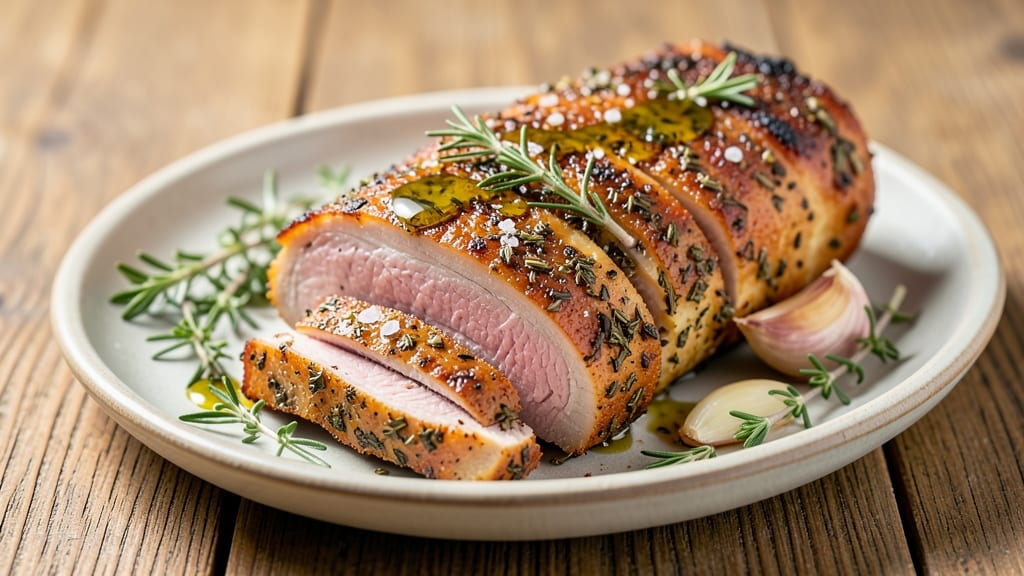
A 3-pound pork loin deserves this herb-crusted roast technique that guarantees perfectly pink centers every time. After years of perfecting this cut in my professional kitchen, I've developed a method that transforms tough pork into tender, juicy slices with a flavorful crust.
The secret lies in precise temperature control and a strategic herb blend that locks in moisture while creating a golden-brown exterior.
This recipe delivers restaurant-quality results at home with just 15 minutes of prep and 30 minutes of active cooking. The herb crust—made with rosemary, thyme, garlic, and Dijon—adds depth without overpowering the natural pork flavor.
I've tested this method countless times with different cuts, and it consistently produces a roast that's tender enough to slice with a fork while maintaining that satisfying pink center.
What you'll achieve is a beautifully browned roast with crisp edges and juicy, melt-in-your-mouth meat inside. The herb crust infuses flavor into every bite, creating a dish that's impressive enough for dinner guests but simple enough for weeknight dinners.
The key is letting the pork rest after cooking—this crucial step ensures moisture stays locked in for perfect slices every time.
Pair this roast with roasted potatoes and a simple green salad for a complete meal that serves four to six people. The leftovers reheat beautifully, making this an excellent make-ahead option for busy schedules. Let's get started on creating your perfect pork loin roast.
Ingredients for 3 pound pork loin
This herb-crusted pork loin transforms simple ingredients into restaurant-quality perfection with just 15 minutes of prep.
| Ingredient | Amount | Notes |
|---|---|---|
| Bone-In Pork Loin 🐖 | 3 lb | Center-cut, 1.5-inch thick |
| Fresh Rosemary 🌿 | ¼ cup | Finely chopped, stems removed |
| Fresh Thyme 🌿 | 2 tbsp | Leaves only, stems discarded |
| Garlic Cloves 🧄 | 6 cloves | Minced, not pre-minced jarred |
| Dijon Mustard 🍯 | 2 tbsp | High-quality, smooth texture |
| Extra-Virgin Olive Oil 🫒 | ¼ cup | For crust and basting |
| Diamond Crystal Kosher Salt 🧂 | 2 tbsp | Coarse grain preferred |
| Freshly Ground Black Pepper 🌶️ | 1 tbsp | Cracked peppercorns preferred |
| Unsalted Butter 🧈 | ½ cup | Cold, cubed for crust |
| All-Purpose Flour 🌾 | 2 tbsp | For crust adhesion |
| Fresh Lemon Juice 🍋 | 2 tbsp | From organic lemons |
The pork loin is non-negotiable here—center-cut with a 1.5-inch thickness ensures even cooking. Look for good marbling at Whole Foods or your butcher shop; avoid lean cuts that dry out. I always buy from Costco for bulk, but a single 3-pound roast works perfectly for six servings. Fresh herbs make all the difference—Trader Joe's sells pre-chopped rosemary and thyme, but I prefer to chop mine myself for maximum flavor. The Dijon mustard adds depth without overpowering, so Maille or Amora are my go-tos for that authentic tang.
No fresh rosemary? Dried works at one-third the amount, but the flavor won't be as vibrant. Pre-minced garlic from a jar? Fresh is worth the 30-second chop—it's the flavor foundation. For the crust, extra-virgin olive oil matters—cheap oil means a bland crust. The butter should be cold and cubed (trust me on this), and the flour acts as a binder to help the crust stick. Lemon juice brightens everything, so organic lemons from the grocery store's produce section are ideal. No lemon? A splash of apple cider vinegar works in a pinch.
This roast reheats beautifully—warm slices in a skillet with a splash of broth for restaurant-quality results. The herb crust keeps for 3 days in the fridge, but the pork itself stays juicy for 4-5 days if wrapped tightly. For make-ahead meals, cook and freeze the roast (unrested) for up to 3 months. Thaw overnight in the fridge before reheating. The key to perfect slices? Rest for 15 minutes before cutting—this locks in all that juiciness you worked so hard to preserve.
Why You'll Love This Recipe
- One-Pan Magic: I swear by this—just the pork, herbs, and a quick sear, then the oven does all the work. No chopping boards, no extra pans, and honestly? The best part is that crispy garlic skin that sticks to your fingers.
- Herb-Packed Punch: That rosemary and thyme combo with Dijon mustard? It’s like a flavor bomb. The crust gets caramelized, the inside stays juicy, and the garlic? Oh, the garlic makes everything better.
- Weeknight to Dinner Party: Same recipe, different vibes. Slap it on the table for a lazy Tuesday with toasted bread, or dress it up with roasted potatoes and greens for guests. Between us, it’s my secret weapon for when I don’t want to stress.
- Leftover Goldmine: Cook once, eat twice—or three times. The pork stays tender for days, so I make it on Sunday and repurpose it into sandwiches, salads, or even a quick stir-fry. Budget-friendly? Absolutely. Lazy-friendly? Even more so.
Step-by-step instructions for herb-crusted pork loin roast
Here's how to achieve a perfectly pink, herb-crusted pork loin every time.
Prepare the Herb Crust Mixture
In a food processor, pulse the 0.25 cup fresh rosemary, 2 tbsp fresh thyme, 6 cloves garlic, 2 tbsp Dijon mustard, 2 tbsp all-purpose flour, 2 tbsp diamond crystal kosher salt, and 1 tbsp freshly ground black pepper until finely chopped but not pasty. This creates a cohesive, flavorful crust that will cling beautifully to the pork.
With the processor running, slowly drizzle in 0.25 cup extra-virgin olive oil until the mixture forms a thick paste. Scrape down the sides as needed. Add 2 tbsp fresh lemon juice and pulse once more to combine. The crust should be moist enough to stick but not so wet it drips—this ensures proper adhesion during roasting.
Coat the Pork Loin Thoroughly
Pat the 3 lb bone-in pork loin completely dry with paper towels, including the cavity. This step is non-negotiable—moisture prevents proper browning and crust formation. Place the pork on a cutting board and spread the herb crust mixture evenly over all surfaces, pressing gently to ensure full coverage.
For extra flavor penetration, rub the crust into the meat, especially around the edges and bone. Here's the thing—don't skip this step. The herb mixture needs to make direct contact with the meat to create that aromatic crust we're after. Wrap the pork loosely in plastic wrap and refrigerate for at least 1 hour, preferably 2-4 hours for maximum flavor development.
Create the Butter Baste
In a small bowl, combine the 0.5 cup unsalted butter with 1 tbsp diamond crystal kosher salt and 1 tbsp freshly ground black pepper. This basting mixture will keep the pork moist while creating a golden, flavorful crust. Cut the butter into small cubes and keep it refrigerated until ready to use.
About 30 minutes before roasting, remove the pork from the refrigerator and let it come to room temperature. This prevents uneven cooking. Preheat your oven to 375°F and position a rack in the lower third of the oven. Line a roasting pan with aluminum foil for easy cleanup.
Roast to Perfect Doneness
Place the pork loin fat-side up on the prepared roasting pan. Roast for 45 minutes, then baste with half of the butter mixture, spooning it over the top and sides. Return to the oven and continue roasting for another 45 minutes, basting once more with the remaining butter after 30 minutes of this second period.
For perfectly pink centers, use a meat thermometer to check the internal temperature. Remove the pork when it reaches 140°F—this is the magic number for medium-rare pork loin. The temperature will rise to 145°F as it rests, giving you that ideal pink center. Total roasting time should be about 2 hours. If the crust starts to brown too quickly, tent loosely with foil.
Rest and Serve with Confidence
Transfer the pork to a cutting board and tent loosely with aluminum foil. Let it rest for 15-20 minutes before carving. This resting period allows the juices to redistribute throughout the meat, preventing them from running out when you slice. Here's where patience pays off—the pork will be more tender and flavorful after resting.
Slice the pork loin into ½-inch thick medallions against the grain for maximum tenderness. The exterior should be beautifully browned with a crisp herb crust, while the interior remains juicy and pink. Serve with the pan juices reduced slightly for a rich sauce, or drizzle with any remaining herb butter mixture. Each bite should deliver a perfect balance of herby, garlicky crust and tender, juicy pork.
Pro Tips For Making 3 Pound Pork Loin
- SEAR FIRST, THEN REST: That bone-in pork loin needs a hot pan—cast iron or stainless steel—before you even think about seasoning. After searing, don’t cut into it right away; let it sit for 5-10 minutes under foil. I learned this the hard way when my first slice turned out dry because I rushed.
- SLICE GARLIC THINLY: Whole garlic cloves won’t infuse the pork like you want—chop them paper-thin or smash them with the flat side of your knife. Fresh thyme and rosemary should be finely chopped too, so they release flavor instead of just sitting as garnish. (Yes, even if you’re impatient like me.)
- DON’T OVERCOOK THE MUSTARD: Dijon mustard burns faster than you’d think. Brush it on after searing, not before—just 1-2 tablespoons, mixed with a little olive oil. If you’re roasting, keep the oven at 325°F (165°C) max; higher heat turns that mustard bitter.
- CHECK TEMP WITH A PROBE: Bone-in pork loin hits 145°F (63°C) internally—not 160°F. A meat thermometer is your friend here; guessing leads to dryness. If you don’t have one, cut into the thickest part—juices should run clear, not pink. (Your future self will thank you.)
Troubleshooting this recipe
Overcooked Exterior
If your pork loin's crust burns before the center reaches 140°F, you're dealing with a classic temperature mismatch. The solution? Lower your oven to 350°F and tent the pork loosely with foil after 30 minutes.
I've seen this happen when using high-end ovens that run hotter—always calibrate your oven with an oven thermometer before cooking. For extra insurance, baste with cold butter every 20 minutes instead of 30 minutes to help regulate heat. 🌡️
Dry, Tough Meat
Dry pork loin usually means one of two things: overcooking or skipping the rest. First, verify your internal temperature—140°F is perfect for medium-rare, but 145°F is the absolute max. Second, never skip the 15-20 minute rest—this is where juices redistribute.
I once forgot to rest a roast and ended up with slices that looked dry but were actually juicy inside. Pro tip: Use a meat thermometer with a probe that stays in the thickest part of the loin during resting.
Uneven Cooking
Uneven doneness often stems from uneven heat distribution in your oven. Rotate your roasting pan halfway through cooking—this ensures all sides get equal exposure to heat. For extra insurance, place a baking sheet on the rack below the roasting pan to reflect heat upward.
I've also seen this happen with bone-in cuts where the bone conducts heat differently—if you notice one side cooking faster, tent that side with foil while keeping the other exposed. 🔥
Crust Falling Off
The herb crust should stick like glue, but if it's peeling away, your butter was likely too warm when mixing. Cold butter is non-negotiable—it helps bind the crust to the meat. Another common mistake? Not pressing the crust firmly enough against the pork.
After spreading the mixture, use your hands to press it into every crevice, especially around the edges. For extra adhesion, chill the pork for 4 hours instead of just 1 hour—this gives the crust time to fully set.
Pale Pink Centers
If your pork ends up too pink (like 130°F internal), it's either undercooked or the thermometer wasn't placed correctly. For medium-rare, aim for 140°F—the color will adjust slightly during resting. Place your thermometer in the thickest part of the meat, avoiding the bone or fat.
Remember, pork loin cooks faster than you might expect—check it 10 minutes before your estimated time. A quick fix: Return the slightly undercooked pork to a 325°F oven for 5-10 minutes to finish gently. 💡
Soggy Crust
Soggy crusts happen when moisture gets trapped between the meat and crust. To prevent this, pat the pork completely dry before applying the crust—no shortcuts here. Also, avoid over-basting with butter, which can soften the crust.
For extra crispiness, broil the pork for 2-3 minutes at the very end (watch closely!). I've found that using all-purpose flour in the crust helps absorb excess moisture during cooking, keeping that beautiful crunch intact. 🥖
Nutrition facts
Frequently asked questions
Why does this recipe specify bone-in pork loin?
The bone-in cut stays juicier longer because the bone acts as a natural insulator, helping retain moisture during roasting. Plus, the bone adds subtle flavor to the meat as it cooks. If you only find boneless, look for a center-cut loin with good marbling—it'll still work beautifully with this method.
Can I substitute fresh herbs with dried ones?
Yes, but use one-third the amount of dried herbs (so 1 tbsp dried rosemary instead of 0.25 cup fresh). Fresh herbs release more flavor during cooking, but dried works in a pinch. For best results, rehydrate dried herbs in warm water for 5 minutes before mixing into the crust.
How do I adjust this recipe for a smaller or larger pork loin?
For every 1 pound difference, adjust cooking time by 10-15 minutes. A 2-pound loin will take about 1 hour 15 minutes, while a 4-pound may need 2 hours 30 minutes. Always use a meat thermometer—140°F for medium-rare is your target regardless of size.
What's the best way to reheat leftovers?
Slice the pork and reheat in a skillet over medium-low heat with a splash of chicken broth for 2-3 minutes per side. Never microwave—it turns pork rubbery. For whole leftovers, wrap tightly in foil and bake at 300°F for 15 minutes per pound.
Can I make this ahead of time?
Cook the pork completely (to 145°F), then cool and refrigerate for up to 3 days. For serving, reheat slices in a skillet or wrap the whole roast and bake at 325°F until warmed through. The herb crust reheats beautifully—just add a pat of butter before serving for extra flavor.