
Main Courses
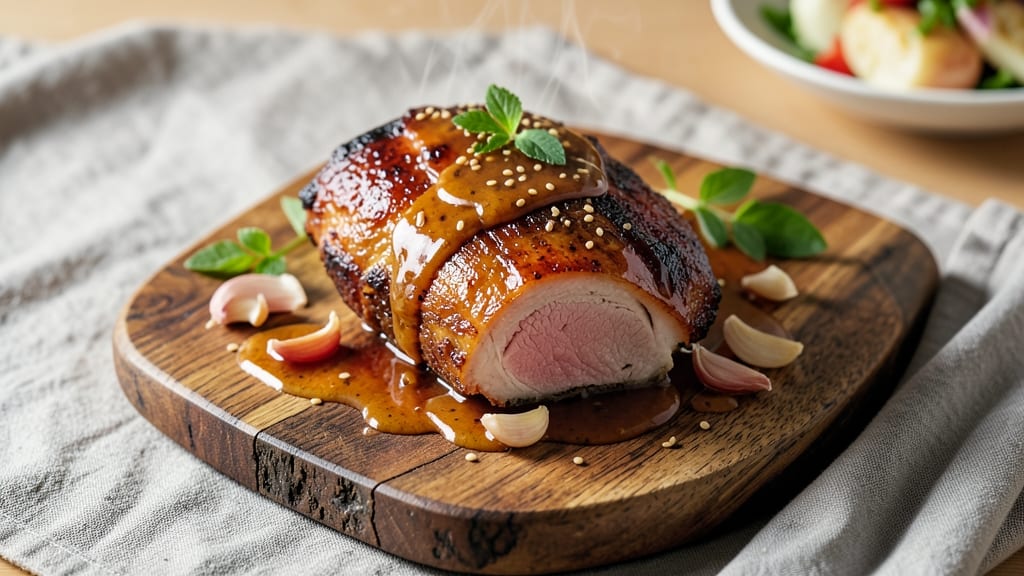
This miso pork roast recipe delivers restaurant-quality results with a glaze that caramelizes into sweet, umami perfection—exactly the kind of dish that transforms a weeknight dinner into something special. I developed this technique after years of perfecting whole-pig roasts in my Atlanta kitchen, where the balance of salty, sweet, and savory flavors is critical. The miso doesn’t just season the pork; it creates a deep, complex crust that locks in moisture while delivering that signature caramelized finish.
The secret lies in the marinade and roasting method. First, the pork is coated in a blend of white and red miso, honey, and aromatics, which tenderizes the meat while building layers of flavor.
Then, during roasting, the glaze caramelizes into a sticky, glossy crust that’s both sweet and deeply savory—a texture that’s impossible to resist. This isn’t just a pork roast; it’s a showstopper that pairs beautifully with roasted vegetables or a simple green salad.
What you’ll achieve is tender, juicy pork with a glaze so rich and caramelized it’ll have everyone asking for seconds. The miso’s umami depth elevates the dish beyond ordinary roasted pork, while the honey adds just enough sweetness to balance the saltiness.
It’s the kind of meal that feels like a celebration, even on a casual night in.
Perfect for holidays, family dinners, or when you want to impress without spending hours in the kitchen. The technique is straightforward, but the results are anything but ordinary. Let’s get started—your taste buds will thank you.
Ingredients for miso pork roast
These 14 ingredients create a restaurant-worthy miso pork roast with caramelized perfection.
| Ingredient | Amount | Notes |
|---|---|---|
| Pork Shoulder Roast 🐖 | 3 lb | Bone-in for flavor, trimmed of excess fat |
| White Miso Paste 🍶 | ½ cup | High-quality, smooth texture preferred |
| Red Miso Paste 🍶 | ¼ cup | For deeper umami richness |
| Honey 🍯 | ¼ cup | Wildflower or clover preferred |
| Garlic Cloves 🧄 | 8 cloves | Peeled and smashed for intensity |
| Fresh Ginger 🌿 | 2 tbsp | Finely grated, aromatic |
| Soy Sauce 🍶 | ¼ cup | Low-sodium preferred |
| Sesame Oil 🫒 | 1 tbsp | Toasted sesame preferred |
| Olive Oil 🫒 | 2 tbsp | For searing the pork |
| Brown Sugar 🍚 | 2 tbsp | Light or dark, packed |
| Apple Cider Vinegar 🍎 | 1 tbsp | For tangy balance |
| Black Peppercorns 🌶️ | 1 tsp | Freshly cracked preferred |
| Fresh Rosemary 🌿 | 1 tbsp | Chopped, for aromatic depth |
| Fresh Thyme 🌿 | 1 tbsp | Chopped, for herbal notes |
The pork shoulder is the star—bone-in for flavor, bone-less for convenience. Costco or local butchers usually have the best cuts, but any grocery store pork shoulder works if it's well-marbled. Look for a roast that's about 3 pounds—big enough to feed a crowd but not so large it's overwhelming for a weeknight. The miso pastes? Miso Master or Hikari brands are my go-tos, but any high-quality miso will do. The white miso adds sweetness, while the red brings that deep umami punch. Don't skimp here—this is what makes the dish sing.
No red miso? Swap in an extra 2 tbsp of white miso plus 1 tsp soy sauce for a similar effect. Sesame oil out of stock? Avocado oil works in a pinch, though it won't have the same nutty depth. Fresh ginger too spicy? Use 1 tbsp instead of 2 tbsp—you can always add more later. The honey should be real, not that fake corn syrup stuff. Wildflower honey adds floral notes that pair beautifully with the miso. For the aromatics, fresh herbs are ideal, but dried thyme at half the amount gets you close if you're in a bind. The apple cider vinegar adds brightness—white vinegar works too, but you'll lose that subtle apple flavor.
This roast tastes even better the next day, so make extra if you can. Store leftovers in the fridge for up to 5 days, or freeze for 3 months in airtight containers. The glaze hardens when chilled, so reheat gently with a splash of water to restore that sticky perfection. For serving, I like to slice it against the grain and arrange on a platter with the caramelized juices spooned over the top—instant crowd-pleaser. The pork reheats beautifully, so plan ahead for leftovers.
Why You'll Love This Recipe
- Umami Bomb: That combo of white and red miso? It’s like a flavor explosion—salty, sweet, and deep all at once. The honey ties it together so the pork stays juicy, and the garlic? Oh, it’s there, but in the best way.
- Leftovers Win: This roast tastes even better the next day, especially when sliced thin for sandwiches or tossed into fried rice. I make a big batch and eat it for three meals—no takeout needed.
- Budget Hero: Pork shoulder is cheap, and a little miso goes a long way. I stretch it into lunches, dinners, and even a quick breakfast scramble. Feeds four for under $15, and I’m always full.
Step-by-step instructions for miso pork roast
Here's the exact method I use to create a perfectly balanced miso glaze that caramelizes beautifully while keeping the pork tender and juicy.
Prepare the Miso Glaze
In a medium saucepan, combine the 0.5 cup white miso paste, 0.25 cup red miso paste, 0.25 cup honey, 0.25 cup soy sauce, 2 tbsp brown sugar, 1 tbsp apple cider vinegar, 1 tbsp sesame oil, 8 smashed garlic cloves, and 2 tbsp finely grated fresh ginger. Place the saucepan over medium-low heat and stir constantly for 5-7 minutes until the mixture thickens slightly and becomes smooth.
Here's the thing—you want to see the miso pastes fully incorporate without burning. The mixture should smell rich and aromatic with deep umami notes. If it starts to bubble vigorously, reduce the heat immediately. Once it reaches a thick, syrupy consistency, remove it from the heat and let it cool completely. This glaze is the soul of your dish, so don't rush this step.
Sear the Pork Shoulder
While the glaze cools, heat 2 tbsp olive oil in a large oven-safe skillet over medium-high heat until shimmering. Pat the 3 lb pork shoulder roast dry with paper towels—this is crucial for that perfect crust. Place the pork in the skillet, fat-side down, and sear for 5-6 minutes until the fat begins to render and the skin turns golden brown.
Flip the pork and sear the other side for another 4-5 minutes. You'll know it's ready when the exterior develops a deep golden crust and the internal temperature reaches about 140°F when measured with a meat thermometer. This initial sear locks in the juices and creates that irresistible caramelized exterior we're after. Don't be tempted to sear longer—we want to finish cooking in the oven.
Coat and Roast the Pork
Remove the pork from the skillet and place it fat-side up on a wire rack set inside a roasting pan. This rack positioning is key—it allows air to circulate all around the pork for even cooking. Using a pastry brush, generously coat the pork with the cooled miso glaze, making sure to get it on all sides, including the cut edges. The glaze should look glossy and well-adhered.
Transfer the roasting pan to a preheated 325°F oven and roast for 2 hours. Here's where patience pays off—the low temperature ensures the pork cooks slowly and evenly, allowing the glaze to caramelize beautifully while keeping the meat tender. After 2 hours, increase the oven temperature to 400°F and continue roasting for another 20-25 minutes until the glaze is deeply caramelized and the internal temperature reaches 195-203°F.
Rest and Carve
Once the pork reaches the perfect internal temperature, remove it from the oven and tent loosely with aluminum foil. Let it rest for at least 30 minutes—this resting period is absolutely critical. It allows the juices to redistribute throughout the meat, ensuring each slice is moist and flavorful. During this time, you can use the drippings from the roasting pan to make a quick pan sauce if you like.
After resting, carve the pork against the grain into ½-inch thick slices. The meat should be fork-tender with a beautiful caramelized glaze that's slightly sticky and rich. Serve immediately with the glaze spooned over the top, and don't forget to garnish with 1 tbsp chopped fresh rosemary and 1 tbsp chopped fresh thyme for that final aromatic touch. Each bite should deliver a perfect balance of sweet, salty, and umami flavors.
Pro Tips For Making Miso Pork Roast
- BROWN THE ROAST FIRST: Don’t skip the sear—get that pork shoulder screaming hot in a dry pan for 5-7 minutes per side before braising. I learned this the hard way: skipping it means bland, gray meat instead of deep, caramelized flavor that cuts through the miso’s saltiness.
- COMBINE MISO PASTES LAST: Mix white and red miso after the pork has cooked down in the liquid, not at the start. The red miso burns easily, and adding it too soon turns your glaze into a bitter sludge. Stir in the last 10 minutes—just enough time to coat the meat without overpowering it.
- DON’T DROWN THE GARLIC: Smash those garlic cloves flat with the side of your knife before tossing them in—whole cloves stay stubbornly intact and turn to mush. If you’re in a rush, minced garlic works, but crushed cloves give that real garlic punch without the texture nightmare.
- USE HONEY SPARINGLY: Start with 1 tablespoon honey, not the 3-4 the recipe might call for. Pork shoulder is already fatty, and too much honey makes the sauce cloyingly sweet. Taste as you go—you can always add more, but you can’t take it out. (Yes, even if you’re impatient like me.)
Essential equipment for great miso pork roast
Oven Essentials
You’ll need an oven that maintains steady temperatures—I swear by my Lodge cast iron Dutch oven for searing and finishing, but a stainless steel roasting pan works too. Preheat your oven to 325°F for the slow cook, then crank it to 400°F for caramelization.
A meat thermometer is non-negotiable; I use my ThermoWorks Smoke to track internal temps precisely. 🌡️
Searing Tools
For that golden crust, a heavy-bottomed skillet (like my All-Clad Stainless) is ideal—it handles high heat without warping. If you don’t have one, a large cast iron skillet (like my Lodge 12-inch) works perfectly.
Heat it until the oil shimmers before searing the pork. A pastry brush (I love OXO Good Grips) helps spread the glaze evenly after searing.
Miso Glaze Gear
Thickening the miso glaze requires medium-low heat and constant stirring. A medium saucepan with sloped sides prevents spills, and a wooden spoon (like OXO’s silicone-coated version) won’t scratch your pan. For cooling, I place the glaze in a heatproof bowl on a wire rack—this prevents condensation from diluting it.
Resting & Carving
Resting the pork demands patience—use aluminum foil loosely tented over the meat to retain heat. A sharp carving knife (I use a Victorinox 8-inch) slices against the grain for tender bites.
For garnish, tweezers help place fresh rosemary and thyme precisely. Pro tip: Let the glaze harden slightly before slicing for cleaner cuts. ✨
Optional Upgrades
Want extra caramelization? A broiler pan (like All-Clad’s) lets you finish under the broiler for 2-3 minutes at the end. For hands-off roasting, a smart oven thermometer (like Meater) ensures perfect temps.
And if you’re serving a crowd, a large platter (I use Le Creuset stoneware) keeps everything warm while you carve.
Nutrition facts
Frequently asked questions
Can I use chicken or turkey instead of pork?
While this recipe is designed specifically for pork shoulder, you can adapt it for chicken thighs or turkey breast with adjustments. Use a 3 lb cut and reduce roasting time to 1.5 hours at 325°F followed by 15 minutes at 400°F. The miso glaze will still caramelize beautifully, but the meat will be less fatty and more delicate.
How do I prevent the glaze from burning?
Watch the oven closely during the final 20-25 minutes at 400°F—this is when caramelization happens fastest. If the glaze darkens too quickly, tent the pork loosely with aluminum foil. For extra insurance, brush on a thin layer of glaze just before the final broil stage to create a protective seal.
What's the best way to reheat leftovers?
Reheat sliced pork in a skillet over medium-low heat with 1 tbsp water or broth to restore moisture. Cover for 3-5 minutes until warmed through. For whole roasts, wrap tightly in foil and bake at 300°F for 1 hour. The glaze may harden slightly but will soften with heat.
Can I make this in a slow cooker?
Yes! Sear the pork first, then transfer to a slow cooker with the glaze. Cook on low for 6-8 hours or high for 4-5 hours. Finish with 15 minutes in a 400°F oven to caramelize. The texture will be more tender but less crispy than oven-roasted.
What sides pair best with this dish?
For a complete meal, try roasted sweet potatoes, steamed bok choy, or coconut rice. The umami richness of the pork pairs beautifully with bright, acidic flavors—think pickled vegetables or a simple arugula salad with lemon vinaigrette.