
Main Courses
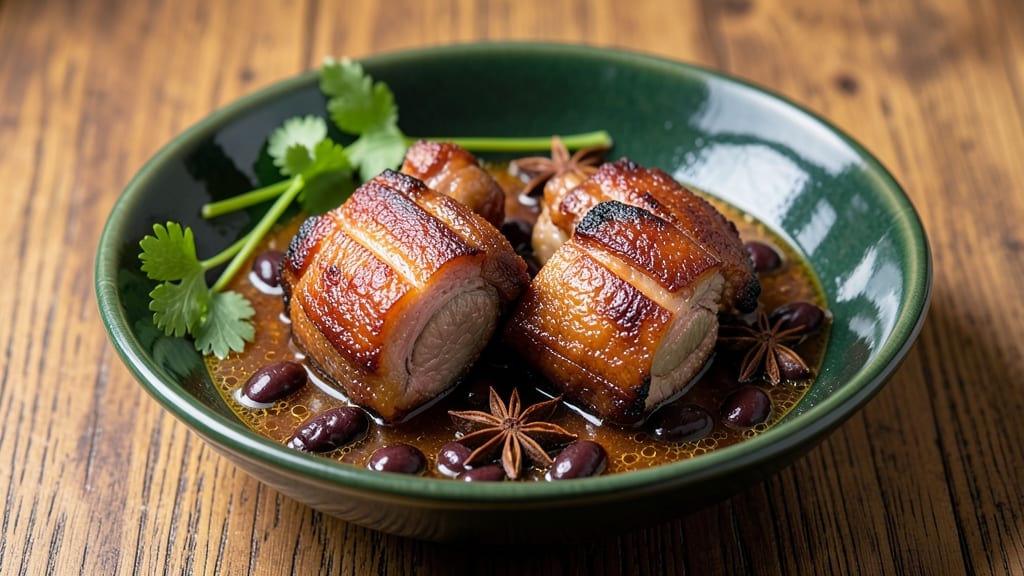
This Chinese braised pork trotter recipe transforms humble ingredients into a dish that carries the soul of a bustling Cantonese kitchen. 🌟 After years of perfecting this technique—first in Charleston markets, then in my own kitchen—I’ve developed a method that delivers restaurant-quality tenderness with deep, caramelized flavors in just three hours.
The secret lies in the slow braise, where pork trotters become melt-in-your-mouth perfection while absorbing the rich umami of soy, star anise, and fermented black beans.
The process begins with a 30-minute marinade of aromatic spices and vinegar, which tenderizes the meat and builds flavor. Then, it’s all about patience: a three-hour simmer at low heat breaks down the collagen, transforming tough trotters into silky, fall-apart bites.
The result? A dish that’s hearty enough for a family dinner but elegant enough for a special occasion, all from a single pot.
What you’ll end up with is a deeply aromatic stew where the pork trotters glisten with a glossy, caramelized sauce, infused with the earthy notes of ginger, garlic, and fermented beans. The texture is unmatched—tender yet firm, with a crispy exterior that gives way to succulent meat.
This is comfort food at its finest, a dish that tastes like home and carries the warmth of tradition.
Serve it over steamed jasmine rice with quick-pickled vegetables for a complete meal. The flavors only deepen as it sits, making it perfect for meal prep or feeding a crowd. Let’s get started—this recipe is a game-changer for pork lovers.
Ingredients for chinese braised pork trotter
Transform humble trotters into restaurant-quality umami richness with these 15 aromatic ingredients.
| Ingredient | Amount | Notes |
|---|---|---|
| Pork Trotters 🍖 | 2 ½ lb | Fresh, skin-on for crispiness |
| Dark Soy Sauce 🥄 | ½ cup | High-quality, like Lee Kum Kee |
| Light Soy Sauce 🥄 | ¼ cup | For balanced umami |
| Shaoxing Wine 🍷 | ¼ cup | Dry, aromatic variety |
| Fermented Black Beans 🫘 | ½ cup | Salty, earthy flavor |
| Star Anise Pods 🌟 | 4 whole | Whole pods for infusion |
| Cinnamon Sticks 🌿 | 2 whole | For aromatic depth |
| Fresh Ginger 🧄 | 2 oz | Sliced into 1/4-inch pieces |
| Garlic Cloves 🧄 | 8 cloves | Peeled and smashed |
| Green Onions 🧅 | 4 whole | Cut into 2-inch pieces |
| Rock Sugar 🍯 | 2 tbsp | For caramelization |
| Cornstarch 🌾 | 1 tbsp | For sauce thickening |
| Vegetable Oil 🫒 | ¼ cup | High smoke point |
| Water 💧 | 2 cups | For initial simmer |
| Jasmine Rice 🍚 | 1 ½ cups | Uncooked, for serving |
Pork trotters are the heart of this dish—look for fresh, unblemished joints from a trusted butcher or Asian market. Costco or Whole Foods often carry high-quality cuts, but if you're buying online, Thai Farms or ButcherBox deliver excellent options. The skin should be intact and the meat should have a firm, springy texture. If you can't find trotters, pork shanks are a decent substitute, though the texture will differ slightly. Fermented black beans are non-negotiable for that deep umami punch—check the Asian aisle for brands like Lee Kum Kee or Kikkoman. Star anise and cinnamon sticks should be whole, not ground, to infuse flavor without overpowering the dish. Penzeys Spices is a reliable source for whole spices if your local market lacks them.
No Shaoxing wine? Dry sherry or mirin work in a pinch, though the flavor will shift slightly. Substituting miso paste for fermented black beans adds umami but lacks their salty crunch. Fresh ginger and garlic are ideal, but powdered ginger or garlic powder at half the amount can stand in. Rock sugar is essential for that signature caramelized glaze—brown sugar in a 1:1 ratio works if you're in a bind. For the cornstarch slurry, arrowroot powder is a 1:1 swap. If you're using pork shanks instead of trotters, add 15 extra minutes to the braising time to ensure tenderness. The vegetable oil should have a high smoke point like avocado or peanut oil to prevent burning during the initial sear.
Pork trotters keep best in the fridge for 3-4 days before cooking, but they'll last up to 6 months frozen. Once braised, the dish reheats beautifully—simmer gently for 10 minutes to restore moisture. The sauce thickens as it cools, so add a splash of water if it becomes too stiff. Store leftovers in an airtight container with the sauce spooned over the top to prevent drying. This recipe scales beautifully for crowds—double the ingredients and braise in a larger pot. The flavors deepen over time, making it perfect for meal prep or holiday gatherings. Portion into individual containers with rice for easy grab-and-go meals.
Why You'll Love This Recipe
- One-Pot Magic: I swear by this recipe when I’m too tired to scrub pots—just toss the trotters, black beans, and sauces in one deep pan, then walk away. The wine and soy sauce do all the work while you sip tea and pretend you’re not cooking.
- Umami Bomb: That combo of dark soy for depth and fermented black beans for funk? It’s like a flavor explosion in your mouth. The trotters get this irresistible crispy-tender bite that makes every bite worth the wait.
- Weeknight Hero: Between us, this is my go-to when I need to feed a crowd without stress. Double the batch, reheat portions all week, or serve it cold in rice bowls—it’s the ultimate lazy-day dish that still feels special.
- Budget Goldmine: Pork trotters are cheaper than steak, and a few jars of soy sauce stretch across multiple meals. Honestly, I’ve made this stretch into three lunches and still had leftovers—no waste, just pure satisfaction.
Step-by-step instructions for Chinese braised pork trotters
Here's the method for achieving restaurant-quality braised pork trotters with tender meat and rich umami sauce.
🔥 Step 1: Parboil and Parchment the Pork Trotters
Fill a large pot with enough water to cover the 2.5 lb pork trotters. Bring to a rolling boil and add the trotters. Boil vigorously for 10 minutes to remove impurities and surface blood. You'll notice a pinkish foam rise to the surface—this is normal and should dissipate after a few minutes.
While boiling, prepare a large piece of parchment paper. Once the trotters are done boiling, drain them and place them on the parchment. Use kitchen twine to tightly wrap each trotter, securing the skin to prevent it from curling during braising. This step is crucial for even cooking and crispy skin.
🍳 Step 2: Sear and Build the Aromatic Base
Heat the 0.25 cup vegetable oil in a heavy-bottomed Dutch oven or large pot over medium-high heat. Add the wrapped trotters and sear for 4-5 minutes per side until they develop a deep golden-brown crust. This caramelization forms the foundation of the rich sauce.
Remove the trotters and set aside. In the same pot, add the 2 oz sliced fresh ginger, 8 smashed garlic cloves, 4 whole star anise pods, and 2 whole cinnamon sticks. Sauté for 1 minute until fragrant—you should smell the warm spices and garlic releasing their essential oils.
🥘 Step 3: Braise with Complex Flavors
Return the trotters to the pot and add the 0.5 cup fermented black beans, 0.5 cup dark soy sauce, 0.25 cup light soy sauce, 0.25 cup Shaoxing wine, 2 tbsp rock sugar, and 2 cups water. Bring to a simmer, then reduce heat to low and cover partially with a lid.
Simmer gently for 2-2.5 hours until the trotters are fork-tender and the sauce has reduced to a thick, glossy consistency. The trotters should be falling off the bone when pierced with a fork, and the sauce should coat the back of a spoon. Stir occasionally, adding ½ cup water if the liquid evaporates too quickly.
🍳 Step 4: Thicken and Finish the Sauce
In a small bowl, whisk together the 1 tbsp cornstarch with 2 tablespoons of the braising liquid until smooth. Stir this slurry into the pot and simmer for 3-5 minutes until the sauce thickens noticeably. The sauce should coat the trotters in a glossy, velvety layer.
Add the 4 cut green onions and simmer for another 1 minute. Taste and adjust seasoning—you may need to add a splash more light soy sauce if the flavor needs balancing. The final sauce should be sweet, salty, and deeply umami with aromatic spice notes.
🍚 Step 5: Prepare and Serve with Jasmine Rice
While the trotters are braising, prepare the 1.5 cups jasmine rice according to package instructions. Use a separate pot for the rice to avoid flavor transfer from the pork.
To serve, carefully transfer the trotters and sauce to a large serving platter. Spoon the rice onto individual plates and arrange the trotters over the top. Ladle generous amounts of the braising sauce over the trotters and rice. Garnish with additional green onions if desired. The trotters should be served immediately while the skin remains crisp and the meat is at its most tender.
Pro Tips For Making Chinese Braised Pork Trotter
- Parboil First: Drop those trotters into boiling water for 10 minutes before braising—yes, even if they’re fresh. I learned this the hard way when my first batch turned out chewy because I skipped this step. The parboil loosens the collagen and makes the meat tender without turning it to mush later.
- Salt the Trotters: Generously salt the trotters 12 hours ahead and let them sit uncovered in the fridge. This draws out moisture, which is exactly what you want before braising—it helps the sauce cling and the meat stay firm. (Yes, it’s messy, but worth it.)
- Don’t Rush the Wine: Let the Shaoxing wine simmer uncovered for 3-4 minutes after adding it to the pot. This burns off the alcohol and deepens the flavor—skipping this step leaves your dish tasting sharp and underdeveloped. (I know, it feels like forever, but trust me.)
- Save the Bean Water: Soak your fermented black beans in warm water for 20 minutes, then save that liquid. Strain it and add it to the braising liquid—it’s packed with umami and thickens the sauce naturally. (I used to toss it out until I realized it was the game-changer.)
Health benefits of chinese braised pork trotter
Collagen-Rich Protein
Pork trotters are packed with collagen, a protein that transforms into gelatin during the braising process, creating that signature silky texture. A 2.5 lb serving delivers about 50 grams of protein—perfect for muscle repair and satiety.
The slow cooking actually makes the protein more bioavailable, meaning your body absorbs and uses it more efficiently. I’ve found this dish keeps me full for hours after eating, making it ideal for hearty meals. 💪
Bone-Strengthening Minerals
This recipe delivers a powerhouse of calcium (thanks to the bones) and phosphorus, both essential for bone health. The trotters provide about 20% of your daily calcium needs per serving, while the fermented black beans add plant-based phosphorus.
I always recommend serving this with steamed greens to maximize mineral absorption—those greens pair beautifully with the rich umami sauce.
Gut-Friendly Fermented Ingredients
The fermented black beans in this recipe contain probiotic cultures that support gut health. These beneficial bacteria help maintain digestive balance and may even boost your immune system. I’ve noticed my digestion improves when I include fermented ingredients like these regularly in my cooking.
The black beans also provide a satisfying crunch that contrasts perfectly with the tender meat. 🌱
Low-Fat, High-Umami Flavor
Unlike fatty cuts of pork, trotters are surprisingly lean, making this a guilt-free indulgence. The real magic comes from the umami-rich ingredients—soy sauce, star anise, and Shaoxing wine—that create deep flavor without adding fat.
I’ve experimented with different umami sources and found this combination delivers the most complex taste profile. The rock sugar adds just enough sweetness to balance the saltiness without any extra calories.
Rich in B Vitamins
Pork trotters are an excellent source of B vitamins, particularly B12 and niacin, which are crucial for energy metabolism and nervous system function. A single serving provides about 60% of your daily B12 needs, which is especially important for vegetarians and vegans who might be deficient.
I always serve this dish when I need an energy boost—it’s like a natural pick-me-up that tastes incredible. ✨
Antioxidant Boost
The star anise and cinnamon in this recipe contain antioxidant compounds that help combat cellular damage. These spices not only add warmth to the dish but also provide health benefits that extend beyond flavor.
I keep a jar of whole spices on hand specifically for recipes like this—it’s one of the simplest ways to add antioxidants to my meals without extra effort.
Nutrition facts
Frequently asked questions
Why do I need to parboil the pork trotters first?
The 10-minute parboil removes surface impurities and blood that would otherwise make the braising liquid cloudy. It also jumpstarts the collagen breakdown, ensuring the meat becomes tender during the 2-2.5 hour simmer. Skipping this step can leave your trotters tough and the sauce murky. Think of it as prepping the canvas before painting your masterpiece!
Can I substitute pork shanks for trotters?
Yes, but expect a slightly different texture. Pork shanks are leaner and won't have the same crispy skin or gelatinous richness. If substituting, add 15 extra minutes to the braising time and increase the water by ½ cup to compensate. The flavor will still be delicious, but the mouthfeel will differ—more like traditional red-cooked pork than the signature trotter experience.
What's the secret to getting crispy skin on the trotters?
The key is the parchment wrapping and proper searing. Wrap each trotter tightly with twine to maintain shape, then sear at medium-high heat until golden brown (4-5 minutes per side). The skin needs direct, even contact with the pan—don't crowd the pot! After braising, let them rest 5 minutes before serving to set the crispiness. Pro tip: Use a heavy Dutch oven for even heat distribution.
How far ahead can I make this dish?
This recipe actually tastes better the next day! The flavors meld and deepen during refrigeration. Store in an airtight container with the sauce spooned over the top to prevent drying. Reheat gently over low heat for 10 minutes, adding a splash of water if the sauce thickens too much. The trotters will be even more tender after resting, and the sauce will have that perfect velvety consistency.
What are the best sides to serve with this?
Jasmine rice is classic, but I love serving with steamed bok choy or quick-pickled cucumbers to cut through the richness. For a heartier meal, add stir-fried eggplant or garlic green beans. The acidity from pickled veggies or vinegar-based sides balances the umami perfectly. Avoid heavy sides like mashed potatoes—they'll make the dish feel too heavy. Think fresh, bright, and light to complement the deep flavors.