
Main Courses
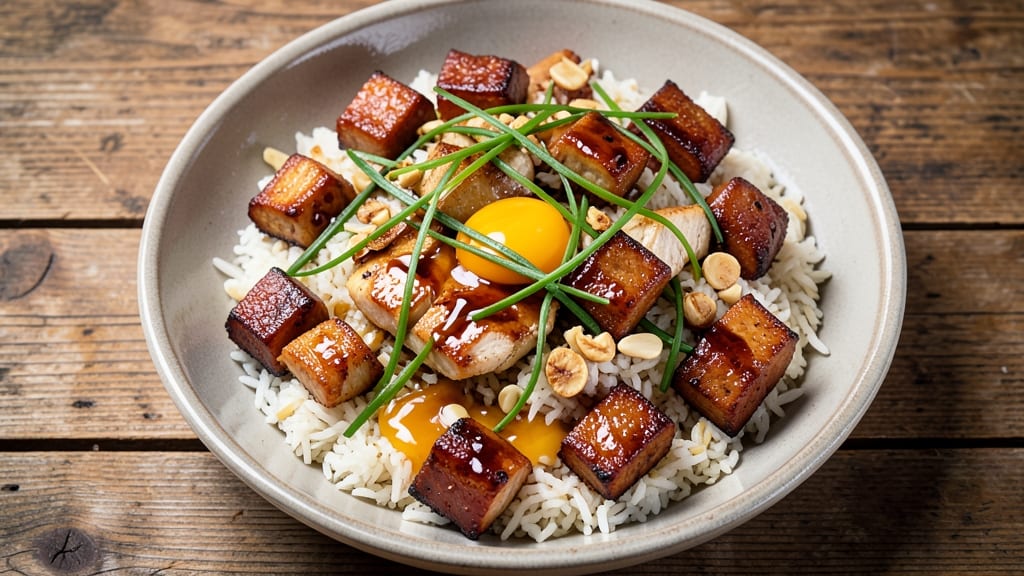
This chicken and pork fried rice recipe delivers restaurant-quality wok-tossed perfection with tender proteins and fluffy rice in every bite. The secret lies in properly prepping the proteins—marinating them just enough to absorb flavor without becoming mushy—while keeping the rice perfectly separate until the final stir-fry.
High heat and quick tossing create that signature smoky aroma and crisp edges that make this dish irresistible.
Once you master the timing, this recipe transforms simple ingredients into a bold, savory meal that balances heat, umami, and freshness. The proteins stay juicy while the rice develops a slight char, and the seasoning blend delivers depth without overpowering.
Whether serving as a weeknight dinner or a takeout-inspired feast, this fried rice delivers professional-level results with minimal effort.
Ingredients for chicken and pork fried rice
Restaurant-quality fried rice starts with these carefully chosen ingredients—fluffy rice, tender proteins, and aromatic seasonings.
| Ingredient | Amount | Notes |
|---|---|---|
| Day-Old Cooked White Rice 🍚 | 4 cups | Cold and slightly dry preferred |
| Boneless Chicken Breast 🍗 | 1 ½ lb | Cut into 1-inch cubes |
| Pork Shoulder 🐖 | 1 ½ lb | Trimmed, cut into 1-inch cubes |
| Large Eggs 🥚 | 4 whole | Lightly beaten for stir-fry |
| Green Onions 🧅 | 1 whole | White and green parts separated |
| Garlic Cloves 🧄 | 6 cloves | Minced for marinade |
| Ginger Root 🌿 | 1 tbsp | Fresh, grated |
| Soy Sauce 🍶 | ½ cup | High-quality, dark preferred |
| Oyster Sauce 🍶 | 2 tbsp | For umami depth |
| Sesame Oil 🫒 | 1 tbsp | Toasted for aroma |
| Vegetable Oil 🫒 | ½ cup | High smoke point |
| Red Bell Pepper 🌶️ | 1 whole | Diced, any color |
| Salt 🧂 | 1 tsp | Kosher or sea salt |
| Black Pepper 🌶️ | ½ tsp | Freshly ground |
| White Pepper 🌶️ | ¼ tsp | For subtle heat |
The proteins are the foundation. Pork shoulder delivers rich flavor when cooked low-and-slow first, while chicken breast stays tender when cut uniformly. Look for well-marbled pork at your butcher counter—it stays juicier during the stir-fry. Day-old rice is non-negotiable; fresh rice turns mushy under high heat. If you're short on time, spread freshly cooked rice on a tray and refrigerate for 30 minutes. For the aromatics, garlic and ginger should be freshly grated—pre-minced jars lack punch. Green onions add freshness, so use both white and green parts separately for texture contrast.
No pork shoulder? Chicken thighs work beautifully—they're more forgiving with timing and stay juicier. Swap the red bell pepper for snow peas or carrots if you prefer a different crunch. The soy sauce can be reduced by half if you're watching sodium—just add a splash of rice vinegar to balance. Sesame oil is purely for aroma; add it at the very end to preserve its delicate flavor. For extra umami without oyster sauce, mushroom sauce or fish sauce (vegetarian version) works well. The white pepper adds subtle heat without changing color—perfect for that authentic restaurant look.
Prep the proteins first—they take the longest. Marinate the chicken and pork for 15-20 minutes maximum to absorb flavor without becoming soggy. Store any unused marinade in the fridge for up to 3 days or freeze for 3 months. The day-old rice keeps in an airtight container for 4-5 days in the fridge. For best results, reheat rice in the microwave with a damp paper towel over it to restore moisture. This fried rice reheats beautifully—2-3 minutes in a wok or large skillet with a splash of water restores that crisp texture. Portion into containers for 3-4 days of lunches, or freeze for up to 2 months.
Why You'll Love This Recipe
- Uses Leftover Rice: I swear by this trick—day-old rice sticks together perfectly, no clumping. That means if you’re like me and always have a half-empty container of rice from last night’s dinner, this recipe turns it into something ridiculously good instead of sad, dry scraps.
- One-Pan Magic: Between us, I’ve tried fried rice with multiple pans and it’s a mess. This? Just one wok or skillet—chicken and pork sear first, eggs scramble right in, then everything gets tossed together. Minimal chopping, zero cleanup stress. (Yes, even on a Tuesday night.)
- Budget-Friendly Powerhouse: Pork shoulder and chicken breast stretch across meals like nobody’s business. A single batch feeds four, and leftovers reheat like a dream—no soggy rice here. Honestly, it’s my go-to when I need to feed a crowd without breaking the bank.
- Crispy-Tender Texture: Here’s what sold me—the way the pork stays juicy while the chicken gets that perfect golden crust. And those sunny-side-up eggs? They melt into the rice like a warm hug. Not the prettiest plate, but the taste makes up for it every time.
Step-by-step instructions for chicken and pork fried rice
Master this wok-tossed technique for restaurant-quality fried rice every time.
Prepare the Protein and Aromatics
In a medium bowl, combine the 1.5 lb boneless chicken breast and 1.5 lb pork shoulder, both cut into 1-inch cubes. Add 6 cloves minced garlic cloves, 1 tbsp grated ginger root, 0.5 cup soy sauce, and 2 tbsp oyster sauce. Toss gently to coat evenly, then let marinate for 20-30 minutes at room temperature. This ensures maximum flavor infusion and even cooking.
Separately, separate the 1 whole green onions into white and green parts. Finely dice the white portions and slice the green parts into ¼-inch pieces. Dice the 1 whole red bell pepper into ½-inch pieces. The aromatics should be prepped now—they'll cook quickly and add vibrant color and freshness to the dish.
Cook the Protein to Perfect Doneness
Heat 0.25 cup vegetable oil in a large wok or skillet over medium-high heat until shimmering. Working in batches to avoid overcrowding, add the marinated chicken and pork. Cook for 4-5 minutes until the meat is lightly browned and cooked through to an internal temperature of 165°F. Remove from the wok and set aside on a plate.
Here's the thing—don't rush this step. The meat needs to develop that golden crust while staying juicy inside. If you see steam but no color developing, your heat isn't high enough. The pork should be tender but not falling apart, and the chicken should be opaque throughout with no pink centers. This is your flavor foundation.
Scramble the Eggs and Prepare the Rice
In the same wok, add 0.25 cup vegetable oil and swirl to coat the bottom. Pour in the 4 whole lightly beaten eggs and scramble quickly over medium-high heat for 30-45 seconds until just set but still slightly moist. Remove the eggs and set aside with the protein.
Now add the 4 cups day-old cooked white rice to the wok. Using a spatula, break up any clumps and spread the rice evenly. Cook for 1-2 minutes, stirring constantly, until the grains are slightly separated and begin to sizzle. The rice should be hot but not yet crispy—we'll finish it with the sauce. This step prevents mushy rice by toasting the grains first.
Combine Everything with Sauce and Finish
Return all the cooked components—the chicken, pork, and eggs—to the wok with the rice. Add the diced white green onion parts, diced red bell pepper, and remaining 0.25 cup vegetable oil. Stir-fry for 2-3 minutes until everything is heated through and the vegetables are tender-crisp.
In a small bowl, whisk together 1 tbsp sesame oil, 1 tsp salt, 0.5 tsp black pepper, and 0.25 tsp white pepper. Pour this mixture over the fried rice and toss vigorously for 1 minute until the sauce is evenly distributed and the rice is glossy. The dish should smell aromatic with layers of umami from the oyster sauce, freshness from the ginger and garlic, and a subtle sweetness from the bell pepper.
Garnish and Serve Immediately
Taste and adjust seasoning if needed—you may want to add a splash more soy sauce or a pinch of salt. Transfer the fried rice to serving plates and garnish with the sliced green green onion parts. Serve immediately while hot, as fried rice loses its texture and flavor when left to sit.
Each bite should deliver a perfect balance: tender protein, slightly crispy rice, fresh vegetables, and a complex sauce that ties everything together. The high-protein combination makes this an especially satisfying dish, perfect for meal prep or a quick weeknight dinner. The secret lies in the day-old rice—it's slightly drier and absorbs flavors better than freshly cooked rice.
Pro Tips For Making Chicken And Pork Fried Rice
- Dry the Rice Properly: Skip the soggy texture by spreading your day-old rice on a baking sheet and letting it air-dry for 10-15 minutes while you prep everything else. Cold rice sticks together—this step guarantees loose, individual grains that won’t turn mushy when stir-fried.
- Pre-Cook the Pork: Pork shoulder stays chewy when stir-fried raw, so simmer it in a little soy sauce and water for 10 minutes until just tender before dicing. I used to skip this and ended up with rubbery bits—now it melts in my mouth every time.
- Scramble Eggs First: Push the eggs to one side of the wok and let them set into soft curds before mixing in the rice. This keeps them creamy instead of breaking into scrambled bits—no one wants dry egg clumps in fried rice.
- Use High Heat Early: Get your wok screaming hot before adding oil, then crank the heat to medium-high once everything’s in. I learned this the hard way—low heat makes the rice steam instead of sear, and you’ll end up with bland, sticky rice. Trust me, it makes a real difference.
Creative variations of chicken and pork fried rice
Spicy Thai-Inspired
Transform your fried rice into a fiery Thai-style dish by adding 1 tbsp chili garlic sauce (like Lee Kum Kee) and 1 tsp fish sauce to the marinade. Stir in ½ cup sliced Thai basil and 2 tbsp crushed roasted peanuts at the end for crunch.
Top with a drizzle of sweet chili sauce and lime wedges for brightness. 🌶️
Vegetarian Swap
Skip the meat entirely and use 1 lb extra-firm tofu (pressed and cubed) or 1.5 cups firm mushrooms (like shiitake or oyster) for umami. Boost flavor with 1 tbsp vegetarian oyster sauce and 1 tsp soy sauce.
Add ½ cup corn kernels and ¼ cup peas for sweetness. The texture stays satisfying without compromising taste.
Breakfast Twist
Make it a brunch star by adding 4 extra eggs (scrambled separately) and ½ cup diced ham to the protein mix. Stir in 2 tbsp sriracha with the sesame oil for heat, and garnish with crumbled bacon bits and extra green onions.
Serve with a side of hot sauce for dipping. This version is hearty enough for a weekend meal.
Seafood Upgrade
Replace the pork with 1 lb shrimp (peeled and deveined) and ½ lb scallops. Marinate them separately in 1 tbsp soy sauce, 1 tsp honey, and ½ tsp white pepper.
Cook the shrimp first (they take 2 minutes), then add scallops (they cook in 1 minute). Finish with a splash of rice vinegar and 1 tbsp chopped cilantro for freshness.
Korean-Inspired Kimchi
Add a ½ cup chopped kimchi (with juice) to the rice during the final stir-fry for tangy depth. Use 1 tbsp gochujang (Korean chili paste) instead of white pepper, and top with 1 fried egg on each serving.
Garnish with sesame seeds and extra kimchi for extra crunch. This version has a bold, fermented kick.
Meal Prep Hack
Double the recipe and store components separately for easy assembly. Cook the proteins and rice ahead, then reheat in a wok with 1 tbsp water to restore crispness.
Keep the eggs and veggies raw until reheating—this keeps everything fresh. Pack in airtight containers with parchment paper between layers to prevent sticking. 💡
Nutrition facts
Frequently asked questions
Why does the recipe specify day-old rice?
Freshly cooked rice is too moist and will turn mushy under high heat. Day-old rice has dried out slightly, giving it the perfect texture to absorb flavors and develop crisp edges during stir-frying. If you're short on time, spread freshly cooked rice on a tray and refrigerate for 30 minutes to mimic this effect.
Can I use chicken thighs instead of breast?
Chicken thighs stay juicier and more forgiving during cooking. Use 1.5 lb boneless thighs instead, and reduce the marinating time to 15 minutes to prevent over-absorption. The skin adds extra flavor—leave it on if desired and crisp it in the wok before removing.
What's the secret to keeping the proteins juicy?
High heat and quick cooking are key. Cook the proteins in batches over medium-high heat until just browned (about 4-5 minutes), then remove immediately. Overcrowding the pan causes steaming instead of searing, which leads to dry meat. Let them rest off the heat for 1-2 minutes before adding back to the rice.
How do I adjust the heat level?
For milder flavor, reduce the soy sauce to 0.3 cup and add 1 tsp honey to balance. For extra spice, stir in 1 tbsp chili garlic sauce with the sesame oil mixture. The white pepper adds subtle heat without changing the dish's color—perfect for restaurant-style presentation.
Can I make this ahead of time?
Yes! Cook all components separately and store in airtight containers. Reheat the rice and proteins in a wok with 1 tbsp water to restore crispness, then add raw eggs and vegetables at the end. For best texture, assemble and serve immediately after reheating—fried rice loses its crisp edges when left to sit.