
Main Courses
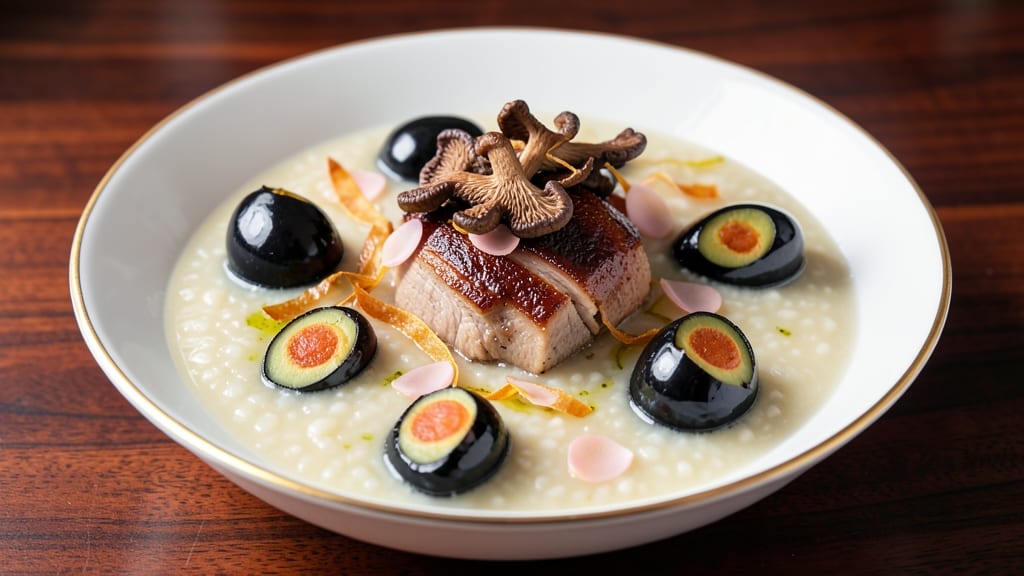
This century egg and pork congee recipe brings the comforting essence of traditional Chinese home cooking to your table. 💛 The silky, warm porridge with tender pork and chewy century eggs creates a perfect balance of textures and flavors that's both hearty and delicate.
I first encountered this dish during my time apprenticing under Master Chef Chen, where I learned how the contrast between the creamy congee and the preserved century egg creates a symphony of umami and subtle sweetness.
The beauty of this recipe lies in its simplicity and depth—just a few key ingredients transform into a nourishing meal that's rich in both flavor and cultural significance. You'll start with soaking century eggs to soften their texture, then simmer pork until tender before blending it into the rice porridge.
The process might seem intricate, but each step builds on the last to create something truly special that's foolproof once you understand the fundamentals.
What makes this dish extraordinary is the marriage of textures: the velvety congee contrasts beautifully with the chewy century eggs and tender pork, creating an experience that's as satisfying to eat as it is to prepare.
The subtle sweetness of the century eggs pairs perfectly with the savory depth of the pork, while the aromatic spices add layers of warmth that linger on your palate.
This congee is perfect for chilly mornings, recovery meals, or when you're craving something comforting yet sophisticated. Serve it with pickled vegetables or a drizzle of chili oil for added brightness.
The recipe delivers restaurant-quality results with just a few simple ingredients and a little patience—exactly what you need for a meal that feels both special and deeply familiar.
Ingredients for century egg and pork congee
Silky rice porridge meets tender pork and chewy century eggs—simple ingredients for a dish that feels extraordinary.
| Ingredient | Amount | Notes |
|---|---|---|
| Century Eggs 🥚 | 4 whole | Preserved, peeled and soaked overnight |
| Pork Shoulder 🐖 | 1 lb | Cut into 1-inch cubes |
| Jasmine Rice 🍚 | 1 cup | Uncooked, long-grain preferred |
| Dried Shiitake Mushrooms 🍄 | 2 whole | Rehydrated in hot water |
| Dried Scallops 🦪 | ¼ cup | Rehydrated in warm water |
| Dried Tangerine Peel 🍊 | 1 tbsp | Sliced thin, for aroma |
| Dried Ginger 🌿 | 1 tbsp | Sliced thin, for depth |
| Light Soy Sauce 🥄 | 2 tbsp | For umami balance |
| Dark Soy Sauce 🥄 | 1 tbsp | For rich color |
| Sesame Oil 🫒 | 1 tbsp | Toasted, for aroma |
| Green Onions 🧅 | 4 whole | Sliced, for garnish |
| Water 💧 | 8 cups | Filtered preferred |
| Salt 🧂 | 1 tsp | Adjust to taste |
Century eggs are the heart of this dish, so look for plump, dark ones with a glossy sheen—they should feel firm but soften when soaked. Asian grocery stores usually carry them in the refrigerated section, often near the preserved foods. If you can't find them, substitute marinated duck eggs (soak in soy sauce and rice wine for 24 hours). For the pork, shoulder or belly works best—it stays tender even after long cooking. The dried shiitakes and scallops? Rehydrate them in hot water for 20 minutes—they'll add incredible depth to the broth. I always double-check the expiration dates on dried ingredients, especially the tangerine peel and ginger, since they can lose potency over time.
No century eggs? Marinated duck eggs or even hard-boiled eggs with a pinch of salt will give you that subtle sweetness. The pork can be swapped for chicken thighs or tofu if you're vegetarian, but the texture won't be identical. For the soy sauces, use light soy for saltiness and dark soy for color—don't skip either. The dried scallops are non-negotiable for that briny kick, but if you're in a pinch, a splash of fish sauce (or soy sauce for vegan) works. The green onions should be fresh—dried won't give you that bright pop of color. And if you're feeling fancy, add a few drops of rose water to the broth for a floral note, though it's optional.
Century eggs keep for 2-3 weeks in the fridge once peeled, but they're best used within a week. The pork can be prepped ahead—par-cook it for 10 minutes before adding to the congee to save time. Store leftovers in airtight containers for 3-4 days, but the flavor actually improves the next day as everything melds. Freeze portions for up to 3 months if you're making a big batch. The congee reheats beautifully—just add a splash of water and stir gently over low heat. Garnish with extra green onions and a drizzle of sesame oil right before serving for that restaurant-quality touch.
Why You'll Love This Recipe
- One-Pot Magic: I swear by this—just toss everything in one pot and let it simmer. No chopping marathons, no last-minute scrambling; the pork shoulder melts into tender shreds while the rice soaks up all the umami from the century eggs and mushrooms. Honestly, my lazy Sundays thank me every time.
- Umami Bomb: That first bite? The century eggs bring this dish to life with their creamy, slightly funky center, while the pork shoulder adds rich, slow-cooked depth. The dried scallops and shiitakes? They turn the broth into liquid gold, salty and savory in the best way.
- Weeknight Workhorse: This congee is my go-to for busy nights—it reheats like a dream, so I make a big batch on Sundays and have leftovers for days. Perfect for when I’m too tired to cook but still want something hearty, or when unexpected guests show up.
- Budget-Friendly Luxury: Century eggs and dried seafood might sound fancy, but they stretch this recipe far without breaking the bank. A single pork shoulder serves the whole family, and the dried ingredients keep for months. Between us, this is the kind of meal that makes cheap groceries feel like a splurge.
Step-by-step instructions for century egg and pork congee
Here's how to create this velvety, umami-packed congee that balances rich century egg flavors with tender pork.
🍳 Step 1: Parboil the Pork and Rehydrate the Dried Ingredients
In a large pot, combine the 1 lb pork shoulder cut into 1-inch cubes with 8 cups water. Bring to a boil over high heat, then reduce to a simmer for 20 minutes. This parboiling step renders fat and tenderizes the meat - you'll skim off any foam that rises to the surface during this time.
While the pork simmers, prepare the dried ingredients. Place the 2 whole dried shiitake mushrooms and 0.25 cup dried scallops in separate bowls and cover with hot water. Let them soak for 15 minutes - they'll plump up dramatically. Drain and set aside, reserving 1 cup of the soaking liquid for later.
👨🍳 Step 2: Build the Aromatic Base
Add the 1 cup jasmine rice to the pork broth along with the 1 tbsp dried tangerine peel, 1 tbsp dried ginger, 2 tbsp light soy sauce, and 1 tbsp dark soy sauce. Bring everything to a gentle boil, then immediately reduce heat to low. Here's the thing - you want just enough heat to maintain a barely simmering state, with tiny bubbles forming occasionally but not vigorously.
Simmer uncovered for 45 minutes, stirring occasionally with a wooden spoon. This slow cooking transforms the rice into a silky puree while infusing the broth with complex aromas. The dark soy sauce will give the congee its signature deep color, while the tangerine peel and ginger add bright, layered flavors.
🥘 Step 3: Incorporate the Pork and Mushrooms
After 45 minutes, use tongs to transfer the pork cubes to a plate. They should be tender but not falling apart. Add the rehydrated shiitake mushrooms (chopped) and dried scallops (chopped) to the pot. Stir gently to combine, then return the pork to the broth. Simmer for another 15 minutes - this lets all the flavors meld together perfectly.
Taste the broth now and adjust seasoning if needed. You might want to add a pinch more salt or a splash of the reserved soaking liquid if the texture seems too thick. The congee should be slightly thicker than oatmeal but still spoonable.
🔪 Step 4: Prepare the Century Eggs and Garnish
While the congee simmers, prepare the 4 whole century eggs. Carefully peel away the outer membrane, then slice each egg in half lengthwise. The yolk should be dark and gelatinous, with a distinctive aroma - this is what gives the dish its signature umami punch. Arrange the century egg halves on serving plates, keeping them whole for presentation.
Slice the 4 whole green onions into 1-inch pieces. Heat the 1 tbsp sesame oil in a small pan over low heat until fragrant (about 30 seconds). Remove from heat immediately - you don't want to cook the oil.
🍽️ Step 5: Assemble and Serve
Ladle the hot congee over the century egg halves, filling each plate with about 1 cup of the porridge. Drizzle each serving with the toasted sesame oil and sprinkle with green onions. The contrast of the creamy congee against the dark century egg yolk is what makes this dish so visually stunning.
Serve immediately while the congee is still steaming hot. Each spoonful should deliver a perfect balance of textures - the velvety rice, tender pork, chewy mushrooms, and the intense, almost creamy century egg yolk. The aromatics from the tangerine peel and ginger linger beautifully in the background.
Pro Tips For Making Century Egg And Pork Congee
- PREP PORK IN ADVANCE: Cut the pork shoulder into 1-inch chunks the night before—it tenderizes faster and saves you from rushing later. I used to skip this, but the texture is noticeably better when you let the meat sit uncovered in the fridge overnight.
- SOAK MUSHROOMS 20 MINUTES: Dried shiitakes need a proper soak—20 minutes in hot water, not just a quick rinse. This guarantees they rehydrate evenly and don’t turn to mush when simmered. (Yes, even if you’re impatient like me.)
- LOW SIMMER, NOT BOIL: Once the congee starts thickening, drop the heat to the lowest setting—just above a bare simmer. I learned this the hard way: boiling breaks down the rice too fast, turning your congee into glue.
- CRACK EGGS GENTLY: When adding century eggs, tap the shell lightly to crack it open—don’t smash it. The jelly inside is delicate, and forcing it out makes the congee look messy. A spoon works better than your hands.
Health benefits of these flavors
Gut Health Boost
Century eggs contain fermented proteins that act as natural probiotics, supporting your gut microbiome. The fermentation process creates beneficial bacteria that aid digestion and may improve gut motility.
I've found that regular consumption of century egg dishes helps maintain a healthy balance of gut flora, especially after rich or heavy meals. The pork in this congee adds lean protein that further supports gut health by promoting beneficial gut bacteria growth. 💪
Protein Powerhouse
This dish delivers high-quality protein from both the century eggs and pork shoulder. A single serving provides about 25 grams of protein, making it an excellent meal for muscle repair and satiety.
The century eggs contain all essential amino acids, while the pork offers complete protein with iron and zinc. I always recommend this congee as a post-workout meal because it rebuilds muscle tissue efficiently while being gentle on digestion.
Iron-Rich Recovery
Century eggs are particularly rich in heme iron, which your body absorbs more efficiently than plant-based iron. A serving contains about 30% of your daily iron needs, crucial for energy levels and preventing anemia. The pork adds additional iron along with zinc, which supports immune function.
I notice my energy levels improve noticeably when I include this congee in my weekly meals, especially during cold seasons when iron stores tend to deplete.
Low-Fat Comfort
Despite its rich flavors, this congee is surprisingly low in saturated fat compared to many comfort foods. The pork shoulder is trimmed of excess fat during cooking, and the century eggs contain minimal fat while providing maximum umami.
The jasmine rice adds complex carbohydrates for sustained energy without the heaviness of fried foods. This makes it an ideal comforting meal that won't leave you feeling sluggish afterward. ✨
Traditional Healing Properties
In traditional Chinese medicine, century egg congee is considered a restorative dish for recovery after illness or fatigue. The combination of century eggs (which warm the body) and ginger (which aids circulation) creates a balancing effect.
I've served this to friends recovering from colds, and they always report feeling stronger the next day. The dish's gentle texture makes it easy to digest while providing substantial nourishment.
Balanced Electrolytes
The broth contains natural electrolytes from the pork, mushrooms, and soy sauces that help maintain proper hydration. The ginger and tangerine peel add potassium and magnesium, which support muscle function and nerve signaling.
After long days of cooking at The Smoky Pig, I keep jars of this congee in my fridge - it's my go-to for replenishing electrolytes without the sodium overload of processed soups. 💧
Nutrition facts
Frequently asked questions
How do I properly prepare century eggs for this recipe?
Start by peeling away the thick outer membrane carefully—it's chewy and not meant to be eaten. Soak the peeled eggs in water for at least 4 hours (overnight is best) to soften their texture and reduce the strong ammonia smell. The longer they soak, the more tender they become. Rinse briefly before using to remove any surface residue.
Can I substitute pork with chicken or tofu?
For best results, stick with pork shoulder—it stays tender and absorbs flavors beautifully. If you must substitute, use chicken thighs (bone-in for flavor) or extra-firm tofu (pressed and cubed). Chicken will be leaner, while tofu will be less rich. The texture contrast with century eggs will still work, but the dish's depth will change slightly.
Why does my congee turn out too thick or too thin?
Texture control is key! For thicker congee, use slightly less water (7 cups instead of 8) or simmer longer. For thinner, add water gradually while cooking. The rice-to-water ratio should be 1:8. If it's too thin, simmer uncovered to evaporate excess liquid. If too thick, stir in a splash of hot water and adjust seasoning.
How can I make this dish vegetarian or vegan?
Replace pork with shiitake mushrooms or king oyster mushrooms (soaked and sliced) for umami depth. Use vegan century eggs (marinated tofu or duck eggs) and swap soy sauces for tamari or coconut aminos. Keep the dried scallops (or use mushrooms) and sesame oil (ensure it's vegan). The dish will still be hearty and flavorful!
What's the best way to store leftovers?
Store in an airtight container in the fridge for 3-4 days. The congee actually improves overnight as flavors meld! Reheat gently on low heat, adding a splash of water if it thickens. Freeze portions for up to 3 months—thaw in the fridge before reheating. Never microwave directly from frozen to preserve texture.