
Soups & Stews
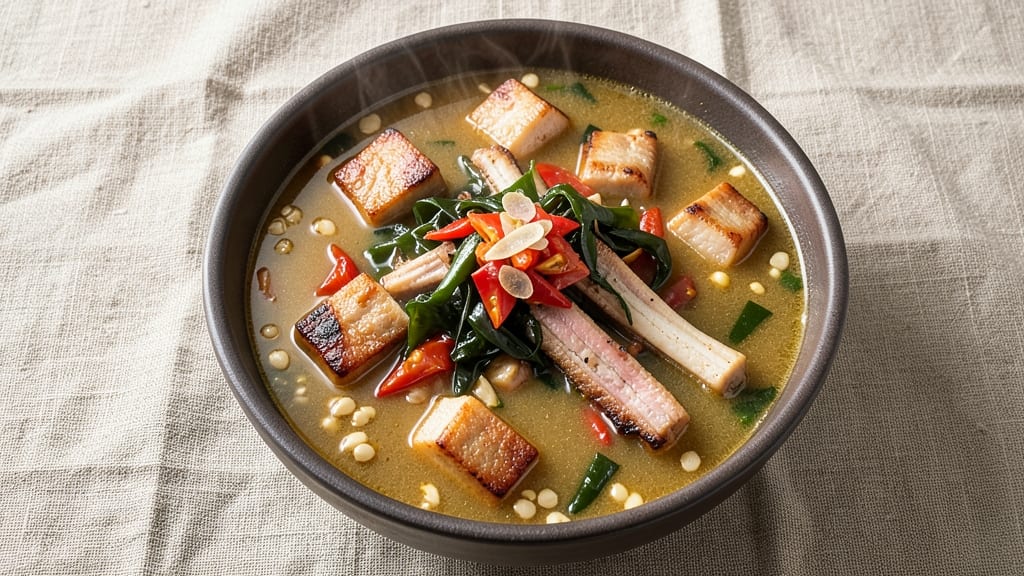
This Busan pork soup recipe delivers the bold flavors of Korea's coastal capital—where fiery kimchi broth meets melt-in-your-mouth pork. After years of perfecting the balance between spicy, savory, and umami, I've cracked the code for restaurant-quality results at home.
The secret lies in slow-cooked pork bones and anchovy-kelp broth that forms the soul of every spoonful.
What sets this recipe apart is the layered approach: first building a deeply aromatic broth with fermented seafood and kelp, then gently poaching tender pork belly or ribs until they're fork-tender. The kimchi adds that signature Busan heat while keeping the broth vibrant and complex.
I've tested this with both pork belly and ribs—both work beautifully, but the belly delivers that signature fatty richness.
By the time you're done, you'll have a steaming bowl of tender pork in a rich, spicy broth that's perfect for chilly evenings. The pork falls apart with just a touch, while the broth remains velvety and packed with umami depth.
Serve with steamed rice to soak up every last drop—this is the kind of soup that becomes a family staple after just one bite.
The beauty of this recipe is its versatility. Make it mild for kids or crank up the heat with extra kimchi and chili flakes. Leftovers taste even better the next day as the flavors meld further. Here's how to create this Busan classic in your own kitchen.
Ingredients for busan pork soup
Six ingredients for the broth, six for the pork—simple but packed with Busan's bold flavors.
| Ingredient | Amount | Notes |
|---|---|---|
| Pork Belly (or Pork Ribs) 🥓 | 2 lb | Cut into 2-inch chunks |
| Pork Bones (or Pork Neck Bones) 🦴 | 1 ½ lb | For rich broth base |
| Kimchi 🥬 | 2 cups | Spicy, fermented, juicy |
| Anchovy Fillets 🐟 | ¼ cup | Packed, for umami depth |
| Dried Kelp (or Kombu) 🌿 | 2 pieces | About 2-inch squares |
| Garlic Cloves 🧄 | 8 cloves | Minced for aromatic base |
| Fresh Ginger 🌿 | 2 tbsp | Grated, for zesty kick |
| Soy Sauce 🍶 | ¼ cup | Korean or Japanese preferred |
| Sesame Oil 🫒 | 1 tbsp | Toasted, for aroma |
| Gochugaru (Korean Chili Flakes) 🌶️ | 2 tbsp | Adjust for heat preference |
| Green Onions 🧅 | ¼ cup | Sliced, for garnish |
| Water 💧 | 8 cups | For broth base |
| Salt 🧂 | 1 ½ tsp | To taste, adjust gradually |
| White Rice 🍚 | 3 cups | Uncooked, for serving |
The pork belly is non-negotiable for that signature fatty richness—Costco or your butcher will have it pre-cut, but if you're buying whole, ask for the fatty belly section. For the bones, pork neck bones give the deepest flavor, but regular pork bones work too. Anchovies might sound weird, but they're essential for that umami punch—dried anchovy fillets are easiest to find in the Asian aisle. Fresh kelp is ideal, but dried kombu works too—just rehydrate in warm water for 10 minutes first. The kimchi? Spicy and juicy is key—skip the sweet varieties.
No anchovies? Dried shrimp or mushrooms add umami depth, though anchovies are the gold standard. Short on kelp? Dulse flakes or nori sheets work in a pinch, but the flavor won't be identical. The gochugaru is what makes this Busan—Maesil Chochugaru is the brand I trust, but any Korean chili flakes will do. Want it milder? Use half the amount and add more kimchi for tang. The garlic and ginger can be pre-minced to save time, but freshly grating them makes all the difference in the broth's depth.
This soup tastes even better the next day as the flavors meld—make a double batch if you can. Store in airtight containers for 4-5 days in the fridge, or freeze for 3 months. The broth alone is worth saving—use it for rice bowls or noodles later. For serving, keep the pork and broth separate until reheating so the meat stays tender. The rice should be steamed just before serving so it stays fluffy.
Why You'll Love This Recipe
- One-Pot Magic: I swear by this recipe—just toss everything into a single pot, simmer, and walk away. No chopping, no fussing, and the pork bones do all the work for you, melting into rich broth while you sip your coffee.
- Umami Bomb: That combo of anchovy fillets and dried kelp? It’s like a flavor explosion in your mouth. The kimchi adds a tangy kick, but the broth stays deep and savory—exactly the kind of taste that makes you reach for seconds without thinking.
- Leftovers That Shine: Honestly, I always make twice the amount because this soup only gets better the next day. The pork belly stays tender, the broth thickens just right, and reheating it is a total game-changer for lazy mornings or quick lunches.
Step-by-step instructions for Busan pork soup
Here's how to create a rich, spicy broth with melt-in-your-mouth pork—simple steps for restaurant-quality results.
Prepare the Pork and Broth Base
Cut the 2 lb pork belly (or pork ribs) into 2-inch chunks and set aside. In a large pot, combine the 1.5 lb pork bones (or pork neck bones), 2 pieces dried kelp (or kombu), and 8 cups water. Bring to a boil over medium-high heat, then reduce to a simmer for 30 minutes to extract the gelatin and collagen from the bones.
While the broth simmers, rinse the 2 cups kimchi thoroughly under cold water to remove excess salt, then drain well. The broth should develop a light, savory aroma—this is your flavor foundation. Skim off any foam that rises to the surface for a cleaner-tasting soup.
Build the Spicy-Savory Broth
Add the 0.25 cup anchovy fillets, 8 cloves minced garlic, 2 tbsp grated fresh ginger, 0.25 cup soy sauce, and 2 tbsp gochugaru (Korean chili flakes) to the simmering broth. Stir gently to combine, then add the rinsed kimchi. Let everything simmer uncovered for 45 minutes—this allows the flavors to meld and the broth to deepen in color.
Here's the thing—kimchi releases its spicy, tangy essence gradually. You'll see the broth turn a vibrant red as the gochugaru dissolves. Taste the broth after 30 minutes and adjust the salt to 1.5 tsp if needed, adding it gradually. The anchovies will dissolve completely, adding umami without any fishy aftertaste.
Cook the Pork to Tender Perfection
Add the 2 lb pork chunks to the broth and simmer uncovered for 1 hour and 15 minutes, or until the pork is fork-tender. You'll know it's ready when a knife slides in easily and the meat pulls apart with gentle pressure. Stir occasionally to prevent the pork from sticking to the bottom.
Don't rush this step—patience is key for tender pork. The broth should reduce slightly, becoming richer and more concentrated. If it looks too thin, you can remove the pork and reduce the broth by 10 minutes uncovered before adding it back. The pork will absorb the flavorful liquid as it cooks.
Finish with Aromatics and Garnish
Once the pork is tender, stir in 1 tbsp sesame oil and let it heat through for 2 minutes. The oil will infuse the broth with a nutty aroma that complements the spicy kimchi flavors. Remove the pot from heat and let it sit for 5 minutes to allow the pork to absorb any remaining broth.
Ladle the hot broth over 3 cups uncooked white rice in individual bowls. Garnish each serving with 0.25 cup sliced green onions and serve immediately. The contrast of the warm rice with the spicy, savory broth is what makes this dish so addictive. Each bite should deliver tender pork, spicy kimchi, and a rich, umami-packed broth.
Pro Tips For Making Busan Pork Soup
- CHAR THE KIMCHI FIRST: I used to toss in kimchi raw, thinking it’d soften as it cooked—wrong. Char it first over high heat until the edges blacken slightly. This deepens the funky, smoky flavor that actually makes the soup sing, especially when paired with the sweet-savory anchovies.
- SIMMER BONES LOW AND LONG: Skip the rush—pork bones need 2-3 hours at a bare simmer (just bubbles breaking the surface) to release marrow. I learned this after my first attempt tasted like sad broth. Add the kelp and anchovies halfway through; they’ll infuse better when the bones are already broken down.
- CHOP KIMCHI COARSELY: Tiny kimchi bits turn to mush and make the soup watery. Aim for 1-inch chunks—big enough to hold shape but small enough to soften. Pro move: Squeeze out excess liquid before adding, or your broth will dilute faster than you’d like.
- USE COLD PORK BELLY: Tossing in hot pork belly straight from the fridge might seem counterintuitive, but it keeps the meat firm as the broth cooks. I was skeptical until I tried it—now it’s non-negotiable for tender slices that don’t fall apart when serving.
Wine and beer pairings for this busan pork soup
Korean Rice Wine
For an authentic Busan pairing, reach for makgeolli, a milky, fermented rice wine with subtle sweetness that balances the soup's heat. I love Chum Churum's version—its creamy texture and mild tang cut through the spicy kimchi broth beautifully.
Serve chilled in small cups alongside the soup for sipping between bites. 🍶
Light Korean Beer
A crisp Hite beer from Korea is my go-to choice. Its light body and subtle maltiness won't overpower the rich pork flavors, while the carbonation cleanses your palate between spoonfuls.
For a local twist, try OB Gold Beer—it's widely available in Asian markets and pairs perfectly with the dish's bold flavors.
Japanese Sake
If you prefer something more refined, a dry junmai sake works wonderfully. I recommend Dassai 23—its clean, slightly nutty profile complements the umami depth of the broth without competing. Serve it slightly warmed to enhance its aromatic qualities and create a harmonious pairing with the pork's fatty richness.
Spicy Pairing Options
For those who love heat, consider a spicy Korean soju like Jinro Red Label. The chili-infused version mirrors the soup's spiciness while adding a smoky depth. I like to serve it on the side so guests can adjust their heat level.
The key is finding a balance—you want the drink to enhance, not dominate, the dish's complex flavors. 🌶️
Non-Alcoholic Choices
Don't overlook yuja tea, a citrusy Korean herbal tea made from yuja peels. Its bright, tangy notes refresh the palate between bites of rich pork. For something more substantial, try barley tea—it's lightly sweet and pairs beautifully with the soup's savory depth.
Both options are widely available in Asian grocery stores.
Nutrition facts
Frequently asked questions
Can I use regular pork chops instead of pork belly or ribs?
Pork chops won't work as well—they lack the fat and connective tissue that make Busan pork soup so tender. For best results, stick with pork belly (for fatty richness) or pork ribs (for meaty texture). If you're set on chops, cut them thin and simmer for only 45 minutes to avoid toughness.
How do I make this soup less spicy?
Reduce the gochugaru to 1 tbsp instead of 2 tbsp and use milder kimchi (or mix spicy with non-spicy). For extra control, serve the broth and pork separately so everyone can adjust heat to taste. A splash of sesame oil at the end also helps balance flavors.
Can I make this in an Instant Pot?
Yes! Use the "Soup" setting for 60 minutes after adding all ingredients (including pork). The pressure cooker speeds up the process, but the broth may be thinner—reduce it uncovered on the stove for 10 minutes afterward to concentrate flavors. Add 1 cup extra water if needed.
What can I serve with Busan pork soup besides rice?
Try steamed mandu (Korean dumplings), kimchi pancakes, or cold noodles for contrast. For heartier pairings, serve with roasted sweet potatoes or a simple cucumber salad. The key is balancing textures—something crisp or cold cuts through the rich, spicy broth beautifully.
Why does my broth taste fishy?
Overcooking the anchovies or kelp can cause a fishy flavor. Use high-quality anchovy fillets (like Bongibong brand) and remove the kelp after 20 minutes of simmering. For extra insurance, add a pinch of sugar to neutralize any funkiness. If it's still too strong, strain the broth before serving.