
Main Courses
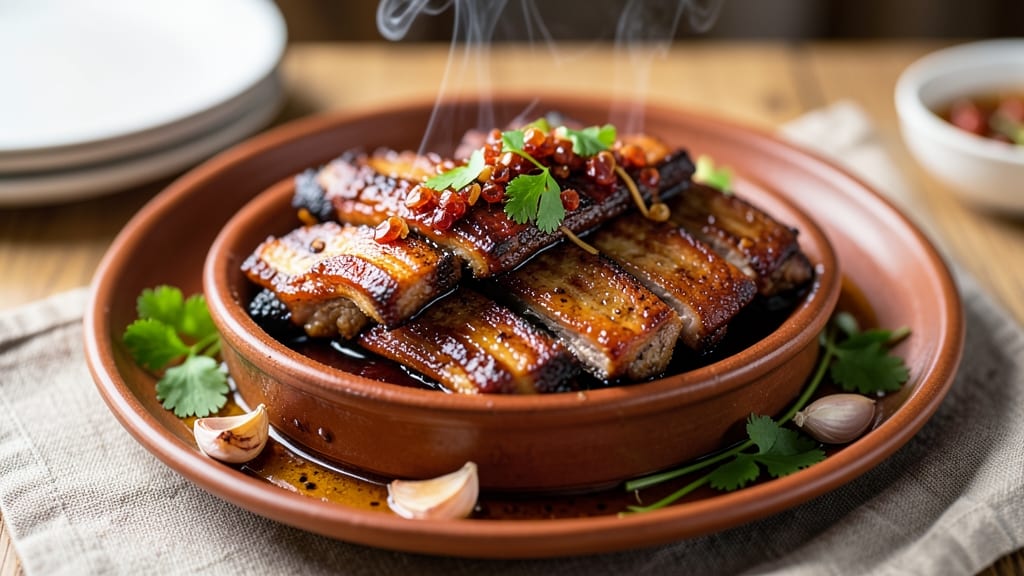
Filipino-style braised pork spare ribs deliver unmatched tenderness and a sticky-sweet glaze that balances umami depth with tangy brightness. This recipe transforms tough ribs into melt-in-your-mouth perfection through slow braising—a technique rooted in Filipino adobo tradition, where soy sauce, vinegar, and aromatics work magic over hours.
The secret lies in the crust: caramelized edges from tamarind and brown sugar create a glossy, finger-licking finish that makes every bite worth the wait.
What sets this dish apart is the layered flavor profile—savory from soy sauce, tangy from vinegar, and a touch of sweetness that cuts through the richness. Unlike quick-cook methods, braising breaks down collagen for fall-apart texture, while garlic, ginger, and bay leaves infuse the ribs with aromatic warmth.
The result? A dish that’s hearty enough for family gatherings but simple enough for weeknight dinners, served best with steamed rice to soak up every last drop of that glossy, tamarind-kissed sauce.
This recipe preserves the authentic Filipino touch without shortcuts: no pressure cookers, no rushed methods. The ribs simmer until the meat pulls away from the bone, while the sauce thickens into a sticky, caramelized glaze that clings to each rib.
The balance of sweet, sour, and savory flavors—achieved through tamarind, vinegar, and soy—mirrors the harmony of Filipino adobo and braised dishes, where simplicity meets depth.
Perfect for special occasions or comforting weeknights, these ribs pair beautifully with classic Filipino sides like atchara (pickled vegetables) or sinigang (sour soup) to round out the meal.
The leftovers? Even better the next day, as the flavors meld into deeper umami richness. Ready to master this dish? Let’s get started.
Ingredients for braised pork spare ribs recipe filipino style
Sixteen ingredients transform tough pork ribs into Filipino-style braised perfection with sticky tamarind glaze.
| Ingredient | Amount | Notes |
|---|---|---|
| Pork Spare Ribs 🥓 | 4 lb | Bone-in, cut into 2-inch pieces |
| Dark Soy Sauce 🍶 | ½ cup | For deep umami flavor |
| Cane Vinegar 🍋 | ¼ cup | White or apple cider vinegar |
| Tamarind Paste 🍈 | ¼ cup | Or 3 tbsp tamarind concentrate |
| Brown Sugar 🍬 | ½ cup | Packed, for caramelized crust |
| Garlic Cloves 🧄 | 8 cloves | Minced for aromatic depth |
| Fresh Ginger 🌿 | 2 tbsp | Finely grated, peeled |
| Bay Leaves 🌿 | 2 whole | For subtle earthy notes |
| Black Peppercorns 🌶️ | 1 tsp | Crushed, for heat balance |
| Onion 🧅 | 1 whole | Yellow, sliced into half-moons |
| Water 💧 | 2 cups | For braising liquid |
| Vegetable Oil 🫒 | 2 tbsp | For searing ribs |
| Green Onions 🧅 | ¼ cup | Sliced, for garnish |
| Fresh Cilantro 🌿 | ¼ cup | Chopped, optional garnish |
The pork spare ribs are the foundation—opt for bone-in cuts from a butcher for maximum flavor, as the marrow infuses the braising liquid. Filipino markets or specialty grocery stores like 99 Ranch or H Mart often carry high-quality cuts with the right marbling. If using frozen ribs, thaw them overnight in the fridge to ensure even cooking. The tamarind paste is non-negotiable for that signature tangy-sweet balance; Filipino tamarind brands like Del Monte or Calpis deliver the most authentic flavor, though concentrated tamarind paste from Latin markets works too. For the soy sauce, use dark soy for its rich color and depth—Lee Kum Kee is a reliable brand that won’t overpower the dish.
No tamarind paste? Substitute with 2 tbsp lime juice plus 1 tbsp brown sugar to mimic the tangy-sweet profile, though the texture won’t be identical. Running short on ginger? Dried ginger powder at half the amount works in a pinch, but fresh is ideal for that bright, zesty kick. The bay leaves can be omitted if unavailable, but they add a subtle earthiness that complements the umami. For a quicker prep, pre-mince the garlic and ginger while the ribs sear—this saves time and ensures even distribution. The brown sugar should be packed tightly to avoid a dry sauce; if your ribs are particularly fatty, reduce it to 0.375 cup to balance richness.
This dish tastes even better the next day as the flavors meld, so make a double batch if feeding a crowd. Store leftovers in an airtight container in the fridge for up to 5 days or freeze for 3 months—the sauce thickens beautifully when reheated. For serving, arrange ribs on a platter with the sauce spooned over top, garnished with green onions and cilantro for freshness. The sauce also freezes well separately; thaw and reheat gently for a quick sauce boost in future dishes. Serve with steamed jasmine rice to soak up every last drop of that sticky, tamarind-kissed glaze.
Why You'll Love This Recipe
- One-Pot Magic: I swear by this recipe because it’s literally one pot—no chopping, no fussing, just ribs, sauce, and simmer. The tamarind paste does all the work while you’re busy with whatever else life throws at you.
- Sweet-Sour Crunch: That balance of dark soy, cane vinegar, and brown sugar? It’s like a party in your mouth—tangy, sticky, and just enough heat to make it addictive. The ribs stay tender but hold their shape, so every bite is ridiculously good.
- Leftovers for Days: Between us, this recipe makes way more than I can eat in one sitting. The sauce thickens beautifully over time, so reheated ribs taste even better the next day—perfect for lazy lunches or sneaking into rice bowls.
- Budget Meal, Big Flavor: Pork ribs are cheaper than you’d think, and the other ingredients? Most pantries already have them. Honestly, it’s my go-to when I need to feed a crowd without breaking the bank—and no one ever guesses how little it cost.
Step-by-step instructions for Filipino-style braised pork spare ribs
Transform tough ribs into tender, caramelized perfection with this meticulous braising technique.
Prepare and Sear the Ribs for Maximum Flavor
Pat the 4 lb pork spare ribs dry with paper towels, removing any excess moisture that would prevent proper searing. Using a sharp boning knife, trim any large silver skin or excess fat from the surface, leaving about ¼ inch of fat cap intact for flavor and moisture.
Heat a heavy Dutch oven over medium-high heat until hot. Add the 2 tbsp vegetable oil and swirl to coat the bottom. Arrange the ribs in a single layer, bone-side down, and let them sear undisturbed for 6-8 minutes until a deep golden-brown crust forms. This initial sear locks in juices and develops rich Maillard flavors. Flip each piece and sear the other side for another 4-5 minutes. Remove ribs from the pot and set aside on a plate.
Build the Umami-Packed Braising Base
In the same Dutch oven, reduce heat to medium and add the sliced 1 whole onion. Cook for 5-6 minutes until softened and translucent, stirring occasionally. Add the 8 cloves minced garlic and 2 tbsp finely grated fresh ginger, cooking for 30 seconds until fragrant - you'll smell the aromatic oils releasing.
Pour in the 0.5 cup dark soy sauce and 0.25 cup cane vinegar, scraping up any browned bits from the bottom with a wooden spoon. This deglazing captures all the concentrated flavors. Add the 0.5 cup packed brown sugar and 0.25 cup tamarind paste, stirring to combine. The mixture should thicken slightly as the sugar begins to caramelize.
Braise Until Fork-Tender with Perfect Glaze
Return the seared ribs to the pot, bone-side up, along with the 2 whole bay leaves and 1 tsp crushed black peppercorns. Pour in the 2 cups water, then bring to a gentle simmer. The liquid should come about halfway up the ribs. Cover with a tight-fitting lid and transfer to a preheated 300°F oven.
Braise for 2 hours, then carefully flip each rib piece and return to the oven for another 1-2 hours until the meat is fork-tender and pulls away from the bone with minimal resistance. The braising liquid should reduce to a thick, glossy glaze that coats the ribs. If the liquid reduces too quickly, add ¼ cup water through the vent in the lid to maintain moisture.
Finish with Sticky Tamarind Glaze
Once the ribs reach perfect tenderness, remove them from the pot and set aside on a serving platter. Increase oven temperature to 400°F and return the braising liquid to the stovetop over medium-high heat. Simmer uncovered for 8-10 minutes until reduced by half and thickened to a glossy consistency. The glaze should coat the back of a spoon and have a deep amber color.
Return the ribs to the pot just long enough to coat them with the glaze, about 1-2 minutes. Garnish with the 0.25 cup sliced green onions and 0.25 cup chopped fresh cilantro. Serve immediately with steamed rice to soak up every last drop of that sticky, umami-rich sauce.
Pro Tips For Making Braised Pork Spare Ribs Recipe Filipino Style
- Sear the Ribs First: I learned this the hard way—skipping the sear means flavor hiding in the sauce instead of clinging to the meat. Hit the ribs with a smoking-hot pan for 3-4 minutes per side until deep brown before adding any liquid. The crust locks in juices and carries that caramelized punch through every bite.
- Dissolve Tamarind Paste Properly: This isn’t the prettiest method, but it’s the tastiest: mix the tamarind paste with a splash of hot water (about 2 tablespoons) first, then stir it into the braising liquid. Cold paste clumps like glue—no one wants fish-eye sauce. Stir until it’s fully dissolved before adding the ribs.
- Control the Vinegar Early: After burning three batches, I finally figured out that adding cane vinegar all at once turns your sauce into a sad, watery mess. Split it: toss half with the ribs during searing, then simmer the rest with the sauce at the end. The acidity brightens flavors without wrecking the texture.
- Simmer Low and Long: Start hot, finish low—this is non-negotiable. Bring the liquid to a boil for 5 minutes to blister the ribs, then drop to a bare simmer (tiny bubbles, occasional skimming). Too much heat = tough, stringy meat. Too little? You’re waiting forever. Aim for 1.5–2 hours, checking occasionally.
Flavor customization for these flavors
Sweet Heat Balance
Filipino braised ribs shine with a perfect balance of sweet and tangy flavors. For extra heat, add 1 tbsp sambal oelek to the braising liquid during the final 30 minutes—this adds smoky, fruity chili notes that complement the tamarind.
If you prefer milder heat, reduce the black peppercorns to ½ tsp and add ½ tsp ground white pepper instead for a subtle kick. 🌶️
Umami Boost Options
For deeper umami flavor, stir in 2 tbsp fish sauce (like Red Boat) along with the soy sauce, or add 1 tbsp oyster sauce for a richer, slightly sweet note.
For a vegetarian-friendly version, replace the fish sauce with 2 tbsp mushroom powder or 1 cup soy sauce + 1 tbsp miso paste. These swaps keep the dish authentic while adapting to dietary needs.
Tamarind Variations
No tamarind paste? Use 2 tbsp lime juice + 1 tbsp brown sugar for a quick substitute, though the texture won’t be identical. For a deeper tang, blend ½ cup tamarind pulp with ¼ cup water and strain to remove seeds.
Alternatively, try 1 tbsp calamansi juice (Filipino lime) for a brighter, citrusy twist that pairs beautifully with the soy and vinegar. 🍋
Glaze Enhancements
To make the glaze extra glossy, whisk in 1 tbsp cornstarch mixed with 2 tbsp water during the final reduction. For a smoky finish, add ½ tsp liquid smoke (like Kosher King) to the braising liquid in the last 20 minutes.
For a nutty depth, sprinkle 1 tsp toasted sesame seeds over the ribs before serving. These tweaks elevate the dish without altering its core Filipino soul.
Regional Twists
In Visayan-style, add 1 tbsp bagoong (fermented shrimp paste) to the braising liquid for a funky, briny depth. For Bicolano-inspired ribs, stir in ½ cup coconut milk during the final 30 minutes of braising to create a creamy, slightly sweet sauce.
Both regional adaptations keep the dish tender while introducing bold, local flavors that feel authentically Filipino.
Spice-Forward Garnishes
Garnish with crushed chili flakes or pickled red onions for a pop of color and acidity. For a fresh finish, add ¼ cup chopped Thai basil instead of cilantro—its anise notes complement the tamarind beautifully.
A drizzle of chili oil (like La Choy) before serving adds a silky, spicy contrast that ties all the flavors together. ✨
Nutrition facts
Frequently asked questions
Can I use pork shoulder instead of spare ribs?
While pork shoulder works for other braised dishes, it won't give the same satisfying texture as spare ribs. The ribs' natural fat and connective tissue create that signature fall-apart tenderness when braised. For a similar experience, use pork belly or baby back ribs instead—they'll develop that perfect crispy edge and sticky glaze.
How do I adjust the recipe for fewer servings?
For 4 servings, reduce the ribs to 2.5 lb and halve all other ingredients except water (use 1 cup). Keep the same cooking times, but check for doneness at 1.5 hours instead of 2. The sauce should still coat the ribs properly with these adjustments.
Why does my sauce turn out too thin?
This usually happens if you didn't reduce the sauce long enough or used too much water. For a thicker glaze, simmer the sauce uncovered for an extra 5-10 minutes until it coats the back of a spoon. If it's still too thin, whisk in 1 tbsp cornstarch mixed with 2 tbsp water and cook for another 2 minutes.
Can I make this in a slow cooker?
Yes! Follow the same searing step, then transfer everything to a slow cooker and cook on Low for 6-7 hours or High for 4-5 hours. The ribs will be tender, but the sauce may not be as thick—reduce it on the stovetop afterward for that signature glaze. The slow cooker method is perfect for busy weeknights!
What's the best way to reheat leftovers?
Place ribs and sauce in an oven-safe dish, cover with foil, and reheat at 300°F for 20-25 minutes. This keeps the meat moist and the glaze intact. For microwave reheating, cover with a damp paper towel and heat for 1-2 minutes—just enough to warm through without drying out.