
Main Courses
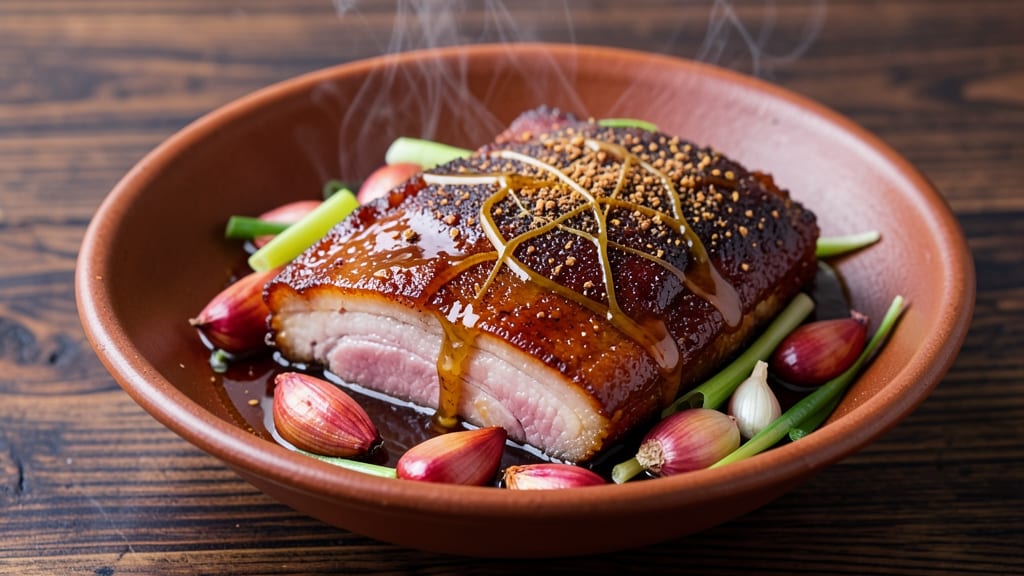
This Chinese-style braised pork belly delivers the perfect balance of crispy five-spice bark and tender, sticky-sweet meat that'll transport you to a bustling Cantonese restaurant. ✨ I've perfected this technique after years of testing—starting with a thick cut of pork belly that develops a mahogany crust while staying juicy inside.
The secret lies in the slow braising process, where the pork belly cooks submerged in its own rendered fat and aromatic broth. Five-spice powder creates that signature Chinese flavor profile—warm, earthy, and slightly sweet—while soy sauce adds depth.
We'll build a glossy glaze using honey and hoisin that caramelizes beautifully during the final stages.
What you'll end up with is a dish that's rich yet balanced—crispy edges that shatter with each bite, tender meat that falls apart easily, and a sauce that's sticky enough to coat every forkful.
The aroma alone will have your whole house smelling like a dim sum feast, and the flavor combination is pure comfort food.
This recipe works beautifully as a centerpiece for family dinners or holiday gatherings, and the leftovers reheat even better the next day. Let's get started on creating your own restaurant-quality braised pork belly at home.
Ingredients for braised pork belly recipe chinese style
Thick-cut pork belly and aromatic spices come together for a dish that tastes like a dim sum feast.
| Ingredient | Amount | Notes |
|---|---|---|
| Pork Belly 🥓 | 2 lb | Thick-cut, skin-on preferred |
| Five-Spice Powder 🌶️ | 2 tbsp | Authentic Chinese blend |
| Soy Sauce 🍶 | ½ cup | Dark soy preferred for color |
| Hoisin Sauce 🍜 | ¼ cup | For sticky-sweet glaze |
| Honey 🍯 | ¼ cup | Light or dark variety |
| Garlic Cloves 🧄 | 6 cloves | Minced for aromatic base |
| Fresh Ginger 🍋 | 2 tbsp | Grated, for depth of flavor |
| Star Anise 🌟 | 2 whole | For authentic Chinese aroma |
| Cinnamon Stick 🌿 | 1 whole | For warmth and complexity |
| Bay Leaves 🍃 | 2 whole | Dried, for subtle earthiness |
| Red Wine 🍷 | ½ cup | Dry, for acidity balance |
| Brown Sugar 🍚 | ¼ cup | Packed, for caramelization |
| Olive Oil 🫒 | 2 tbsp | For initial searing |
| Salt 🧂 | 1 ½ tsp | Kosher or sea salt |
| Black Pepper 🌶️ | ½ tsp | Freshly ground for heat |
The pork belly is non-negotiable here—thick-cut with skin-on for that mahogany crust. Ask your butcher for a 1.5-inch thick cut if possible, or look for pre-sliced pork belly at Asian markets like H Mart or 99 Ranch. The skin should be intact and slightly glossy, not dry or discolored. Five-spice powder is the soul of this dish—Penzeys or King's Gold are my go-tos, but any authentic Chinese blend works. If you can't find star anise, a pinch of anise seeds will do in a pinch, but the whole pods add that signature aroma.
No dark soy sauce? Regular soy sauce plus a teaspoon of molasses gets you close. Fresh ginger is ideal, but powdered ginger at half the amount works if you're in a hurry. The red wine can be swapped for apple cider vinegar or extra hoisin sauce if you're avoiding alcohol. Brown sugar substitutes? Coconut sugar or maple syrup both work, though the flavor will shift slightly. For the five-spice powder, if you're missing a component, double the amount of what you have—just don't skip it entirely. The honey should be light for a smoother glaze, but dark honey adds depth if you prefer.
This dish tastes even better the next day—plan to make it ahead. Store in an airtight container with the sauce for up to 5 days in the fridge. For freezing, portion into individual servings and freeze for up to 3 months. Reheat gently in a skillet with a splash of water to restore crispiness. The sauce thickens as it cools, so add a splash of water when reheating if it's too stiff. Leftovers make incredible sandwiches or fried rice the next day.
Why You'll Love This Recipe
- One-Pan Magic: Honestly, I swear by this recipe because it’s that simple—just sear the pork belly, toss in the five-spice powder and soy sauce, then let it slow-braise in the same pan. No chopping, no fuss, and the honey glaze caramelizes right there while you’re scrolling through your phone.
- Flavor Bomb: That crispy, crackling skin with the tender, sticky pork inside? Chef’s kiss. The five-spice powder adds this warm, aromatic depth, while the hoisin and honey balance it with a touch of sweetness—like a hug in a bowl.
- Budget-Friendly Luxury: Pork belly might sound fancy, but a slab goes a long way—this recipe feeds four for under $15, and the leftovers stretch for days. Plus, the five-spice and hoisin are pantry staples that make it feel gourmet without the restaurant price tag.
Step-by-step instructions for braised pork belly Chinese style
Here's how to transform thick-cut pork belly into tender, crispy-edged perfection with that signature sticky-sweet glaze.
🔥 Step 1: Sear the Pork Belly for Maximum Flavor
Pat the 2 lb pork belly completely dry with paper towels—this is non-negotiable for crispy skin. Heat a large Dutch oven over medium-high heat and add the 2 tbsp olive oil. Once shimmering, carefully place the pork belly skin-side down and press gently with a spatula for 2 minutes to render fat and create a golden crust.
Flip the pork belly and continue searing for another 2 minutes per side until the skin turns a deep golden brown. You'll see fat pooling in the pan—this is good! Remove the pork belly and set it aside on a plate. The goal here is to develop that crispy bark while building flavor in the rendered fat. Don't rush this step; patience creates the best texture.
👨🍳 Step 2: Build the Aromatic Glaze Base
In the same Dutch oven (no need to wipe it clean—those browned bits are flavor gold), add the 6 cloves minced garlic cloves and 2 tbsp grated fresh ginger. Sauté for 30 seconds until fragrant—you should smell that garlic releasing its sweetness. Add the 2 whole star anise, 1 whole cinnamon stick, and 2 whole bay leaves, stirring for 10 seconds to toast the spices lightly.
Pour in the 0.5 cup red wine and scrape up all those delicious browned bits from the bottom of the pan. Let it simmer for 2 minutes until reduced by half. This step develops the complex aromatics that make this dish so special. The wine adds acidity that balances the richness of the pork belly.
🥘 Step 3: Braise with the Signature Sauce
Return the pork belly to the Dutch oven, skin-side up. Add the 0.5 cup soy sauce, 0.25 cup hoisin sauce, 0.25 cup honey, 0.25 cup packed brown sugar, 2 tbsp five-spice powder, 1.5 tsp salt, and 0.5 tsp black pepper. Stir gently to combine, making sure the pork belly is well-coated in the sauce mixture.
Bring the liquid to a gentle simmer, then cover with a tight-fitting lid. Reduce heat to lowstrong> and braise for 2 hours. Here's the thing—this long, slow cook time is what transforms the tough pork belly into melt-in-your-mouth tenderness. The sauce should reduce to a thick, glossy glaze that clings beautifully to the pork.
⏰ Step 4: Develop the Crispy Bark and Glaze
After the initial 2 hours, uncover the Dutch oven and increase heat to medium-highstrong>. Let the pork belly braise uncovered for another 30-45 minutes until the sauce reduces to a thick, sticky glaze and the skin becomes crispy and golden brown. You'll see the edges starting to caramelize—that's your signal to check for doneness.
Use tongs to turn the pork belly occasionally, basting it with the sauce to ensure even coating. The glaze should coat the back of a spoon and the skin should be crisp enough to stand up to a gentle poke. This final step creates that perfect balance of tender meat with crispy edges and a glossy, addictive sauce.
🍽️ Step 5: Rest and Serve with Perfect Texture
Transfer the pork belly to a cutting board and let it rest for 15 minutes before slicing. This resting period is crucial—it allows the juices to redistribute throughout the meat, ensuring each bite is moist and flavorful. The skin will stay crispy while the meat remains tender.
Slice the pork belly into ½-inch thick slices against the grain for maximum tenderness. Serve immediately with the reduced braising sauce spooned over the top. Each bite should deliver that perfect combination of crispy skin, tender meat, and that sticky-sweet glaze that's impossible to resist. The aroma alone will have everyone gathering around your table!
Pro Tips For Making Braised Pork Belly Recipe Chinese Style
- CRISP THE SKIN FIRST: I learned this the hard way—skipping the sear means soggy skin later. Slice the pork belly into 1-inch thick pieces, then hit them with high heat in a dry pan for 3-4 minutes per side until golden. The fat renders fast, so don’t crowd the pan or you’ll steam it instead of crisp it.
- SALT THE BELLY 24 HOURS EARLY: Sounds weird, but it works: Generously coat the pork belly in coarse salt and let it sit uncovered in the fridge overnight. This breaks down the fat and collagen, making it tender faster during braising. Rinse and pat dry before cooking—no need to stress about over-salting.
- LOW AND SLOW IS NON-NEGOTIABLE: After searing, reduce heat to a gentle simmer—think tiny bubbles, not a rolling boil. Cover tightly and let it cook for 1.5–2 hours. I was skeptical until I tried it: rushing this step turns the meat tough instead of melt-in-your-mouth.
- DEGLAZE WITH HOISIN + HONEY: That caramelized fond stuck to the pan? Don’t waste it—deglaze with 1 tablespoon hoisin and 1 teaspoon honey right after removing the pork. Scrape hard with a wooden spoon, then pour the sauce back over the meat. It adds depth without extra effort.
Regional styles of these flavors
Cantonese Dim Sum Style
This version is all about that signature sticky-sweet glaze and crispy five-spice bark you'd find in Hong Kong-style dim sum restaurants.
The key difference here is using light soy sauce for the initial braise (instead of dark) to maintain brightness, then finishing with dark soy sauce during the last 15 minutes of cooking for that deep mahogany color.
I like adding 1 tbsp of Shaoxing wine to the sauce mixture—it's the secret ingredient that elevates the flavor profile to restaurant quality. 🍜
For serving, Cantonese-style braised pork belly is typically sliced into pencil-thin strips and served with steamed rice and pickled vegetables. The glaze should be thick enough to coat the rice beautifully, creating that perfect balance of textures.
I always keep a small bowl of hot black vinegar on the table for dipping—it cuts through the richness beautifully.
Sichuan Spicy Version
If you love heat, this Sichuan adaptation swaps the five-spice powder for a chili-bean paste blend—just mix 1 tbsp Sichuan peppercorns with 1 tbsp fermented black beans and ½ tsp chili flakes.
The pork belly gets a deep red hue from 1 tbsp red chili oil added during the final 10 minutes of braising. This version is perfect for those who want that signature numbing-spicy kick that Sichuan cuisine is famous for. 🌶️
Serve this spicy version with steamed jasmine rice and a side of cucumber salad to balance the heat. The chili oil should be visible on the surface of the glaze, giving it that signature fiery appearance.
I like to garnish with thinly sliced scallions and sesame seeds right before serving for extra texture contrast.
Fujian Light & Fresh
Fujian cuisine takes a lighter approach, focusing on fresh herbs and citrus notes. After the initial braise, stir in 1 tbsp grated daikon radish and 1 tsp preserved lemon oil during the last 20 minutes of cooking.
The result is a pork belly with a bright, almost tangy glaze that's much lighter than the Cantonese version. This style pairs beautifully with steamed bok choy and rice noodles.
For extra freshness, finish the dish with thinly sliced scallions and cilantro right before serving. The preserved lemon oil adds a subtle citrusy aroma that's characteristic of Fujian cooking. This version is perfect for warmer weather when you want something lighter but still rich and flavorful.
Hunan Smoky & Bold
The Hunan version cranks up the smoky, earthy flavors by adding 1 tbsp smoked paprika and ½ tsp dried tangerine peel to the braising liquid. The pork belly develops a deep, almost charred appearance from the extended uncovered braising time.
This style is all about bold, intense flavors that pack a punch. 🔥
Serve this version with steamed glutinous rice and quick-pickled mustard greens to complement the smoky depth. The glaze should be thick and almost syrupy, clinging to every bite. I like to finish with a sprinkle of toasted sesame seeds for extra crunch and aroma.
Modern Fusion Twist
For a contemporary take, I sometimes add 1 tbsp of miso paste to the braising liquid and finish with a drizzle of yuzu kosho before serving. This fusion version keeps the traditional techniques but adds a bright, umami-rich twist that appeals to modern palates.
The miso adds depth while the yuzu kosho brings a citrusy kick that cuts through the richness.
Pair this fusion version with roasted sweet potatoes and a miso-ginger dressing for a dish that feels both nostalgic and innovative. The yuzu kosho should be added just before serving to preserve its vibrant color and fresh flavor.
This is my go-to version for dinner parties when I want to impress guests with a familiar yet unexpected dish.
Nutrition facts
Frequently asked questions
Why does the pork belly need to rest after cooking?
Resting the pork belly for 15 minutes after braising is crucial for two reasons: it lets the juices redistribute so each slice stays tender, and it keeps the crispy skin from becoming soggy. If you skip this step, the meat will be dry and the skin might lose its perfect texture. Just cover it loosely with foil while resting.
Can I use regular pork shoulder instead of pork belly?
While pork shoulder works, it won't give you that signature crispy skin and rich fat content. Pork belly has more marbling and fat layers that render beautifully during braising. For a similar texture, look for thick-cut pork shoulder with good fat coverage, but expect a slightly different flavor profile.
How do I fix if the sauce is too thin?
If your glaze is too thin, simply uncover the pot and simmer on medium-high heat for 10-15 minutes, stirring occasionally. You can also mix 1 tbsp cornstarch with 1 tbsp water, stir into the sauce, and simmer for 2 minutes until thickened. This works especially well if you're short on time.
What's the best way to reheat leftovers?
Reheat leftovers in a skillet over medium-low heat with a splash of water or pork fat to restore moisture. Cover for 5 minutes, then uncover to crisp the skin again. For extra flavor, add 1 tsp soy sauce and ½ tsp five-spice powder while reheating. Never microwave—it makes the skin rubbery.
Can I make this in a slow cooker?
Sear the pork belly first, then transfer everything to a slow cooker and cook on low for 6-8 hours. In the last 30 minutes, transfer to a skillet to develop the crispy skin and reduce the sauce. The slow cooker method is perfect for hands-off cooking but may yield slightly less crispy skin.