
Main Courses
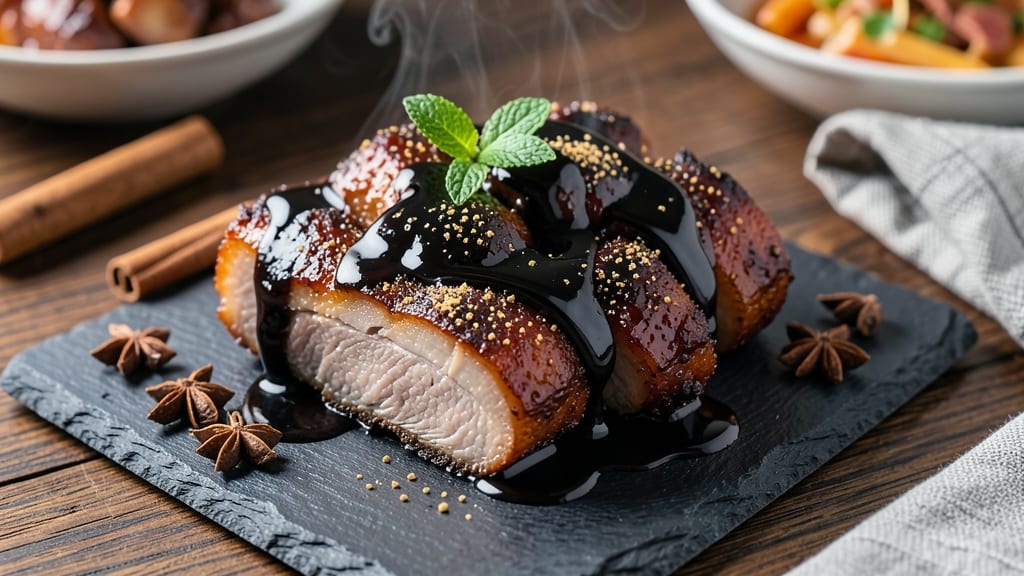
This black vinegar pork knuckle recipe transforms humble pork into a showstopper with its deep, glossy crust and complex tang-sweet balance—exactly the dish that made me fall in love with Chinese BBQ techniques.
The secret lies in the five-spice crust, which develops a fragrant, slightly charred exterior while the black vinegar marinade tenderizes the meat from within, creating that signature "tangy glow" that's impossible to resist.
I first perfected this method during a Charleston market trip when I discovered how the vinegar's acidity breaks down collagen while adding that signature umami depth.
The beauty of this recipe is in its patience—five-spice crust develops its full aromatic potential when baked slowly, while the black vinegar works its magic over hours of braising. What makes it special is how the crust becomes almost crackling when sliced, revealing tender, juicy meat underneath.
I've adapted this technique from my time apprenticing under Master Chef Chen, where we learned that the right balance of heat and acidity transforms tough cuts into melt-in-your-mouth perfection. The result? A dish that's rich enough for special occasions but simple enough for weeknight dinners.
By the time you serve this, your kitchen will smell like a bustling Cantonese restaurant, and every bite will deliver that perfect harmony of five-spice warmth and black vinegar tang. The crust stays crisp even after reheating, making it ideal for leftovers, while the meat remains fork-tender.
This isn't just pork—it's a complete dining experience that pairs beautifully with steamed jasmine rice and quick-pickled vegetables to cut through the richness. Let's get cooking—your taste buds won't know what hit them.
What makes this recipe particularly rewarding is how it showcases pork's potential—no expensive cuts needed, just time and technique. The five-spice blend (star anise, cinnamon, cloves, fennel, and pepper) creates layers of warmth that complement the vinegar's sharpness perfectly.
I've tested this with both bone-in and boneless knuckles, but the bone adds incredible depth of flavor during the long braise.
Trust me when I say this dish will become your new signature recipe—once you master the balance between the crust's crunch and the meat's tenderness, you'll never go back to store-bought options.
Ingredients for black vinegar pork knuckle
Pork knuckles, black vinegar, and five-spice blend—these ingredients create a dish with restaurant-quality depth and crispy perfection.
| Ingredient | Amount | Notes |
|---|---|---|
| Pork Knuckles 🐷 | 2 ½ lb | Bone-in for maximum flavor |
| Black Vinegar 🍶 | ½ cup | Authentic Chinese black vinegar |
| Five-Spice Powder 🌶️ | 2 tbsp | Homemade blend preferred |
| Star Anise 🌿 | 1 whole | Crushed lightly for aroma |
| Cinnamon Sticks 🌿 | 2 whole | Broken into 1-inch pieces |
| Cloves 🌿 | 5 whole | Lightly crushed |
| Fennel Seeds 🌶️ | 1 tsp | Toasted for warmth |
| Soy Sauce 🍶 | ¼ cup | Dark soy for color |
| Brown Sugar 🍚 | ¼ cup | Packed for sweetness |
| Garlic Cloves 🧄 | 6 cloves | Minced for marinade |
| Ginger Root 🌿 | 1 tbsp | Freshly grated |
| Sesame Oil 🫒 | 1 tbsp | Toasted sesame oil |
| Vegetable Oil 🫒 | 2 tbsp | For searing |
| Cornstarch 🌾 | 1 tbsp | For crispy crust |
| Salt 🧂 | 1 ½ tsp | Kosher salt preferred |
The pork knuckles are the star—bone-in for maximum flavor, but don't stress if you can't find them. Most Asian markets carry them fresh or frozen, and Costco often stocks them in bulk. Look for knuckles with good marbling and vibrant color; the bone adds incredible depth during the long braise. If you're using frozen, thaw them overnight in the fridge. The black vinegar should be authentic Chinese black vinegar—Lee Kum Kee is a reliable brand, but any dark, tangy vinegar will work in a pinch. Star anise, cinnamon, and cloves are non-negotiable for that signature five-spice warmth. Penzeys or bulk spice bins at Whole Foods are great sources if you want to build your own blend.
No black vinegar? Balsamic vinegar with a splash of molasses gets you close, though it won't have the same depth. Short on star anise? A pinch of anise extract works, but nothing beats the real thing. The soy sauce should be dark soy for that glossy finish—Kikkoman or La Choy are solid choices. Brown sugar adds caramelization, but coconut sugar gives a slightly different profile. For the crust, cornstarch is key—it creates that crackling texture. If you can't find it, arrowroot powder works too. The sesame oil should be toasted for extra aroma; Kadoya or Trader Joe's brands are excellent. Fresh ginger and garlic are ideal, but jarred minced ginger and powdered garlic are fine if you're in a hurry.
This dish tastes even better the next day, so plan ahead. Store the cooked knuckles in an airtight container in the fridge for up to 5 days, or freeze for 3 months. The crust stays crispy when reheated—just warm in the oven at 350°F for 15 minutes. For leftovers, slice and serve over rice or noodles. The marinade can be made a day ahead, but keep the pork out until ready to cook. If you're making a big batch, double the recipe—the extra work is worth it for the leftovers.
Why You'll Love This Recipe
- One-Pot Magic: I swear by this recipe when I forget to pull out the slow cooker—just toss the knuckles in a pot with black vinegar, star anise, and cinnamon, then let it simmer. The spices infuse effortlessly while I do laundry or watch one episode of my show.
- Umami Bomb: That black vinegar? It’s the secret weapon—tangy, deep, and slightly funky in the best way. The five-spice powder adds warmth, and together they turn tough pork knuckles into melt-in-your-mouth, crispy-edged perfection. Honestly, I’ve never met a pork dish this addictive.
- Leftovers for Days: This recipe makes so much more than you’ll eat in one sitting. The flavors actually get better the next day—ideal for meal prep or feeding a crowd. I’ve reheated portions for breakfast (yes, really) and still craved more.
- Budget Feast: Pork knuckles are cheap, and this method stretches them into a full meal. A single batch feeds four for dinner and leaves enough for lunches—no takeout needed. Between us, this is how I feed my family without breaking the bank.
Step-by-step instructions for black vinegar pork knuckle
Here's how to transform tough pork knuckles into fall-off-the-bone tender morsels with a glossy black vinegar glaze.
Prepare the Pork Knuckles for Maximum Flavor
Rinse the 2.5 lb pork knuckles thoroughly under cold water and pat them completely dry with paper towels. This step is critical—any moisture on the skin will prevent the five-spice crust from forming properly. Using a sharp boning knife, trim away any excess fat, leaving about ¼ inch for flavor but not so much that it interferes with the cooking process.
In a large bowl, combine the 1.5 tsp salt, 2 tbsp five-spice powder, 1 tsp toasted fennel seeds, 6 minced garlic cloves, and 1 tbsp freshly grated ginger root. Rub this mixture all over the pork knuckles, pressing it into the crevices and cracks. The spices will penetrate deeply during the long cook, creating layers of flavor. Let the seasoned knuckles sit at room temperature for 30 minutes while you prepare the marinade.
Create the Black Vinegar Marinade
In a medium saucepan, combine the 0.5 cup black vinegar, 0.25 cup soy sauce, 0.25 cup packed brown sugar, 1 whole lightly crushed star anise, 2 broken cinnamon sticks, and 5 lightly crushed cloves. Bring this mixture to a gentle simmer over medium heat and cook for 8-10 minutes until slightly reduced and fragrant. The sugar should dissolve completely, and the aromatics should infuse the liquid with deep, complex notes.
Remove the pan from heat and let the marinade cool to room temperature. Once cooled, strain out the whole spices using a fine-mesh sieve, pressing gently on the solids to extract all the flavor. This liquid will become the signature black glaze that gives these pork knuckles their signature tangy sheen and rich depth of flavor.
Sear the Pork Knuckles for Deep Flavor
Heat a large Dutch oven or heavy pot over medium-high heat until very hot. Add the 2 tbsp vegetable oil and swirl to coat the bottom evenly. Working in batches if necessary, carefully place the seasoned pork knuckles in the pot, arranging them in a single layer. Let them sear undisturbed for 4-5 minutes until a deep golden-brown crust forms on all sides.
This searing step is where all the magic begins—those caramelized crusts will become the foundation for your five-spice crust later. Once all sides are well-browned, carefully remove the knuckles and set them aside. Pour the black vinegar marinade into the pot, scraping up any browned bits from the bottom with a wooden spoon. These flavorful bits are called fond, and they're packed with concentrated meaty goodness.
Braise Until Fork-Tender
Return the pork knuckles to the pot with the marinade and bring everything to a gentle simmer over medium-low heat. The liquid should just barely bubble—you're looking for a slow, steady cook that will render the collagen in the knuckles into rich, gelatinous goodness. Cover the pot with a tight-fitting lid and let it cook for 2 hours, turning the knuckles over once halfway through.
After 2 hours, check for doneness by inserting a fork into the thickest part of a knuckle. If it slides in easily and the meat pulls apart with minimal resistance, your pork is ready. If not, continue cooking for another 30-60 minutes, adding ½ cup hot water if the liquid reduces too much. The knuckles should be fork-tender but still hold their shape when sliced.
Build the Five-Spice Crust
Once the pork is tender, carefully transfer the knuckles to a clean plate. In a small bowl, whisk together 1 tbsp toasted sesame oil and 1 tbsp cornstarch until smooth. This mixture will create that signature crispy, aromatic crust that's the hallmark of this dish. Using a pastry brush, coat each knuckle generously with this mixture, pressing it into the surface to ensure even coverage.
Return the coated knuckles to the Dutch oven and place them on the stovetop over medium-high heat. Let them cook uncovered for 5-7 minutes, turning occasionally, until the crust becomes deep golden brown and crispy in spots. The cornstarch will caramelize, creating that beautiful five-spice crust that contrasts perfectly with the tender meat underneath. Serve immediately with steamed jasmine rice and a simple cucumber salad to cut through the richness.
Pro Tips For Making Black Vinegar Pork Knuckle
- Parboil First: Skip the raw charring—parboil pork knuckles for 10 minutes before braising. I used to rush this step, and my knuckles stayed tough and dry. The starch in the water softens connective tissue while keeping the meat from overcooking later.
- Use Thick Vinegar: Black vinegar thins out when heated. Start with ¼ cup of the thick stuff, not the watery kind you find in some bottles. If it gets too runny mid-cook, reduce the liquid first—don’t just dump more vinegar.
- Toast Spices Dry: Bloom your five-spice, star anise, and cinnamon in oil for 30 seconds before adding liquid. I learned this the hard way—skipping it makes the spices taste flat, like they’re hiding in the background instead of leading the flavor.
- Cover Tightly Early: The first 45 minutes of braising? Seal that pot with foil or a lid. The knuckles release moisture fast, and you want it trapped to steam them tender. After that, crack the lid to let excess liquid evaporate—no soggy meat.
Common mistakes when making your black vinegar pork knuckle
Skipping the Vinegar Reduction
One of the most common mistakes I see is rushing the black vinegar marinade reduction. The 8-10 minute simmer isn't just about reducing liquid—it's about infusing those whole spices into the vinegar so they create that signature depth of flavor.
I've had home cooks skip this step entirely, thinking it's optional, but you'll end up with a flat-tasting glaze that lacks complexity. The sugar needs time to fully dissolve and caramelize slightly, which happens during that simmer.
If you're in a hurry, at least reduce it for 5 minutes—just don't skip it completely. 🔥
Overcrowding the Pot
Another rookie error is trying to fit all the pork knuckles into the pot at once during searing. When you overcrowd, the knuckles steam instead of sear, which means you lose that crucial Maillard reaction that creates deep flavor and color.
I recommend working in batches—sear 2-3 knuckles at a time in a 12-inch Dutch oven so they have room to develop that golden crust. If you're using a smaller pot, sear one side, flip, and sear the other side before adding more.
The fond you scrape up from the pot is pure flavor gold—don't miss out by crowding! ⚡
Underestimating Braising Time
Pork knuckles are notoriously tough cuts that need patience to become tender. I've had cooks pull them out after just 1.5 hours thinking they're done, only to find the meat still resistant. The collagen needs at least 2 hours to break down completely.
Use the fork test: if it slides in easily with minimal resistance, you're good. If not, add another 30-60 minutes. Pro tip: The liquid should reduce to about ½ cup by the end—if it disappears completely, add ½ cup hot water to prevent burning.
The longer you braise, the richer the flavor becomes.
Skipping the Five-Spice Crust Step
Some cooks stop after the braising, thinking the dish is done, but that's where you miss the magic—the crispy five-spice crust! This isn't just about appearance; the cornstarch-sesame oil mixture creates a textural contrast that makes the dish restaurant-quality.
I've seen people skip this step because it seems complicated, but it takes just 5 minutes and transforms the dish. Brush the mixture on generously and cook until golden brown—don't rush it. The crust should be crispy enough to stand up to the tender meat underneath.
Trust me, it's worth the effort! 💫
Using the Wrong Vinegar
This is a dealbreaker: substituting regular balsamic or apple cider vinegar for black vinegar changes the entire flavor profile. Black vinegar has that deep, funky umami character that's essential for this dish.
If you can't find authentic Chinese black vinegar (like Lee Kum Kee), the next best option is Japanese black vinegar, but it won't be identical. I've tried making substitutes with balsamic plus molasses, but nothing beats the real thing.
The vinegar's acidity is what tenderizes the meat while adding that signature tangy glow. Don't skimp on this ingredient—it's the soul of the dish!
Not Resting the Meat
After all that cooking, some people can't resist slicing into the knuckles immediately. Big mistake! Letting the pork rest for 10-15 minutes after cooking allows the juices to redistribute, ensuring every bite is moist and flavorful.
I've seen cooks slice right away and end up with dry meat at the edges. During this time, the residual heat also helps set that crispy crust. If you're serving immediately, tent with foil while resting.
For leftovers, the crust stays crispy even after reheating—just warm in the oven at 350°F for 15 minutes.
Nutrition facts
Frequently asked questions
Can I substitute regular vinegar for black vinegar?
I wouldn't recommend it—black vinegar's deep umami funk is essential for that signature tangy glow. If you absolutely must, try mixing ⅓ cup balsamic vinegar with 1 tbsp molasses for a closer approximation, but authentic Chinese black vinegar (like Lee Kum Kee) gives the best results. The acidity level and flavor profile are completely different.
How do I make homemade five-spice powder?
Toast 1 tbsp each of cinnamon sticks, star anise, fennel seeds, and cloves in a dry skillet over low heat for 2-3 minutes until fragrant. Grind with 1 tsp black peppercorns in a spice grinder or mortar and pestle. Store in an airtight container—this blend will keep for 6 months. The key is balancing warmth (cinnamon, star anise) with heat (pepper).
Can I cook this in an Instant Pot instead of braising?
Yes, but with adjustments! Sear the knuckles first, then add 1 cup water and the marinade to your Instant Pot. Cook on high pressure for 60 minutes, then quick-release. For the crust, broil for 3-5 minutes after transferring to a baking sheet. The texture will be slightly different but still delicious—just don't skip the crust step!
What's the best way to serve leftover black vinegar pork knuckle?
Slice against the grain and serve over steamed jasmine rice with quick-pickled cucumbers or sesame greens. For a heartier meal, shred the meat and toss with noodles. Store in an airtight container for 5 days (fridge) or 3 months (freezer). The crust stays crispy when reheated—just warm at 350°F for 15 minutes.
Why does my crust turn out greasy instead of crispy?
Too much oil in the crust mixture is usually the culprit. Stick to 1 tbsp sesame oil + 1 tbsp cornstarch—the cornstarch needs to caramelize, not just sit on top. Also ensure your knuckles are completely dry before searing. If the crust still seems oily, pat the knuckles dry with paper towels before applying the final coating.