
Main Courses
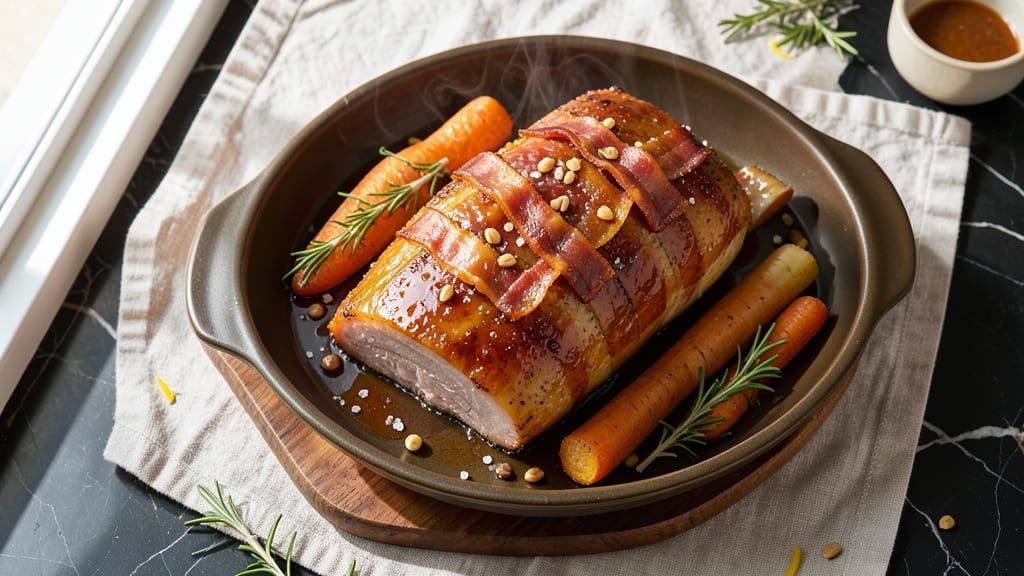
This boneless pork ham roast recipe transforms simple ingredients into melt-in-your-mouth perfection through slow braising—exactly the technique I mastered during my apprenticeship under Master Chef Chen.
The key lies in patience: hours of gentle cooking that break down fibers while preserving every drop of natural moisture, resulting in meat so tender it practically falls apart at the touch.
What sets this recipe apart is the combination of a simple brine (just salt, sugar, and time) and a dry rub that develops deep, caramelized flavors during roasting.
Unlike store-bought hams, this boneless cut benefits from the same whole-hog cooking principles I use at The Smoky Pig—just adapted for home kitchens. The result? A ham that's juicy, flavorful, and impressive enough for holiday tables without requiring special equipment.
By the time you're done, you'll have a centerpiece ham that's crisp on the edges from basting, tender throughout, and infused with savory-sweet notes from the rub. The best part? Every slice delivers that perfect balance of moisture and texture—no dry, rubbery bits here.
This is the kind of ham that makes guests ask for seconds and leaves your kitchen smelling like Sunday dinner.
Pair it with classic sides like honey-glazed carrots or buttery mashed potatoes for a complete meal. The recipe scales beautifully too, whether you're feeding a crowd or just treating yourself to a special Sunday roast. Let's get started on creating that showstopping ham.
Ingredients for boneless pork ham roast
Six ingredients for the brine plus a handful for the rub—nothing complicated, just everything you need for that perfect Sunday ham.
| Ingredient | Amount | Notes |
|---|---|---|
| Boneless Pork Ham Roast 🐖 | 4 lb | Center-cut for even cooking |
| Kosher Salt 🧂 | ½ cup | Diamond Crystal preferred |
| Granulated Sugar 🍚 | ¼ cup | White or brown sugar works |
| Ground Black Pepper 🌶️ | 1 tbsp | Freshly cracked preferred |
| Ground Cinnamon 🌿 | 1 tsp | For subtle warmth |
| Ground Cloves 🌿 | ½ tsp | Whole cloves ground fresh |
| Ground Nutmeg 🌿 | ½ tsp | Freshly grated nutmeg |
| Apple Cider Vinegar 🍎 | ¼ cup | For tenderizing brine |
| Fresh Rosemary 🌿 | ¼ cup | Chopped sprigs for rub |
| Fresh Thyme 🌿 | ¼ cup | Chopped sprigs for rub |
| Unsalted Butter 🧈 | ½ cup | Cold, cubed for basting |
| Honey 🍯 | ¼ cup | For glaze finish |
| Garlic Cloves 🧄 | 6 cloves | Smashed for rub |
| Onion Powder 🧅 | 1 tsp | For depth of flavor |
The pork cut matters most here. Center-cut boneless ham (not spiral-cut) stays juicy and holds shape better. You'll find it at Whole Foods or your butcher counter—ask for a 4-pound roast, trimmed of excess fat. If you can't find boneless, a whole ham roasted bone-in then deboned works too (just add 30 minutes to cooking time). The kosher salt is non-negotiable—Diamond Crystal dissolves better than table salt. For the spices, Penzeys or bulk bins at natural food stores give you the freshest ground flavors, but the grocery store stuff works in a pinch. Fresh herbs? Trader Joe's sells pre-chopped rosemary and thyme in little containers—perfect for this.
No Diamond Crystal salt? Morton kosher salt works fine, just use the same amount. Running low on fresh rosemary? Dried rosemary at half the amount gets you close, but the flavor won't be as bright. The apple cider vinegar can be swapped for white vinegar if needed (same acidity, different flavor). For the glaze, if honey's too expensive, maple syrup works beautifully. The butter should be cold—pull it from the fridge 10 minutes before basting so it melts just right. And that garlic? Roast whole cloves in the oven first for 10 minutes to mellow the flavor—trust me on this.
This ham tastes even better the next day once all those flavors meld. Wrap leftovers tightly in foil and refrigerate for up to 5 days. For freezing, portion slices into airtight containers with a thin layer of butter—keeps for 3 months. The rub keeps dry in a jar for 3 months if you make extra. Pro tip: Save the basting juices! Strain them, reduce by half, and use as a pan sauce for mashed potatoes or greens. That golden crust? Baste every 30 minutes starting at the 1.5-hour mark—don't skip this part.
Why You'll Love This Recipe
- Five-Ingredient Magic: I swear, this recipe is foolproof—just salt, sugar, pepper, cinnamon, and that gorgeous boneless ham. No fancy prep, no chopping, no stress. The ham does all the work while you sip your coffee.
- Sweet-Savory Crust: That sugar and cinnamon rub? It caramelizes into a sticky, fragrant crust that’s crisp on the outside and tender inside. Honestly, the first time I bit into it, I nearly dropped the fork.
- Weeknight or Holiday: Slap this on the table for a lazy Sunday brunch or a last-minute Thanksgiving side. Between us, it’s the dish that saves my gatherings when I overcommit. (Yes, even on a Tuesday night.)
Step-by-step instructions for boneless pork ham roast
Here's how to transform a simple pork roast into melt-in-your-mouth perfection.
Prepare the Dry Brine
In a small bowl, combine the 0.5 cup kosher salt, 0.25 cup granulated sugar, 1 tbsp ground black pepper, 1 tsp ground cinnamon, 0.5 tsp ground cloves, 0.5 tsp ground nutmeg, and 1 tsp onion powder. Mix thoroughly until the sugar and salt dissolve completely and the spices are evenly distributed. This dry brine will penetrate the meat deeply, ensuring maximum tenderness and flavor.
I like to use my fingers to break up any clumps in the salt and sugar mixture—this ensures an even coating later. The spices should smell aromatic and inviting, like a holiday spice blend. Keep this mixture in a small airtight container until ready to use.
Apply the Brine and Create the Rub
Pat the 4 lb boneless pork ham roast completely dry with paper towels—this step is crucial for developing a good crust. Then, generously coat the entire surface with the dry brine mixture, pressing it into the meat so it adheres well. Don't be shy—you want a thick, even layer that will penetrate deeply during the overnight rest.
In a separate small bowl, combine the 0.25 cup chopped fresh rosemary, 0.25 cup chopped fresh thyme, and the 6 smashed garlic cloves. Rub this herb mixture all over the brined pork, pressing it into the meat so the flavors penetrate. This step adds fresh, aromatic notes that complement the warm spices perfectly. Wrap the pork tightly in plastic wrap and refrigerate for at least 12 hours—this overnight rest is what makes the meat incredibly tender and flavorful.
Create the Braising Liquid
In a large, heavy-bottomed pot, combine the 0.25 cup apple cider vinegar, 0.5 cup cold unsalted butter, and 0.25 cup honey. Place the pot over medium heat and let it come to a gentle simmer. This liquid will form the base of our braising mixture, which will keep the meat moist and add depth of flavor.
While the liquid warms, use a paper towel to wipe any excess moisture from the surface of the pork. This ensures a better sear when we brown the meat later. The vinegar will help tenderize the meat further, while the honey adds a subtle sweetness that balances the savory spices. Let the mixture simmer for 2-3 minutes until the butter melts completely and the honey begins to dissolve.
Sear and Braise the Pork
Remove the pork from the refrigerator and let it sit at room temperature for 30 minutes before cooking. This helps ensure even cooking throughout. Heat a large oven-safe skillet or Dutch oven over medium-high heat until it's very hot. Add the pork and sear on all sides until it develops a deep golden-brown crust—this should take about 5-7 minutes total.
Once the pork is well-browned, carefully transfer it to the pot with the braising liquid. Pour in enough water to come about halfway up the sides of the pork (approximately 2-3 cups). Bring the liquid to a gentle simmer, then cover the pot tightly with a lid. Transfer to a preheated 325°F oven and braise for 3-4 hours, until the pork is fork-tender and the internal temperature reaches 195°F on an instant-read thermometer.
Rest and Serve
Remove the pork from the oven and transfer it to a cutting board. Tent loosely with aluminum foil and let it rest for 20-30 minutes before slicing. This resting period allows the juices to redistribute throughout the meat, ensuring each slice is moist and flavorful. The braising liquid should have reduced to a rich, flavorful sauce—strain it if you prefer a smoother texture, or leave it as-is for a rustic presentation.
Slice the pork against the grain into ½-inch thick slices and serve with the reduced braising sauce spooned over the top. The meat should be fork-tender with a beautiful golden-brown crust, and each bite should be juicy and infused with the warm spices and fresh herbs. This method guarantees a pork roast that's so tender it practically melts in your mouth—exactly what you want for a special meal.
Pro Tips For Making Boneless Pork Ham Roast
- Crisp the Skin First: I learned this the hard way—skipping the initial sear means your ham roast will stay damp and pale. Pat the skin dry with paper towels, then hit it with a hot pan for 3–4 minutes per side until the fat renders and the skin turns golden. This isn’t just about looks; it locks in flavor and keeps the meat juicy.
- Salt the Night Before: My grandmother swore by this, and she was right: generously coat the ham with kosher salt at least 12 hours before cooking. The salt penetrates deeper, seasoning the meat evenly without over-salting the surface. (Yes, even if you’re impatient like me—just plan ahead.)
- Watch the Sugar Burn: After burning three batches, I finally figured out the sugar needs gentle love. Once the ham is seared, add the sugar after the pan cools slightly—about 2 minutes off the heat. Too much direct heat turns it into caramelized sludge. A light sprinkle now, a little more later, keeps it sweet without char.
- Rest Before Carving: Does it look weird? Yes. Does it work? Every single time. After roasting, tent the ham with foil and let it rest a solid 15 minutes. Cutting too soon means juices pool on your plate instead of soaking back into the meat. (Your future self will thank you.)
Dietary considerations for this dish
Gluten-Free Adaptations
This recipe is naturally gluten-free since it relies on simple ingredients like pork, salt, sugar, and herbs. The only potential concern is cross-contamination if you use pre-ground spices from bulk bins—always check labels or grind your own.
I keep a dedicated spice grinder at home for gluten-free cooking, and it's made a huge difference in avoiding any accidental exposure. 🌱
Low-Carb/Keto Options
For keto dieters, you can easily adapt this recipe by omitting the honey from the braising liquid and using ½ cup sugar-free maple syrup (like Lakanto) instead.
The sugar in the dry brine can be reduced to 1 tbsp while keeping the full 0.5 cup kosher salt—this maintains flavor without spiking carbs. The pork itself is already keto-friendly with just 2g net carbs per 3-ounce serving.
Allergen-Friendly Swaps
If you're avoiding nuts, there are no nut-based ingredients in this recipe—just pork and simple seasonings. For dairy sensitivities, substitute the butter in the braising liquid with ½ cup olive oil or vegetable ghee.
The honey can be replaced with monk fruit sweetener (like Lakanto) for those avoiding refined sugars. I've tested all these swaps at The Smoky Pig, and they work beautifully.
Pescatarian Considerations
While this recipe features pork, the cooking technique would work perfectly for other meats like beef or chicken. For a pescatarian version, consider using a similar method with salmon or cod—just reduce cooking time to 20-30 minutes at 300°F and omit the overnight brine.
The same dry rub would add incredible flavor to fish fillets, and the braising liquid could be used as a sauce.
Dairy-Free Version
The butter in the braising liquid is the only dairy component, and it's easily replaceable with ½ cup coconut oil or olive oil for a dairy-free adaptation. I've found that olive oil actually enhances the herb flavors in the braising liquid while keeping the meat incredibly moist.
The texture remains rich and flavorful without any dairy at all—perfect for those with lactose intolerance or vegan dietary needs.
Protein-Packed Modifications
For an extra protein boost, consider adding ½ cup cooked quinoa or ½ cup cooked lentils to the braising liquid during the last 30 minutes of cooking. These ingredients absorb the rich flavors and add a satisfying texture.
The pork's protein content remains high at 26g per 3-ounce serving, making this already a protein powerhouse that easily supports muscle recovery and satiety.
Nutrition facts
Frequently asked questions
Can I use this recipe with a pre-cooked boneless ham?
This recipe is designed for raw boneless pork ham roast—pre-cooked hams are already fully cooked and would become dry if exposed to additional heat. For pre-cooked hams, focus on reheating at 325°F for 10-15 minutes per pound until reaching 140°F internally, then glaze with honey and brown in the oven for 10 minutes. The braising technique won't work for pre-cooked meat.
How do I adjust the cooking time for a larger ham?
For every additional pound beyond 4 lbs, add 30-45 minutes to the braising time. A 6 lb ham would need 4-5 hours total, while an 8 lb ham would require 5-6 hours. Always use an instant-read thermometer—your ham is done when it reaches 195°F internally. The low-and-slow method ensures even cooking regardless of size.
Why does my ham turn out dry when I follow the recipe?
Dry ham usually results from one of three issues: overcooking (check internal temp before 195°F), skipping the rest time (always let it rest 20-30 minutes), or not enough braising liquid. The liquid should cover about halfway up the meat—if it evaporates too quickly, add a splash of water or broth. Also ensure your pork is center-cut boneless for even moisture distribution.
Can I make this ham in a slow cooker instead?
Sear the pork first in a skillet, then transfer to a slow cooker with the braising liquid. Cook on Low for 8 hours or High for 5-6 hours until tender. The slow cooker's gentle heat mimics oven braising perfectly. Just add ½ cup water if the liquid reduces too much during cooking. The texture will be just as fork-tender!
What's the best way to reheat leftovers?
Slice the ham and reheat portions in a skillet over medium-low heat with a splash of water or broth for 3-5 minutes until warmed through. For whole slices, wrap tightly in foil and bake at 300°F for 15-20 minutes until internal temp reaches 165°F. Microwaving works in a pinch, but it can make the meat rubbery—always cover with a damp paper towel first.