
Main Courses
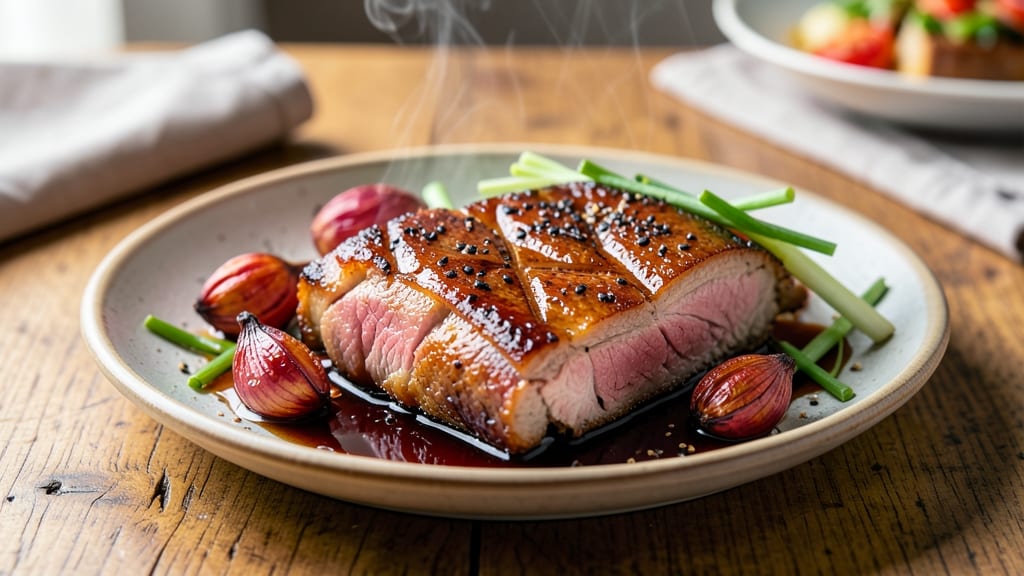
This black pork belly recipe delivers restaurant-quality results with a crispy five-spice bark and sticky tamarind core that'll have you reaching for seconds.
After years of perfecting my technique at The Smoky Pig, I've developed a method that transforms tough pork belly into melt-in-your-mouth perfection with just the right balance of sweet, smoky, and aromatic flavors. The secret?
A slow cure followed by precise high-heat cooking that creates that coveted crackling exterior while keeping the interior tender and juicy.
What makes this recipe special is the combination of traditional Chinese techniques with Southern barbecue sensibilities—something I've been refining since my apprenticeship under Master Chef Chen. We start with a dry cure that enhances the meat's natural flavors, then build layers of complexity with five-spice powder and tamarind paste.
The result is pork belly that's rich, aromatic, and packed with depth—far beyond what you'd find in most restaurants.
By the time you're done, you'll have a dish that's impressive enough for dinner parties but simple enough for weeknight dinners. The crispy bark gives way to tender, fatty meat that practically melts in your mouth, all coated in that sticky-sweet tamarind glaze.
This is the kind of pork belly that'll have your guests asking for the recipe—and you'll want to keep making it long after they're gone.
Pair it with steamed jasmine rice and quick-pickled vegetables for a complete meal that balances textures and flavors perfectly. The tamarind glaze works wonders with the pork's natural richness, while the pickled vegetables cut through the fat and add brightness. Let's get cooking—this is pork belly at its finest.
Ingredients for black pork belly
Crispy bark meets sticky-sweet tamarind core—just 15 ingredients for restaurant-quality pork belly.
| Ingredient | Amount | Notes |
|---|---|---|
| Pork Belly 🥓 | 2 lb | Skin-on, thick-cut preferred |
| Five-Spice Powder 🌶️ | 2 tbsp | Toasted for deeper aroma |
| Tamarind Paste 🍯 | ½ cup | Unadulterated, no additives |
| Brown Sugar 🍚 | ¼ cup | Light or dark preferred |
| Soy Sauce 🍶 | ¼ cup | Kosher-style for balance |
| Honey 🍯 | 2 tbsp | Wildflower for complexity |
| Garlic Cloves 🧄 | 6 cloves | Minced for marinade |
| Fresh Ginger 🌿 | 2 tbsp | Grated, aromatic variety |
| Sesame Oil 🫒 | 1 tbsp | Toasted, for finishing |
| Neutral Oil 🫒 | ½ cup | Vegetable or canola |
| Salt 🧂 | 1 tbsp | Kosher or sea salt |
| Black Peppercorns 🌶️ | 1 tsp | Freshly cracked |
| Jasmine Rice 🍚 | 1 ½ cups | Uncooked, for serving |
| Cucumber 🥒 | 1 whole | For quick-pickled veggies |
| Red Onion 🧅 | 1 whole | Thinly sliced for pickles |
The pork belly is non-negotiable here. Thick-cut, skin-on from the grocery store's meat counter is ideal—ask for the fattier cuts if they have them. Costco or Whole Foods often carry the best quality, but any reputable butcher will do. Look for pieces with good marbling; that's where the flavor hides. Five-spice powder should be toasted in a dry pan for 30 seconds to wake up those aromatic oils—it makes all the difference. Tamarind paste? Look for unadulterated versions in the international aisle or at Asian markets—none of that powdered junk.
No tamarind paste? Substitute date syrup or extra honey, but you'll lose that signature tang. Fresh ginger is a must—substitute ground ginger at half the amount if you're in a pinch, but it won't be the same. The soy sauce? Kosher-style has less salt, so you can control the balance better. For the pickled veggies, apple cider vinegar works if you can't find rice vinegar, but the flavor will be slightly different. And if you're making this ahead, prep the pickles the night before—they get better as they sit.
Pork belly keeps 3-4 days in the fridge once cooked, but honestly, it's best the first day. The crispy bark softens over time, so plan to eat it fresh. Store the cooked belly in an airtight container with a paper towel on top to absorb any moisture—this keeps that crackling texture. The tamarind glaze? It freezes beautifully for up to 3 months, so make extra. And those pickled veggies? They'll last a week in the fridge, so you can prep everything ahead of time.
Why You'll Love This Recipe
- One-Pan Magic: I swear by this—just sear the pork belly, toss in the five-spice, tamarind, and a splash of soy, then let it slow-roast. No chopping, no fussing, no extra pots. The sticky glaze does all the work while I’m scrolling through my phone.
- Sweet-Savory Balance: That tamarind paste and brown sugar combo? It’s what makes this dish ridiculously good. The pork belly stays tender but gets this glossy, caramelized crust that’s addictive—like biting into a perfect balance of smoky, sweet, and umami in every bite.
- Weeknight or Weekend: Between us, this recipe works for everything. Need a quick weeknight dinner? Done. Hosting a BBQ? It’s the star. Even my picky teenage nephew devours it—no complaints, just seconds.
- Budget-Friendly Feast: Pork belly might sound fancy, but it stretches far. A single slab feeds four, and leftovers reheat beautifully for sandwiches or fried rice. Honestly, it’s my go-to for feeding a crowd without breaking the bank.
Step-by-step instructions for black pork belly with five-spice bark
Here's how to transform simple pork belly into restaurant-quality perfection.
Prepare the Pork Belly for Maximum Crisp
Start by scoring the pork belly skin in a diamond pattern using a sharp knife. Cut through the fat layer but stop about ¼ inch before reaching the meat—this creates channels for the marinade to penetrate while allowing the skin to crisp beautifully. I press gently with my fingers to ensure even, consistent cuts.
Rub the scored belly with the 1 tablespoon salt and 1 teaspoon freshly cracked black peppercorns. This initial seasoning helps draw out moisture from the skin, which is crucial for that signature crispy bark. Place the pork belly skin-side down on a baking sheet and refrigerate uncovered for 12-24 hours. This drying process transforms the skin from rubbery to paper-thin and crispy.
Create the Five-Spice Tamarind Marinade
In a mixing bowl, combine the 0.5 cup tamarind paste, 0.25 cup brown sugar, 0.25 cup soy sauce, 2 tablespoons honey, 6 cloves minced garlic, and 2 tablespoons grated fresh ginger. Mix until the tamarind paste is fully dissolved and the marinade has a smooth, syrupy consistency. The tamarind gives this dish its signature tangy depth that cuts through the pork's richness.
Heat 0.5 cup neutral oil in a small saucepan over low heat and toast the 2 tablespoons five-spice powder in it for 1-2 minutes until fragrant. Immediately strain the spiced oil through a fine-mesh sieve and let it cool to room temperature. Add this aromatic oil to your marinade and stir well.
Marinate and Render the Pork Belly
After the pork belly has dried in the fridge, remove it and pat it completely dry with paper towels. Place the pork belly skin-side up in a roasting pan and pour the marinade evenly over the top, making sure it coats all sides. Cover with plastic wrap and marinate in the refrigerator for 6-8 hours, turning the pork belly every 2 hours to ensure even flavor penetration.
When ready to cook, transfer the pork belly to a cold skillet (I use a heavy cast-iron skillet) and place it over medium-low heat. Cook the pork belly skin-side down for 45-60 minutes without moving it, allowing the fat to render slowly and the skin to become golden and crispy. You'll see the fat bubbling and sizzling—this is when the magic happens. The pork belly is ready when the skin is deep golden brown and the fat has rendered out to about ½ inch thickness.
Finish with the Sticky Tamarind Glaze
While the pork belly is rendering, prepare the glaze by combining the rendered fat from the pan (about ¼ cup) with any remaining marinade in a small saucepan. Bring to a simmer over medium heat and cook for 5-7 minutes until the mixture reduces by half and becomes syrupy. This concentrated glaze will coat the pork belly beautifully.
Once the pork belly skin is perfectly crispy, flip it over and cook the meat side for another 10-15 minutes until it reaches an internal temperature of 195-200°F. The meat should be tender enough to pull apart with a fork but still hold together in slices. Brush the reduced tamarind glaze generously over the meat side, then drizzle with 1 tablespoon toasted sesame oil for that final aromatic touch.
Rest and Serve with Jasmine Rice and Quick Pickles
Transfer the pork belly to a cutting board and let it rest for 15 minutes before slicing. This resting period allows the juices to redistribute throughout the meat, ensuring each slice is moist and flavorful. While it rests, prepare the quick pickles by thinly slicing the 1 whole red onion and 1 whole cucumber, then tossing with 2 tablespoons rice vinegar and ½ teaspoon salt. Let them sit for 10 minutes to soften slightly.
Slice the pork belly into ¼-inch thick slices and serve with the 1.5 cups cooked jasmine rice and quick pickles on the side. The contrast of crispy, aromatic pork belly with the cool, tangy pickles and fragrant rice creates a perfect balance of textures and flavors that will have everyone reaching for seconds.
Pro Tips For Making Black Pork Belly
- CRACK THE BELLY FIRST: Cut the pork belly into 1-inch thick slices before searing—thicker pieces stay unevenly cooked and dry out faster. I learned this after wrestling with a 2-inch slab that took 45 minutes just to render fat properly.
- DILUTE THE TAMARIND: Mix tamarind paste with equal parts warm water first—it’s thick enough to clump and burn if tossed in dry. My first batch stuck to the pan like glue; now I whisk it into a smooth slurry before adding other sauces.
- LOW AND SLOW AFTER SEARING: Once the pork belly hits the pan, blast it hard for crust, then immediately drop heat to medium-low. Rushing the low-and-slow stage turns the meat rubbery—trust me, I’ve served that mistake.
- USE LESS SUGAR: Brown sugar caramelizes fast and can scorch before the pork belly finishes. Start with 1 tablespoon per pound, then adjust—your sauce will darken naturally from the soy and tamarind. Less sugar = more control.
Common mistakes when making this recipe
Skipping the Dry Cure
I cannot stress enough how critical the 12-24 hour dry cure is for that perfect crispy bark. Skipping this step means you'll end up with a skin that's greasy rather than paper-thin and crackling.
The salt draws out moisture through osmosis, and without it, your pork belly will steam instead of crisp. I've seen home cooks rush this process and end up with rubbery skin—trust me, you don't want that. 🥓
Overcrowding the Pan
When rendering the fat, resist the urge to stack other proteins or veggies in the same pan. Pork belly needs space to render its fat properly, and overcrowding causes the temperature to drop, leading to greasy rather than crispy skin.
Use a pan that's at least 12 inches wide for a 2-pound cut, and give that belly room to breathe. I've had to salvage many a failed batch because someone tried to cook the pork belly alongside onions or potatoes.
Ignoring the Internal Temp
Many home cooks pull pork belly from the heat too early, resulting in tough meat. Aim for an internal temperature of 195-200°F—this ensures the collagen has fully broken down into gelatin, making the meat fork-tender.
I use a ThermoWorks Smoke thermometer for precision, but even a basic instant-read thermometer works. Never guess—this is where most home cooks go wrong. 🌡️
Rushing the Marinade Time
The 6-8 hour marinade isn't just about flavor—it's about tenderness. Pork belly is a tough cut, and the tamarind and five-spice blend work their magic over time. I've seen people try to cut this to 2 hours and end up with bland, underseasoned meat.
Be patient—this is where the real depth of flavor develops. If you're short on time, at least let it marinate for 4 hours.
Not Resting the Meat
Skipping the 15-minute rest is a rookie mistake that leads to dry slices. When you cut into pork belly too soon, all those juices rush out, leaving you with something that's more sad than satisfying.
I know it's tempting to dig in immediately, but trust the process. This is especially important with the tamarind glaze—resting lets it absorb properly into the meat. 💫
Using Low-Quality Tamarind
This is where many home cooks fail to recreate restaurant-quality results. Store-bought tamarind paste often contains fillers that dilute the flavor. I source mine from H Mart or specialty Asian markets—look for brands like Mae Ploy or Thai Kitchen.
If you can't find good tamarind, substitute with date syrup, but you'll lose that signature tang that cuts through the pork's richness. The flavor difference is night and day.
Nutrition facts
Frequently asked questions
What makes this black pork belly recipe different from regular pork belly dishes?
This recipe transforms traditional pork belly with a five-spice bark and sticky tamarind core—combining Chinese techniques with Southern barbecue flavors. The key difference is the 12-24 hour dry cure for crispy skin and the tamarind glaze that adds tangy depth, creating a balance of textures and flavors you won't find in standard recipes.
Can I substitute tamarind paste if I can't find it?
Yes! Use date syrup or extra honey (add 1 extra tablespoon) as a substitute, but you'll lose the signature tang. For best results, look for unadulterated tamarind paste at Asian markets—brands like Mae Ploy work perfectly. The flavor difference is noticeable but manageable with these swaps.
How do I know when the pork belly is fully cooked?
Use a meat thermometer to check for an internal temperature of 195-200°F. The meat should be tender enough to pull apart with a fork but still hold together in slices. If you don't have a thermometer, look for deep golden-brown skin and rendered fat about ½ inch thick. Never guess—this is critical for perfect texture.
Can I make this recipe ahead of time?
The marinade can be prepped 2 days ahead, and the pickled vegetables keep for 1 week. Cook the pork belly fresh for best texture, but you can store cooked slices in an airtight container for 3-4 days. The tamarind glaze also freezes beautifully for up to 3 months. Plan ahead for maximum convenience.
What's the best way to serve this black pork belly?
Pair it with steamed jasmine rice and quick-pickled vegetables (like cucumber and red onion) to balance the rich flavors. For a complete meal, add a simple steamed bok choy or miso soup. The contrast of crispy pork belly with cool, tangy pickles creates a perfect harmony of textures and temperatures.