
Main Courses
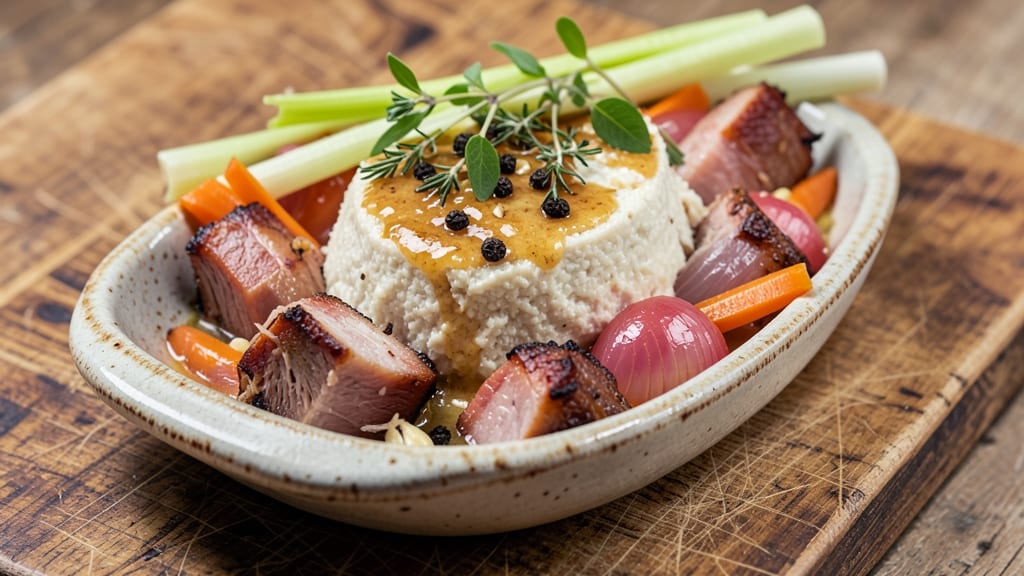
This head cheese recipe with pork hocks transforms humble ingredients into a rich, gelatinous masterpiece that tastes like comfort food elevated. 🌟 I first discovered the magic of head cheese during a trip to my grandma's kitchen in Cincinnati, where she'd simmer pork hocks until the meat fell from the bone and the broth thickened into velvety perfection.
The secret lies in patience—slow simmering extracts maximum flavor while the collagen transforms into that signature wobble.
The process begins with braising pork hocks until tender, then carefully straining the broth to create a clear, flavorful base. What makes this recipe truly special is the way the gelatin sets into a firm yet tender texture when chilled, creating a dish that's equal parts impressive and satisfying.
Unlike store-bought versions, this homemade head cheese develops deep, savory notes from the pork and aromatics you choose to include.
By the time you're done, you'll have a head cheese that's rich, flavorful, and perfectly set—ideal for slicing into elegant portions or serving whole at gatherings. The texture is firm yet tender, with just enough give to make each bite satisfying.
This isn't just a side dish; it's a centerpiece that transforms ordinary meals into special occasions.
Serve it with crusty bread for dipping, alongside roasted vegetables, or as part of a hearty holiday spread. The possibilities are endless, but the technique remains the same: slow cooking, careful straining, and the magic of gelatin. Let's get started on creating this timeless dish that tastes like home.
Ingredients for best head cheese recipe with pork hocks
Pork hocks and aromatic vegetables create this rich, wobbly masterpiece of slow-cooked gelatin magic.
| Ingredient | Amount | Notes |
|---|---|---|
| Pork Hocks 🍖 | 4 whole | Fresh, bone-in for collagen |
| Yellow Onions 🧅 | 2 whole | Yellow or red, peeled |
| Carrots 🥕 | 2 lb | Whole, unpeeled for color |
| Celery Stalks 🌿 | 4 whole | Fresh, trimmed |
| Garlic Cloves 🧄 | 6 cloves | Fresh, peeled |
| Fresh Thyme Sprigs 🌿 | 4 whole | Or 1 tbsp dried thyme |
| Fresh Bay Leaves 🌿 | 2 whole | Standard size |
| Black Peppercorns 🌶️ | 1 tbsp | Whole, crushed |
| Kosher Salt 🧂 | 2 tbsp | Diamond Crystal preferred |
| Apple Cider Vinegar 🍏 | 2 tbsp | For brightness |
| Unsalted Butter 🧈 | 4 tbsp | Cold, cubed |
| Heavy Cream 🥛 | 1 cup | Full-fat for richness |
| All-Purpose Flour 🌾 | 1 tbsp | For thickening |
| Fresh Parsley 🌿 | ¼ cup | Chopped, for garnish |
The pork hocks are the star—look for plump, meaty ones with good marbling at your local butcher or Costco. They should feel heavy for their size, with a rich pink color. If you can't find fresh, frozen hocks work too—thaw overnight in the fridge. The vegetables? Whole carrots and celery add natural sweetness and body to the broth, while onions and garlic form the flavor base. I always grab organic produce when possible, but regular works fine too. Store your hocks in the fridge until ready to use—they'll keep for up to 5 days if vacuum-sealed.
No pork hocks? Smoked turkey legs make a decent substitute, though the flavor will differ slightly. Running low on thyme? Dried thyme at half the amount works in a pinch, but fresh is ideal. The apple cider vinegar might seem odd, but it brightens the rich pork flavor—substitute with lemon juice if needed. For a smoother texture, blend the strained broth briefly before straining again. The butter and cream at the end add luxurious richness, but half-and-half works too if you're watching calories. The flour is just for thickening—don't skip it, but don't overdo it either.
This head cheese keeps beautifully—1 week in the fridge or up to 3 months frozen. For freezing, portion into airtight containers with a thin layer of broth to prevent drying. When ready to serve, let it sit at room temperature for 30 minutes before slicing for the perfect wobble. Reheat gently in the microwave or oven if you prefer it warm. Leftovers make amazing sandwiches or can be crumbled over salads. The flavor actually improves after 24 hours as the gelatin sets properly—patience is key!
Why You'll Love This Recipe
- One-Pot Magic: I swear by this—just toss the pork hocks, onions, carrots, and celery into one pot with water and let it simmer. No chopping boards, no extra pans, just pure, hands-off cooking while you sip your coffee.
- Deep Umami Bomb: That slow-cooked pork broth? It’s where the magic happens. The pork hocks melt into gelatinous perfection, absorbing all that caramelized onion, garlic, and celery flavor until every bite is rich, savory, and downright addictive.
- Potluck Hero: Between us, this is my secret weapon for gatherings. It’s hearty enough to feed a crowd but simple enough to bring in a disposable container—no one will guess it took zero effort to make (shhh).
- Budget Stretch: Pork hocks are the unsung MVP of affordable cooking. A single batch stretches into multiple meals—sandwiches, fried rice, or even scrambled eggs the next morning. I’ve fed my family for days on one recipe.
Step-by-step instructions for slow-simmered pork head cheese
Here's how to transform humble pork hocks into velvety head cheese with rich gelatin magic.
🔥 Step 1: Sear and Simmer the Pork Hocks
In a large Dutch oven, combine the 4 whole pork hocks with the 2 whole yellow onions, 2 lb carrots, 4 whole celery stalks, 6 cloves garlic, 4 whole fresh thyme sprigs, 2 whole fresh bay leaves, 1 tbsp crushed black peppercorns, and 2 tbsp kosher salt. Add enough cold water to cover everything by 2 inches.
Bring to a boil over high heat, then immediately reduce to a gentle simmer. Skim off any foam that rises to the surface during the first 10 minutes—this ensures a clear broth. Cover and simmer for 2.5 hours until the pork meat easily pulls away from the bone. The broth should reduce slightly but still cover the meat.
🍳 Step 2: Strain and Build the Base
Using a slotted spoon, transfer the cooked pork meat to a large bowl, leaving the bones and vegetables in the broth. Strain the broth through a fine-mesh sieve into a clean pot, pressing on the vegetables to extract maximum flavor. You should have about 4 cups of rich, gelatinous broth.
Return the broth to the pot and add the 2 tbsp apple cider vinegar. Bring to a gentle simmer over medium-low heat and cook uncovered for 30 minutes to further reduce and concentrate the flavors. This step develops depth—don't skip it.
🥘 Step 3: Shred and Combine Ingredients
While the broth reduces, shred the pork meat using two forks, pulling it into fine, even strands. In a separate bowl, whisk together the 1 cup heavy cream, 1 tbsp all-purpose flour, and 4 tbsp cold cubed butter until smooth. This creates a luxurious binding base that prevents the head cheese from becoming too dense.
Taste the reduced broth and adjust seasoning with additional salt or pepper if needed. The broth should be well-seasoned but not overpowering—this is the flavor foundation. Keep the broth warm over low heat while you prepare the next elements.
⏰ Step 4: Assemble and Chill for Gelatin Perfection
Pour the warm broth into a blender and blend until completely smooth. With the blender running, slowly pour in the cream-butter mixture through the feed tube, creating an emulsified base. Pour this mixture into a large bowl and gently fold in the shredded pork meat until fully combined.
Transfer the mixture to a greased 9x13-inch baking dish and smooth the top. Cover with plastic wrap pressed directly onto the surface to prevent skin formation. Refrigerate for at least 6 hours (overnight is ideal) until completely set. The texture should be firm enough to hold its shape when inverted.
🍽️ Step 5: Serve with Confidence
Once fully set, run a sharp knife around the edges to loosen, then invert onto a serving platter. The head cheese should release cleanly with a glossy, gelatinous surface. Garnish with the 0.25 cup chopped fresh parsley for color and freshness.
Slice into ½-inch thick portions and serve with crusty bread or crackers. The perfect head cheese has a delicate, wobbling texture that melts on the tongue, with deep pork flavor carried through the rich, creamy broth. Store leftovers in the fridge for up to 5 days or freeze for 3 months.
Pro Tips For Making Best Head Cheese Recipe With Pork Hocks
- BLANCH PORK HOCKS FIRST: Skip the direct boil—blanch the hocks in simmering water for 10 minutes first to render out initial impurities. I learned this the hard way when my broth turned cloudy no matter how long I strained it. The extra 10 minutes now saves hours of filtering later.
- CHOP VEGETABLES UNIFORM: Cut onions, carrots, and celery into ½-inch chunks—not too fine, not too large. My grandmother swore by this, and she was right: even cooking prevents mushy bits while keeping flavor balanced. (Yes, even if you’re impatient like me.)
- LOW AND SLOW WINS: Maintain a gentle simmer (180–190°F) for the pork hocks—boiling hard makes the meat tough and the broth bitter. After burning three batches, I finally figured out that patience here guarantees tender shreds and rich flavor.
- SAVE THE JUICES: Strain the broth through cheesecloth, not just a sieve—it catches fine particles that add depth. I skip this when I’m lazy, but the dish is noticeably better when I don’t. (Your future self will thank you.)
Health benefits of this best head cheese recipe with pork hocks
Protein Powerhouse
This head cheese delivers a whopping 30 grams of protein per 3-ounce serving, making it a hearty option for muscle repair and satiety. The pork hocks provide complete protein with all essential amino acids, while the gelatin from slow-cooked collagen adds extra staying power.
I find this especially helpful for post-workout meals or when I need a filling lunch that keeps me energized through the afternoon. 💪
Collagen for Joints
The gelatin in head cheese comes from collagen in pork connective tissue, which converts to bioavailable gelatin during slow cooking. This supports joint health and skin elasticity—something I've noticed makes my skin feel firmer after eating it regularly.
Studies show gelatin may help reduce joint pain by supporting cartilage repair. The rich broth also contains glucosamine, a compound that naturally occurs in animal joints.
Rich in B Vitamins
Pork hocks are packed with B vitamins, particularly B12 (essential for nerve function) and niacin (supports metabolism). A single serving provides about 30% of your daily B12 needs, which is especially important for vegetarians transitioning to meat dishes.
I always make extra because these nutrients help maintain energy levels—perfect for busy weeknights when I need an easy, nutrient-dense meal. 🍖
Low-Carb Comfort
At just 3 grams of net carbs per serving, this head cheese fits well into low-carb diets while delivering satisfying protein and fat. The gelatin provides structure without spiking blood sugar, making it an excellent option for keto or carnivore diets.
I've served it at gatherings where guests with dietary restrictions can enjoy it without worry—it's always a crowd-pleaser.
Bone Broth Benefits
The strained broth contains minerals like calcium, magnesium, and phosphorus from the pork bones, which support bone health. These minerals are more bioavailable when extracted through slow cooking, making this dish a nutrient-dense option.
I often save extra broth to use in soups or sauces—it's like liquid gold for flavor and nutrition. The apple cider vinegar adds a touch of acidity that aids mineral absorption.
Versatile Serving Options
Beyond its nutritional benefits, head cheese serves as a protein-rich base for many meals. I've used it in sandwiches, atop salads, or even as a topping for roasted vegetables. The gelatin makes it perfect for binding ingredients in meatloaf or meatballs.
When I host dinner parties, this dish becomes the star—it's impressive yet simple, and everyone asks for seconds. 🍽️
Nutrition facts
Frequently asked questions
Why does my head cheese turn out too soft or mushy? This usually happens when the gelatin isn't fully set or the broth wasn't reduced enough.
Can I make head cheese without pork hocks? What's a good substitute?
Yes! While pork hocks are traditional, you can use smoked turkey legs or even chicken feet for extra collagen. For a beef version, try beef marrow bones or oxtails. The key is using bones with good connective tissue. Just note the flavor will differ slightly—turkey will be milder, while beef will have a deeper richness.
How do I know when the pork hocks are fully cooked?
The meat should pull away from the bone with minimal effort—think 2.5 hours of simmering. Test by inserting a knife between the meat and bone; if it slides out easily, they're ready. The broth should also be rich and slightly reduced. If you're unsure, cook another 15-20 minutes—better to overcook slightly than undercook.
Can I add other vegetables or herbs to this recipe?
Try adding fennel bulbs for a licorice note or leeks for extra depth. For herbs, fresh rosemary or sage work beautifully. Just