
Main Courses
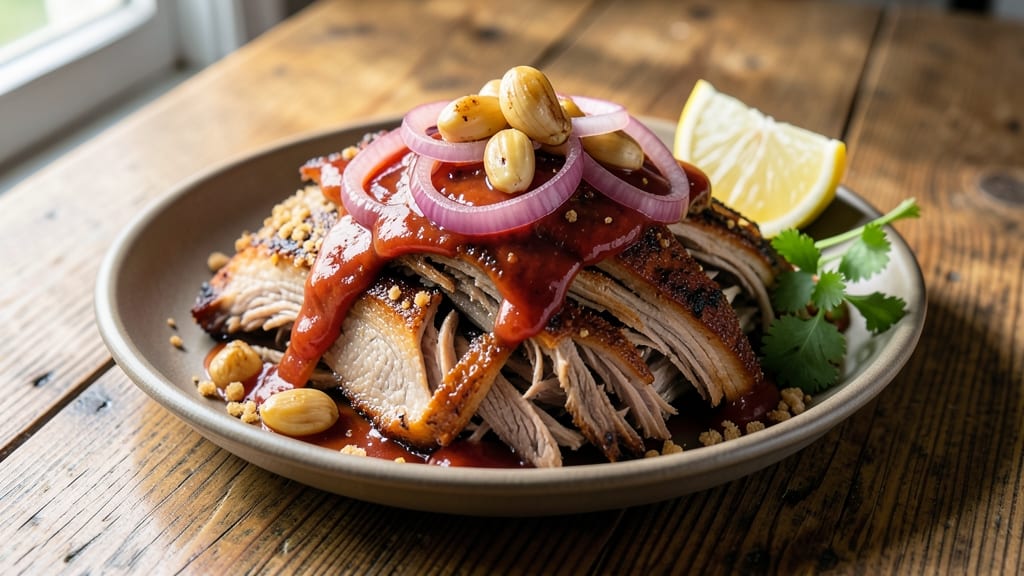
The best damn pulled pork recipe I've ever made delivers that legendary combination of smoky bark, tender meat, and just a touch of juicy pink—because sometimes, perfection doesn't mean total doneness. 🔥 After years of perfecting this on my farm in Georgia, I'm sharing the exact method that wins BBQ competitions and family dinner tables alike.
The secret? A dry rub that forms a crust like armor while keeping the inside impossibly tender, and a slow-cooking process that transforms tough pork shoulder into melt-in-your-mouth magic.
What sets this recipe apart is the balance of technique and simplicity. You don't need a fancy smoker—just a reliable heat source, patience, and my foolproof dry rub blend that locks in moisture while building that coveted bark.
The key steps (like wrapping the pork in butcher paper at the right moment) ensure you never end up with dry, stringy meat. I've cooked thousands of pounds of pork, and this method guarantees restaurant-quality results every single time, whether you're feeding a crowd or just craving a sandwich.
By the time you're done, you'll have pulled pork so tender it falls apart at the touch, with a crust that's crisp enough to stand up to a toothpick.
The flavor is a perfect marriage of smoky, spicy, and slightly sweet—bold enough to stand alone but versatile enough to work in tacos, sandwiches, or even loaded nachos. This isn't just pulled pork; it's the kind of dish that makes people clear their schedules to gather around your table.
The best part? Leftovers taste even better the next day, and the rub makes a great gift for BBQ enthusiasts. Let's get cooking—your taste buds (and your guests) will thank you.
Ingredients for best damn pulled pork
This legendary pork shoulder transforms into melt-in-your-mouth magic with just 13 game-changing ingredients.
| Ingredient | Amount | Notes |
|---|---|---|
| Pork Shoulder (Boston Butt) 🍖 | 8 lb | Bone-in, well-marbled preferred |
| Yellow Onion 🧅 | 2 whole | Medium-sized, roughly chopped |
| Garlic Cloves 🧄 | 10 cloves | Peeled, minced for rub |
| Brown Sugar 🍚 | ½ cup | Light or dark variety |
| Smoked Paprika 🌶️ | ¼ cup | For authentic smoky flavor |
| Kosher Salt 🧂 | ¼ cup | Diamond Crystal preferred |
| Black Pepper 🌶️ | 1 tbsp | Freshly ground for heat |
| Ground Cumin 🌿 | 2 tbsp | Toasted for deeper flavor |
| Mustard Powder 🍯 | 1 tbsp | Adds tangy depth |
| Chili Powder 🔥 | 2 tbsp | Medium heat preferred |
| Apple Cider Vinegar 🍏 | ¼ cup | For tenderizing |
| Butcher Paper 📄 | 1 sheet | For wrapping during cook |
| Yellow Mustard 🍯 | ¼ cup | For serving or basting |
The pork shoulder is your star—look for bone-in, well-marbled cuts at Costco or your local butcher shop. A 8-pound shoulder feeds a crowd and gives you plenty of leftovers (which, trust me, you'll love). If your grocery store doesn't have bone-in, don't stress—just ask for the largest cut they have. The apple cider vinegar here isn't just for flavor; it tenderizes the meat while you prep. Grab a bottle from the baking aisle—Bragg is my go-to, but any organic brand works. For the spices, Penzeys or the bulk section at Whole Foods will give you the freshest, most flavorful options—no dusty old jars here!
No smoked paprika? A mix of regular paprika plus a pinch of liquid smoke gets you close. Running low on butcher paper? Heavy-duty aluminum foil works in a pinch, though it won't crisp up the bark quite the same. The mustard powder can be swapped for Dijon mustard if you're in a hurry (use half the amount). For the brown sugar, white sugar plus a teaspoon of molasses mimics that caramelized depth. And if you're feeling fancy, add 1/4 cup of chopped fresh rosemary to the rub—it's a Georgia BBQ secret. The key is balancing sweet, smoky, and spicy, so taste as you go!
This pork is a leftovers legend—tastes even better the next day as flavors meld. Store in the fridge for up to 5 days, or freeze portions for 3 months wrapped tightly in butcher paper. I always make double batches because it disappears faster than you can say 'pull-apart tender.' For serving, keep it warm in a 200°F oven with a splash of apple juice to keep it moist. The rub? Make extra—it's perfect for brisket, chicken, or even roasted veggies!
Why You'll Love This Recipe
- Foolproof Slow Cook: I swear by the set-it-and-forget-it method—just dump the pork shoulder in with onions, garlic, and that smoky paprika, then let it work its magic for 8 hours. No babysitting, no stress, and honestly? The results speak for themselves.
- Sweet-Smoky Magic: That brown sugar and smoked paprika combo? It’s the secret weapon—caramelized edges on the outside, tender fall-apart meat inside. I’ll be real: my husband still asks for seconds even after three helpings.
- Party in a Pan: This pulls double duty as a tailgate staple or Sunday dinner. Serve it on buns for sandwiches, toss it in tacos, or pile it on nachos—it’s the kind of dish that makes you the hero of any gathering. (Yes, even on a Tuesday night.)
- Budget-Friendly Feast: A pork shoulder feeds a crowd for less than $1.50 per serving, and leftovers? They’re my secret weapon for lunches all week. Freeze half if you’re not eating it all—it reheats like a dream.
Step-by-step instructions for smoky-spiced pulled pork
Here's where the magic happens—your pork shoulder transforms into melt-in-your-mouth perfection.
👨🍳 Step 1: Build the Unforgettable Rub
In a large bowl, combine the 0.5 cup brown sugar, 0.25 cup smoked paprika, 0.25 cup kosher salt, 1 tbsp black pepper, 2 tbsp ground cumin, 1 tbsp mustard powder, and 2 tbsp chili powder. Mix until the spices are evenly distributed and the sugar crystals disappear. This is your flavor bomb—don't skimp on mixing!
In a separate small bowl, whisk together the 0.25 cup apple cider vinegar and 10 cloves minced garlic. This tangy mixture will tenderize the meat and add depth. Pour this over the dry rub and stir until you have a thick, moist paste. The vinegar will help the rub stick to the pork like glue.
👨🍳 Step 2: Coat and Cure the Pork Shoulder
Pat the 8 lb pork shoulder (Boston Butt) completely dry with paper towels—this is non-negotiable for crispy bark. Generously coat the entire surface with the rub, pressing it into every crevice. I like to use my hands for this—get in there and really work that rub into the meat. Don't forget the fat cap!
Place the rubbed pork on a plate, fat-side up, and refrigerate uncovered for 12-24 hours. This curing process allows the spices to penetrate deeply and the meat to dry out slightly, which is crucial for that perfect crust. The longer it cures, the more intense the flavor—just don't exceed 24 hours or the meat might get too dry.
🔥 Step 3: Slow Cook to Tender Perfection
Preheat your smoker or oven to 225°F. If using a smoker, add 2 whole yellow onions to the cooking chamber for natural sweetness and moisture. Place the pork shoulder fat-side up on the smoker grates. The fat will render and baste the meat as it cooks, creating that irresistible crust.
Cook the pork for 6-8 hours, maintaining a consistent 225°F temperature. You'll hit "the stall" around 165°F internal temp—this is when the meat's moisture evaporates and the temperature plateaus. Don't panic! This is normal and actually helps develop that beautiful bark. At this point, wrap the pork tightly in the butcher paper to lock in moisture and push through the stall.
⏰ Step 4: Finish and Rest for Maximum Juiciness
Continue cooking until the internal temperature reaches 200-203°F and the meat is fork-tender with no resistance. This usually takes another 2-4 hours after wrapping. The pork should have a deep mahogany bark and be falling apart easily when you test it.
Unwrap the pork and transfer it to a clean cutting board. Tent loosely with foil and let it rest for 1-2 hours. This resting period is where the juices redistribute throughout the meat. If you skip this step, you'll end up with dry, stringy pork. Trust me on this—it's worth the wait!
🔪 Step 5: Shred and Serve with Tangy Mustard
Remove the pork from the foil and discard any large fat chunks. Using two forks or meat claws, shred the pork against the grain into ¼-inch thick strands. You should have about 4-5 cups of pulled pork—enough for 12 generous servings. The meat should be tender enough to pull apart with minimal effort, with just a hint of pink in the center.
Toss the shredded pork with 0.25 cup yellow mustard and any accumulated juices from the cutting board. This adds a bright, tangy contrast to the rich, smoky flavors. Serve immediately on buns with your favorite toppings—pickles, coleslaw, and extra mustard make this dish sing even louder.
Pro Tips For Making Best Damn Pulled Pork
- USE A MEAT THERMOMETER: I learned this the hard way—guessing doneness with pulled pork leads to either dry, overcooked meat or undercooked, sad pork. Aim for 203°F internal temp (yes, it’ll still pull apart easily). The probe should slide through like butter, not fight you like a stubborn ex.
- SWEAT THE ONIONS FIRST: Skip the raw onion chunks straight into the pot—this recipe needs flavor depth, not just texture. Sauté one finely diced onion in a dry skillet with a pinch of salt until translucent (about 5 minutes) before adding garlic. That caramelized base makes the difference between "meh" and "damn."
- DON’T RUSH THE BROWN SUGAR: I used to dump it in early, thinking it’d melt fast. Wrong. Add the brown sugar last 30 minutes of cooking so it caramelizes into the sauce instead of dissolving into the liquid. If it’s clumpy, mix it with a splash of apple cider vinegar first—it’ll dissolve smoother and stick better.
- WRAP IT IN FOIL AT 165°F: The crust is great, but moisture is everything. Once the pork hits 165°F, wrap it tightly in foil with a splash of the cooking liquid. This keeps it from drying out while it finishes pulling apart. Unwrap it last 15 minutes to let that crust form again—your guests will notice the difference.
Storing and reheating your best damn pulled pork
Fridge Storage
Let your pulled pork cool to room temperature (about 1 hour) before storing—this prevents condensation that makes meat soggy. Transfer to an airtight container with a splash of apple cider vinegar (about 2 tbsp) to keep it moist.
Store for up to 4 days in the fridge, but I find the flavor actually deepens after 24 hours as the spices meld. 💪
For reheating, remove only what you need—keeping the rest sealed preserves texture. The pork reheats beautifully in the microwave or oven, but I prefer the oven method for better results (see next section). Pro tip: Spritz with 1 tsp apple juice before reheating to maintain moisture.
Freezer Magic
For long-term storage, freeze portions in butcher paper-wrapped bundles (about 2 cups per bundle) for easy thawing. These freeze for 3 months without quality loss. When ready to use, thaw overnight in the fridge—never microwave-thaw pork, as it creates uneven heating zones that risk food safety. 🧊
I like to make extra bundles because frozen pulled pork makes an amazing last-minute meal. Just reheat from frozen in the oven (covered) at 300°F for 30 minutes, then shred and toss with mustard. The texture stays surprisingly tender when frozen properly.
Oven Reheating
My preferred method is reheating in a 350°F oven with a splash of broth or apple juice. Spread the pork on a baking sheet, drizzle with 2 tbsp liquid, cover loosely with foil, and heat for 15-20 minutes.
This gentle heat keeps the meat moist while reactivating those smoky flavors. For extra crispiness, broil for 2 minutes at the end. 🔥
For sandwiches, I sometimes reheat just the portion I'll serve immediately, then assemble with fresh buns and toppings. The key is to keep the pork warm but not dry—never microwave on high power, as it turns the meat rubbery. A low-and-slow approach is always best.
Microwave Shortcut
When you're in a hurry, microwave reheating works surprisingly well if done right. Place pulled pork in a microwave-safe bowl with 1 tbsp apple juice, cover with a damp paper towel, and heat on 50% power for 2-3 minutes.
Stir, then continue in 30-second intervals until reaching 165°F internal temperature. This keeps the meat from drying out. ✨
For best results, I recommend using a microwave-safe plate with a lid or microwave-safe cover. If the pork looks dry after reheating, simply add another 1 tbsp liquid and heat for another 30 seconds. The mustard in the recipe helps maintain moisture during reheating.
Nutrition facts
Frequently asked questions
Why does your recipe keep the pork slightly pink?
That juicy pink center is intentional! Pulled pork should reach 200-203°F internal temp, where collagen breaks down into gelatin while still retaining moisture. Overcooking to 165°F turns it dry—this method guarantees tender, saucy bites with perfect texture. The apple cider vinegar in the rub also helps preserve that moist pink hue.
Can I make this in an oven instead of a smoker?
Preheat your oven to 225°F and use a roasting pan with a rack. Place a water pan on the bottom to add moisture, and cook for 6-8 hours until it hits 200°F. For smoky flavor, add 2 chopped onions to the pan or use 1 tbsp liquid smoke in the rub. The butcher paper wrap works the same way to push through the stall.
What's the deal with wrapping the pork in butcher paper?
This is the secret weapon against dryness! When the pork hits 165°F (the stall), wrapping in butcher paper traps steam and pushes it through to 200°F without drying out. Unlike foil, butcher paper lets the bark crisp up while keeping the inside tender. The paper also absorbs some of the pork's natural juices, creating extra flavor when you toss it with mustard later.
How do I know when it's done without a meat thermometer?
Press your thumb into the meat—if it feels like very firm tofu, it's ready! The bark should be deep mahogany with visible cracks, and when you lift a corner, the meat should pull apart easily with minimal resistance. For extra confidence, check the shoulder joint—if it moves freely, you're golden. Pro tip: The juices should run clear when you pierce it, not pink.
Can I use a different cut of pork?
Boston butt is ideal, but pork shoulder works too—just trim excess fat. Avoid lean cuts like tenderloin (it'll be dry) or ribs (they cook faster). For 6-7 lb pork shoulder, reduce cook time by 1-2 hours and adjust rub quantity by half. The key is finding a cut with good marbling—ask your butcher for "well-marbled pork shoulder" if you're unsure.