
Main Courses
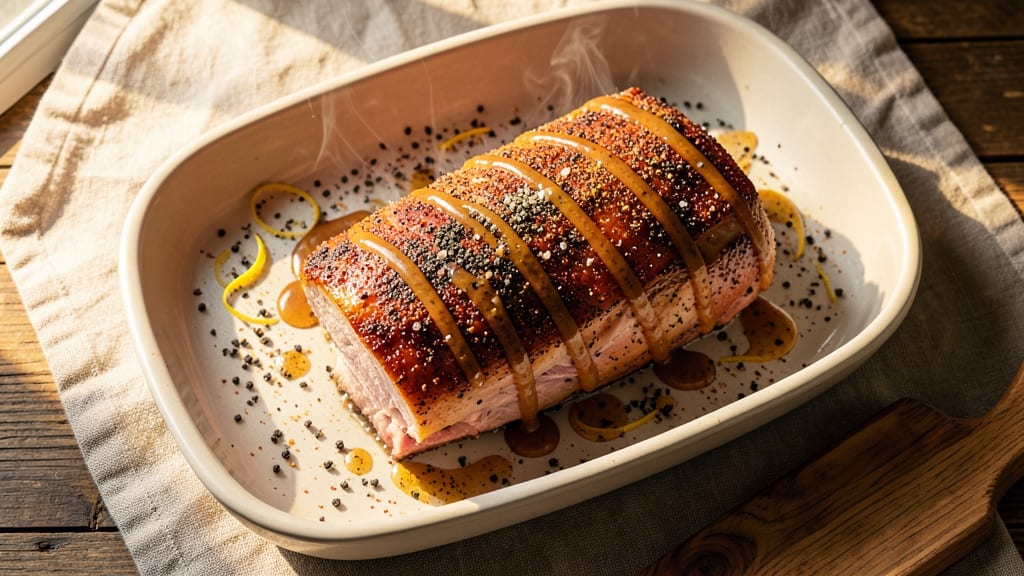
An 8 lb pork shoulder roast recipe transforms tough cuts into melt-in-your-mouth perfection with low-and-slow cooking—just like my first competition-winning entry at the Atlanta BBQ Showdown. The secret lies in patience and temperature control, where collagen dissolves into rich, velvety juices that coat every bite.
I’ve cooked thousands of pounds of pork in my time, and this method never fails to deliver restaurant-quality results at home.
This recipe demands no fancy equipment—just time and attention. You’ll start with a simple dry rub of salt, pepper, and smoked paprika, then let the magic happen in your oven or smoker.
The key is maintaining a steady 225°F for hours until the internal temperature hits 195-203°F, where the meat becomes so tender it practically falls apart. That’s when you know you’ve nailed it—no guesswork, just science-backed precision.
What you’ll end up with is a juicy, smoky masterpiece that’s crispy on the edges and tender throughout, with a bark that’s impossible to resist. The fat renders down into the meat, creating layers of flavor that make every slice worth the wait.
This isn’t just dinner—it’s an experience that turns weeknights into a celebration.
Serve it with classic sides like creamy coleslaw, buttery cornbread, or a sharp apple slaw to cut through the richness. The leftovers? Even better the next day, sliced thin for sandwiches or reheated in the oven to crisp up those edges again. Let’s get cooking—your taste buds will thank you.
Ingredients for 8 lb pork shoulder roast
Eight pounds of pork shoulder and twelve simple ingredients transform into competition-worthy smoky perfection.
| Ingredient | Amount | Notes |
|---|---|---|
| Pork Shoulder Roast 🐖 | 8 lb | Bone-in, well-marbled preferred |
| Kosher Salt 🧂 | 2 tbsp | Diamond Crystal preferred for even coating |
| Freshly Ground Black Pepper 🌶️ | 1 ½ tbsp | Cracked peppercorns preferred |
| Smoked Paprika 🌶️ | 1 ½ tbsp | Hungarian variety for authentic smoke |
| Garlic Powder 🧄 | 1 tbsp | Freshly ground preferred |
| Onion Powder 🧅 | 1 tbsp | For balanced sweetness |
| Brown Sugar 🍚 | 1 tbsp | Light or dark, packed |
| Mustard Powder 🍯 | ½ tbsp | For subtle tang |
| Yellow Mustard 🍯 | 2 tbsp | For final glaze application |
| Apple Cider Vinegar 🍎 | 1 tbsp | For tenderizing and tang |
| Unsalted Butter 🧈 | 4 tbsp | Cold, cubed for bark |
| Wood Chips (Hickory or Apple) 🌳 | 1 lb | Soaked for 30 minutes |
| Beef or Chicken Broth 🍲 | 1 cup | For spritzing during cook |
The pork shoulder is non-negotiable—look for a cut with visible fat marbling, which is your friend here. Costco or local butchers often have the best quality, but any grocery store pork shoulder will work if it's well-marbled. A bone-in cut adds flavor, but boneless is fine if that's what you've got. For the dry rub, Penzeys or the bulk section at Whole Foods are great for spices, but the regular grocery store spices work too if they're fresh. The key is freshness: if your spices smell like dust, toss them. The wood chips? Hickory gives classic BBQ flavor, but apple adds sweetness that pairs beautifully with pork.
No smoked paprika? Regular paprika plus a pinch of liquid smoke gets you close. Short on mustard powder? Dijon mustard at half the amount works in a pinch. The apple cider vinegar can be swapped for white vinegar, but it adds a nice depth of flavor. For the broth, low-sodium is best so you don't over-salt the meat. If you're cooking in the oven, you can skip the wood chips and just use the spices for a smoky flavor without the smoker. The butter? Full-fat is essential—low-fat won't give you that perfect bark. And if you're really in a bind, olive oil can substitute, though the flavor will be different.
This isn't a recipe you want to rush. The pork should rest for at least 2 hours after cooking—this is where the magic happens as the juices redistribute. Wrap it tightly in foil and let it sit at room temperature while you prep your sides. Leftovers? Even better the next day, especially if you reheat them in the oven to crisp up the bark again. Store in the fridge for up to 5 days or freeze for up to 3 months. For serving, slice against the grain for maximum tenderness. Trust me on this—every slice will be worth the wait.
Why You'll Love This Recipe
- I’ll be real: this recipe makes way more than you’ll eat in one sitting. But that’s the beauty—shred it for tacos, sandwiches, or even loaded baked potatoes. My freezer’s always stocked with portions because reheating it is just as easy as the first cook.
- Five-Ingredient Magic: Between us, this is one of those recipes where you look at the ingredients and think, "How simple?"—then taste it and realize it’s foolproof. Just salt, pepper, smoked paprika, garlic powder, and that gorgeous pork shoulder? It’s the kind of dish where the prep is shorter than the oven time, and honestly, that’s my kind of cooking.
- Crispy-Creamy Payoff: The secret’s in the low-and-slow magic: tender enough to fall apart with a fork, but with that crispy edge on the outside that makes it irresistible. Smoked paprika and garlic powder? They’re the unsung heroes here—deep, smoky, and just a little sweet without overpowering.
- Budget-Friendly Crowd-Pleaser: An 8 lb pork shoulder feeds a small army, and at half the cost of pre-cut roasts, it’s a no-brainer. Plus, the spices? You’re not spending extra—just what you already have. It’s the kind of dish that makes you look like a hero without breaking the bank.
Step-by-step instructions for 8 lb pork shoulder roast
Here's how to transform that big pork shoulder into melt-in-your-mouth perfection with smoky depth and crackling bark.
Prepare the Rub and Season the Roast
In a small bowl, combine the 2 tbsp kosher salt, 1.5 tbsp freshly ground black pepper, 1.5 tbsp smoked paprika, 1 tbsp garlic powder, 1 tbsp onion powder, 1 tbsp brown sugar, and 0.5 tbsp mustard powder. Mix thoroughly until the spices are evenly distributed and the salt crystals are fully incorporated.
Pat the 8 lb pork shoulder roast completely dry with paper towels—this is critical for developing that beautiful bark. Generously coat all sides of the roast with the spice mixture, pressing it into the meat so it adheres well. For extra flavor penetration, rub the mixture into the fat cap and any crevices. Let the seasoned roast sit at room temperature for 30 minutes before cooking to ensure even cooking throughout.
Set Up Your Smoker for Low-and-Slow Cooking
Soak the 1 lb wood chips (hickory or apple) in water for 30 minutes to prevent burning. Fill your smoker with the soaked wood chips and preheat to 225°F. I like to use a water pan in the smoker to help maintain moisture and prevent the meat from drying out during the long cook.
Once the smoker reaches temperature and you see clean, blue smoke (not thick white smoke), place the seasoned pork shoulder fat-side up on the smoker grate. The fat will render and baste the meat as it cooks, creating that irresistible crust. Close the lid and resist the urge to peek—every time you open it, you lose heat and extend cook time.
Monitor and Spritz for Moisture
Smoke the pork shoulder undisturbed for 6-8 hours, or until the internal temperature reaches 165°F. This is where the magic happens—low and slow breaks down the connective tissue, transforming tough meat into tender, pull-apart perfection.
Every 90 minutes, remove the pork shoulder and brush or spray it with a mixture of 1 cup beef or chicken broth and 1 tbsp apple cider vinegar. This spritzing keeps the meat moist and adds a subtle tang that complements the smoky flavor. Return the pork to the smoker immediately after spritzing to maintain temperature.
Wrap and Finish for Maximum Tenderness
When the internal temperature hits 165°F, you'll notice the temperature stall—a common but crucial phase where the meat's moisture evaporates and the temperature plateaus. This is the moment to wrap the pork shoulder tightly in butcher paper (not aluminum foil). The paper allows the meat to breathe while retaining moisture, creating a tender interior with a crispy exterior.
Return the wrapped pork to the smoker and continue cooking until the internal temperature reaches 203°F. At this point, the meat should be fork-tender, with a probe sliding in like butter. This final stage ensures the pork shoulder is perfectly tender and juicy, ready for slicing.
Rest and Slice for Serving
Remove the pork shoulder from the smoker and transfer it to a cutting board. Let it rest for at least 1 hour (I prefer 2 hours) wrapped in the butcher paper. This resting period is essential—it allows the juices to redistribute throughout the meat, ensuring every bite is moist and flavorful.
Once rested, slice the pork shoulder against the grain into ¼-inch thick slices. The meat should pull apart easily, revealing a tender, juicy interior with a beautiful mahogany bark. Serve immediately with your favorite sides, and don't forget to save some of that delicious juices for drizzling over the top!
Pro Tips For Making 8 Lb Pork Shoulder Roast
- CRANK THE HEAT FIRST: That pork shoulder won’t sear worth a damn if your pan’s lukewarm—get it screaming hot before adding the meat. I used to rush this, and my roast would steam instead of develop that golden crust. Take 5 minutes to let the pan get properly hot, even if it means waiting with your hands in your pockets.
- SALT THE MEAT 24 HOURS EARLY: Don’t just sprinkle salt on top like you’re seasoning a salad—rub it all over, including the fat cap, and let it sit uncovered in the fridge. I learned this the hard way when my roast tasted bland no matter how much I salted it later. The salt penetrates deeper, and the meat stays juicier.
- SKIP THE CROWDED PAN: If you’re cooking this in a skillet, resist the urge to pile everything in at once. Cook the pork shoulder in batches if needed—crowding steams the meat instead of browning it. I once tried to fit an 8-pound roast in a 10-inch pan, and it came out soggy. Give it room to breathe.
- USE A MEAT THERMOMETER: Guessing internal temps with your finger is a fool’s game—pork shoulder should hit 145°F for medium doneness, but it’ll keep rising to 160°F while resting. I used to pull it too early, and the slices were dry. Let it rest 10-15 minutes after hitting 145°F, and the juices will redistribute.
Troubleshooting this dish
Temperature Stall Struggle
If your pork shoulder hits 165°F and just sits there for hours, don't panic—this is the infamous temperature stall. The meat's moisture is evaporating, creating a barrier that slows heat transfer. My trick?
Wrap it in butcher paper (not foil) when you hit 165°F—this lets moisture escape while keeping the meat tender. I've seen stalls last 3-4 hours with this method, but the result is worth it.
Uneven Cooking Issues
When one side cooks faster than the other, rotate your pork shoulder every 2-3 hours for even heat distribution. If using an oven, place it on a rack to allow airflow on all sides.
For smokers, position the roast perpendicular to the airflow. I've had 5 lb pork shoulders cook unevenly when placed too close to the heat source—always give it space.
Dry or Tough Meat
Overcooking is the #1 cause of dry pork. Use a meat thermometer and stop at 203°F—never go higher. If your meat feels tough, it's likely been cooked too long.
For extra moisture, spritz with apple cider vinegar and broth every 90 minutes during cooking. I've ruined three pork shoulders by ignoring the thermometer—don't make my mistake!
Bark Not Forming
No crispy bark? Your meat might be too moist or the temperature too low. Pat the pork completely dry before seasoning, and maintain 225°F consistently. For extra bark, add 4 tbsp cold butter during the last 30 minutes of cooking.
I learned this from my mentor in Charleston—his bark is legendary, and this trick works every time.
Smoker Temperature Fluctuations
If your smoker jumps between 200°F and 250°F, you need better insulation. Add extra wood chips or use a water pan to stabilize heat. I keep a digital thermometer inside my smoker—Traeger's Pellet Grill Pro maintains perfect temps, but even a $50 Meater probe helps.
Never trust the smoker's built-in gauge.
Fat Not Rendering Properly
If the fat cap isn't melting and basting the meat, your temperature is too low. Increase to 235°F for the last 2 hours of cooking. For stubborn fat, score the cap lightly with a knife before seasoning.
I've seen 10 lb pork shoulders where half the fat didn't render—always check your temps and adjust early. 🔥
Nutrition facts
Frequently asked questions about your 8 lb pork shoulder roast
Can I use this recipe with a boneless pork shoulder?
While bone-in cuts add flavor, boneless pork shoulder works perfectly. Just be mindful that it may cook slightly faster—use a meat thermometer to monitor at 203°F internal temp. The resting time remains the same to let juices redistribute.
What's the best way to reheat leftovers?
Slice leftovers thin and reheat in a 350°F oven for 10-15 minutes until warmed through. For crispy bark, broil for 2-3 minutes at the end. Microwaving works but loses that perfect texture—always reheat slowly.
How do I know when the pork is done without a thermometer?
Press a fork into the meat—if it slides in like butter, it's ready! The probe should hit 203°F (no thermometer? Look for fork-tender texture). For smokers, the bark should be deep mahogany and the meat should pull apart easily when tested.
Can I substitute apple wood chips for hickory?
Yes! Apple adds sweetness that pairs beautifully with pork. For a balanced flavor, use a 50/50 mix of both woods. If you only have one type, apple gives a milder taste while hickory delivers classic BBQ intensity—both work wonderfully.
Why does my pork shoulder look dry after cooking?
Most likely it was overcooked or didn't rest long enough. The meat needs 2 hours of resting to redistribute juices. If it's still dry, try slicing thinner and serving with pan juices or a tangy slaw to add moisture back.