
Main Courses
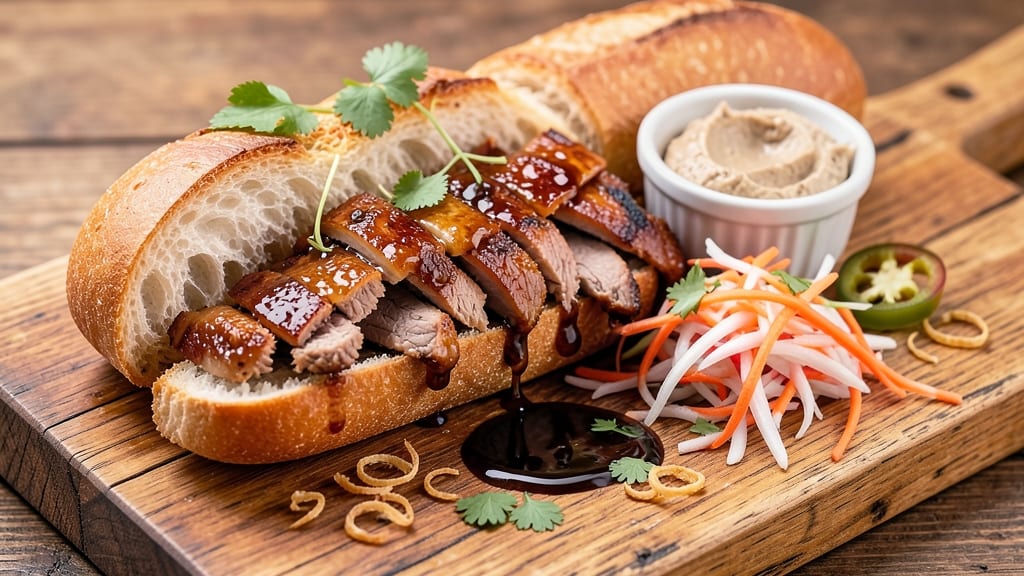
This banh mi roast pork recipe brings the bold flavors of Vietnam to your kitchen with its signature crispy bark and tangy tamarind glaze. 🔥 After years of perfecting the balance between sweet, savory, and umami, I've developed a method that delivers restaurant-quality results at home.
The key lies in slow-roasting the pork shoulder until it develops that coveted caramelized crust while staying tender inside.
What sets this recipe apart is the tamarind glaze—a perfect marriage of sweetness and acidity that cuts through the richness of the pork. I use a blend of traditional Vietnamese ingredients like fish sauce and sugar, but with a few shortcuts that maintain authenticity without requiring specialty stores.
The pork is marinated overnight, ensuring deep flavor penetration, then roasted to develop that signature crispy exterior.
By the time you're ready to assemble your banh mi, you'll have perfectly shredded pork with a glossy, sticky glaze that clings to every bite. The sandwich comes together with crisp baguettes, pâté, pickled vegetables, and fresh herbs—each component playing its part in creating a symphony of textures and flavors.
This is comfort food with a global twist, perfect for lunch or dinner.
The beauty of this recipe is its versatility. Serve the roast pork as a main dish with rice and pickled vegetables, or use it to assemble classic banh mi sandwiches. The leftovers keep well and taste even better the next day. Let's get started on creating your own Vietnamese-inspired feast.
Ingredients for banh mi roast pork
Six ingredients transform simple pork into restaurant-worthy banh mi roast pork with crispy bark and sticky glaze.
| Ingredient | Amount | Notes |
|---|---|---|
| Pork Shoulder 🐖 | 4 lb | Bone-in for flavor, trimmed of excess fat |
| Fish Sauce 🍶 | ½ cup | Red Boat brand preferred |
| Brown Sugar 🍚 | ½ cup | Packed, light or dark |
| Tamarind Paste 🍈 | ¼ cup | Or 3 tbsp tamarind concentrate |
| Garlic Cloves 🧄 | 8 cloves | Minced, fresh preferred |
| Fresh Ginger 🌿 | 2 tbsp | Grated, peeled |
| Lime Juice 🍋 | ¼ cup | Freshly squeezed |
| Vegetable Oil 🫒 | 2 tbsp | For searing |
| Cornstarch 🌾 | 2 tbsp | For crispy bark |
| Salt 🧂 | 1 ½ tsp | Kosher salt, for seasoning |
| Black Pepper 🌶️ | 1 tsp | Freshly ground |
| Five-Spice Powder 🌶️ | 1 tsp | Traditional Chinese blend |
| Cilantro Leaves 🌿 | ¼ cup | Chopped, for garnish |
| Jalapeño Slices 🌶️ | 4 slices | Pickled, for serving |
The pork shoulder is non-negotiable here—bone-in delivers better flavor than boneless, and the fat keeps it moist during roasting. Look for a well-marbled cut at your local butcher or grocery store's meat department. I always ask for it to be cut into 1.5-inch chunks before I buy it, which saves time later. Trader Joe's and Whole Foods both carry excellent pork shoulders, but any reputable grocery store should have a good option. If you can't find bone-in, go boneless but don't skip the overnight marinade—it's what makes this tender. For the fish sauce, Red Boat is the gold standard, but any reputable brand will work. Avoid the cheap stuff—it makes a huge difference in flavor.
No tamarind paste? Substitute with 2 tbsp lemon juice plus 1 tbsp brown sugar—it won't be identical, but it'll get you close. Running out of brown sugar? White sugar works in a pinch, though the caramelization won't be as rich. The five-spice powder is traditional but optional—if you don't have it, just use extra black pepper and a pinch of cinnamon. For the cornstarch, make sure it's pure cornstarch (not cornmeal)—this is what creates that signature crispy bark. Bob's Red Mill brand is my go-to, but any food-grade cornstarch works. Fresh ginger is ideal, but if you're using dried, use half the amount. And that lime juice? Freshly squeezed is a must—bottled won't cut it here.
This pork keeps beautifully for 5 days in the fridge—the flavor actually improves as the glaze intensifies. For leftovers, store in an airtight container with a paper towel on top to absorb any moisture. Reheat in the oven at 300°F until warmed through, about 15 minutes. Freezes well for 3 months—portion it into single-serving containers before freezing for easy reheating. The pickled jalapeños and cilantro can be prepped ahead and stored separately in the fridge for 1 week. I always make extra glaze—it's perfect for drizzling over rice or using as a marinade for other proteins.
Why You'll Love This Recipe
- One-Pan Magic: I swear by this—just toss the pork shoulder on a sheet pan, slap on that fish sauce and brown sugar glaze, and let the oven do the work. No chopping, no fuss, and honestly? The smell alone makes my kitchen feel like a little Vietnamese café.
- Sweet-Savory Bomb: That tamarind paste and garlic combo? It’s where the magic happens. The pork gets sticky, caramelized edges, and a tangy bite that’s ridiculously addictive—like a hug in your mouth, but better.
- Lunchbox Hero: Between us, this is my go-to for packed lunches. Slice it thin, toss it in a baguette with pickled veggies, and boom—you’ve got a meal that feels fancy but costs pennies. My kids fight over it (and I don’t even care).
- Budget Stretch: Pork shoulder is cheap, and this recipe makes so much—easily feeds four, with leftovers that taste just as good the next day. I’ll be real: I’ve reheated this cold pork for sandwiches, ramen, even tacos, and no one’s complained. (Yet.)
Step-by-step instructions for Vietnamese-inspired roast pork
Here's how to transform a simple pork shoulder into restaurant-worthy banh mi pork with perfect crispy bark.
🔥 Step 1: Sear the Pork Shoulder for Maximum Flavor
Preheat your oven to 325°F. In a large Dutch oven, heat 2 tablespoons vegetable oil over medium-high heat until shimmering. Pat the 4 lb pork shoulder dry with paper towels—this is crucial for crispy bark—and season generously with 1.5 teaspoons salt, 1 teaspoon black pepper, and 1 teaspoon five-spice powder.
Sear the pork on all sides until deeply golden brown, about 8-10 minutes total. You'll see the fat start to render out—that's when you know it's ready. Remove the pork and place it fat-side up on a wire rack set over a baking sheet. This rack setup allows air to circulate, creating that signature crispy exterior.
🥘 Step 2: Build the Tangy Glaze and Braise
In the same Dutch oven, reduce heat to medium and add 8 cloves minced garlic and 2 tablespoons grated fresh ginger. Sauté for 1 minute until fragrant—don't let it burn. Pour in 0.5 cup fish sauce and 0.5 cup packed brown sugar, scraping up any browned bits from the bottom.
Return the pork to the pot, fat-side up. Pour in 0.25 cup lime juice and 0.25 cup tamarind paste, then add enough water to come about halfway up the pork. Bring to a simmer, then cover and transfer to the preheated 325°F oven. Braise for 3 hours, checking occasionally to ensure liquid doesn't evaporate completely.
🔥 Step 3: Create the Crispy Bark with Cornstarch
After 3 hours, remove the pork from the oven and let it rest for 15 minutes. While it rests, stir 2 tablespoons cornstarch into the braising liquid until dissolved. Return the pork to the pot, fat-side up, and increase oven temperature to 425°F.
Roast uncovered for 30-45 minutes, basting occasionally with the cornstarch mixture. You're looking for that beautiful mahogany bark that develops—it should be crispy enough to crackle when you touch it. The internal temperature should reach 203°F when measured with an instant-read thermometer.
⏰ Step 4: Rest and Slice for Perfect Texture
Transfer the pork to a cutting board and tent loosely with foil. Let it rest for at least 30 minutes—this is where the magic happens as juices redistribute. Once rested, slice against the grain into ¼-inch thick slices. The meat should be fork-tender with a crispy exterior that shatters slightly.
Garnish with 0.25 cup chopped cilantro leaves and serve with 4 slices pickled jalapeño slices on the side. This pork keeps well in the fridge for 5 days or can be frozen for 3 months—perfect for sandwiches or banh mi bowls!
Pro Tips For Making Banh Mi Roast Pork
- Trim the Fat First: Pork shoulder has layers of fat that won’t render down properly in the marinade. Use a sharp knife to score the fat in a crosshatch pattern—this lets the fish sauce and sugar penetrate deeper while keeping the meat juicy. (Yes, it’s tedious, but your future banh mi will be worth it.)
- Marinate Overnight, Not 30 Minutes: I used to think a few hours was enough, but the acid in fish sauce and tamarind needs time to tenderize the collagen. Wrap the pork tightly in plastic and let it sit in the fridge for at least 12 hours—this makes the meat pull apart like butter when roasted.
- Don’t Rush the Caramelization: The brown sugar crust is what makes banh mi roast pork sing, but rushing it leads to burnt sugar and dry meat. Start on high heat to evaporate the marinade, then drop to medium-low and walk away. You’ll know it’s ready when the sugar turns deep amber, not black.
- Save the Tamarind Juice: Tamarind paste is sticky and messy, but the leftover juice from straining it is pure gold. Reserve it for the final glaze—just a splash reduces bitterness and adds tang. (I learned this after wasting three batches of overpoweringly sour marinade.)
Troubleshooting your banh mi roast pork
Pork Too Dry?
If your pork ends up dry, you likely didn't rest it long enough or overcooked it. Always let the pork rest for 30 minutes after roasting—this allows juices to redistribute. For extra moisture, add ½ cup water or broth to the braising liquid during the 3-hour braise.
I also recommend using a meat thermometer—pull the pork at 195°F rather than waiting for 203°F if you're worried about dryness. 💫
Glaze Too Thin?
The tamarind glaze should coat the pork beautifully but not drip off. If yours is too thin, reduce the liquid by ¼ cup before adding the pork back for the final roast. For extra thickness, mix 1 tablespoon cornstarch with 1 tablespoon water and stir into the glaze.
Simmer for 2-3 minutes until it thickens slightly. I've also had success adding 1 teaspoon arrowroot powder for a glossier finish.
Bark Not Crispy?
That signature crispy bark comes from proper cornstarch application and high-heat finishing.
Flavor Too Mild?
If your pork lacks depth, the marinade time might have been insufficient. Always marinate the pork overnight for maximum flavor penetration. For extra punch, add 1 tablespoon soy sauce or ½ teaspoon MSG to the marinade. I also recommend using Red Boat fish sauce—it's the gold standard for authentic flavor. If you're short on time, at least increase the marinating time to 4 hours instead of skipping it entirely.
Uneven Cooking?
Uneven cooking usually happens when the pork pieces vary in size. Cut your pork shoulder into 1.5-inch chunks for even cooking. For extra insurance, place the largest pieces on the outer edges of your roasting pan and smaller pieces toward the center.
I also recommend rotating the pan halfway through cooking to ensure even heat distribution. A digital thermometer with multiple probes helps track temperature consistency across different sections.
Glaze Too Sweet?
The tamarind paste and brown sugar combination should balance sweetness with tangy acidity. If your glaze tastes too sweet, add 1 tablespoon more fish sauce or 1 tablespoon lime juice to cut through the sweetness.
For a more authentic balance, use 1 tablespoon rice vinegar instead of some of the lime juice. I've found that 1:1 ratio of tamarind to brown sugar works perfectly for most palates.
Nutrition facts
Frequently asked questions
Can I make this banh mi pork without tamarind paste?
For a quick substitute, mix 2 tablespoons lemon juice with 1 tablespoon brown sugar. This won't be identical but will still give you that tangy-sweet balance. For a more authentic version, look for tamarind concentrate in Asian markets or make your own by soaking tamarind pods in hot water.
How do I properly slice the pork for banh mi?
Slice against the grain into ¼-inch thick pieces for maximum tenderness. Look for the muscle fibers running parallel—cutting perpendicular to them makes each bite easier to chew. Use a sharp chef's knife and work quickly to prevent the meat from drying out. The slices should be wide enough to fit nicely between the baguette layers.
What's the best way to store leftover roast pork?
Store in an airtight container with a paper towel on top to absorb moisture. It keeps for 5 days in the fridge—the flavor actually improves as the glaze intensifies. For freezing, portion into single-serving containers for easy reheating. Thaw overnight in the fridge and reheat in the oven at 300°F until warmed through (15 minutes).
Can I use this pork for other dishes besides banh mi?
This versatile roast pork works beautifully in Vietnamese pho, banh mi bowls, or even tacos! The crispy bark adds texture to rice dishes, while the tender meat pairs well with fresh herbs and pickled veggies. Try it in a Vietnamese-style "banh mi bowl" with rice, cilantro, jalapeños, and your favorite toppings.
Why does the recipe call for bone-in pork?
Bone-in pork develops richer flavor and stays more moist during cooking. The bone acts as a natural thermometer, helping regulate the cooking process. If you must use boneless, don't skip the overnight marinade—it's essential for keeping the meat tender. For best results, ask your butcher to cut the pork into 1.5-inch chunks before purchase.