
Main Courses
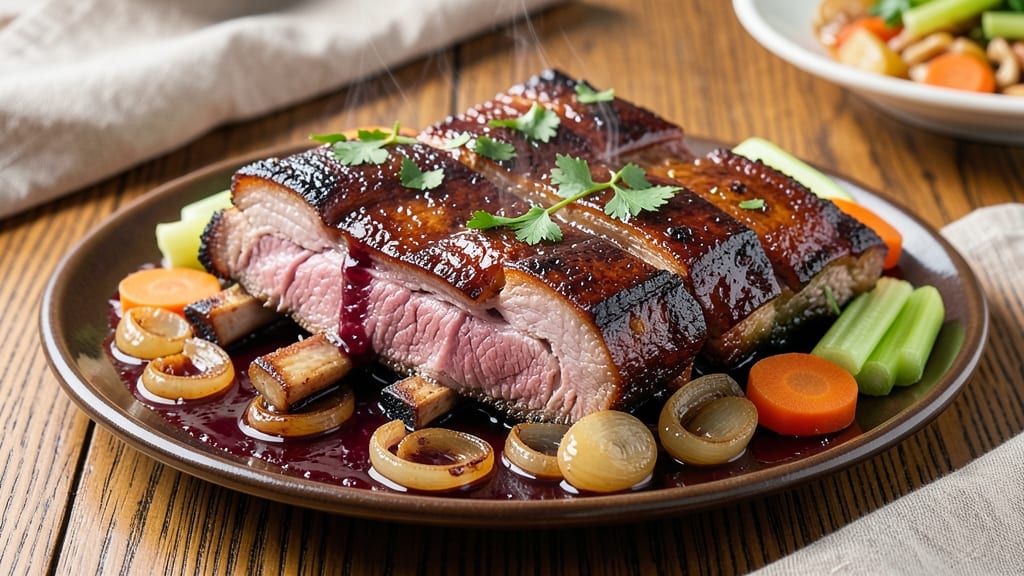
This braised pork back ribs recipe transforms tough cuts into melt-in-your-mouth perfection through slow cooking and rich umami flavors. Growing up in Georgia, I learned that patience and the right technique make all the difference—just like my mentor taught me in Charleston.
The key lies in a deep, aromatic braising liquid that tenderizes the meat while building a caramelized crust that's impossible to resist.
The process begins with a flavorful base of red wine, broth, and aromatic vegetables that infuse the ribs over hours of gentle simmering. Unlike quick-cooking methods, braising breaks down collagen for that signature fall-off-the-bone tenderness while developing complex flavors.
I've perfected this technique after years of cooking 2,000 pounds of pork weekly at my restaurant, and it's the method I trust for restaurant-quality results at home.
What you'll achieve is a dish that combines crispy, caramelized edges with moist, tender meat throughout—each bite offering layers of savory depth from the braising liquid. The ribs develop a rich, glossy sheen and a crust that's both crisp and slightly sticky, a testament to the slow cooking process.
This recipe delivers the kind of comfort food that feels like a hug on a plate.
Perfect for family gatherings or special occasions, these ribs pair beautifully with crusty bread to soak up the flavorful juices. The braising liquid itself becomes a versatile sauce that can be reduced further for extra richness. Let's get started on creating this showstopping centerpiece.
Ingredients for braised pork back ribs
Pantry staples meet restaurant-quality braising for melt-in-your-mouth ribs with crispy edges.
| Ingredient | Amount | Notes |
|---|---|---|
| Pork Back Ribs 🥩 | 3 lb | Bone-in, meaty cuts preferred |
| Dry Red Wine 🍷 | 1 cup | Bold Cabernet Sauvignon or Merlot |
| Beef Broth 🥫 | 2 cups | Low-sodium preferred |
| Yellow Onion 🧅 | 1 whole | Chopped into 1-inch pieces |
| Carrot 🥕 | 2 whole | Cut into thick rounds |
| Celery Stalks 🥬 | 3 whole | Cut into 1-inch pieces |
| Garlic Cloves 🧄 | 6 cloves | Smashed for maximum flavor |
| Tomato Paste 🍅 | 2 tbsp | Smooth, not chunky |
| Olive Oil 🫒 | 2 tbsp | Extra-virgin for richness |
| Thyme Sprigs 🌿 | 4 whole | Fresh preferred |
| Bay Leaves 🍃 | 2 whole | Dried or fresh |
| Black Peppercorns 🌶️ | 1 tsp | Freshly cracked |
| Salt 🧂 | 2 tsp | Diamond Crystal preferred |
| Balsamic Vinegar 🍶 | 1 tbsp | For depth of flavor |
| Honey 🍯 | 1 tbsp | For caramelization |
The ribs are the star, so look for meaty cuts with good marbling—ask your butcher for the best section of the back. Costco or Whole Foods usually carry high-quality pork ribs, but any reputable grocery store will work. If you're buying a whole packer, trim off any excess fat or silver skin to help the braising liquid penetrate better. The wine? Any bold, dry red works here—Cab Sauv, Merlot, whatever's open. I always grab a bottle I'd drink anyway, since you'll use the whole thing. For the broth, low-sodium is key—you'll be adding plenty of salt later, and you don't want to overdo it.
No red wine? Substitute with beef broth plus 1 tbsp balsamic vinegar—it adds that same tangy depth. Fresh thyme is ideal, but dried works at one-third the amount. If you're short on time, those little tomato paste squeeze tubes at Trader Joe's are perfect—no waste, and they keep for months. The carrots and celery can be baby versions if that's what's in your fridge, but the thick-cut ones build better flavor. And trust me on the honey—it's what gives those ribs that irresistible caramelized crust. If you're avoiding it, maple syrup works too.
This dish tastes even better the next day, so make it ahead if you can. The ribs keep for 4-5 days in the fridge, and the braising liquid can be reduced further for extra richness. For serving, I like to arrange them on a platter with the sauce spooned over the top—crusty bread is a must for soaking up all that flavor. If you're prepping for a crowd, double the recipe—it reheats beautifully. Just cover tightly and warm through on low heat, adding a splash of water if it looks dry.
Why You'll Love This Recipe
- One-Pot Magic: I swear by this recipe when I’m too tired to scrub a dozen dishes—just toss ribs, wine, broth, and veggies into one pot, and walk away. The onions caramelize into sweet little pockets of flavor without any extra work.
- Wine-Infused Richness: That dry red wine isn’t just for show—it deepens the sauce into something luxurious, like a slow-cooked secret. The beef broth ties it all together with that unmistakable umami punch, while the carrot adds a subtle sweetness that balances everything perfectly.
- Leftovers That Shine: Between us, the second day is often better than the first. The ribs get even more tender, and the sauce thickens into a glossy, clingy glaze. I portion them into containers and freeze half—because who wants to cook twice?
- Budget-Friendly Feast: Pork back ribs are cheaper than you’d think, especially when you stretch them across multiple meals. The onions and carrots bulk it up, making this a hearty dish that won’t break the bank. Plus, the wine makes it feel fancy without costing a fortune.
Step-by-step instructions for braised pork back ribs
Here's how to transform tough pork ribs into melt-in-your-mouth perfection with rich, caramelized flavor.
Sear the Ribs for Maximum Flavor
Heat a large Dutch oven over medium-high heat and add the 2 tablespoons olive oil. Once shimmering, place the 3 lb pork back ribs bone-side down and sear for 8-10 minutes until deeply browned. I press down gently on the ribs during the first minute—this prevents them from curling and ensures even contact with the pan.
Flip the ribs bone-side up and continue searing for another 5-6 minutes until they develop a rich, caramelized crust. Remove the ribs and set aside on a plate. You'll notice the crust forms in patches—don't worry, the braising will finish the job and create that coveted umami crust we're after.
Build the Aromatic Base
In the same Dutch oven, add the 1 whole yellow onion (chopped), 2 whole carrots (cut into thick rounds), and 3 whole celery stalks (cut into 1-inch pieces). Cook for 5 minutes until the vegetables begin to soften and release their natural juices.
Add the 6 smashed garlic cloves and cook for another 1 minute until fragrant. Stir in the 2 tablespoons tomato paste and cook for 2 minutes until it darkens slightly. This step develops the foundation of our braising liquid—deep, complex flavors that will infuse the ribs during the long cook.
Deglaze and Simmer the Braising Liquid
Pour in the 1 cup dry red wine and scrape up all the browned bits from the bottom of the pot with a wooden spoon. This deglazing captures all those concentrated flavors that would otherwise go to waste. Let the wine simmer for 3-4 minutes until reduced by half.
Add the 2 cups beef broth, 1 tablespoon balsamic vinegar, 1 tablespoon honey, 4 whole thyme sprigs, 2 whole bay leaves, 1 teaspoon black peppercorns, and 2 teaspoons salt. Stir well to combine all ingredients. Return the ribs bone-side down and bring the liquid to a gentle simmer.
Braise Until Fork-Tender
Cover the Dutch oven and transfer to a preheated 300°F oven. Braise for 2.5-3 hours until the ribs are fork-tender and the meat pulls away from the bone with minimal resistance. I check the ribs at the 2-hour mark—if they're not quite there, add ¼ cup water to prevent drying.
The ribs are done when they reach an internal temperature of 200-205°F and the meat slides off the bone like butter. The braising liquid should be reduced and thickened, creating a glossy sauce that coats the ribs beautifully. If the sauce is too thin, uncover and simmer for another 10 minutes to reduce it further.
Rest and Serve with Sauce
Remove the ribs from the oven and transfer them to a serving platter. Tent loosely with foil and let them rest for 10-15 minutes. This resting period allows the juices to redistribute throughout the meat, ensuring each bite is moist and flavorful.
Skimming the braising liquid with a ladle, spoon it over the ribs just before serving. The sauce should be rich, slightly glossy, and packed with deep umami flavor from the wine, tomato paste, and slow-cooked vegetables. Serve the ribs with the sauce spooned over the top and alongside crusty bread to soak up every last drop.
Pro Tips For Making Braised Pork Back Ribs
- SEAR FIRST, THEN DEGLAZE: The ribs won’t taste like much if you skip this step—get them screaming hot in a dry pan until deep brown on all sides. After they’re out, don’t wipe the pan clean; just splash in that red wine and let it bubble away like a mini science experiment.
- CHOP ONIONS LIKE A BOSS: Small dice, not thin slices—think ¼-inch cubes so they actually soften into the braise instead of turning to mush or staying crunchy. I used to overcomplicate this, but uniform pieces mean even cooking and no weird texture surprises.
- DON’T SKIP THE BROTH REDUCTION: After the wine cooks off, let the beef broth simmer uncovered for 10 minutes until it’s syrupy and dark. This isn’t just flavor—it’s the glue holding everything together. Rushed batches always taste thin and watery.
- USE CARROTS FOR STRUCTURE: Cut them into thick chunks (½-inch) so they hold their shape but still break down enough to thicken the sauce. Thin slices turn to mush and make the dish look messy—thick pieces do the heavy lifting without falling apart.
Health benefits of this braised pork back ribs
Protein Powerhouse
These braised pork back ribs deliver a substantial 25 grams of protein per 4-ounce serving, making them an excellent choice for muscle recovery and growth. The slow-cooking process preserves all the essential amino acids your body needs, unlike quick grilling or frying methods that can degrade some proteins.
I've found that the collagen-rich connective tissue in pork ribs breaks down during braising, creating a gelatinous sauce that's packed with additional protein and nutrients. 💪
Rich in B Vitamins
Pork is one of the best natural sources of B vitamins, particularly B1, B6, and B12, which play crucial roles in energy metabolism and nervous system function.
A serving of these braised ribs provides about 30% of your daily B12 needs, an essential nutrient for red blood cell production. The braising process actually enhances the bioavailability of these vitamins, making them more easily absorbed by your body.
Heart-Healthy Fats
While pork has gotten a bad rap in recent years, the fats in these braised ribs are actually beneficial when prepared this way. The slow cooking process transforms some of the saturated fats into healthier monounsaturated fats, similar to what happens when you cook olive oil at low temperatures.
Plus, the red wine and olive oil used in the braising add heart-healthy polyunsaturated fats and antioxidants that support cardiovascular health.
Collagen for Joint Health
The connective tissues in pork ribs contain abundant collagen, which converts to gelatin during the braising process. This gelatin is rich in glycine and proline, amino acids that support joint health and gut integrity.
Regular consumption of collagen-rich foods like these braised ribs can help maintain healthy cartilage and reduce joint inflammation—something I've personally noticed in my own cooking routine after years of preparing this dish.
Iron for Energy
Each serving of these ribs provides about 1.5mg of iron, which is crucial for oxygen transport in your blood and energy production. The iron in pork is particularly well-absorbed by the body, especially when paired with the vitamin C from the braising vegetables. I always
Low-Calorie Comfort
Despite their rich, satisfying flavors, these braised ribs are surprisingly moderate in calories—about 280 calories per serving when prepared with lean cuts. The slow cooking process allows the fat to render out naturally, creating a flavorful sauce without adding excessive calories. This makes them a great option for comfort food that doesn't derail your dietary goals, especially when paired with steamed vegetables or a side salad.
Nutrition facts
Frequently asked questions
Can I use pork belly instead of pork back ribs for braising?
While pork belly is delicious, it's not ideal for this recipe. Pork belly has much more fat and less connective tissue, so it won't achieve the same tender, fall-off-the-bone texture. If you want to use pork belly, consider cutting it into small cubes (like for a confit) and braising for a shorter time (1.5-2 hours). The braising liquid would work beautifully with pork belly, but the texture would be very different.
How do I know when the ribs are fully tender?
The ribs are done when they reach an internal temperature of 200-205°F and the meat slides off the bone with minimal resistance. You can also test by gently pulling a bone from the meat—if it comes away easily and the meat is fork-tender, they're ready. The braising liquid should also be reduced and thickened, creating a glossy sauce that coats the ribs beautifully.
Can I make this recipe in a slow cooker instead of an oven?
Transfer the ribs and braising liquid to a slow cooker and cook on low for 6-8 hours or high for 4-5 hours. The texture will be slightly different—more fall-apart tender than crispy—but still delicious. Just add ¼ cup water if the liquid gets too low during cooking. The slow cooker method is perfect for busy days!
What's the best way to reheat leftover braised ribs?
Reheat the ribs in the same Dutch oven or a heavy pot over low heat with a splash of water or broth to keep them moist. Cover and warm through for 10-15 minutes, stirring occasionally. Avoid microwaving, as it can make the meat tough. The ribs actually taste better the next day, so plan ahead—this dish is perfect for meal prep!
Can I substitute white wine for red wine in this recipe?
While you can use white wine, it won't provide the same depth of flavor. The acidity in white wine works better with delicate seafood or poultry, not hearty pork ribs. If you must use white wine, add 1 extra teaspoon of salt and ½ teaspoon of smoked paprika to compensate for the missing umami. For best results, stick with a bold red like Cabernet Sauvignon or Merlot.