
Main Courses
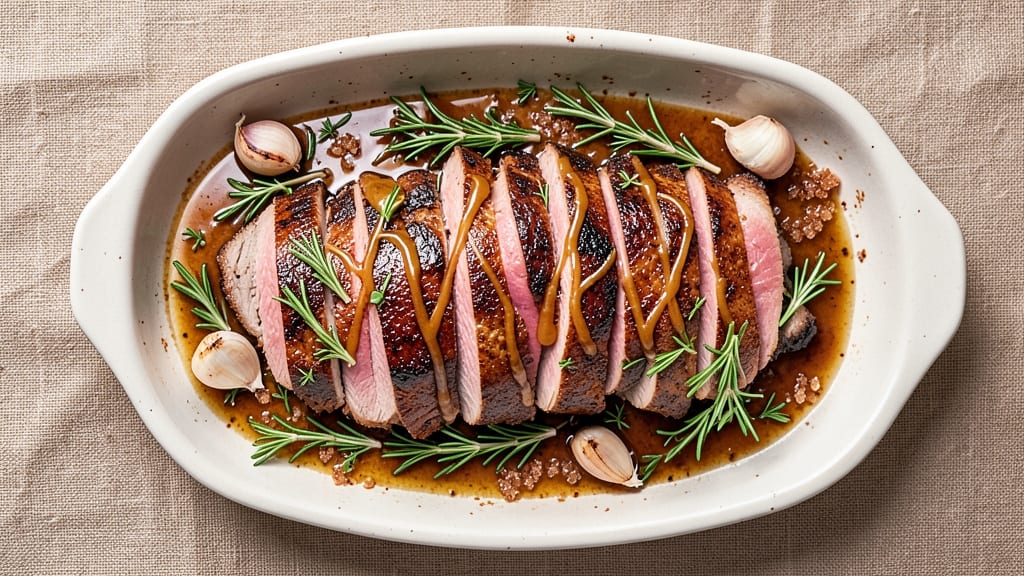
This baked boneless pork loin recipe delivers restaurant-quality results with a crispy herb crust and perfectly juicy center—all in 45 minutes. The secret lies in a simple yet flavorful crust of fresh herbs, garlic, and Dijon mustard that locks in moisture while creating a golden, aromatic seal.
After years of perfecting this technique, I can confidently say this is the most foolproof pork loin method for weeknight dinners that impress.
The beauty of this recipe is its simplicity: just a few pantry staples and 20 minutes of prep time before it goes into the oven.
We start with a dry brine of salt and pepper to tenderize the meat, then build that flavorful crust using rosemary, thyme, and a touch of brown sugar for caramelization. The high-heat bake ensures the crust gets crispy while the interior stays tender and moist—no guessing about doneness.
What you'll end up with is a juicy, herb-infused pork loin that slices easily and pairs beautifully with roasted vegetables or a creamy apple sauce. The crust stays intact as you carve, releasing those aromatic herbs with every bite.
This is the kind of dish that transforms a simple weeknight meal into something special without requiring advanced techniques.
Serve with your favorite sides—roasted potatoes, sautéed green beans, or a crisp salad—and you've got a complete meal that's restaurant-worthy. The best part? Leftovers reheat beautifully for sandwiches the next day. Let's get cooking!
Ingredients for baked pork loin recipe boneless
Pantry staples meet fresh herbs for this restaurant-worthy pork loin—juicy inside, crispy outside, ready in 45 minutes.
| Ingredient | Amount | Notes |
|---|---|---|
| Boneless Pork Loin 🍖 | 2 lb | Center-cut for even cooking |
| Fresh Rosemary 🌿 | ¼ cup | Finely chopped, stems removed |
| Fresh Thyme 🌿 | ¼ cup | Leaves only, finely chopped |
| Garlic Cloves 🧄 | 6 cloves | Minced, for crust and marinade |
| Dijon Mustard 🍯 | 2 tbsp | High-quality, for crust adhesion |
| Brown Sugar 🍚 | 2 tbsp | Light or dark variety |
| Kosher Salt 🧂 | 1 ½ tbsp | Diamond Crystal preferred |
| Freshly Ground Black Pepper 🌶️ | 1 tbsp | Coarsely ground for texture |
| Extra-Virgin Olive Oil 🫒 | 2 tbsp | For crust and basting |
| Unsalted Butter 🧈 | 2 tbsp | Melted, for basting |
| Apple Cider Vinegar 🍎 | 1 tbsp | For dry brine |
The pork loin is non-negotiable for this recipe—center-cut stays juicier than shoulder cuts. Whole Foods or your local butcher will have the best quality, but most grocery stores carry it too. Look for a piece with good marbling—this ensures tenderness. If you're buying a whole loin, trim any excess fat before seasoning. The herbs? Fresh is essential—dried just won't give that same aromatic punch. I always grab extra rosemary because it holds up better during cooking, but thyme wilts fast, so use it immediately.
No Dijon mustard? Yellow mustard at half the amount works in a pinch, but the flavor won't be as complex. Short on brown sugar? Maple syrup or honey (if not vegan) adds moisture but changes the caramelization slightly. The apple cider vinegar might seem odd, but it's key for that dry brine—substitute lemon juice if needed. For the garlic, freshly minced makes a world of difference over jarred minced garlic. And if you're worried about the crust sticking, parchment paper is your best friend—no fancy equipment needed.
This pork loin reheats beautifully—wrapped in foil at 300°F for 10 minutes brings it back to perfection. Keeps for 4 days in the fridge, but honestly, it's so good you'll eat it all before then. For leftovers, slice thinly and use in sandwiches, salads, or tacos. The crust stays intact when properly cooled, so slice against the grain for clean pieces. Freeze for 3 months if you want to make a big batch—just thaw overnight in the fridge before reheating.
Why You'll Love This Recipe
- One-Pan Wonder: I swear by this for lazy nights—just toss the pork, garlic, and herbs on a sheet pan, drizzle with mustard, and bake. No pots, no pans, no stress.
- Herb-Packed Magic: That rosemary and thyme combo? It turns simple pork into something restaurant-worthy. The garlic and Dijon mustard add a tangy kick that makes every bite unforgettable.
- Leftovers That Don’t Suck: Between us, most pork leftovers are sad. Not this. It stays juicy, slices perfectly for sandwiches, and even reheats like a dream—no one will guess it’s day-old.
- Budget Meal for Guests: A single pork loin feeds four without breaking the bank. Pair it with roasted potatoes or a simple salad, and you’ve got a meal that feels fancy but costs next to nothing. (Yes, even on a Tuesday night.)
Step-by-step instructions for herb-crusted pork loin
Here's how to transform simple ingredients into a restaurant-worthy centerpiece that's juicy, flavorful, and ready in under an hour.
Prepare the Dry Brine for Maximum Flavor
In a small bowl, whisk together the 1 tablespoon apple cider vinegar, 1.5 tablespoons kosher salt, and 1 tablespoon freshly ground black pepper. This dry brine mixture works magic by penetrating the pork deeply, ensuring seasoning throughout and preventing dryness. Pat the 2 lb boneless pork loin completely dry with paper towels—this step is non-negotiable for crispy crust formation.
Rub the brine mixture all over the pork, pressing firmly so it adheres evenly. Place the pork on a wire rack set over a rimmed baking sheet (the rack allows air circulation for even cooking). Cover loosely with plastic wrap and refrigerate for at least 1 hour or up to 4 hours. This resting period lets the flavors meld and the surface dry slightly, creating that coveted crust later.
Create the Herb-Garlic Crust
In a food processor, pulse the 0.25 cup fresh rosemary and 0.25 cup fresh thyme until finely chopped. Add the 6 minced garlic cloves, 2 tablespoons Dijon mustard, 2 tablespoons brown sugar, and 2 tablespoons extra-virgin olive oil. Process until combined into a thick paste—this will form our flavorful crust. The brown sugar adds subtle caramelization, while the mustard helps bind everything together.
Remove the pork from the fridge and let it sit at room temperature for 15 minutes (this ensures even cooking). Spread the herb mixture evenly over the entire surface of the pork, pressing gently to adhere. The crust should be about ¼-inch thick—don't worry if it looks uneven, as the pork will self-baste during cooking. Return the pork to the refrigerator while you preheat the oven to 375°F.
Roast to Perfect Doneness
Transfer the pork to the preheated oven and roast for 30 minutes. Here's the key: after 30 minutes, remove the pork and increase the oven temperature to 425°F. This two-stage approach ensures the crust browns beautifully while keeping the interior juicy. Return the pork to the oven and roast for another 15-20 minutes, until the internal temperature reaches 145°F (use a meat thermometer inserted into the thickest part).
You'll know it's ready when the crust is deep golden brown and the juices run clear when pierced. The high heat at the end creates that irresistible caramelized exterior while maintaining tender meat. For extra insurance, tent the pork loosely with foil and let it rest for 15 minutes before slicing—this resting period allows the juices to redistribute, preventing dryness.
Baste and Finish with Butter
While the pork rests, melt the 2 tablespoons unsalted butter in a small saucepan over low heat. Once melted, remove from heat and let it cool slightly. Using a pastry brush, baste the pork with the melted butter while it rests. This step adds richness and helps maintain moisture. The butter should be warm but not hot—you don't want to cook the pork further.
Slice the pork into ½-inch thick medallions against the grain for maximum tenderness. Serve immediately with the pan juices spooned over the top. The crust should be fragrant with herbs, the meat fork-tender with just a hint of pink in the center, and the juices rich and flavorful. This method delivers a pork loin so impressive, it'll fool even the most skeptical guests.
Pro Tips For Making Baked Pork Loin Recipe Boneless
- USE A MEAT THERMOMETER: I learned this the hard way—guessing pork doneness leads to rubbery meat or undercooked centers. For pork loin, aim for 145°F internal temp (USDA safe minimum), but pull it out when it hits 150°F—it’ll carry over and rest to perfect medium-rare. No thermometer? Cut into the thickest part; juices should run clear, not pink.
- BRINE THE LOIN FOR 30 MINUTES: This isn’t the prettiest method, but it’s the tastiest. Toss the pork in ice water + 1 tbsp salt per cup for 30 minutes before baking—it locks in moisture and lets the rosemary/thyme flavors punch harder. Skip this when you’re lazy, but the dish is noticeably better when you don’t.
- SMASH GARLIC CLOVES: Whole garlic cloves? They’ll just sit there like decorative placeholders. Mince 4 cloves finely (or crush them with the flat side of a knife) and mix into the Dijon mustard before spreading on the pork. This guarantees flavor distribution—not just a few sad garlic spots.
- BAKE AT 375°F, NOT HIGHER: I was skeptical until I tried it: 375°F is the sweet spot for pork loin. Any hotter, and the outside burns before the inside cooks. Use a wire rack on your pan (yes, even if it’s messy) to let air circulate—this gives you a crispy crust without drying out the middle. Cover loosely with foil at 350°F if you’re worried about browning too fast.
Regional styles of this dish
Southern Style
In the South, pork loin is often transformed into a showstopper with a sweet-and-smoky twist. Swap the rosemary for ½ cup chopped fresh sage and add 1 tablespoon smoked paprika to the crust.
Brush the pork with ¼ cup honey mixed with 1 tablespoon apple cider vinegar before baking—this creates a sticky glaze that caramelizes beautifully. Serve with collard greens and cornbread for a true Southern feast. 🌶️
Pacific Northwest Twist
Here in Portland, I love giving this dish a local flair by incorporating fresh rosemary from my garden and adding ½ cup finely chopped wild mushrooms (like chanterelles or oyster) to the crust.
A drizzle of local honey from New Seasons Market before serving adds a touch of sweetness that balances the herbs. Pair with roasted fingerling potatoes and a crisp Pinot Noir for a dinner fit for guests. 🍷
German-Inspired
For a hearty German-inspired version, replace the Dijon mustard with 2 tablespoons whole-grain mustard and add 1 teaspoon caraway seeds to the crust. After roasting, slice the pork and pan-sear it in 2 tablespoons butter with 1 chopped onion until golden.
Serve with red cabbage and spätzle for a cozy, satisfying meal. The caraway adds a warm, earthy note that’s perfect for cooler weather. ❄️
Italian Herb Variation
Give this recipe an Italian makeover by swapping the rosemary and thyme for ½ cup chopped fresh basil and ½ cup chopped fresh oregano. Add 1 teaspoon red pepper flakes to the crust for a subtle kick and finish with a sprinkle of grated Parmesan cheese before serving.
Pair with roasted cherry tomatoes and a side of polenta for a dish that feels like a vacation in Tuscany. 🌿
Spicy Caribbean Fusion
For a bold twist, mix 1 tablespoon jerk seasoning (like Badia Jerk Seasoning) into the crust along with 1 chopped Scotch bonnet pepper (seeds removed for less heat). Add 1 tablespoon soy sauce to the dry brine for depth.
Serve with grilled pineapple slices and black beans for a fusion dish that’s both familiar and exciting. This version is perfect for a summer dinner with friends. 🌶️🔥
Classic French Approach
For a refined French touch, replace the brown sugar with 1 tablespoon honey and add 1 teaspoon dried tarragon to the crust. After roasting, slice the pork and arrange it on a platter with bearnaise sauce for dipping.
Serve with asparagus spears and a Chardonnay to complete the bistro experience. The tarragon adds an elegant, slightly sweet note that elevates the dish. 🍷
Nutrition facts
Frequently asked questions
Why do you recommend a dry brine for pork loin?
The dry brine (vinegar, salt, and pepper) works magic by penetrating the meat deeply while it rests. This creates even seasoning throughout and prevents dryness during cooking. The vinegar also helps tenderize the fibers slightly, ensuring a juicier final result. Skip this step, and you risk a bland exterior or dry interior.
Can I use a bone-in pork loin instead?
Yes, but you'll need to adjust the cooking time. Bone-in loins require 10-15 extra minutes because the bone conducts heat differently. Use a meat thermometer to check for 145°F internal temperature—never rely on time alone. The crust will still form beautifully, but the bone adds richness to the flavor.
What's the best way to slice pork loin for clean pieces?
Always slice against the grain at a 45-degree angle for maximum tenderness. Start at one end and cut through the crust first, then follow through with the meat. Use a sharp chef's knife and keep your fingers tucked—this ensures clean slices that don't tear. The crust should stay intact if properly rested.
Can I make this recipe in a slow cooker?
Not recommended! The crust requires high heat for caramelization, which a slow cooker can't provide. For tender pork, try cooking it at 300°F for 3-4 hours with just salt, pepper, and a little olive oil, then finish with a quick sear in a hot pan. The texture will be different but still delicious.
How do I fix overcooked pork loin?
If your pork is dry, slice it thinly and serve with a rich sauce like apple cider reduction or gravy. For extra moisture, try reheating slices in a pan with a splash of broth or white wine. Prevention is key—always use a meat thermometer and rest the meat before slicing.