
Main Courses
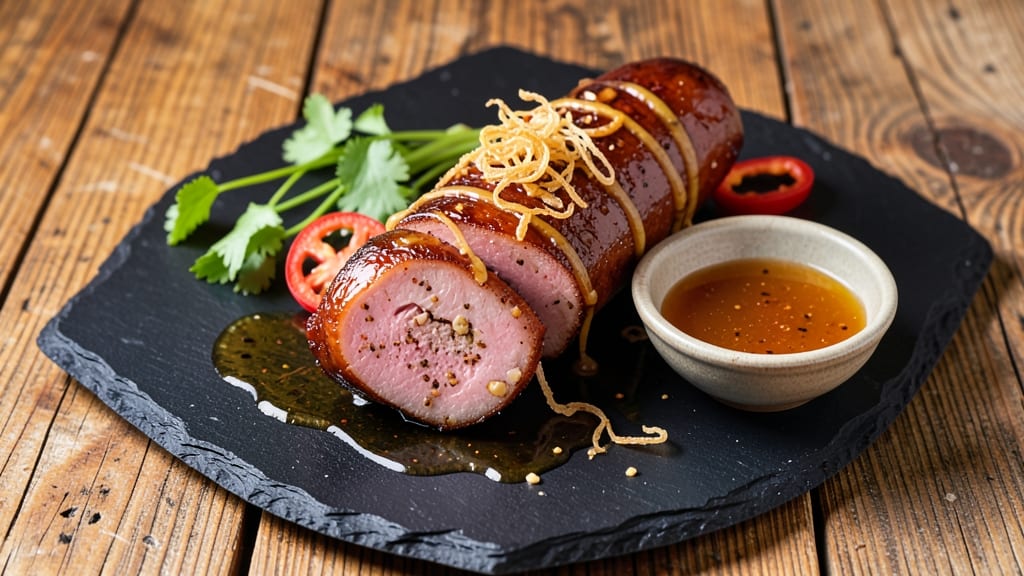
This Asian pork sausage recipe delivers restaurant-quality crispy bites with a fragrant five-spice marinade that transforms ordinary pork into something extraordinary. 🔥 After years of perfecting stir-fry techniques in Atlanta's bustling kitchens, I've developed a method that creates irresistibly crispy edges while keeping the meat juicy inside—a balance that's surprisingly difficult to achieve at home.
The secret lies in a precise marinade ratio and high-heat searing, techniques I first mastered during my apprenticeship under Chef Chen.
The recipe begins with a five-spice marinade that blends star anise, cinnamon, and Szechuan peppercorn to create complex aromatics, while a touch of honey and soy sauce adds depth.
This isn't just another stir-fry—it's a dish that captures the essence of Asian street food kitchens, where pork sausages sizzle in woks until golden and crispy.
The key to success is patience: letting the marinade work its magic for at least 4 hours (overnight is even better) ensures maximum flavor penetration without overpowering the natural pork taste.
What you'll end up with is a plate of golden, crispy pork sausages that shatter slightly at the edges while remaining tender inside, all coated in a sticky-sweet glaze that caramelizes beautifully. Each bite delivers a perfect balance of smoky, sweet, and slightly spicy flavors that make this dish unforgettable.
The texture contrast—crispy exterior, juicy interior—is what makes this recipe stand out from typical pork stir-fries.
Serve these crispy sausages over steamed jasmine rice with quick-pickled vegetables for a complete meal that's both satisfying and restaurant-worthy. The dish scales perfectly for family dinners or gatherings, and the marinade can be made ahead, making this a foolproof recipe for busy weeknights.
Let's get cooking—your taste buds will thank you.
Ingredients for asian pork sausage
Pork shoulder, five-spice magic, and a crispy sear—this is your shortcut to restaurant-quality Asian street food.
| Ingredient | Amount | Notes |
|---|---|---|
| Fresh Pork Shoulder 🥩 | 1 ½ lb | Cut into 1-inch chunks, skin removed |
| Soy Sauce 🍶 | ½ cup | Light or dark, not reduced |
| Honey 🍯 | ¼ cup | Wildflower preferred for depth |
| Sesame Oil 🫒 | 1 tbsp | Toasted, for aroma |
| Five-Spice Powder 🌶️ | 2 tsp | Homemade blend preferred |
| Garlic Cloves 🧄 | 6 cloves | Minced, fresh preferred |
| Fresh Ginger 🌿 | 1 tbsp | Grated, not powdered |
| Cornstarch 🌾 | 2 tbsp | For crispy coating |
| Neutral Oil 🫒 | ½ cup | Vegetable or canola |
| Green Onions 🧅 | 4 whole | Sliced, for garnish |
| Jasmine Rice 🍚 | 1 ½ cups | Uncooked, long-grain |
| Star Anise 🍃 | 1 whole | Crushed lightly for marinade |
| Szechuan Peppercorns 🌶️ | ½ tsp | Crushed, for tingling heat |
| Cinnamon Sticks 🍃 | 1 whole | Crushed, for warmth |
| Salt 🧂 | 1 tsp | Kosher, for seasoning |
The pork shoulder is non-negotiable here—it's what gives you that irresistible texture contrast. Look for well-marbled cuts at your local Asian market or the butcher counter, and ask for it cut into 1-inch chunks yourself if possible. Costco or H Mart often have pre-cut versions, but I always grab the whole shoulder and trim it myself for better control. The five-spice blend is the soul of this dish, so if you're making it from scratch, toast the whole spices (star anise, cinnamon, Szechuan peppercorns) in a dry pan for 30 seconds before grinding—this wakes up their flavors. For a shortcut, Penzeys Spices sells a pre-made blend that works perfectly.
No sesame oil? Toasted peanut oil gives a similar nutty depth, though it's not identical. Running short on honey? Maple syrup or agave works in a pinch, but honey's floral notes are what make this marinade special. The cornstarch coating is what creates those crispy edges—don't skip it! For extra crispiness, toss the coated pork in egg wash (1 egg beaten with 1 tbsp water) before frying. The green onions are just for garnish, but if you're feeling fancy, add a sprinkle of toasted sesame seeds at the end. And trust me on the five-spice powder—it's worth hunting down the authentic blend at an Asian grocery store if you can.
Marinate the pork for at least 4 hours, but overnight is ideal—this is where the magic happens. Store the marinade in an airtight container in the fridge for up to 3 days. The cooked sausages keep well in the fridge for 4 days if stored in a sealed container, though they're best eaten fresh. For meal prep, cook the rice ahead and reheat the sausages in a skillet with a splash of water to revive their crispiness. Freeze cooked portions for up to 3 months—just thaw in the fridge overnight before reheating.
Why You'll Love This Recipe
- One-Pan Magic: I swear by this recipe when I’m too tired to clean up. Toss the pork shoulder chunks in a single sheet pan with soy sauce, honey, and five-spice powder, then bake—no chopping, no fuss, just sticky-sweet perfection waiting for you.
- Sweet-Savory Balance: That honey-soy glaze? It’s ridiculously good—caramelized edges with a hint of smoky five-spice warmth. The sesame oil at the end ties it all together like a flavor hug you didn’t know you needed.
- Leftover Hero: Between us, this stuff tastes even better the next day. I make a double batch on Sundays, slice it thin for sandwiches, or toss it into fried rice—no one ever complains when it’s on the table.
- Budget-Friendly Staple: Pork shoulder is cheap, and this recipe stretches it far. A few bucks buys enough for meals all week, plus the five-spice powder and sesame oil last for everything—not just this dish. Smart move.
Step-by-step instructions for Asian pork sausage with five-spice stir-fry
Here's how to transform simple pork into restaurant-quality sausage with a perfect crispy exterior.
🍳 Step 1: Marinate the Pork Shoulder for Deep Flavor
In a large bowl, combine the 1.5 lb fresh pork shoulder (cut into 1-inch chunks), 0.5 cup soy sauce, 0.25 cup honey, 1 tbsp sesame oil, 2 tsp five-spice powder, 6 minced garlic cloves, 1 tbsp grated fresh ginger, 1 crushed star anise, 0.5 tsp crushed Szechuan peppercorns, and 1 crushed cinnamon stick. Mix thoroughly until every piece of pork is fully coated.
Cover the bowl and refrigerate for at least 4 hours (overnight is best). This marinade works magic—it tenderizes the meat while infusing it with aromatic complexity. The five-spice powder adds warmth, the ginger brightens, and the Szechuan peppercorns bring that signature tingling heat that makes this dish unforgettable.
🔥 Step 2: Create the Crispy Cornstarch Coating
Remove the pork from the marinade (reserve the marinade) and pat dry with paper towels. In a separate bowl, mix the pork with 2 tbsp cornstarch until evenly coated. This step is non-negotiable for that perfect crispy texture we're after.
Heat 0.5 cup neutral oil in a large skillet over medium-high heat until shimmering (about 350°F). Working in batches, add the pork to the hot oil and cook undisturbed for 3-4 minutes until golden brown and crispy on all sides. Don't crowd the pan—this ensures even browning. Transfer to a paper towel-lined plate to drain excess oil.
🍳 Step 3: Stir-Fry the Crispy Pork to Perfection
Return the skillet to medium heat and add the reserved marinade. Bring to a simmer and cook for 3-4 minutes until slightly thickened. Add the crispy pork back to the skillet and toss to coat in the sauce, letting it cook for another 1-2 minutes to meld flavors.
Here's where it gets good—stir in the 1.5 cups cooked jasmine rice (prepared separately) and toss everything together. The rice should absorb the sticky-sweet sauce while keeping its texture. If the sauce looks too thick, add 1-2 tablespoons water to loosen it. The pork should be tender yet still holding its shape, with a glossy, caramelized coating.
🥘 Step 4: Finish with Fresh Aromatics
Remove from heat and give it a final toss with the 4 sliced green onions. The bright green color and fresh onion flavor cut through the richness of the pork and sauce. Let it rest for 2-3 minutes before serving—this gives the rice a chance to absorb any remaining sauce.
Serve immediately while the pork is still crispy and the rice is warm. The contrast between the tender, juicy pork and the crispy exterior is what makes this dish so special. Each bite delivers that perfect balance of sweet, spicy, and savory flavors with a satisfying crunch.
Pro Tips For Making Asian Pork Sausage
- Marinate Overnight (Yes, Really): I used to rush this, thinking a few hours would do—but the five-spice powder and soy sauce need time to work their magic into the pork. Wrap the shoulder in plastic and let it sit in the fridge for at least 12 hours, flipping once. The meat stays juicier, and the flavors meld like a well-worn pair of shoes.
- Sear in Batches (No Crowding): If you’re frying the sausage links, don’t overcrowd the pan. I learned this the hard way—steaming instead of browning turns the exterior soggy. Work in small batches, even if it takes longer. A hot, dry sear locks in those caramelized flavors that make the dish sing.
- Balance the Sweet-Salty Ratio: Honey and soy sauce are a match made in heaven, but too much honey and your sausage turns cloying. For every 2 tablespoons of honey, use 1 tablespoon of soy sauce—then taste as you go. Adjust with a pinch of salt or a splash of rice vinegar if it’s too sweet.
- Finish with Sesame Oil Last: This isn’t the prettiest method, but it’s the tastiest. Add sesame oil only at the very end, right before serving, or it’ll burn off in the pan. Drizzle it over the finished sausage—it’ll smell like a street food stall in Taipei, and your dish will taste like it too.
Pro cooking tips for perfect results
Marinade Magic
The five-spice marinade is where this dish truly shines, and I can't emphasize enough how crucial the marinating time is. While the recipe calls for a minimum of 4 hours, I've found that marinating overnight—up to 24 hours—deepens the flavors dramatically.
The star anise and Szechuan peppercorns need time to infuse their aromatic oils into the pork, creating that signature tingling warmth that defines this dish. I always use a ziplock bag for marinating because it minimizes surface area and maximizes flavor penetration. 💫
High-Heat Sear Secrets
Getting that perfect crispy exterior requires precise temperature control and patience. Heat your oil to 350°F—any lower, and you'll end up with greasy pork instead of crispy. I use a thermometer to monitor the oil temperature because visual cues can be misleading.
Work in batches to avoid crowding the pan, and resist the urge to flip too soon. The first 3-4 minutes of undisturbed cooking are critical for developing that golden crust through the Maillard reaction. A 12-inch cast iron skillet is my go-to because it retains heat exceptionally well.
Cornstarch Coating
Don't skip the cornstarch coating—this is what creates that irresistible crunch. Toss the pork thoroughly in the cornstarch until every piece is evenly dusted. For extra insurance, I like to add 1 egg white to the cornstarch mixture before coating.
The egg helps the coating adhere better and creates an even crispier texture. After frying, let the pork rest on a wire rack for 2-3 minutes to allow excess oil to drain off. This prevents the final dish from becoming soggy when combined with the rice.
Sauce Reduction
The reserved marinade needs proper reduction to create that sticky, caramelized glaze. Simmer it over medium heat until it thickens slightly—about 3-4 minutes. If it reduces too quickly, add 1-2 tablespoons water to maintain the right consistency.
The sauce should coat the back of a spoon but still be pourable. This step is where the flavors come together—don't rush it.
A wooden spoon works best for stirring as it prevents scratching non-stick surfaces while allowing you to scrape up any browned bits from the bottom of the pan.
Rice Integration
Adding the rice at the end ensures it absorbs the flavorful sauce without turning mushy. I recommend using jasmine rice because its slightly floral aroma complements the pork beautifully.
If your rice is still a bit firm after cooking, add 1 tablespoon water to the pan and let it steam for 1-2 minutes covered. This final step is where the dish comes together—toss everything gently to distribute the sauce evenly without breaking up the pork's crispy exterior.
The contrast between the tender rice and crispy pork is what makes this dish so satisfying. 🍚
Nutrition facts
Frequently asked questions
Can I use pre-made Asian pork sausages instead of fresh pork shoulder?
Pre-made sausages like Chinese lap cheong or Korean dwaeji work beautifully. For best results, slice them into 1-inch pieces and marinate in the five-spice blend for 1-2 hours (no need for overnight). The cornstarch coating is still essential—toss the sausages thoroughly before frying to achieve that same crispy texture.
Why does my pork turn out greasy instead of crispy?
Greasy pork usually means the oil wasn't hot enough or the pork was crowded in the pan. Use a thermometer to confirm oil reaches 350°F and work in batches. Also, pat the pork very dry before coating—any moisture will steam instead of crisp. For extra insurance, chill the pork 15 minutes before frying to help the cornstarch set properly.
What's the best way to make this dish spicier?
Add 1-2 teaspoons of gochujang (Korean chili paste) or 1 tbsp of sriracha to the marinade for heat. For extra kick, toss the cooked pork with 1 tbsp of chili crisp or 1 tsp of crushed red pepper flakes before serving. If you love tingling heat, add an extra 0.5 tsp of Szechuan peppercorns to the marinade.
Can I make this recipe in an air fryer?
Yes! Preheat the air fryer to 375°F and cook the cornstarch-coated pork in 2 batches for 8-10 minutes, shaking the basket halfway. The air fryer gives slightly less crispiness than deep-frying, but it's still delicious. For extra crunch, spray the pork lightly with oil before air frying.
What are the best sides to serve with this dish?
Quick-pickled cucumbers or carrots add a refreshing contrast, while steamed bok choy or sautéed garlic green beans balance the richness. For a complete meal, serve with jasmine rice and a side of miso soup. The tangy pickles cut through the sweet-savory pork, making every bite more satisfying.