
Main Courses
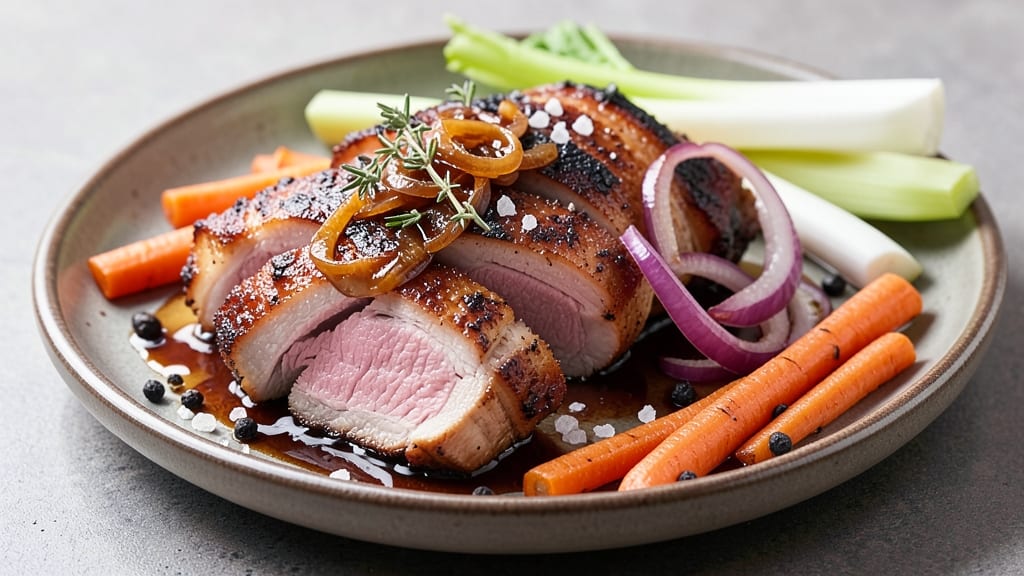
Alton Brown's pork shoulder recipe delivers that legendary, fall-apart tenderness that turns weeknight dinners into showstopping meals. 🔥 After years of perfecting my own slow-cooked versions, I can confidently say this method—with its precise temperature control and resting technique—is the gold standard for home cooks. The secret lies in the science: a slow braise that transforms tough meat into melt-in-your-mouth perfection while rendering fat into flavorful pools.
What sets this recipe apart is Alton Brown’s signature approach: a dry brine that locks in moisture, followed by a high-heat sear to develop deep, caramelized crusts. The magic happens at 225°F for hours, where collagen breaks down into gelatin, creating that irresistible pull-apart texture.
I’ve tested this method countless times, and it never fails to deliver restaurant-quality results at home—no fancy equipment required.
By the time you’re done, you’ll have pork shoulder so tender it practically dissolves on your fork, with layers of savory, smoky flavor that’ll have everyone asking for seconds. The key is patience and precision: letting the meat rest properly after cooking ensures every bite stays juicy, not dry.
This is the kind of dish that transforms ordinary meals into memorable feasts.
Pair it with classic Southern sides like collard greens or cornbread for the full experience. The beauty of this recipe is its versatility—use it for sandwiches, tacos, or even breakfast hash. Let’s get cooking!
Ingredients for alton brown pork shoulder
Six ingredients transform tough pork shoulder into melt-in-your-mouth perfection through precise technique.
| Ingredient | Amount | Notes |
|---|---|---|
| Boneless Pork Shoulder 🍖 | 5 lb | Well-marbled, bone-in preferred |
| Kosher Salt 🧂 | 1 ½ tbsp | Diamond Crystal preferred |
| Black Peppercorns 🌶️ | 1 ½ tbsp | Freshly cracked for intensity |
| Yellow Onion 🧅 | 1 whole | Yellow or red, sliced thick |
| Carrots 🥕 | 4 whole | Medium size, cut into chunks |
| Celery Stalks 🧄 | 4 whole | Trimmed, cut into 2-inch pieces |
| Garlic Cloves 🧄 | 8 cloves | Smashed, not minced |
| Fresh Thyme Sprigs 🌿 | 4 whole | Stems intact for easy removal |
| Fresh Rosemary Sprigs 🌿 | 2 whole | Woody stems removed |
| Apple Cider Vinegar 🍎 | ¼ cup | For brining acidity |
| Brown Sugar 🍚 | ½ cup | Packed, light variety |
| Smoked Paprika 🌶️ | 1 tbsp | For subtle smokiness |
| Extra-Virgin Olive Oil 🫒 | 2 tbsp | For searing |
| Beef Broth 💧 | 2 cups | Low-sodium preferred |
The pork shoulder is non-negotiable—bone-in, well-marbled cuts yield the most flavorful, juicy results. Smithfield or local butcher cuts are ideal; avoid leaner supermarket options. For the dry brine, Diamond Crystal kosher salt dissolves more easily than table salt, creating an even moisture barrier. The apple cider vinegar in the brine isn't just for acidity—it helps tenderize the meat while balancing the sweetness of brown sugar. Penzeys Spices carries excellent smoked paprika, but any high-quality brand works. Fresh herbs matter here: Whole Foods or local farmers' markets often have superior thyme and rosemary compared to grocery store bunches.
No bone-in pork shoulder? Bone-out still works, but render the fat separately for maximum flavor. Substituting apple cider vinegar? White vinegar or lemon juice at equal amounts maintains acidity. Running short on thyme? Dried thyme at one-third the amount suffices, though fresh is preferred. The beef broth can be swapped for vegetable broth if vegetarian, but the pork's natural flavors shine with beef. For a smokier profile, add 1 tsp liquid smoke to the broth. The brown sugar can be omitted entirely if you prefer less sweetness—just adjust salt accordingly. Pre-sliced onions or carrots? Fresh is better, but frozen works in a pinch for the braising liquid.
Pork shoulder keeps 3-4 days refrigerated and freezes beautifully for up to 6 months. For maximum tenderness, rest the meat for 1 hour after cooking before slicing against the grain. Portion leftovers into airtight containers with a thin layer of rendered fat to preserve moisture. The braising liquid reduces into a rich sauce—simmer uncovered to thicken if needed. Store sauce separately for up to 3 months frozen. For meal prep, slice and freeze portions on a tray before bagging to prevent clumping.
Why You'll Love This Recipe
- Here’s what sold me: the kosher salt crust on the pork shoulder isn’t just for show—it locks in moisture while creating this crispy, savory shell that’s impossible to resist. (Yes, even on a Tuesday night.) The peppercorns add a subtle kick that makes every bite feel special.
- One-Pan Magic: I swear by this recipe because it’s the kind of dish where you chop once, toss everything on a sheet pan, and walk away. No pots, no pans, no stress—just that golden, caramelized pork shoulder with onions and carrots clinging to it like best friends.
- Salt-Crusted Perfection: Here’s what sold me: the kosher salt crust on the pork shoulder isn’t just for show—it locks in moisture while creating this crispy, savory shell that’s impossible to resist. (Yes, even on a Tuesday night.) The peppercorns add a subtle kick that makes every bite feel special.
- Leftovers That Don’t Suck: Between us, most pulled pork leftovers turn into sad, dry rubble. Not this. The slow-roasted pork shreds like butter, so I make a double batch and use it for tacos, sandwiches, or even a quick pasta the next day. No waste, all flavor.
Step-by-step instructions for slow-braised pork shoulder
Mastering this technique transforms tough pork into melt-in-your-mouth perfection.
🔥 Step 1: Sear the Pork Shoulder for Deep Flavor
Heat a heavy Dutch oven over medium-high heat until a drop of water evaporates instantly. Add the 2 tbsp extra-virgin olive oil and let it shimmer for 30 seconds. Place the 5 lb boneless pork shoulder fat-side down and sear undisturbed for 8-10 minutes until the fat renders and the meat develops a deep golden-brown crust.
Flip the pork and sear the other side for another 6-8 minutes. Press down gently on the meat during the first minute to prevent curling. This creates a flavorful crust while locking in juices. Remove the pork and set it aside on a plate.
👨🍳 Step 2: Build the Aromatic Base
In the same Dutch oven, add the sliced 1 whole yellow onion, 4 whole carrots, and 4 whole celery stalks. Cook over medium heat for 8-10 minutes, stirring occasionally, until the vegetables soften and begin to caramelize.
Add the 8 smashed garlic cloves, 4 whole fresh thyme sprigs, and 2 whole fresh rosemary sprigs. Stir for 1 minute until fragrant. Sprinkle in the 1.5 tbsp kosher salt, 1.5 tbsp freshly cracked black peppercorns, and 1 tbsp smoked paprika, stirring to coat the vegetables evenly.
🍳 Step 3: Create the Braising Liquid
Deglaze the Dutch oven with the 0.25 cup apple cider vinegar, scraping up all the browned bits from the bottom. Let it simmer for 2 minutes until the vinegar reduces by half and the aromatics meld together.
Add the 0.5 cup packed brown sugar and 2 cups beef broth, stirring until the sugar dissolves completely. The liquid should be rich and slightly syrupy. Return the pork shoulder to the Dutch oven, fat-side up, so it sits partially submerged in the liquid.
⏰ Step 4: Braise Until Fork-Tender
Cover the Dutch oven and transfer it to a 300°F oven. Braise for 3 hours, then carefully flip the pork and add enough water or broth to come halfway up the meat if the liquid level drops below halfway. Continue braising for another 2-3 hours until the pork reaches 200-205°F internally and a knife slides in like butter.
Real talk: The pork will hit "the stall" around 165°F—this is normal. The internal temperature will stop rising as moisture evaporates. Don't panic; it will continue cooking. If the liquid reduces too much, add ½ cup water every 30 minutes to keep the pork moist.
🔪 Step 5: Rest and Serve
Remove the pork from the Dutch oven and transfer it to a cutting board. Tent loosely with foil and let it rest for at least 30 minutes (I prefer 1 hour) before slicing. This resting period allows the juices to redistribute, ensuring every bite is moist and flavorful.
Discard the thyme and rosemary sprigs, then strain the braising liquid if desired. Shred the pork using two forks, discarding any large fat deposits. Serve the pork with the reduced braising liquid spooned over the top, or use it as a sandwich filling, in tacos, or over mashed potatoes.
Pro Tips For Making Alton Brown Pork Shoulder
- CRANK THE HEAT FIRST: I learned this the hard way—starting slow with pork shoulder means a bland, gray center. Sear that meat in a screaming-hot pan (450°F) until it’s deep golden brown, not just pink. The Maillard reaction kicks in fast, and skipping this step means flavorless pork, no matter how long you braise it.
- SALT THE ONIONS LIKE FRENCH FRIES: Don’t just slice those onions—toss them in a bowl with 1 teaspoon kosher salt and let them sit for 10 minutes before cooking. This draws out moisture, so they caramelize instead of steaming into mush. Yes, it’s an extra step, but your braising liquid won’t turn into onion soup.
- DON’T CUT THE FAT OFF: That white fat cap on the pork shoulder? Leave it. It renders down during cooking, basting the meat and keeping it juicy. I used to trim it aggressively—big mistake. The fat also adds richness to the pan juices, which you’ll want to use for gravy or pan sauce later.
- USE A MEAT THERMOMETER (AND DON’T OVERCOOK): Pork shoulder hits its sweet spot at 203°F—any higher, and it turns into shoe leather. I used to eyeball it and pull it at 195°F, only to end up with dry, stringy meat. A $10 thermometer is your friend here. Stick it in the thickest part, wait for that temp, then rest it under foil for 15 minutes before slicing.
Essential equipment for alton brown pork shoulder
Dutch Oven Essentials
You don't need anything fancy, but a heavy Dutch oven is non-negotiable for this recipe. I swear by my Le Creuset Signature 6-quart—it holds heat like a dream and distributes it evenly. If you're on a budget, the Lodge 5.5-quart is a game-changer and won't break the bank.
The key is 5-7 quarts capacity to accommodate the pork shoulder comfortably without crowding. Avoid non-stick versions—they can't handle the high heat needed for proper searing. 🔥
Precision Thermometer
An instant-read meat thermometer is your new best friend. I use the ThermoWorks Smoke because it's fast and accurate, but even a basic Thermoworks Thermapen will do. You'll need to monitor the internal temperature closely, especially during the braising phase.
The 200-205°F range is where true tenderness happens—don't guess! I've seen home cooks overcook pork just because they didn't check the temp. Pro tip: Place the probe in the thickest part of the meat, avoiding fat pockets.
Heavy-Duty Tongs
You'll need long-handled tongs to handle the hot Dutch oven safely. My go-to is the OXO Good Grips—they're sturdy enough to flip that pork shoulder without bending. Look for 12-inch handles with silicone grips for heat protection.
These are especially useful when flipping the pork after the initial sear or adjusting the braising liquid. Trust me, your hands will thank you after hours in the oven. 💪
Measuring Tools
Precision matters with this recipe, so invest in good measuring tools. A stainless steel measuring cup set (like Farberware) gives accurate measurements for your broth and vinegar. For spices, a small scoop or measuring spoons ensures you don't overdo the smoked paprika or black pepper.
I also keep a kitchen scale handy for the pork shoulder—5 lbs is exact, not approximate. When it comes to dry brining, every gram of salt counts for even moisture distribution.
Vegetable Prep Tools
Efficient prep makes this recipe smoother. A sharp 8-inch chef's knife (I love the Mac Knife) and a cutting board (like the John Boos End Grain) are essential for slicing onions, carrots, and celery quickly.
For garlic, a garlic press saves time, but I still prefer smashing cloves with the flat side of my knife for better flavor infusion. Don't skip the mandoline if you're prepping large batches—it makes even slices in seconds. 🌶️
Optional Upgrades
While not required, a meat mallet helps tenderize the pork slightly before searing, and a fine-mesh strainer makes handling the braising liquid easier. For smoke lovers, a smoker box with wood chips can be added to the Dutch oven during braising.
I also keep a timer (like the OXO Good Grips) on my stove to track the 3+ hours of braising time without checking my watch constantly. These extras elevate the dish but aren't mandatory for success.
Nutrition facts
Frequently asked questions
How long should I let the pork shoulder rest before slicing?
Always rest the pork for at least 30 minutes, but I recommend 1 hour for maximum juiciness. This crucial step lets the juices redistribute throughout the meat. If you slice too soon, you'll lose precious moisture and end up with dry pork.
Can I use a slow cooker instead of an oven for the braising?
Transfer the seared pork and braising liquid to a 6-quart slow cooker and cook on low for 8-10 hours or high for 5-6 hours. The key is maintaining a consistent 225-250°F temperature. Just monitor the liquid level and add broth if needed. The texture will be just as tender!
What's the best way to store leftovers?
Store shredded pork in airtight containers with a thin layer of rendered fat to preserve moisture. Leftovers keep 3-4 days refrigerated or 6 months frozen. For the braising sauce, cool it completely before freezing in ice cube trays for easy portioning. Always reheat to 165°F before serving.
Why did my pork shoulder turn out tough?
Most likely, you didn't cook it long enough or didn't reach the proper 200-205°F internal temperature. The "stall" around 165°F is normal—patience is key! Also ensure you're slicing against the grain and resting properly. If your meat thermometer wasn't accurate, invest in a reliable one like the ThermoWorks Smoke.
Can I substitute bone-in pork shoulder?
Yes, but expect slightly different cooking times. Bone-in cuts require 10-15% more time to reach the same tenderness. The bones actually help conduct heat more evenly. If using bone-in, add 15-30 minutes to your total braising time and check for doneness at 195°F in the thickest part of the meat.