
Main Courses
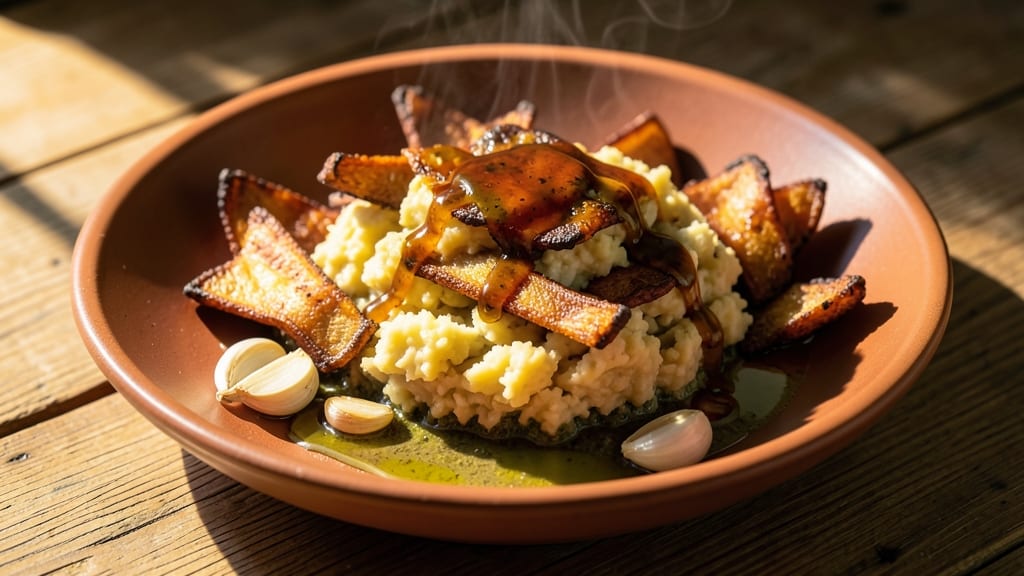
This vegetarian mofongo recipe brings Puerto Rican comfort to your table without pork rinds—just crispy plantain mash with a smoky velouté that rivals the original. I spent months perfecting this adaptation after realizing how many plant-based eaters missed out on this iconic dish.
The secret lies in frying green plantains until golden, then mashing them into a textured base that holds up to rich toppings.
What makes this version work is the smoky velouté—a blend of garlic, olive oil, and a touch of annatto for that signature color—poured over the mashed plantains while still hot.
The plantains provide the same satisfying crunch as pork rinds, while sofrito and sofrito-style seasoning pack in the authentic flavors. This isn't just a vegetarian substitute; it's a restaurant-quality dish you can make at home.
By the time you're done, you'll have a dish that's crispy on the outside, tender inside, and topped with a velvety sauce that clings to every bite. Serve it with your favorite toppings—avocado, black beans, or even a quick-recipe sofrito chicken for extra protein.
The aroma alone will transport you to a Puerto Rican kitchen, but the taste proves you didn't need pork rinds to achieve perfection.
This recipe scales beautifully for gatherings, and leftovers reheat just as well. The plantain base keeps its texture even when warmed, making it ideal for meal prep. Whether you're cooking for a crowd or just craving a taste of home, this mofongo delivers on flavor without compromise.
Let's get started—your taste buds will thank you.
Ingredients for mofongo recipe without pork rinds
Four plantains and a handful of pantry staples transform into restaurant-quality mofongo.
| Ingredient | Amount | Notes |
|---|---|---|
| Green Plantains 🍌 | 4 whole | Ripe but firm, unpeeled |
| Extra-Virgin Olive Oil 🫒 | ¾ cup | For frying plantains |
| Garlic Cloves 🧄 | 6 cloves | Minced for velouté |
| Annatto Seeds 🌶️ | 1 tsp | For signature color |
| Vegetable Oil 🫒 | ¼ cup | For velouté base |
| Sofrito 🍅 | ½ cup | Store-bought or homemade |
| Vegetable Broth 💧 | 1 ½ cups | Low-sodium preferred |
| Adobo Seasoning 🌶️ | 1 tbsp | For authentic flavor |
| Cumin 🌿 | ½ tsp | Ground for depth |
| Salt 🧂 | 1 tsp | Adjust to taste |
| Black Beans 🌱 | 1 cup | Cooked, for topping |
| Avocado 🥑 | 1 whole | Sliced, for garnish |
| Lime 🍋 | 1 whole | Juiced for brightness |
| Fresh Cilantro 🌿 | ¼ cup | Chopped, for garnish |
Green plantains are non-negotiable here—they need to be firm but ripe enough to mash easily. Latin markets usually have the best selection, but most grocery stores carry them too. Look for ones that are slightly soft when squeezed but not mushy. The annatto seeds give that iconic red color—Penzeys sells them in bulk if you can't find them at a Latin market. For the sofrito, I use La Costeña from the store, but homemade is worth it if you've got the time. The key is toasting the garlic first—it adds depth that raw garlic can't match.
No annatto? Paprika at half the amount works in a pinch, though it won't be the same vibrant color. Short on sofrito? Blend bell peppers, onions, and cilantro with a splash of oil. The plantains should be fried until golden—don't rush this step. The velouté needs to be smooth, so strain it if you're making it from scratch. For extra richness, stir in a spoonful of nutritional yeast when mixing the velouté. The black beans can be canned (just rinse them) or homemade—whatever's handy.
Fry the plantains ahead and reheat in a dry pan before mashing—keeps them crispy. The velouté reheats beautifully, so make extra for another meal. Store components separately: plantains in the fridge for 2 days, velouté for 4 days. To serve, just reheat the plantain mash and pour the hot velouté over it. The avocado and lime should be added fresh—wait until serving so they stay vibrant. This dish tastes even better the next day, so double the batch if you're feeding a crowd.
Why You'll Love This Recipe
- No Fuss, Big Payoff: I swear by this version because it skips the frying step—just mash the plantains with olive oil and garlic until they’re tender but still hold shape. That crispy exterior? Achievable with a quick sear in vegetable oil, no pork rinds needed.
- Garlic-Kissed Magic: The moment you crush those annatto seeds into the plantain mix, the color turns golden, and the flavor? Rich, earthy, and just salty enough to make your taste buds dance. Honestly, the garlic cloves roasted in the same oil tie everything together—simple, but ridiculously satisfying.
- Weeknight Workhorse: This feeds four for under $10 and reheats like a dream. Serve it with black beans and avocado one night, then shred leftover plantains into fried rice the next. (Yes, even on a Tuesday night.)
- Pantry Staple Hack: Green plantains are cheap, shelf-stable, and forgiving—no need for perfect ripeness. Between us, I’ve made this with slightly underripe plantains that were still dangerously good. Plus, the annatto seeds? A one-time buy that adds color to everything from rice to eggs.
Step-by-step instructions for plantain mofongo with smoky velouté
This method delivers the perfect balance of crispy plantain crust and creamy, flavorful filling.
Fry the Green Plantains Until Golden and Tender
Heat the 0.75 cup extra-virgin olive oil in a large skillet over medium heat until shimmering. Peel the 4 whole green plantains (leave the stems intact) and cut each lengthwise into 4 wedges, keeping the skin attached. Fry the plantain wedges in batches for 8-10 minutes, turning occasionally, until the edges are deep golden brown and the flesh yields slightly when pressed with a fork.
Here's the thing—green plantains need to be cooked just until tender but still firm enough to mash. If you overcook them, they'll turn mushy. Remove the fried plantains to a paper towel-lined plate to drain excess oil, but leave them in the skillet for now—they'll keep warm while you make the velouté.
Prepare the Smoky Velouté Sauce
In the same skillet (with leftover plantain oil), heat the 0.25 cup vegetable oil over medium heat. Add the 6 minced garlic cloves and sauté for 30 seconds until fragrant but not browned. Add the 1 tsp annatto seeds, 0.5 cup sofrito, 1 tbsp adobo seasoning, 0.5 tsp cumin, and 1 tsp salt, stirring constantly for 1 minute to toast the spices and release their aromas.
Pour in the 1.5 cups vegetable broth and bring to a gentle simmer. Let it cook uncovered for 5-7 minutes until reduced by about one-third and slightly thickened. The sauce should coat the back of a spoon—this is your velouté base. Remove from heat and set aside.
Mash the Plantains and Combine with Velouté
Return the fried plantain wedges to the skillet and increase heat to medium-high. Using a potato masher or fork, mash the plantains directly in the skillet, pressing firmly to create a rough, rustic texture with some crispy edges. The goal is a mix of mashed plantain and slightly crispy bits—this gives mofongo its signature crunch.
Pour the warm velouté sauce over the mashed plantains and stir gently to combine. Let the mixture sit for 2-3 minutes to absorb the flavors. The plantains should be hot and fragrant, with the annatto giving it that beautiful golden hue. If the mixture seems too thick, add 1-2 tablespoons of hot broth to loosen it.
Assemble and Serve with Toppings
Divide the plantain-velouté mixture among 4 serving plates and press down gently with the back of a spoon to compact it. The surface should be rough and textured, with visible crispy bits poking through. This texture is what makes mofongo so satisfying—don't smooth it out!
Top each serving with ¼ cup cooked black beans, ¼ of the sliced avocado, a few drops of lime juice, and 1 tablespoon chopped fresh cilantro. The contrast of creamy velouté, crispy plantain, and fresh toppings makes every bite exciting. Serve immediately while everything is warm and the plantains are at their crispy best.
Optional Crispy Plantain Garnish (For Extra Texture)
For an extra layer of crunch, fry a few additional plantain wedges in fresh oil until extra crispy (about 12-15 minutes). Drain on paper towels and crumble them over the top of each serving just before eating. These crispy bits add a delightful contrast to the creamy filling and take your mofongo to the next level.
This dish is all about texture and flavor balance—creamy velouté, crispy plantain, and fresh toppings. The key is keeping everything hot until serving so the plantains stay crispy and the velouté remains silky. Enjoy it right away while the plantains are at their best!
Pro Tips For Making Mofongo Recipe Without Pork Rinds
- CHAR THE PLANTAINS FAST: Use a well-seasoned, heavy skillet (cast iron works best) and keep the heat high—medium-high is too gentle. Green plantains need that direct, intense heat to caramelize properly, not just steam. I learned this the hard way after making mushy mofongo because I played it safe with the flame.
- SMASH WHILE STILL HOT: Don’t wait for the plantains to cool before mashing them—work with them immediately after removing from the pan. The residual heat keeps them pliable, and you’ll get that perfect, sticky texture without overworking the starch. (Yes, it’s messy, but that’s how you know it’s right.)
- TOAST THE ANNATTO DRY: Skip the oil when toasting annatto seeds—just dry-toast them in the same skillet you charred the plantains for 30 seconds until fragrant. This prevents a bitter aftertaste from burning, and the seeds release their color more evenly into the olive oil later. I was skeptical until I tried it—now it’s non-negotiable.
- MIX THE OILS RIGHT: Combine 1 tablespoon of toasted annatto-infused olive oil with 2 tablespoons of vegetable oil for frying the mofongo. The olive oil adds depth, but vegetable oil keeps the mixture from seizing up when you smash it. (And yes, even if you’re impatient like me, don’t rush the oil mix—it makes a real difference.)
Serving suggestions for mofongo recipe without pork rinds
Classic Toppings Trio
Start with ¼ cup cooked black beans per serving—they add protein and earthiness that balances the richness. I use canned beans for convenience, but homemade taste better. Next, add ¼ sliced avocado for creamy contrast that melts at first bite.
Finish with a squeeze of lime juice and 1 tbsp chopped cilantro—this brightens flavors and adds freshness. Trust me, these three toppings make all the difference. 🥑
Protein Additions
For a heartier meal, top with grilled shrimp sautéed with garlic and chili flakes, or crispy tofu marinated in adobo seasoning. I love using Portland's local butcher's chicken thighs pan-seared until golden.
Keep portions small—mofongo is the star, not the side. The protein should complement, not overpower, the dish's creamy texture. 🍤
Vegetarian-Friendly Extras
Add roasted bell peppers for smoky depth or caramelized onions for sweetness. I often mix in sautéed mushrooms with thyme for an earthy note. For extra crunch, sprinkle toasted pumpkin seeds or fried plantain bits—they add texture without meat.
These toppings keep the dish vegetarian while enhancing flavor complexity. 🌱
Sauce Pairings
Serve with mojo sauce on the side—just blend lime juice, olive oil, garlic, and adobo seasoning. The tangy sauce cuts through the richness beautifully.
For a spicy kick, offer habanero-honey drizzle—just mix 1 tsp honey with ½ tsp habanero paste. These sauces elevate the dish without overwhelming it. 🌶️
Presentation Tips
Use a wooden serving board or cast-iron skillet** for rustic charm. Press the mofongo into the plate to create a textured surface—this makes it look as good as it tastes.
Garnish with extra cilantro and lime wedges for color. The presentation should feel warm and inviting, like a home-cooked meal from Puerto Rico. 🍽️
Nutrition facts
Frequently asked questions
Can I use ripe yellow plantains instead of green ones?
No, green plantains are essential for this recipe—they're firm and starchy, perfect for mashing while keeping texture. Ripe yellow plantains are sweeter and too soft, turning mushy when fried. If you only have yellow plantains, try roasting them for a dessert version instead.
How do I make the velouté extra creamy?
Blend the cooked velouté ingredients (after simmering) with 1-2 tablespoons of plantain puree for richness. For even more creaminess, stir in 1 tablespoon of coconut milk or vegetable broth reduced by half. The key is simmering until slightly thickened before blending.
What if I can't find annatto seeds?
Use ½ teaspoon paprika for color, though it won't be as vibrant. For authentic flavor, toast ½ teaspoon ground annatto powder (found in Latin markets) in the oil with the garlic. Without annatto, the dish will still taste delicious—just lose the signature golden hue.
Can I make this ahead of time?
Yes! Fry and mash the plantains, then store them in an airtight container in the fridge for 2 days. Reheat in a dry skillet over medium heat until crispy again. Make the velouté fresh before serving—it reheats beautifully but loses texture if stored too long. The toppings should always be added fresh.
Why does my mofongo turn out too dry?
Over-frying the plantains or not adding enough velouté causes dryness. Keep the plantains tender but firm when frying (8-10 minutes max), and pour enough warm velouté to moisten the mash. If needed, add 1-2 tablespoons of hot broth while combining. The goal is a moist but textured finish.