
Main Courses
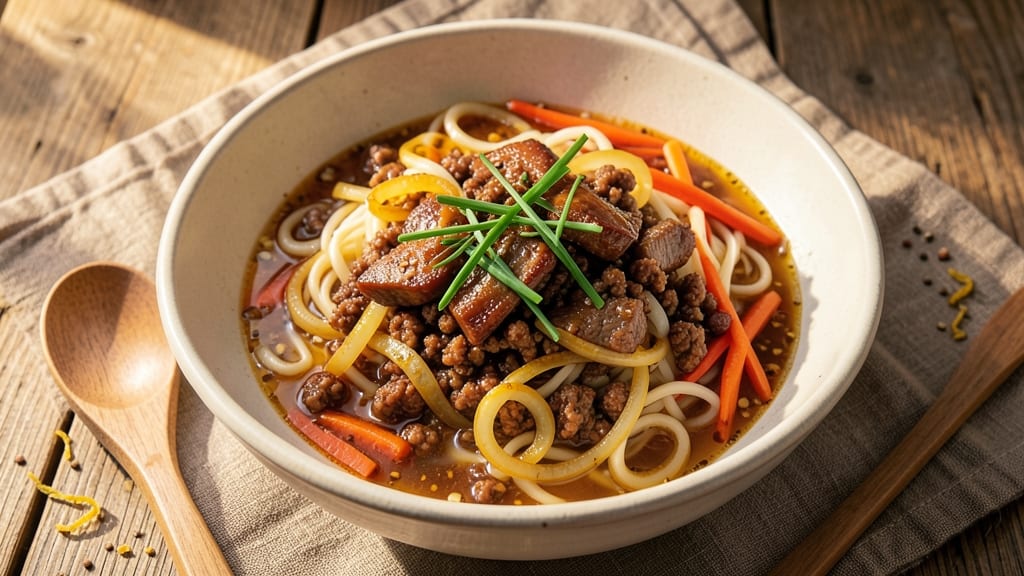
This minced pork ramen recipe delivers the perfect balance of rich, umami-packed broth and tender noodles—just like your favorite Asian eatery, but made at home. 💛 After years of perfecting my pork techniques, I’ve developed a method that transforms simple ingredients into a deeply flavorful bowl.
The secret lies in slow-cooking the pork with aromatic vegetables and spices, creating a broth so robust it needs no additional seasoning.
What sets this recipe apart is the dual approach to flavor: a savory pork base infused with garlic and ginger, combined with a silky miso or soy broth that’s both comforting and complex.
I’ve tested this with both traditional and modern variations, ensuring it works for any preference—whether you crave classic tonkotsu-style richness or a lighter, spicy kick. The result? A bowl that’s hearty enough for a cold evening yet light enough for lunch.
By the time you’re done, you’ll have perfectly cooked ramen with tender pork that practically melts in your mouth, silky noodles that hold up to the broth, and a flavor profile that’s impossible to resist.
The best part? This method builds flavor as it cooks, so every spoonful tastes deeper and more satisfying than the last. Ready to master your own restaurant-quality ramen?
Whether you’re serving a crowd or treating yourself to a solo meal, this recipe scales beautifully. Garnish with soft-boiled eggs, quick-pickled vegetables, or fresh herbs to elevate the dish even further. Let’s get cooking—your taste buds will thank you.
Ingredients for minced pork ramen
Minced pork, aromatic vegetables, and umami-rich broth—everything you need for restaurant-quality ramen at home.
| Ingredient | Amount | Notes |
|---|---|---|
| Minced Pork 🐷 | 1 ½ lb | Ground pork, not pre-seasoned |
| Ramen Noodles 🍜 | 2 packages | 8 oz each, any brand |
| Garlic Cloves 🧄 | 8 cloves | Minced for deep flavor |
| Fresh Ginger 🌿 | ½ cup | Finely grated, peeled |
| Yellow Onion 🧅 | 1 whole | Diced, yellow or white |
| Carrots 🥕 | 2 whole | Cut into thick matchsticks |
| Celery Stalks 🌿 | 3 whole | Cut into 1-inch pieces |
| Dried Shiitake Mushrooms 🍄 | ¼ cup | Rehydrated in hot water |
| White Miso Paste 🍶 | 2 tbsp | High-quality, not instant |
| Soy Sauce 🥢 | ¼ cup | Kikkoman preferred |
| Sesame Oil 🌰 | 1 tbsp | Toasted for aroma |
| Chicken or Vegetable Broth 💧 | 4 cups | Low-sodium preferred |
| Green Onions 🧅 | 3 whole | Sliced, for garnish |
| Sesame Seeds 🌰 | 1 tbsp | Toasted for crunch |
| Red Chili Flakes 🌶️ | 1 tsp | Optional, for heat |
| Salt 🧂 | 1 tsp | Adjust to taste |
| Black Pepper 🌶️ | ½ tsp | Freshly ground |
The pork is the heart of this dish, so pick high-quality ground pork—look for at least 15% fat content at Whole Foods or your local butcher. Freshly minced pork has more flavor than pre-ground, but if you're short on time, the store-bought stuff works fine. For the mushrooms, dried shiitake adds incredible depth—soak them in hot water for 20 minutes first. The miso paste? White miso is traditional, but red works too if you want more richness. I always grab mine from Asian markets—they carry better quality than regular grocery stores.
No fresh ginger? Powdered works at half the amount, but it won't be as vibrant. Short on shiitake? Cremini mushrooms in a pinch, but they won't have the same umami punch. The broth can be chicken, vegetable, or even pork—just make sure it's low-sodium. For extra depth, I sometimes add a splash of fish sauce (about 1 tsp), but skip it if you're avoiding seafood. The sesame oil is non-negotiable—it's what ties all the flavors together. Toast it lightly in a dry pan before adding to release its aroma. And if you're feeling fancy, soft-boiled eggs make an amazing garnish.
This broth builds flavor as it cooks, so it tastes even better the next day. Store leftovers in the fridge for up to 5 days, or freeze for 3 months—just thaw overnight in the fridge. I always double the batch because it's perfect for lunches or quick dinners. The noodles cook in minutes, so keep them in the fridge until you're ready to serve. Garnish with green onions, sesame seeds, and chili flakes right before eating—trust me, it makes all the difference.
Why You'll Love This Recipe
- I swear by this trick: just mince the pork yourself (or grab pre-minced) and toss the whole onion in thin slices—no dicing required. The ginger and garlic get a quick pulse in the food processor, and boom, you’re done. That’s the magic of minced pork ramen—it’s forgiving when you’re tired.
- No-Chop Needed: I swear by this trick: just mince the pork yourself (or grab pre-minced) and toss the whole onion in thin slices—no dicing required. The ginger and garlic get a quick pulse in the food processor, and boom, you’re done. That’s the magic of minced pork ramen—it’s forgiving when you’re tired.
- Umami Bomb: The pork browns so fast, it releases this deep, savory aroma that fills the whole kitchen. Add the garlic and ginger? Instant flavor explosion. Honestly, the broth alone could be a soup—it’s that rich—but the noodles soak it up like a dream.
- Lunchbox Hero: Between us, this is my go-to for packed lunches. Cook a big batch, let it cool, and portion it into containers. The noodles stay tender, the pork stays juicy, and it’s still delicious cold. (Yes, even on a Tuesday night when you forgot to pack anything.)
Step-by-step instructions for minced pork ramen
Here's how to build rich, aromatic broth from scratch—no shortcuts, just pure umami flavor.
🍳 Step 1: Sear the Minced Pork for Maximum Flavor
Heat a large pot or Dutch oven over medium-high heat until hot. Add the 1.5 lb minced pork and cook, stirring frequently, until it loses its raw color and turns golden brown (about 5-7 minutes). This step is crucial—it develops deep meaty flavor through the Maillard reaction.
Don't worry if the pork looks dry at first—it will release its juices as we cook. Once browned, push the pork to one side of the pot and add 1 tablespoon sesame oil. Let it sizzle for 30 seconds to infuse the aroma before we add the aromatics.
👨🍳 Step 2: Build Layers of Aromatics and Miso
Add the 1 whole yellow onion, 2 whole carrots, and 3 whole celery stalks (all prepped as directed) to the pot. Stir to coat in the pork juices and cook for 3-4 minutes until softened. Then add the 8 cloves minced garlic and 0.5 cup finely grated fresh ginger, cooking for another 1 minute until fragrant.
Stir in the 2 tablespoons white miso paste and 0.25 cup soy sauce, letting it caramelize slightly for 1-2 minutes. This creates the umami foundation. Here's the thing—don't rush this step. The miso needs time to develop its rich, savory depth.
🍳 Step 3: Simmer the Broth with Mushrooms and Broth
Pour in the 4 cups chicken or vegetable broth and bring to a gentle simmer. Add the 0.25 cup rehydrated dried shiitake mushrooms (drained of excess water) and 1 teaspoon red chili flakes. Reduce heat to low-medium and let it bubble gently for 20-25 minutes, partially covered, until the vegetables are tender and the broth has reduced slightly.
Taste and adjust seasoning with 1 teaspoon salt and 0.5 teaspoon black pepper. The broth should be deeply flavorful but balanced—not salty or overly spicy. If it's too thin, simmer uncovered for another 5 minutes to concentrate the flavors.
🥘 Step 4: Cook the Noodles to Perfection
While the broth simmers, prepare the 2 packages ramen noodles according to package instructions but cook them for 1 minute less than recommended. They'll finish cooking in the hot broth. Drain and set aside, reserving 1 cup of the starchy pasta water—this helps emulsify the broth.
Add the cooked noodles to individual bowls, then ladle the hot broth over them. The noodles will finish cooking and absorb the rich flavors. Here's a pro tip: If the broth seems too thick after adding noodles, whisk in 2-3 tablespoons of reserved pasta water to create a silky consistency.
🍽️ Step 5: Finish and Garnish for Restaurant-Quality Presentation
Divide the 3 whole green onions (sliced) and 1 tablespoon toasted sesame seeds among the bowls. Drizzle each serving with an extra ½ teaspoon sesame oil for that final aromatic punch. The contrast of textures—silky noodles, tender vegetables, crisp sesame seeds—and layers of flavor make this ramen truly special.
Serve immediately while the broth is steaming hot. Each spoonful should deliver a perfect balance of savory, umami, and subtle heat. Leftovers? Store the broth and noodles separately and reheat gently to maintain texture.
Pro Tips For Making Minced Pork Ramen
- STIR CONSTANTLY FIRST 2 MINUTES: Minced pork burns faster than you think—keep it moving until it loses that raw pink color. After that, you can loosen up a bit, but those first minutes are make-or-break for flavor.
- GRATE GINGER FINE: I used to chop it, and it’d clump like a stubborn rock in the broth. A microplane or fine grate blends it smoothly—no scraping later, just silky heat in every bite.
- SALT THE ONION WATER: Toss your sliced onion into the pot with the pork and let it sweat out moisture first. Then add water—this keeps your broth from turning cloudy later, and the onion’s sweetness stays where it belongs.
- COOK NOODLES SEPARATELY: The broth’s already rich, but boiling noodles in it dilutes the flavor and makes them soggy. Reserve 1 cup of broth to toss with drained noodles instead—keeps them tender without sacrificing depth.
Best sauces and condiments for these flavors
Miso Magic
White miso paste is the umami powerhouse of this ramen—2 tablespoons creates a velvety, fermented depth that transforms simple broth into something extraordinary.
I always use high-quality white miso from my local Asian market (like Hikari or Miso Master) because the fermentation process develops complex flavors that store-bought versions can't match. 💛
For an extra layer of richness, dissolve the miso in ¼ cup warm broth before adding it to the pot. This prevents clumping and ensures even distribution throughout the broth.
If you prefer a deeper color and bolder flavor, swap in red miso—just reduce the amount to 1 tablespoon since it's more concentrated.
Soy Sauce Secrets
The ¼ cup soy sauce (I use Kikkoman for consistency) adds saltiness and a touch of sweetness that balances the pork's richness. For a smoother finish, reduce the soy sauce by 1 tablespoon and replace it with 1 tablespoon of mirin—this adds subtle sweetness without overpowering the broth. 🥢
Pro tip: If your broth tastes too salty after simmering, add 1-2 tablespoons of cold water and stir. The salt concentration will adjust naturally as the broth rebalances. For a lighter touch, use tamari instead of soy sauce—it's gluten-free and has a cleaner flavor profile.
Sesame Oil Finish
The 1 tablespoon toasted sesame oil is non-negotiable—it carries the aroma that makes ramen irresistible. I always toast mine in a dry pan over low heat for 30 seconds to deepen its nutty flavor before adding it to the broth.
For the final drizzle, use an extra ½ teaspoon per bowl to create that signature aromatic cloud. 🌰
If you're sensitive to sesame, substitute with 1 teaspoon of toasted walnut oil (less common but works in a pinch). For a smoky twist, add ½ teaspoon of chili oil to the final drizzle—it brings heat and complexity without overpowering the broth.
Chili Oil Heat
The 1 teaspoon red chili flakes adds subtle heat that wakes up your palate between rich, umami bites.
For a more intense kick, replace it with 1 tablespoon of homemade chili oil (simmer 2 tablespoons neutral oil with 1 tablespoon crushed red pepper flakes and 1 clove minced garlic for 5 minutes). 🌶️
If you're serving this to kids or sensitive eaters, reduce the chili flakes to ½ teaspoon or omit entirely. For a smoky variation, swap in 1 teaspoon of smoked paprika—it adds depth without heat. Store-bought chili oil works too, but homemade lets you control the spice level.
Umami Boosters
Looking to take your broth to the next level? Add 1 teaspoon fish sauce (like Red Boat) for an extra umami punch—it’s a secret weapon in Southeast Asian cooking.
For a vegetarian option, stir in 1 tablespoon of mushroom powder (like Nutiva's nutritional yeast) or 1 tablespoon of soy sauce for depth. 💡
Another pro move: Add 1 sheet of kombu seaweed (dried) to the simmering broth for 10 minutes before removing it. Kombu infuses the broth with natural glutamate, enhancing the umami without altering the flavor profile. It’s a trick I learned from Japanese ramen masters.
Nutrition facts
Frequently asked questions
Can I use ground pork instead of minced pork?
Ground pork works perfectly—just make sure it's high-fat (15%+) for maximum flavor. The texture will be slightly coarser than hand-minced pork, but it still delivers that rich, meaty taste. If your ground pork is lean, add 1 tablespoon neutral oil to the searing step to prevent drying out.
How do I make this vegetarian?
Swap the pork for 1.5 lb extra-firm tofu (pressed and crumbled) or 1.5 lb mushrooms (like shiitake or oyster). Boost umami with 1 tablespoon soy sauce and 1 teaspoon mushroom powder in the broth. For texture, add ½ cup cooked lentils or ½ cup crispy fried tofu as a garnish.
Why does my broth taste thin?
Broth often thins when noodles are added because they absorb liquid. To fix this, simmer the broth uncovered for 5-10 extra minutes to reduce it before adding noodles. If it's still too thin, whisk in 1 tablespoon cornstarch mixed with 2 tablespoons cold water and simmer for 2 minutes—this thickens without altering flavor.
Can I make this ahead of time?
Yes! Prepare the broth up to 3 days ahead and store it in the fridge. Reheat gently on the stove, skimming off any hardened fat. For the noodles, cook them fresh when serving—this prevents mushiness. Keep the garnishes separate until ready to assemble for maximum crispness.
What's the best way to reheat leftovers?
Reheat broth and noodles separately over low heat with a splash of water to prevent drying. For the best texture, combine them in bowls and cover with a damp paper towel while reheating. If the broth seems too thick after reheating, whisk in 1-2 tablespoons of water or reserved pasta water to restore silkiness.