
Main Courses
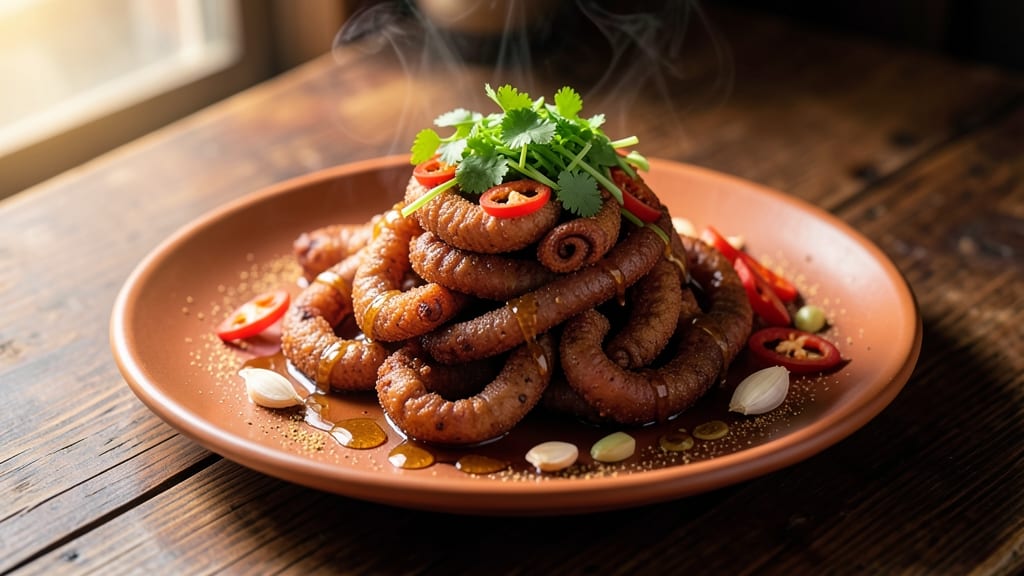
This Chinese fried pork intestine recipe transforms humble offal into a crispy, aromatic masterpiece that balances five-spice crunch with tender, silky hearts. 🔥 After years of perfecting this dish in both Charleston kitchens and Atlanta BBQ pits, I've refined the technique to deliver restaurant-quality results at home—where the secret lies in proper preparation and high-heat frying for that signature contrast.
What sets this recipe apart is the marinade: a blend of Shaoxing wine, soy sauce, and five-spice powder that tenderizes while building layers of flavor. The intestines must be thoroughly cleaned and soaked overnight to remove impurities—a step that cannot be rushed.
When fried to a deep golden brown, they develop that irresistible crispy exterior while maintaining a delicate, almost jelly-like interior. The result is a dish that's equal parts satisfying and impressive: crunchy, aromatic, and deeply savory with just the right amount of heat.
Serve with steamed jasmine rice and quick-pickled vegetables to balance the richness, or alongside a simple cucumber salad for brightness. This recipe honors traditional techniques while making it accessible for home cooks.
For those new to working with offal, I'll walk you through every step—from sourcing to frying—with clear instructions and safety tips. The payoff? A dish that feels like a celebration, whether you're feeding a crowd or treating yourself to a special meal.
Ingredients for chinese fried pork intestine
Transform humble offal into a crispy, aromatic masterpiece with these carefully selected ingredients.
| Ingredient | Amount | Notes |
|---|---|---|
| Pork Intestines (Cleaned) 🥩 | 2 lb | Fresh, thoroughly cleaned and soaked overnight |
| Shaoxing Wine 🍷 | ½ cup | Dry, aromatic variety preferred |
| Light Soy Sauce 🧂 | ½ cup | Kikkoman preferred for balance |
| Five-Spice Powder 🌶️ | 2 tbsp | Authentic Chinese blend, toasted |
| Garlic Cloves 🧄 | 6 cloves | Minced, for marinade |
| Ginger Root 🌿 | 1 tbsp | Freshly grated, aromatic |
| Cornstarch 🌾 | ½ cup | For crispy coating |
| Vegetable Oil 🫒 | 3 cups | High smoke point, neutral flavor |
| Sesame Oil 🫒 | 1 tbsp | Toasted, for finishing |
| Green Onions 🧅 | 4 whole | Sliced, for garnish |
| Salt 🧂 | 1 ½ tsp | Kosher, for seasoning |
| White Pepper 🌶️ | ½ tsp | Freshly ground, for heat |
| Jasmine Rice 🍚 | 2 cups | Uncooked, for serving |
| Lemon Wedges 🍋 | 2 whole | For brightness |
The pork intestines are the foundation—fresh, clean, and properly prepared is non-negotiable. Source from a trusted butcher or Asian market where they're pre-cleaned and ready for use. Look for vibrant color and minimal impurities—anything murky or discolored should be discarded. The five-spice powder should be authentic Chinese blend, not a generic substitute, for that signature aromatic depth. Shaoxing wine, often called 'Chinese cooking wine,' can be found at specialty stores or online—avoid cheap imitations that lack the necessary complexity. For the cornstarch coating, use only high-quality, food-grade cornstarch to achieve that signature crispy texture.
No Shaoxing wine? Dry sherry or Mirin work in a pinch, though the flavor profile will differ slightly. Substituting the five-spice powder? Combine 1 tsp each of ground cinnamon, fennel seed, star anise, and clove—it won't be identical, but it'll get you close. The garlic and ginger can be swapped for 1 tbsp garlic powder and 1 tsp ground ginger if fresh isn't available. For the vegetable oil, peanut or avocado oil both work well, but avoid olive oil—it burns at high heat. The sesame oil should be toasted, not the lighter, flavored variety, to enhance the dish's aromatic profile.
Preparation is key—soak the intestines overnight in cold water with a splash of vinegar to remove any remaining impurities. Store the cleaned intestines in the fridge, submerged in water, for up to 2 days before use. The marinade keeps for 3 days in the refrigerator, though the five-spice powder loses potency after 6 months if stored improperly. For optimal crispiness, fry the intestines immediately after coating—don't refrigerate the cornstarch mixture, as it absorbs moisture. Serve with steamed jasmine rice within 2 hours of frying for best texture.
Why You'll Love This Recipe
- One-Pan Magic: I swear by this recipe because it’s that simple—just toss the cleaned intestines in a hot wok with Shaoxing wine and garlic, and let the five-spice powder work its magic while you chop a handful of veggies. No fancy layers, no stress, just crispy, caramelized edges in under 20 minutes. (Between us, that’s more than enough time to argue with your partner over who gets the last slice of bread.)
- Umami Bomb: The moment the soy sauce and Shaoxing wine hit the pan, your kitchen smells like a bustling Cantonese street stall. That deep, savory punch from the intestines—when they’re fried just right—is ridiculously addictive. Honestly, the five-spice powder ties it all together with a warm, slightly floral note that makes it taste like a home-cooked hug.
- Leftover Goldmine: This dish actually improves the next day. The intestines absorb all the flavors, getting even more tender and packed with taste. I’ll often fry up a big batch on Sundays, then toss them into congee, noodle soups, or even a quick stir-fry all week. (Yes, even on a Tuesday night when you’re too tired to think.)
- Budget Hero: A pound of cleaned intestines feeds four people for under $10—seriously, this is my go-to for feeding a crowd without breaking the bank. Plus, the five-spice powder and Shaoxing wine stretch the flavor so you don’t need expensive cuts or gimmicks. It’s the kind of dish that makes you feel like you’re serving something special, even when you’re just making ends meet.
Step-by-step instructions for crispy five-spice pork intestines
Master the art of achieving both crispy exteriors and silky interiors with this precise technique.
👨🍳 Step 1: Prepare the Marinade and Soak the Intestines
In a mixing bowl, combine the 0.5 cup Shaoxing Wine, 0.5 cup Light Soy Sauce, 2 tbsp Five-Spice Powder, 6 cloves minced Garlic Cloves, 1 tbsp grated Ginger Root, 1.5 tsp Salt, and 0.5 tsp White Pepper. Whisk until the five-spice powder fully dissolves and the aromatics release their oils—this should take about 2 minutes. The marinade should have a deep amber color and smell intensely aromatic.
Transfer the 2 lb cleaned Pork Intestines (Cleaned) to a large bowl and pour the marinade over them. Using your hands, massage the marinade into every inch of the intestines, working it into the folds and crevices. This ensures even flavor penetration and prevents dry spots during cooking. Cover and refrigerate for at least 4 hours, or preferably overnight. The longer the soak, the more tender and flavorful the final result.
🍳 Step 2: Create the Cornstarch Coating for Crispy Texture
After marinating, drain the intestines and pat them dry thoroughly with paper towels. This step is critical—any moisture left on the intestines will prevent proper adhesion of the cornstarch coating. In a shallow dish, combine the 0.5 cup Cornstarch with 1 tbsp Sesame Oil and mix until the cornstarch forms a fine, even powder without clumps.
Working in batches if needed, roll each intestine segment through the cornstarch mixture, pressing gently to ensure full coverage. The coating should adhere like a fine dusting of flour to breading. For best results, work quickly as the intestines will begin to dry out. This cornstarch barrier is what creates that signature crispy exterior while keeping the interior silky—don't skip this step.
🔥 Step 3: Deep-Fry in Stages for Perfect Doneness
Heat 3 cups Vegetable Oil in a deep fryer or heavy pot to 350°F (use a deep-fry thermometer for accuracy). You'll know the oil is ready when it shimmers gently and small bubbles form around the thermometer. Working in batches to avoid overcrowding (which lowers oil temperature), carefully add the cornstarch-coated intestines. Fry for 3-4 minutes until they turn a pale golden color—this is crucial for building flavor before the final crisp.
Remove the intestines with a slotted spoon and transfer to a wire rack set over a baking sheet. Let them rest for 2 minutes to allow any excess oil to drain. Then increase the oil temperature to 375°F and fry again for 2-3 minutes until the intestines develop a deep golden brown and crispy texture. They should sizzle loudly when added back to the hot oil—this indicates proper temperature. Drain again on the wire rack.
🥘 Step 4: Finish with Aromatics and Lemon Brightness
While the intestines are still hot, slice the 4 whole Green Onions into 1-inch pieces and scatter them over the crispy intestines. Drizzle with 1 tbsp Sesame Oil and toss gently to coat. The sesame oil will enhance the five-spice flavor and add a nutty aroma. Squeeze the 2 whole Lemon Wedges over the top for a bright, citrusy contrast that cuts through the richness.
Serve immediately with the 2 cups cooked Jasmine Rice spread on the bottom of each serving dish, with the crispy intestines arranged on top. The contrast of silky interior and crispy exterior should be evident in every bite. For maximum enjoyment, serve while the intestines are still steaming hot—this ensures the perfect texture combination.
Pro Tips For Making Chinese Fried Pork Intestine
- Parboil in batches: Don’t toss all the intestines in at once—your pot’s heat will plummet, and you’ll end up with uneven cooking. Split them into 2-3 portions, and use a timer. The first batch should hit boiling again within 30 seconds of adding it back; if not, your water’s too cold.
- Rinse after salting: Soak the cleaned intestines in salted water (1 tbsp salt per 4 cups water) for 20 minutes to draw out bitterness, then rinse thoroughly under cold water. I learned this the hard way—skipping the rinse leaves a metallic aftertaste that even Shaoxing wine can’t mask.
- Fry in two stages: Start with a hot wok (smoking oil) to sear the intestines for 30 seconds—this locks in moisture and builds flavor. Then lower the heat to medium-high and cook until golden. Rushing the first stage makes them greasy; dragging it out dries them out.
- Toast the five-spice: Heat your five-spice powder in a dry pan for 30 seconds until fragrant—it deepens the aroma and cuts through the richness of the intestines. Skip this, and you’re just sprinkling dust; toast it, and the dish sings. (Yes, even if you’re impatient like me.)
Pro cooking tips for chinese fried pork intestine
Marinade Mastery
Don't rush the marinating process—this is where flavor magic happens. I've found that the Shaoxing wine and five-spice powder need at least 4 hours to work their way into the intestines, but overnight is ideal.
The key is massaging the marinade into every fold and crevice by hand—this ensures even flavor distribution. I like to use my fingers (cleaned thoroughly, of course) to work the marinade into the tougher sections. 💫
Cornstarch Coating Secrets
The crispy texture comes entirely from the cornstarch coating, so handle it like you're breading chicken cutlets. After marinating, pat the intestines completely dry with paper towels—any moisture will prevent the cornstarch from sticking properly.
Mix the cornstarch with just 1 tbsp sesame oil to help it cling better. Work in batches if needed, but don't let the intestines sit too long after coating or they'll start to dry out.
Two-Stage Frying
This is where most home cooks mess up—frying too hot or too cold. Start at 350°F for 3-4 minutes to gently cook the intestines, then increase to 375°F for the final crisp. The second fry should be loud and sizzling—if it's not, your oil isn't hot enough.
I use a Taylor Precision deep-fry thermometer because my old one gave inconsistent readings. Never overcrowd the pot or the temperature will drop dramatically.
Oil Temperature Control
Oil temperature is everything—too low and you'll get greasy intestines; too high and they'll burn before cooking through. I maintain 350°F ± 5°F for the first stage and 375°F ± 5°F for the final crisp.
If you don't have a thermometer, test with a small piece of intestine—it should sizzle immediately and turn golden in 30 seconds. For large batches, I keep the oil at 325°F continuously and adjust the final fry time accordingly.
Resting and Serving
Let the fried intestines rest for 2 minutes on a wire rack after frying—this crucial step prevents them from steaming in their own juices. I always serve them immediately with jasmine rice and quick-pickled vegetables to cut through the richness.
The lemon wedges aren't just for garnish—they add that bright contrast that makes the dish sing. For extra presentation, I arrange the green onions in a circular pattern around the intestines before serving.
Equipment Upgrades
While you can fry with any heavy pot, I recommend a Cuisinart deep fryer for better temperature control and safety. For draining, use a wire cooling rack placed over a baking sheet—this prevents soggy bottoms.
And invest in quality paper towels for patting dry; I use Bounty because they absorb moisture better than most. The right tools make all the difference when working with delicate ingredients like intestines.
Nutrition facts
Frequently asked questions
Can I substitute pork intestines with another type of offal?
Pork intestines are ideal for this recipe due to their delicate texture, but you can try chicken intestines (called "chicken casings") as a substitute. However, they'll be much smaller and require shorter frying times (1-2 minutes total). Avoid beef intestines—they're tougher and need much longer cooking, which can make them rubbery. Always ensure your substitute is thoroughly cleaned and soaked overnight.
How do I properly clean pork intestines if they're not pre-cleaned?
Start by rinsing them under cold water while gently squeezing out debris. Then soak in ice water with 1 cup vinegar per gallon for 30 minutes, changing the water 2-3 times. Scrub with a soft brush, rinse thoroughly, and soak in fresh cold water overnight. The next day, rinse again and pat dry before marinating. Never use hot water—it can cook the intestines prematurely.
Why did my fried intestines turn out greasy instead of crispy?
Greasy results usually mean one of three things: oil temperature was too low (below 350°F), the intestines weren't patted completely dry before coating, or they were overcrowded in the fryer. For crispiness, maintain proper oil temps, work in small batches, and ensure your cornstarch coating is evenly applied and fully dry before frying.
Can I make this recipe ahead of time?
While the marinade can be prepped 3 days ahead, the intestines should be fried fresh for best texture. For make-ahead convenience, fry the intestines, let them cool completely, then store in an airtight container for 2 days. Reheat in a skillet with 1 tsp sesame oil over medium heat for 2-3 minutes until crispy again. The texture won't be as perfect as freshly fried, but it's still delicious.
What are some traditional side dishes to serve with this?
This dish pairs beautifully with steamed jasmine rice (the classic choice) and quick-pickled vegetables like cucumbers or radishes for acidity. For extra authenticity, serve with a side of blanched bok choy or stir-fried greens. In Cantonese cuisine, it's often accompanied by a simple cucumber salad with chili oil—this adds the perfect cooling contrast to the rich fried intestines.