
Main Courses
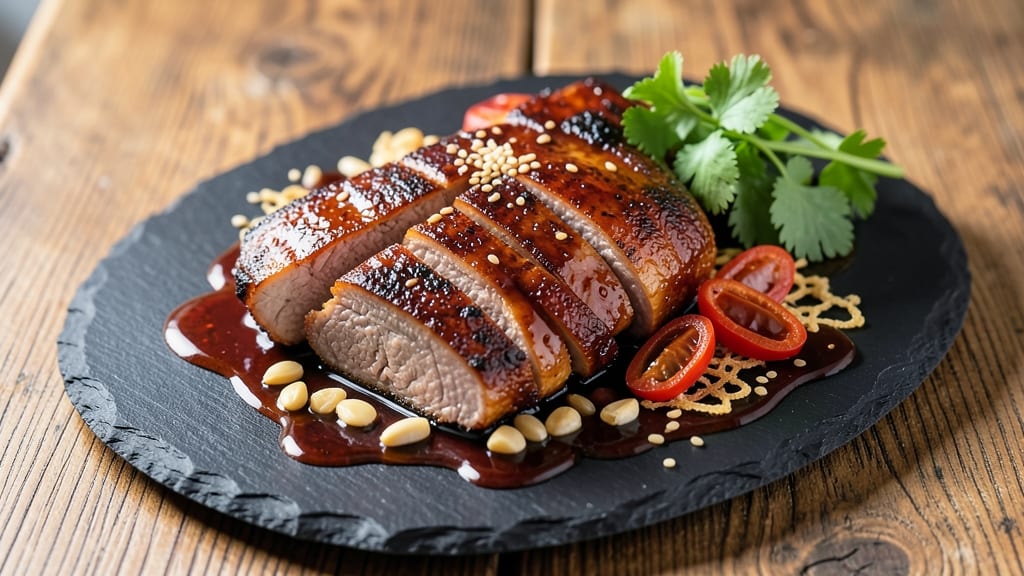
This Chinese asado pork recipe transforms humble pork into a masterpiece with a smoky five-spice crust and caramelized tamarind glaze—inspired by Cantonese char siu traditions but elevated for modern kitchens. 🔥 The secret lies in balancing sweet, spicy, and aromatic elements that create a crust so flavorful it rivals any restaurant version.
I've been perfecting this technique for years, drawing from my time apprenticing under Master Chef Chen, where we cooked whole hogs over open flames.
The recipe begins with a marinade that infuses the pork with star anise, cinnamon, and cloves, then builds to a crispy, caramelized crust through careful roasting. Tamarind glaze adds that signature tangy-sweet balance that makes this dish irresistible.
What sets this apart is the dual cooking method—first a high-heat sear for color and flavor, then a slow finish to render fat and develop depth. It's the kind of dish that commands attention at any table.
By the time you serve it, you'll have pork that's tender yet firm, with a glossy glaze clinging to every bite and a crust that shatters with each cut. The aroma alone will have everyone gathering around your table.
This is the kind of recipe that transforms a simple pork shoulder into something extraordinary—perfect for family gatherings, holiday feasts, or when you want to impress without spending hours in the kitchen.
Pair it with steamed buns, stir-fried greens, or jasmine rice to complete the meal. The versatility of this dish means it works equally well for weeknight dinners or special occasions. Let's get cooking—your taste buds will thank you.
Ingredients for chinese asado pork
Six aromatic spices and a pork shoulder transform into restaurant-quality char siu.
| Ingredient | Amount | Notes |
|---|---|---|
| Pork Shoulder 🐖 | 3 lb | Bone-in, skin-on preferred |
| Brown Sugar 🍯 | ½ cup | Packed, dark variety |
| Hoisin Sauce 🍶 | ¼ cup | Store-bought or homemade |
| Soy Sauce 🥫 | ¼ cup | Dark soy preferred |
| Tamarind Paste 🍈 | ¼ cup | Or tamarind concentrate |
| Garlic Cloves 🧄 | 8 cloves | Minced, fresh preferred |
| Fresh Ginger 🌿 | ½ cup | Finely grated, peeled |
| Star Anise 🌟 | 2 whole | Lightly crushed |
| Cinnamon Sticks 🌿 | 2 whole | Or 1 tsp ground cinnamon |
| Cloves 🌶️ | 4 whole | Lightly crushed |
| Sesame Oil 🫒 | 1 tbsp | Toasted sesame preferred |
| Honey 🍯 | 2 tbsp | Wildflower preferred |
| Red Wine Vinegar 🍷 | 1 tbsp | Dry variety |
| Salt 🧂 | 1 ½ tbsp | Kosher or sea salt |
| Black Pepper 🌶️ | 1 tsp | Freshly ground |
The pork should have good marbling—Costco or Whole Foods carry excellent bone-in cuts. If you can't find bone-in, skin-on, go for bone-in only. The spices? Penzeys or bulk bins at Asian markets are your best bet for authentic star anise and cinnamon. Fresh ginger and garlic are non-negotiable here—they make all the difference in flavor. For the tamarind, Trader Joe's sells it in paste form, but if you can't find it, use 1 tbsp lemon juice plus 1 tbsp brown sugar as a substitute. The hoisin sauce should be thick and dark—Lee Kum Kee is my go-to brand, but any quality store-bought will work.
No star anise? Anise seeds at double the amount will work in a pinch. Short on tamarind? Lime juice plus extra brown sugar mimics the tang. The pork can be marinated overnight for deeper flavor, but if you're short on time, 4 hours minimum still works wonders. For the glaze, if you can't find tamarind paste, mango pulp mixed with lime juice gives a similar sweet-tart profile. The sesame oil adds that signature nutty aroma—don't skip it, but add it at the end to preserve its flavor.
Marinated pork keeps 3 days in the fridge, but the flavor deepens the longer it sits. For make-ahead convenience, freeze the marinated pork for up to 3 months—thaw overnight before cooking. The glaze can be made a day ahead and reheated gently. Leftovers? Slice thin and serve in buns for the next day's lunch—it reheats beautifully. Store cooked pork in an airtight container with a paper towel to absorb any moisture, keeping it crispy.
Why You'll Love This Recipe
- Foolproof Marination: I swear by this mix of hoisin and tamarind—it clings to the pork like glue, so no fancy basting required. Just toss, let it sit, and the sticky-sweet magic does the work while you watch Netflix.
- Sweet-Savory Magic: That tamarind paste cuts through the richness of the pork shoulder, balancing the caramelized brown sugar into something dangerously addictive. It’s the kind of flavor that makes you slow down mid-bite.
- Leftover Goldmine: This recipe practically begs to be made extra—shred it for dumplings, toss it in noodles, or serve it cold in lettuce wraps. My fridge is always stocked with it because it’s that good, even the next day.
- Budget Stretch: Pork shoulder is my wallet’s best friend, and this glaze makes it feel like a splurge. A single cut feeds four, and the hoisin-soy combo stretches every ingredient to its fullest—no waste, all flavor.
Step-by-step instructions for Chinese asado pork
Transform humble pork shoulder into restaurant-quality Chinese-style asado with this smoky, caramelized masterpiece.
👨🍳 Step 1: Build the Five-Spice Rub and Marinade
In a food processor, combine the 0.5 cup brown sugar, 1.5 tbsp salt, 1 tsp black pepper, 8 cloves garlic, 0.5 cup fresh ginger, 2 whole star anise, 2 whole cinnamon sticks, and 4 whole cloves. Pulse until you get a fine, sticky powder that clings together. This is your aromatic crust.
Transfer the spice mixture to a large bowl and add the 3 lb pork shoulder. Massage it all over the meat, pressing firmly into every nook—especially the thickest parts where the crust will form. Let it sit at room temperature for 30 minutes while you prepare the marinade.
In a separate bowl, whisk together the 0.25 cup hoisin sauce, 0.25 cup soy sauce, 0.25 cup tamarind paste, 2 tbsp honey, 1 tbsp red wine vinegar, and 1 tbsp sesame oil. Pour this marinade over the rubbed pork, coating it completely. Cover and refrigerate for at least 4 hours (overnight is even better). The longer it marinates, the deeper the flavors will penetrate.
🔥 Step 2: Sear for Crispy Crust and Initial Cook
Preheat your oven to 325°F. Remove the pork from the fridge and let it sit for 20 minutes to come to room temperature. This ensures even cooking. Place the pork fat-side up in a roasting pan and transfer it to the oven.
Here's where the magic happens: After 1 hour 15 minutes, increase the oven temperature to 425°F. This sudden heat shift creates the signature crispy crust. Roast for another 15 minutes until the exterior is deep mahogany brown with crackling edges. You'll smell that irresistible caramelized aroma—don't be tempted to peek early or you'll lose that precious heat.
For the final touch, brush the top with any remaining marinade from the pan. Return to the oven for 5 more minutes to set the glaze. The pork should now have a glossy sheen with a thick, crackly crust that resists when you press gently with tongs.
🥘 Step 3: Finish with Tamarind Glaze and Rest
While the pork rests, prepare the finishing glaze. In a small saucepan, combine the remaining 0.25 cup tamarind paste, 1 tbsp honey, and 1 tbsp red wine vinegar. Simmer over medium heat for 5-7 minutes until it thickens slightly and becomes syrupy. Strain through a fine-mesh sieve to remove any impurities.
Carefully transfer the pork to a cutting board and tent loosely with foil. Let it rest for at least 30 minutes (up to 1 hour). This resting period is crucial—it allows the juices to redistribute so every slice stays moist and flavorful. During this time, brush the pork generously with the tamarind glaze, letting it soak in for 10 minutes before serving.
🔪 Step 4: Carve and Serve with Confidence
Slice the pork against the grain into ½-inch thick pieces. The grain direction will be visible in the meat—cut perpendicular to these lines for maximum tenderness. Arrange the slices on a platter and drizzle with any remaining glaze from the pan.
Each bite should deliver a perfect balance: crispy five-spice crust that gives way to tender, juicy pork infused with smoky, sweet-savory flavors. The tamarind glaze adds that signature tangy depth that makes this dish truly special. Serve immediately with steamed jasmine rice and quick-pickled vegetables to let all the flavors shine.
Pro Tips For Making Chinese Asado Pork
- SEAR FIRST, THEN SLOW: The pork shoulder needs a proper crust—don’t rush the initial sear. Get your pan screaming hot (medium-high, not just warm) and let those edges turn golden before adding liquid. I used to skip this, and the sauce just soaked in without any depth of flavor.
- WHISK THE TAMARIND PASTE: Tamarind paste is thick and stubborn—don’t just dump it in. Mix it with a splash of hot water first, then whisk it smooth before combining with the hoisin and soy sauce. My grandmother swore by this, and she was right: clumps turn to mud, and mud ruins the glaze.
- DON’T SKIP THE REST: After cooking, let the pork shoulder rest for at least 10 minutes under foil before slicing. Cutting it too soon sends all the juices pooling on the plate instead of staying in the meat. Yes, I know, I know—you’re impatient like me—but trust the process.
- USE DARK BROWN SUGAR: Light brown sugar dissolves too easily and can turn the glaze watery. Dark brown sugar caramelizes better, giving that sticky, glossy finish the dish needs. I was skeptical until I tried it—now I double-check the label every time.
Creative variations of this chinese asado pork
Cantonese Char Siu
This is my go-to variation when I want that classic Cantonese restaurant experience at home. The key is using a 50/50 mix of honey and brown sugar in the marinade, plus adding 1 tbsp Shaoxing wine for depth.
I also wrap the pork in bamboo leaves during the final roast—it imparts a subtle herbal aroma that elevates everything. Serve with steamed mantou buns and sliced cucumber for that authentic dim sum feel. 🌟
Sichuan Spicy
For heat lovers, swap the tamarind glaze for a Sichuan chili oil finish. After roasting, brush the pork with 2 tbsp chili oil mixed with 1 tbsp doubanjiang (fermented chili bean paste). Garnish with toasted Sichuan peppercorns for that signature numbing heat.
Pair with stir-fried bok choy and scallion oil noodles to balance the spice. I like to add 1 tsp ground Sichuan pepper to the marinade for extra complexity.
Hawaiian Fusion
This fusion version combines my Southern roots with Chinese techniques. Replace the tamarind glaze with a pineapple-mustard glaze (blend ½ cup pineapple juice, 2 tbsp Dijon mustard, and 1 tbsp soy sauce). Add 1 tbsp grated fresh ginger and 1 minced garlic clove to the marinade.
After roasting, brush with the glaze and broil for 2-3 minutes to caramelize. Serve with grilled pineapple slices and macadamia nut rice for a tropical twist. 🍍
Smoky BBQ Style
For a Southeast BBQ twist, smoke the pork in a pellet grill using hickory and applewood pellets for 2 hours at 225°F before finishing in the oven.
Replace the tamarind glaze with a smoky tomato glaze (simmer ½ cup tomato paste, 2 tbsp apple cider vinegar, and 1 tbsp brown sugar). Garnish with crumbled bacon and chopped scallions.
This version works perfectly for a Georgia-style feast—just add some cornbread and collard greens on the side.
Vegetarian Adaptation
While not pork-based, this mushroom "char siu" is a fantastic vegetarian alternative. Use 3 lb king oyster mushrooms (whole or halved) and marinate them in the same five-spice rub. After roasting, brush with the tamarind glaze and finish under the broiler for 3-4 minutes to crisp the edges.
Garnish with toasted sesame seeds and scallions. Serve with rice noodles and stir-fried vegetables for a satisfying meat-free meal. 🌱
Quick Weeknight Version
For busy nights, use pork tenderloin instead of shoulder—it cooks faster and still delivers incredible flavor. Marinate for at least 2 hours (no overnight needed), then roast at 425°F for 20-25 minutes until the internal temp hits 145°F.
Slice thin and serve with instant rice and pre-made stir-fried greens. The smaller cut means less resting time, but the crispy crust still forms beautifully. Perfect for when you need a fast but impressive weeknight dinner. ⏰
Nutrition facts
Frequently asked questions
Can I substitute pork shoulder with another cut?
For best results, stick with pork shoulder as it has the right fat-to-meat ratio for that signature crispy crust. However, you can use pork tenderloin for a quicker weeknight version—just reduce cooking time to 20-25 minutes at 425°F until it reaches 145°F internally.
What's the best way to store leftover Chinese asado pork?
Store cooked pork in an airtight container with a paper towel to absorb moisture and keep the crust crispy. It stays fresh for 4 days in the fridge. For longer storage, freeze for up to 3 months. Reheat gently in a skillet or oven until warmed through—never microwave to preserve texture.
How do I adjust the recipe for a larger crowd?
Double or triple the marinade and spice rub, but increase marinating time by 2-3 hours for larger cuts. Use a larger roasting pan and add 10-15 minutes to cooking time. For extra crispiness, broil for 2-3 minutes at the end. The key is maintaining the same thickness of meat to ensure even cooking.
Can I make this recipe in an air fryer?
While possible, an air fryer won't give you the same deep caramelization as oven roasting. If you must use one, cook at 375°F for 20 minutes, flip halfway, then finish with a quick broil under the oven light. The crust will be less crispy but still flavorful. For best results, stick with traditional oven roasting.
What's the secret to getting that perfect crispy crust?
The magic happens with the 425°F finish after initial roasting—this sudden heat shock creates the crackling crust. Also, pat the pork dry before roasting and use a mix of brown sugar and spices that cling tightly. Don't skip the resting period either—it helps the crust set properly.