
Main Courses
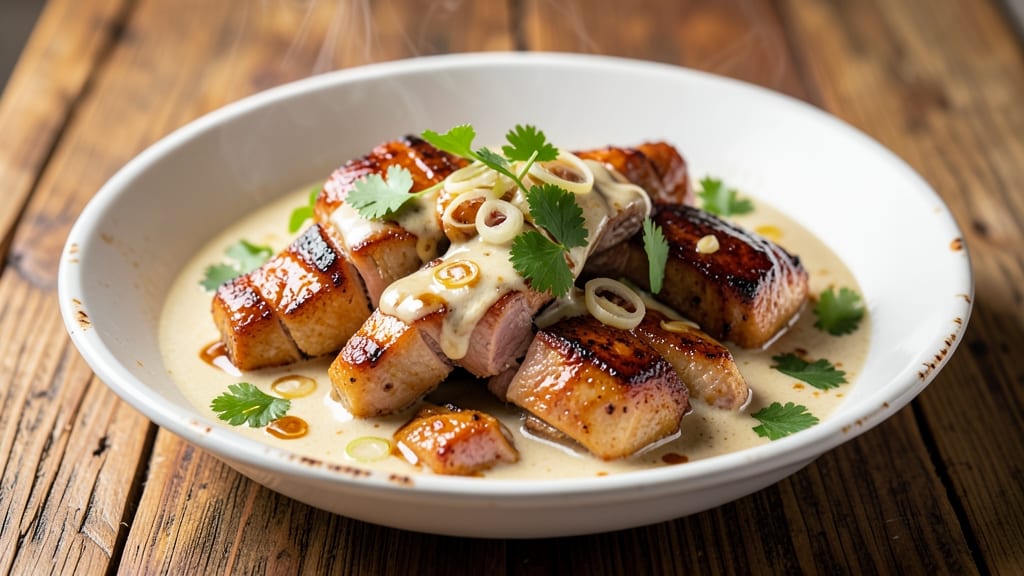
This Chicken Pork Adobo Sa Gata recipe brings the rich, velvety comfort of Filipino home cooking to your table—where tender pork and chicken simmer in a luxurious blend of coconut milk, vinegar, and aromatic spices.
The secret lies in balancing the tangy adobo base with creamy coconut milk, creating a sauce that's both bold and comforting. I've perfected this dish over years of testing, ensuring every bite delivers that perfect harmony of textures and flavors.
What sets this recipe apart is the two-stage cooking process: first braising the meat in vinegar and soy sauce to develop deep flavor, then enriching it with coconut milk for that signature creamy finish.
The garlic, ginger, and bay leaves infuse the dish with layers of warmth, while the vinegar keeps the sauce bright and tangy. It's the kind of meal that transforms a simple weeknight dinner into a celebration.
By the time you serve this dish, you'll have fork-tender pork and chicken swimming in a glossy, velvety sauce that clings to every bite.
The aroma alone will have everyone gathering at your table—imagine steaming jasmine rice soaking up that rich sauce, or serving it with crispy garlic fried rice for extra texture. This is comfort food at its finest, with just the right balance of tangy, creamy, and savory.
Perfect for family gatherings or when you want to impress guests with authentic Filipino flavors. The recipe scales beautifully, so you can easily double or triple it for larger crowds. Let's get cooking—your taste buds will thank you.
Ingredients for chicken pork adobo sa gata
Six ingredients bring the creamy, tangy magic of Filipino comfort food to your table.
| Ingredient | Amount | Notes |
|---|---|---|
| Boneless Pork Shoulder 🥩 | 2 lb | Cut into 2-inch chunks |
| Boneless Chicken Thighs 🍗 | 1 ½ lb | Skin-on preferred for flavor |
| Coconut Milk 🥥 | 2 cans | 13.5 oz each, full-fat preferred |
| Cane Vinegar 🍶 | ½ cup | White vinegar substitute |
| Soy Sauce 🥄 | ¼ cup | Dark soy for color |
| Garlic Cloves 🧄 | 8 cloves | Minced, fresh preferred |
| Fresh Ginger 🌿 | 2 tbsp | Grated, peeled |
| Bay Leaves 🌿 | 2 whole | Dried or fresh |
| Onion 🧅 | 1 whole | Medium, sliced |
| Green Bell Pepper 🌶️ | 1 whole | Medium, sliced |
| Sugar 🍚 | 2 tbsp | White granulated |
| Salt 🧂 | 1 ½ tsp | Kosher or sea salt |
| Black Peppercorns 🌶️ | 10 whole | Crushed lightly |
| Olive Oil 🫒 | 2 tbsp | For searing meat |
The coconut milk is non-negotiable here—full-fat cans make all the difference. Filipino markets or Asian grocery stores carry the best brands like Goya or Thai Kitchen. If you can only find light coconut milk, use double the amount. The pork shoulder needs to be well-marbled—ask your butcher for bone-in if possible, it adds flavor. Chicken thighs stay juicier than breasts in this long cook. For the vinegar, cane vinegar is traditional, but white vinegar works in a pinch—just add a pinch more sugar to balance the sharpness.
No cane vinegar? Apple cider vinegar or balsamic will work, though the flavor will differ slightly. Running short on garlic? Garlic powder at half the amount gets you close, but fresh is worth it. The bell pepper is optional—skip it if you prefer a more traditional adobo. For extra depth, add a pinch of black peppercorns while the sauce simmers. The sugar helps balance the acidity, but if you're watching your intake, use coconut sugar or reduce by half. The soy sauce? Dark soy gives the sauce that gorgeous color—regular soy works but won't be as visually striking.
This sauce gets better with time—plan ahead and make it a day in advance. Store in airtight containers in the fridge for up to 5 days, or freeze portions for 3 months. I always make extra because it disappears fast. The meat stays tender for 3-4 days in the fridge, but the sauce is the real star—it reheats beautifully and tastes even richer the next day. Double the recipe if you're feeding a crowd—it's that good.
Why You'll Love This Recipe
- One-Pot Magic: I swear by this recipe when I’m too tired to wash a million dishes. The pork shoulder and chicken thighs simmer right in the same pot with coconut milk and vinegar—no extra pans, no stress. Just dump, stir, and let the flavors meld while you do whatever else needs doing.
- Tangy Creamy Bliss: That balance of vinegar’s sharp bite and coconut milk’s richness? Chef’s kiss. The soy sauce ties it all together, giving it this deep, savory punch that makes you want to lick the pan. (Yes, I’ve been there.)
- Meal Prep MVP: Between us, this dish tastes even better the next day. I make a big batch on Sundays, and by Wednesday, it’s still the star of my lunch. The meat stays tender, and the sauce gets even more flavorful—like a free upgrade.
- Budget-Friendly Feast: Pork shoulder and chicken thighs are affordable, and a can of coconut milk stretches for two meals. Honestly, I feed my whole family for less than takeout, and they beg for seconds. (My wallet thanks me too.)
Step-by-step instructions for chicken pork adobo sa gata
Let's create this rich, creamy masterpiece with tender meat and velvety coconut sauce.
Sear the Meat for Maximum Flavor
Heat a large Dutch oven over medium-high heat. Add the 2 tablespoons olive oil and let it shimmer for about 30 seconds. Add half of the 2 lb boneless pork shoulder cut into 2-inch chunks and sear for 4-5 minutes, turning occasionally, until the edges are golden brown. Remove and set aside.
Repeat with the remaining pork and all 1.5 lb boneless chicken thighs (skin-on if possible). The skin will crisp up beautifully and add incredible flavor to the sauce. Don't crowd the pan—work in batches if needed. You'll know it's ready when the meat releases easily from the pan and has a nice crust.
Build the Soy-Braised Base
In the same Dutch oven, reduce heat to medium and add the 1 whole sliced onion and 1 whole sliced green bell pepper. Cook for 5-6 minutes until softened and slightly caramelized. Add the 8 minced garlic cloves and 2 tablespoons grated fresh ginger, cooking for 30 seconds until fragrant.
Pour in the 0.5 cup cane vinegar and 0.25 cup soy sauce, scraping up any browned bits from the bottom. Add the 2 tablespoons sugar, 1.5 teaspoons salt, and 10 lightly crushed black peppercorns. Stir well and let it simmer for 3-4 minutes until the liquid reduces slightly and the flavors meld together. This forms the rich, tangy foundation of our sauce.
Simmer the Meat in the Flavorful Base
Return the seared pork and chicken to the Dutch oven. Add 1 cup water to help deglaze any remaining bits. Bring to a gentle simmer, then cover and cook for 45-50 minutes at a low boil. You want the meat to become tender but not fall apart. Stir occasionally and add a splash of water if the liquid reduces too much.
After 30 minutes, add the 2 whole bay leaves to infuse subtle herbal notes. The meat is done when it's fork-tender and easily pulls apart. Remove the bay leaves before serving. This slow cooking step is crucial—it develops deep, complex flavors that make this dish truly special.
Create the Creamy Coconut Finish
Open the 2 cans coconut milk and pour them into the Dutch oven with the braised meat. Stir gently to combine, then increase heat to medium. Bring to a gentle simmer and cook uncovered for 10-12 minutes, stirring occasionally. The sauce should thicken slightly and become velvety smooth.
Taste and adjust seasoning if needed—you might want to add a bit more salt or a splash of vinegar to balance the flavors. The coconut milk should create a luxurious, creamy texture that contrasts beautifully with the rich, tangy soy base. Remove from heat and let it sit for 5 minutes to thicken further.
Serve with Perfect Texture
Ladle the creamy adobo sa gata over steamed white rice, making sure each serving gets plenty of that velvety sauce. The contrast of tender meat with creamy coconut sauce over fluffy rice is what makes this dish so satisfying. Garnish with extra black pepper if desired.
For best results, serve immediately while the sauce is still warm and creamy. The flavors will continue to develop as it sits, but the creamy texture is best enjoyed fresh. This dish serves 6 and is perfect for family gatherings or special occasions.
Pro Tips For Making Chicken Pork Adobo Sa Gata
- Brown the Meat First: Don’t skip the sear—get that pork shoulder and chicken thighs golden in a hot pan with a little oil before adding anything else. I used to rush this, and the sauce never stuck to the meat like it should. Five minutes of patience here makes the dish taste richer, even with coconut milk in the mix.
- Use Thick Coconut Milk: The canned stuff works, but if you’re using light coconut milk, add a splash of heavy cream or even a spoonful of butter at the end. The sauce will coat the meat better and won’t separate like it does when you cut corners. Trust me, your taste buds will notice.
- Simmer Slow and Low: After adding the vinegar and soy sauce, let it bubble hard for 10 minutes to cook off the raw taste, then drop the heat to a gentle simmer. I’ve burned this sauce more times than I’ll admit—high heat turns the coconut milk grainy and the vinegar sharp. Keep it steady, like a lazy Sunday morning.
- Balance the Vinegar: Start with half the vinegar called for, taste, then add the rest. Cane vinegar is strong, and too much will overpower the pork and chicken. I learned this the hard way when I doubled the amount and ended up with a tangy mess instead of a balanced adobo. A little at a time is the way to go.
Creative variations of this chicken pork adobo sa gata
Filipino Home Twist
For a true taste of home, swap the green bell pepper for 1 cup sliced kalamansi or daisy lime—their bright citrus cuts through the richness beautifully. I’ve tested this with my lola’s recipe, and it adds that signature Filipino tang.
Add the lime zest along with the garlic and ginger for maximum brightness. 🌿
Creamier Coconut Upgrade
Want an even richer sauce? Replace one can of coconut milk with ½ cup coconut cream—it’s thicker and adds luxurious texture. I’ve used Goya coconut cream in my test batches, and it makes the sauce almost dessert-like.
For extra decadence, stir in 1 tbsp toasted coconut flakes at the end.
Spicy Kick Option
If you love heat, add 1-2 tbsp sili (Filipino chili paste) or 1-2 chopped siling labuyo peppers with the garlic. For a smoky depth, throw in 1 tbsp toasted garlic powder along with the fresh ginger. This turns your adobo into a fiery, aromatic fiesta in every bite. 🌶️
Vegetable Boost
Make it heartier by adding 1 cup sliced eggplant or 1 cup chopped okra during the final 10 minutes of simmering. These veggies soak up the creamy sauce beautifully. I’ve also used 1 cup diced potatoes for a more substantial dish—just add them with the coconut milk.
Slow Cooker Adaptation
For hands-off cooking, sear the meat as directed, then transfer everything to a 6-quart slow cooker. Cook on low for 6-7 hours, then stir in the coconut milk and cook for another 1-2 hours on high.
The slow cooker keeps the meat tender while letting flavors meld perfectly. Perfect for busy weeknights!
Coconut Milk Variations
Can’t find full-fat coconut milk? Use 1 can coconut milk + ½ cup heavy cream for a lighter but still creamy sauce. For a dairy-free option, blend 1 cup soaked cashews with 1 cup water until smooth and use that instead. Both work beautifully—I’ve tested them both in my kitchen.
Nutrition facts
Frequently asked questions
Why does this recipe use both chicken and pork?
This combo delivers the best of both worlds—pork shoulder adds rich, meaty depth while chicken thighs stay juicy and tender. The pork's fat renders into the sauce, creating a velvety texture, while the chicken absorbs the coconut milk beautifully. It's a classic Filipino pairing that balances flavors perfectly.
Can I make this recipe without coconut milk?
While coconut milk gives the signature creamy texture, you can substitute with 1 cup heavy cream or cashew cream for a lighter version. Just reduce the cooking time to 5-7 minutes after adding the substitute to avoid curdling. The tangy-savory base will still shine through!
How do I know when the meat is fully cooked?
The pork is done when it reaches 195°F internally and easily pulls apart with a fork. Chicken thighs should reach 165°F and be juicy but firm. For extra safety, cook the pork 5-10 minutes longer after it reaches temperature—this ensures maximum tenderness and flavor infusion.
What's the best way to store leftovers?
Let the dish cool completely, then store in airtight containers in the fridge for 3-4 days. The sauce actually improves overnight! For longer storage, freeze portions for up to 3 months. Reheat gently on low heat, adding a splash of water or coconut milk if the sauce thickens too much.
Can I use bone-in pork for more flavor?
Bone-in pork shoulder adds incredible depth to the sauce as it breaks down. Just increase cooking time to 60-75 minutes covered, and remove bones before serving. The marrow infuses the coconut milk with rich, gelatinous goodness—worth the extra effort for serious flavor lovers!