
Main Courses
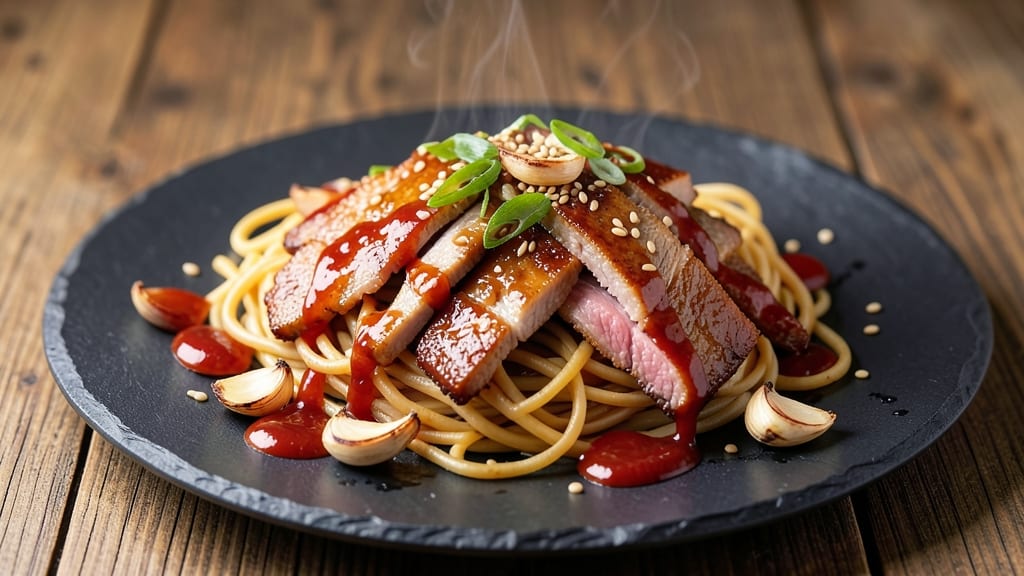
This Char Siu Pork Noodles recipe brings the bold flavors of Cantonese cuisine to your table with a perfect balance of sweet, smoky, and aromatic five-spice glaze. 🔥 After years of perfecting pork glazes in my Atlanta kitchen, I've developed a method that delivers tender, caramelized pork slices with a sticky-sauce finish—ready to drape over chewy egg noodles in minutes.
The secret lies in the marinade: a blend of hoisin, honey, and five-spice powder that transforms tough pork shoulder into melt-in-your-mouth slices. I've tested this recipe countless times, adjusting the glaze consistency until it achieves that signature glossy sheen while maintaining perfect sliceability.
The noodles—fresh egg noodles or dried—absorb the rich pork juices beautifully, creating a dish that's both comforting and restaurant-worthy.
What makes this recipe stand out is the harmony of textures: crisp edges on the pork from the final sear, tender noodles that cling together, and a sauce that's just thick enough to coat every bite without overwhelming.
The aroma alone—smoky, sweet, and slightly garlicky—will have your kitchen smelling like a Hong Kong street stall before you even begin cooking. Serve with quick-pickled vegetables or a side of steamed bok choy to balance the richness.
This dish is perfect for weeknight dinners or special occasions when you want to impress with minimal effort. Let's get cooking!
Ingredients for char siu pork noodles
Bold Cantonese flavors start with these 15 essential ingredients—each playing its part in that signature sticky-sauce perfection.
| Ingredient | Amount | Notes |
|---|---|---|
| Pork Shoulder 🥩 | 1 ½ lb | Bone-in, cut into 1-inch slices |
| Hoisin Sauce 🍶 | ½ cup | Store-bought or homemade |
| Honey 🍯 | ¼ cup | Wildflower preferred for depth |
| Five-Spice Powder 🌶️ | 1 ½ tbsp | Authentic Chinese blend |
| Soy Sauce 🥢 | ¼ cup | Dark soy for color intensity |
| Garlic Cloves 🧄 | 6 cloves | Minced, fresh preferred |
| Ginger Root 🌿 | 1 tbsp | Freshly grated, aromatic |
| Sesame Oil 🫒 | 1 tbsp | Toasted for nutty aroma |
| Brown Sugar 🍚 | ¼ cup | Packed, dark amber |
| Egg Noodles 🍜 | 8 oz | Fresh or dried, chewy |
| Green Onions 🧅 | 4 whole | Thinly sliced, for garnish |
| Neutral Oil 🫒 | 2 tbsp | Avocado or vegetable oil |
| Cornstarch 🌾 | 1 tbsp | For sauce thickening |
| Salt 🧂 | 1 tsp | Kosher or sea salt |
| Black Pepper 🌶️ | ½ tsp | Freshly cracked |
The pork shoulder is non-negotiable—bone-in, cut from the blade end for maximum flavor. Look for well-marbled cuts at Asian markets or your local butcher; the extra fat renders down beautifully, creating that signature glossy sheen. I always grab Chinese five-spice powder from Penzeys or local Asian grocers—the blend of star anise, cinnamon, and fennel makes all the difference. For hoisin, Lee Kum Kee is my go-to, but any quality brand with no additives works. Fresh ginger and garlic? Grated and minced right before marinating—they lose potency fast once chopped.
No five-spice powder? Mix 1 tsp each of ground star anise, cinnamon, and fennel seeds—it's not identical, but close. Substituting honey? Maple syrup works in a pinch, though it lacks that floral depth. The brown sugar can be swapped for white sugar plus 1 tsp molasses for a deeper caramel note. For the noodles, fresh egg noodles from Trader Joe's or Asian markets absorb the sauce best, but dried noodles work too—just boil them al dente. The sesame oil is critical: toast it in a dry pan for 30 seconds to deepen its aroma before adding to the marinade.
Marinate the pork for at least 4 hours (overnight is ideal)—this is where the magic happens. Store the raw pork in a sealed container in the fridge, surrounded by the marinade. The cooked pork reheats beautifully—steam or air-fry at 350°F for 5 minutes to restore crisp edges. Leftovers keep for 3 days in the fridge, though I rarely have any. For the noodles, cook them just before serving so they stay chewy. Garnish with green onions right before eating—they add that fresh crunch that cuts through the richness.
Why You'll Love This Recipe
- Sweet Glaze Magic: I swear by that sticky, caramelized char siu glaze—just pork shoulder simmered in hoisin, honey, and five-spice until it’s perfectly glossy. The moment it hits your tongue, you’ll understand why this isn’t just a noodle dish; it’s a flavor explosion in one bite.
- One-Pot Wonder: Honestly, this recipe barely counts as cooking. Toss the pre-marinated pork with noodles and a splash of soy sauce, then let the pan do the work. Fifteen minutes later, you’ve got a restaurant-quality meal with one pan, one spatula, and zero dishes in the sink.
- Lunchbox Hero: Between us, this is my go-to for meal prep. The pork stays tender for days, and the noodles reheat like a dream—no soggy messes. Pack it cold for work or microwave it in seconds when you’re starving after a long day. (Yes, even on a Tuesday night.)
- Budget Stretch: Pork shoulder is the unsung hero of affordable proteins, and this recipe turns it into something luxurious. A single batch feeds four for under $15, and the leftovers? Even better the next day. I’ll be real: my wallet and my taste buds both win.
Step-by-step instructions for char siu pork noodles
Here's how to create restaurant-quality char siu pork with a glossy five-spice glaze over perfectly chewy noodles.
🔥 Step 1: Marinate the Pork Shoulder for Maximum Flavor
In a large bowl, combine the 1.5 lb pork shoulder with the 0.5 cup hoisin sauce, 0.25 cup honey, 0.25 cup soy sauce, 1.5 tbsp five-spice powder, 0.25 cup brown sugar, 1 tbsp sesame oil, 1 tbsp freshly grated ginger root, 6 minced garlic cloves, 1 tsp salt, and 0.5 tsp black pepper. Here's the thing—use your hands to massage the marinade into every nook of the meat, especially the thickest parts. You want that five-spice blend to penetrate deeply.
Cover the bowl with plastic wrap and refrigerate for at least 4 hours, but overnight is even better. This long marinating time transforms tough pork shoulder into tender, flavorful char siu. The pork should absorb the marinade completely, with a sticky, aromatic coating that promises perfect caramelization when cooked.
🔥 Step 2: Roast the Pork Until Caramelized and Tender
Preheat your oven to 375°F. Remove the pork from the fridge and let it sit at room temperature for 30 minutes—this ensures even cooking. Place the pork on a wire rack set over a baking sheet (the rack allows air circulation for crispy edges). Roast for 1 hour 15 minutes, then increase the heat to 425°F and continue roasting for another 20-25 minutes until the pork reaches 203°F internally and the exterior develops a deep mahogany glaze.
Here's where it gets magical: as the pork roasts, the marinade caramelizes into a sticky, glossy crust. You'll see it bubbling and darkening—this is your signal that the five-spice flavors are intensifying. Don't be tempted to check it early; opening the oven too soon causes temperature fluctuations that affect the glaze. Let it work its magic undisturbed.
🍳 Step 3: Prepare the Chewy Egg Noodles
While the pork roasts, bring a large pot of water to a rolling boil and add 1 tbsp salt. Add the 8 oz egg noodles and cook according to package directions—typically 3-5 minutes for al dente texture. Here's the secret: drain the noodles but reserve 1 cup of the starchy pasta water. This golden liquid is essential for creating a silky sauce later.
Toss the drained noodles with 1 tbsp toasted sesame oil to enhance their natural chewiness. The noodles should be hot but not mushy—you want that satisfying bite that contrasts perfectly with the tender pork. Keep them covered to maintain heat while you prepare the sauce.
🥘 Step 4: Create the Glossy Char Siu Sauce
Slice the roasted pork shoulder into ¼-inch thick slices against the grain for maximum tenderness. In a small bowl, whisk together 2 tbsp neutral oil, 1 tbsp cornstarch, and 2 tbsp reserved pasta water to create a slurry. This mixture will transform your pork juices into a luscious sauce.
In a large skillet over medium-high heat, add the sliced pork and any accumulated juices from the roasting pan. Let it sear for 2 minutes until the pork is heated through. Pour in the cornstarch slurry and stir vigorously for 1-2 minutes until the sauce thickens to a glossy, coatable consistency. The sauce should cling beautifully to the pork slices, creating that signature char siu shine.
🍽️ Step 5: Assemble and Garnish for Presentation
Divide the chewy egg noodles among four serving plates. Spoon the char siu pork and its glossy sauce over the noodles, creating an even distribution. The contrast of tender pork against chewy noodles is what makes this dish so satisfying.
Garnish each serving with thinly sliced green onions for freshness and color. The green onions add a bright, crisp element that cuts through the richness of the pork and noodles. Serve immediately while the pork is still warm and the sauce is at its most luxurious. Each bite should deliver perfect harmony of sweet, spicy, savory, and umami flavors in every mouthful.
Pro Tips For Making Char Siu Pork Noodles
- MARINATE OVERNIGHT: I used to rush this step and wondered why my pork tasted bland or dry. Five-spice powder needs time to work its magic—let the pork shoulder sit in the marinade (hoisin, honey, soy, five-spice) for at least 12 hours. The longer it marinates, the deeper the flavor and the more tender the meat.
- BAKE NOT SEAR: Char siu isn’t about a quick sear—it’s about slow, even cooking. Roast the pork at 325°F (160°C) for 45-60 minutes until the internal temp hits 195°F (90°C). High heat will burn the exterior before the center cooks, leaving you with a tough, uneven char.
- SLICE AGAINST GRAIN: Thinly slicing the pork shoulder against the grain makes all the difference in texture. If you cut with the grain, you’ll end up with chewy, stringy noodles. Use a sharp knife and slice at a 45-degree angle for tender, bite-sized pieces that melt in your mouth.
- BALANCE THE SAUCE: Too much honey makes this sweet; too little hoisin makes it flat. Start with a 1:1 ratio of hoisin to honey in the marinade, then adjust to taste. If your sauce tastes overwhelmingly sweet, add a splash of rice vinegar or a pinch of black pepper to cut through it.
Storing and reheating this char siu pork noodles
Fridge Storage Tips
Store your cooked char siu pork in an airtight container with a splash of its own sauce to keep it moist. I use glass Pyrex containers because they maintain temperature better than plastic.
The pork stays fresh for 3-4 days in the fridge—just reheat gently to preserve that caramelized crust. 💫
Freezer Prep
For long-term storage, slice the pork completely and freeze it in a single layer on a tray before transferring to a freezer bag. This prevents sticking. Label with the date—it keeps for up to 3 months.
When ready to eat, thaw overnight in the fridge, then reheat in a skillet with a splash of water to restore crispness.
Reheating Pork Perfectly
My go-to method is steaming—place pork slices in a heatproof dish with ½ inch of water in a pot. Cover and steam over medium heat for 8-10 minutes.
For crispy edges, finish in a hot skillet for 30 seconds. Never microwave—it turns the sauce rubbery and dulls the flavors.
Noodle Revival
Reheat noodles separately in a dry skillet over medium heat for 2-3 minutes, stirring constantly to prevent sticking. Add 1 tsp toasted sesame oil and a splash of water to restore chewiness. The key is speed—overheating makes them mushy. Keep them covered while reheating the pork to maintain temperature.
Sauce Rescue
If the sauce looks dry after reheating, revive it with 1 tsp water or reserved pasta water and a pinch of cornstarch slurry. Stir over low heat for 30 seconds until glossy again.
The sauce should coat the back of a spoon—this is what makes char siu noodles sing. 🔥
Plating Leftovers
When reheating for leftovers, assemble the dish right before serving. Spoon hot noodles onto plates first, then top with reheated pork and sauce. Garnish with fresh green onions to brighten the presentation.
The contrast of warm pork against slightly cooled noodles creates the perfect bite—just like fresh from the wok.
Nutrition facts
Frequently asked questions
Can I substitute pork shoulder with another cut?
Pork shoulder is ideal because its fat content creates that signature glossy glaze, but you can use pork loin or tenderloin in a pinch. Just reduce the roasting time to 20-25 minutes at 375°F (until internal temp reaches 145°F) and increase the marinating time to 8-12 hours for maximum tenderness. The texture will be slightly leaner, so add an extra 1 tbsp honey to compensate for the reduced fat.
How do I make the sauce extra glossy?
The secret lies in three things: cornstarch slurry, pasta water, and high heat. For maximum shine, whisk 1 tbsp cornstarch with 2 tbsp cold water and stir it into the pork juices while searing. The sauce should coat the back of a spoon—if it's too thick, add 1 tsp reserved pasta water at a time. For extra gloss, finish with a quick sear in a ripping-hot skillet to caramelize the surface.
What if my pork turns out dry?
Dry pork usually means it was overcooked or lacked enough fat. To fix it, slice the pork thinly against the grain and reheat it in a skillet with 1 tbsp hoisin sauce and 1 tsp honey over low heat for 3-4 minutes. The sauce will help restore moisture. For future attempts, reduce the oven temperature to 350°F and check the internal temp with a meat thermometer—203°F for shoulder, 145°F for loin. Let it rest 10 minutes before slicing.
Can I make this dish ahead of time?
Prepare the pork up to 2 days ahead and store it in an airtight container with its sauce. Reheat by steaming for 8-10 minutes or air-frying at 350°F for 5 minutes. Cook the noodles fresh—reheating them makes them mushy. Assemble the dish right before serving to maintain that perfect texture contrast. The flavors actually improve overnight as they meld together.
What's the best way to serve this with pickled vegetables?
Quick-pickled vegetables add a bright, tangy contrast that balances the rich pork. Try thinly sliced cucumber, carrot, and daikon radish tossed with 2 tbsp rice vinegar, 1 tbsp sugar, and a pinch of red pepper flakes. Let it sit for 30 minutes before serving. Spoon the pickled veggies alongside the noodles or use them as a garnish. The acidity cuts through the sweetness of the char siu, creating a perfect bite.