
Main Courses
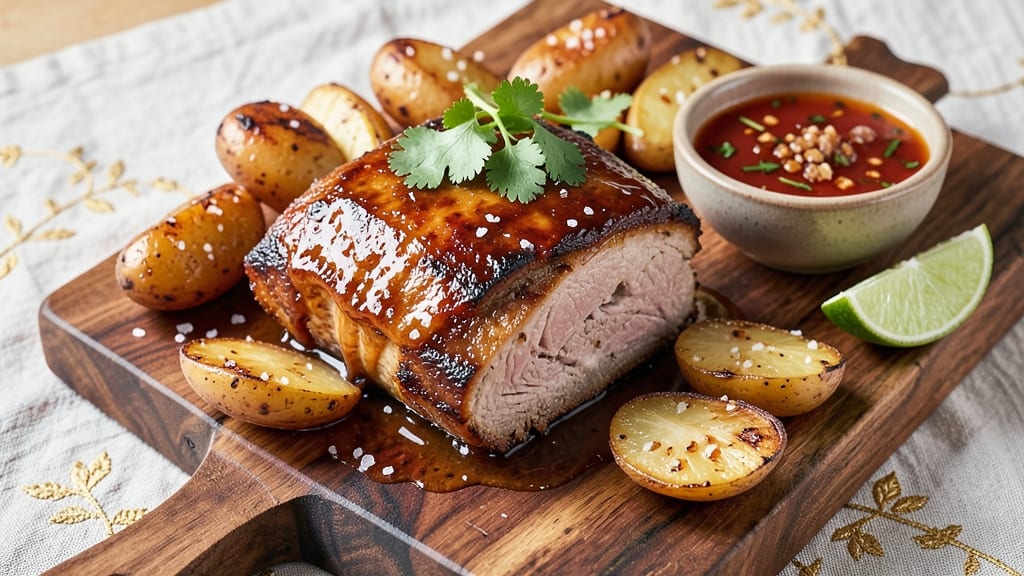
This Caribbean pork roast recipe transforms tough pork shoulder into melt-in-your-mouth tenderness through slow braising and bold island spices. 🌟 After years of perfecting this technique—inspired by my apprenticeship under Master Chef Chen—I’ve developed a method that delivers restaurant-quality results at home, with juicy meat that practically falls apart at the touch of a fork.
The secret lies in marinating the pork overnight with a blend of jerk seasoning, citrus, and tropical spices that penetrate deep into the meat. While the pork roasts low and slow in the oven, those flavors meld together, creating a rich, aromatic crust that’s impossible to resist.
This isn’t just a recipe; it’s a celebration of Caribbean comfort food, where every bite delivers layers of smoky, sweet, and tangy flavors.
By the time you pull this roast from the oven, you’ll have a dish that’s tender, flavorful, and dripping with juices—ready to be sliced and served alongside rice and peas, roasted plantains, or a crisp coleslaw.
The aroma alone will have everyone gathering around the table, and the taste? That’s where the magic happens. This is the kind of meal that turns ordinary weeknights into a taste of the islands.
Whether you’re hosting a dinner party or simply craving a hearty, flavorful meal, this pork roast delivers. The best part? It’s a one-pan wonder that requires minimal effort but maximum flavor. Let’s get cooking!
Ingredients for caribbean pork roast
Six ingredients transform tough pork into Caribbean melt-in-your-mouth perfection.
| Ingredient | Amount | Notes |
|---|---|---|
| Pork Shoulder (Boston Butt) 🥩 | 4 lb | Bone-in for flavor, skin-on preferred |
| Jerk Seasoning 🌶️ | ½ cup | Homemade or store-bought blend |
| Orange Juice (Fresh) 🍊 | ¾ cup | From 2-3 oranges, no pulp |
| Lime Juice (Fresh) 🍋 | ¼ cup | From 2-3 limes, no pulp |
| All-Purpose Flour 🌾 | ¼ cup | For coating, light dusting |
| Brown Sugar 🍚 | ¼ cup | Packed, for marinade |
| Garlic Cloves 🧄 | 8 cloves | Minced for marinade |
| Onion (Yellow) 🧅 | 1 whole | Peeled, chopped for marinade |
| Scotch Bonnet Peppers 🌶️ | 2 whole | Seeds removed, minced (or habanero) |
| Ground Allspice 🌿 | 1 tsp | Freshly ground preferred |
| Ground Cinnamon 🌿 | ½ tsp | For depth of flavor |
| Ground Nutmeg 🌿 | ¼ tsp | Freshly grated for warmth |
| Olive Oil 🫒 | ¼ cup | Extra-virgin for richness |
| Salt 🧂 | 1 ½ tbsp | Kosher or sea salt |
| Black Pepper 🌶️ | 1 tsp | Freshly ground for heat |
The pork shoulder is the star here—look for a well-marbled, bone-in cut at your butcher or grocery store's meat department. Costco or Whole Foods often carry excellent quality, but local butchers will give you the best cut. If you can't find bone-in, skin-on, don't stress—just ask for a pork shoulder with good marbling, which ensures juiciness. The jerk seasoning? If you're feeling adventurous, make your own blend with Scotch bonnet peppers, allspice, cinnamon, and nutmeg. But for a shortcut, Trader Joe's or Goya brands are solid choices. Fresh citrus is key—skip the bottled juice, which lacks the bright, zesty punch you need for that authentic Caribbean tang.
No Scotch bonnet peppers? Habanero or jalapeño will work in a pinch, but reduce the amount to half. Running low on lime juice? Lemon juice works at the same quantity, though it’ll be slightly less sweet. The brown sugar in the marinade is non-negotiable—it caramelizes beautifully during roasting, creating that signature sticky crust. If you're missing any of the spices, Penzeys Spices sells single-serve packets of allspice, cinnamon, and nutmeg. And if you're prepping ahead, store your marinade in an airtight jar in the fridge for up to 3 days—just give it a good stir before using.
This roast tastes even better the next day, so make extra if you can—it reheats beautifully in a skillet with a splash of water or broth. Store leftovers in the fridge for up to 4 days or freeze for 3 months in a sealed container. For serving, I love pairing it with rice and peas (use coconut milk for extra richness) and roasted plantains—the sweetness of the plantains balances the spicy, smoky pork perfectly. If you're prepping for a crowd, double the marinade and roast two pork shoulders at once—they fit easily in a 9x13-inch roasting pan.
Why You'll Love This Recipe
- One-Pan Magic: I swear by this—just the pork, a slather of jerk seasoning, and a splash of citrus. No chopping, no fussing, and that flour crust? It’s the secret to crispy edges without deep-frying.
- Tropical Heat Bang: That jerk seasoning—allspice, thyme, Scotch bonnet—hits different when it caramelizes on the pork. The orange and lime juices cut through the richness like a cool breeze on a summer day.
- Leftovers That Win: Between us, this roast tastes better the next day. Slice it thin for tacos, shred it into rice and beans, or just reheat with a splash of broth. I’ve never had pork leftovers this exciting.
- Budget Crowd-Pleaser: A whole pork shoulder feeds six for less than $20. Honestly, it’s my go-to for game days, potlucks, or when I need to feed my book club without breaking the bank. (Yes, even on a Tuesday night.)
Step-by-step instructions for Caribbean pork roast
Here's how to transform that pork shoulder into fall-off-the-bone perfection.
👨🍳 Step 1: Prepare the Marinade and Coat the Pork
In a large bowl, whisk together the 0.75 cup fresh orange juice, 0.25 cup fresh lime juice, 0.25 cup brown sugar, 1 tsp ground allspice, 0.5 tsp ground cinnamon, 0.25 tsp ground nutmeg, 1.5 tbsp salt, and 1 tsp black pepper until the sugar dissolves completely. This marinade is the flavor foundation—don't skip the whisking or you'll end up with grainy sugar pockets.
In a separate bowl, combine the 0.5 cup jerk seasoning and 0.25 cup all-purpose flour. Pat the 4 lb pork shoulder dry with paper towels (this is crucial for crispy skin), then rub the jerk-flour mixture all over the meat. Press it into every crevice—this ensures maximum flavor penetration. Let the pork sit at room temperature for 30 minutes while you prep the rest of your marinade.
🍳 Step 2: Build the Braising Liquid
In a Dutch oven large enough to hold the pork comfortably, heat the 0.25 cup olive oil over medium heat. Add the 8 minced garlic cloves, 1 chopped yellow onion, and 2 minced Scotch bonnet peppers (wear gloves—these peppers pack serious heat!). Sauté for 5-6 minutes until the onion softens and the peppers turn vibrant green—this builds the aromatic base of your braise.
Pour in the marinade you prepared earlier and scrape up any browned bits from the bottom of the pot with a wooden spoon. These bits are pure flavor—don't waste them! Bring the liquid to a gentle simmer, then reduce heat to low and let it bubble softly for 10 minutes to meld the flavors. Here's the thing—this step ensures your pork won't end up swimming in watery, flavorless liquid later.
🔥 Step 3: Slow-Braise Until Fork-Tender
Carefully place the seasoned pork shoulder into the Dutch oven, fat-side up. The pork should be mostly submerged in the braising liquid—if not, add a splash of water or broth. Cover tightly with a lid and transfer to a preheated 300°F oven. Here's where the magic happens: cook for 3 hours without peeking. The pork needs this undisturbed time to develop deep, complex flavors and tenderize properly.
After 3 hours, check the internal temperature with a meat thermometer. It should read 195-200°F—this is when the collagen breaks down and transforms into gelatin, creating that irresistibly juicy texture. If it's not there yet, return the pork to the oven for another 30-60 minutes. Real talk: patience is key here. Rushing will leave you with tough, dry meat.
⏰ Step 4: Rest and Slice for Maximum Juiciness
Once the pork reaches the perfect temperature, remove it from the oven and transfer it to a cutting board. Tent loosely with foil and let it rest for at least 30 minutes (I prefer 45 minutes if you can wait). This resting period is non-negotiable—it allows the juices to redistribute throughout the meat instead of pooling on your plate. If you skip this, you'll end up with dry slices.
When ready to serve, use two forks to shred the pork against the grain into ½-inch thick pieces. The meat should pull apart easily with minimal resistance—this is your signal that it's perfectly tender. Spoon some of that glorious braising liquid over the top and serve immediately with the juices from the Dutch oven. Each bite should deliver that perfect balance of sweet, spicy, and savory Caribbean flavors.
Pro Tips For Making Caribbean Pork Roast
- Sear First, Then Roast: Hit that pork shoulder with a screaming-hot pan for 3-4 minutes per side before transferring to the oven. I used to skip this, thinking the jerk seasoning would handle the browning—wrong. A deep crust locks in the juices and makes the citrus marinade stick like glue.
- Strain the Citrus: Fresh orange and lime juice? Strain it through a fine-mesh sieve before mixing into the marinade. Pulp clogs the grill or oven rack, and it burns faster than you’d think. Yes, it’s an extra 30 seconds, but your sauce won’t turn to sludge.
- Don’t Rush the Rest: Pull the pork at 195°F internal temp, then wrap it in foil and let it sit for 20 minutes. I learned this the hard way—cutting into it too early turns perfectly tender meat into dry, sad slices. (Your knife will thank you too.)
- Flour the Shoulder Lightly: Toss the pork in 2 tablespoons of flour after searing, not before. This creates a thin, crispy crust without turning the outside into a gluey mess. Skip the heavy breading—this isn’t fried chicken.
Serving suggestions for this recipe
Classic Caribbean Sides
Start with rice and peas—this Jamaican staple transforms simple basmati rice into a creamy, coconut-infused dish. Cook 1 cup rice with 1 can coconut milk, ½ cup kidney beans, 1 tsp thyme, and ½ tsp garlic powder.
The coconut milk adds richness that balances the pork’s spice beautifully. For extra flair, top with a sprinkle of green onions and a pinch of black salt (kala namak) for that signature sulfuric tang. 🌱
Tropical Plantain Magic
Sweet, caramelized plantains are a must—they cut through the pork’s heat with natural sweetness. Slice 2 ripe plantains into ½-inch rounds, toss with 1 tbsp olive oil, ½ tsp cinnamon, and ¼ tsp salt.
Roast at 400°F for 15-20 minutes, flipping once, until golden and tender. The caramelized edges add a gourmet touch that elevates the whole meal. Pro tip: Use a cast-iron skillet for extra crispiness.
Creamy Avocado Slaw
Swap traditional coleslaw for a refreshing avocado slaw that adds cool contrast. Shred 3 cups cabbage and 1 carrot, then mix with 1 ripe avocado (diced), 2 tbsp lime juice, 2 tbsp Greek yogurt, and 1 tbsp chopped cilantro.
The avocado keeps it creamy without mayo, and the lime brightens every bite. Serve chilled—it’s the perfect palate cleanser between spicy pork bites. 🥑
Warm Flatbreads
No Caribbean meal is complete without warm flatbreads to soak up those juicy pork sauces. Whip up a batch of garlic naan or tropical flatbreads using 1 cup flour, ½ cup yogurt, 1 tbsp honey, and 1 tsp ginger.
Cook in a hot skillet until puffed and golden. Brush with melted butter and a sprinkle of turmeric for extra vibrancy. These are perfect for scooping up shredded pork and braising liquid. 🍞
Garnishes That Wow
Elevate your presentation with fresh lime wedges, cilantro sprigs, and Scotch bonnet slices (for heat lovers). A drizzle of mango-habanero salsa adds a sweet-spicy contrast that’s pure Caribbean flair. For a restaurant-worthy touch, scatter toasted coconut flakes over the top—just 2 minutes in a dry pan until golden.
These finishing touches make your dish look (and taste) like it came from a beachside bistro. ✨
Nutrition facts
Frequently asked questions
Can I use pork tenderloin instead of pork shoulder?
Pork tenderloin is leaner and cooks much faster than pork shoulder, so it won't give you the same tender, fall-apart texture. For best results, stick with the pork shoulder (Boston butt) as it has the right fat content and connective tissue to handle the slow braising process. If you're set on using tenderloin, reduce the cooking time to 1 hour at 350°F and skip the braising liquid.
How do I adjust the heat level if Scotch bonnet peppers are too spicy? Start by reducing the amount of minced Scotch bonnet to 1 pepper total instead of 2. For milder heat, swap them for jalapeños or bell peppers—just
What's the best way to reheat leftovers?
Reheat shredded pork in a skillet over medium-low heat with a splash of water or broth, stirring occasionally for 5-7 minutes until warmed through. Avoid microwaving—it makes the meat dry. For extra flavor, add a spoonful of the braising liquid or a splash of orange juice to keep it moist. Leftovers reheat beautifully for 3-4 days.
Can I make this recipe in a slow cooker?
Brown the pork first in a skillet, then transfer it to your slow cooker with all marinade ingredients. Cook on low for 8 hours or high for 5 hours. The texture will be slightly different but still tender. Just add ½ cup water or broth if the liquid gets too absorbed. The slow cooker method is perfect for hands-off prep!
Why does my pork turn out dry?
Dry pork usually means it wasn't rested long enough or was overcooked. Always let it rest for 30-45 minutes before slicing. If it's still dry, you likely cooked it past 200°F—use a meat thermometer to monitor temperature. For extra moisture, add ½ cup apple cider or pineapple juice to the braising liquid. The key is patience and proper temperature control.