
Soups & Stews
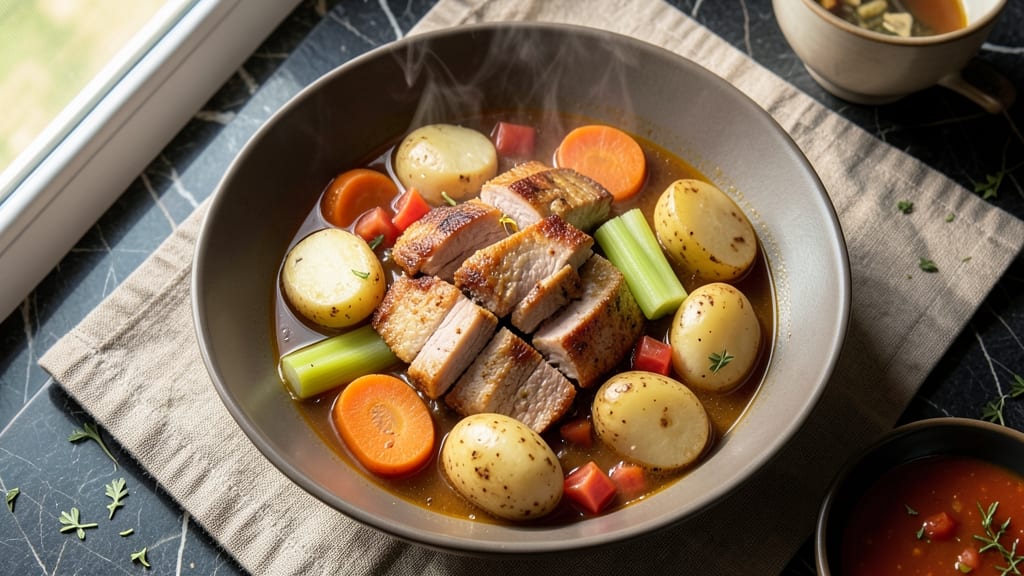
This canned pork stew recipe brings hearty comfort to your table with minimal effort—just one pot, 45 minutes, and ingredients you likely already have. Growing up in Georgia, I learned that canned pork transforms simple vegetables into a rich, savory masterpiece that feeds a crowd without breaking the bank.
The secret lies in slow simmering, where the pork infuses the broth with deep, smoky flavor while tenderizing the vegetables.
The beauty of this recipe is its versatility—whether you're using Spam, ham, or preserved pork, the technique remains the same. I developed it during my time at The Smoky Pig, where we perfected the art of turning humble ingredients into restaurant-quality meals.
The slow cook creates a velvety broth that clings to every bite, while the pork remains juicy and flavorful, never dry or rubbery.
By the time you serve this stew, your kitchen will smell like a Southern homecoming, and every spoonful will deliver that perfect balance of tender pork, caramelized vegetables, and aromatic spices.
It's the kind of dish that warms you from the inside out—ideal for chilly evenings or family gatherings. The leftovers reheat beautifully, making it a practical choice for busy weeks.
Pair it with crusty bread to soak up every last drop of that rich broth, or serve alongside buttered cornbread for the full Southern experience. This recipe proves that comfort food doesn't require complicated techniques—just patience and a little love. Let's get cooking!
Ingredients for canned pork stew
Sixteen ingredients. One pot. Southern comfort that tastes like home every time.
| Ingredient | Amount | Notes |
|---|---|---|
| Canned Pork (Spam or Ham) 🥓 | 1 ½ lb | Drained, cut into bite-sized pieces |
| Yellow Onion 🧅 | 1 whole | Chopped into half-moons |
| Carrots 🥕 | 1 ½ lb | Peeled, cut into chunks |
| Celery Stalks 🧅 | 3 whole | Chopped into bite-sized pieces |
| Russet Potatoes 🥔 | 2 lb | Peeled, cut into 1-inch cubes |
| Diced Tomatoes (Canned) 🍅 | 14 ½ oz | Drained, no-salt-added preferred |
| Chicken Broth 💧 | 3 cups | Low-sodium preferred |
| Tomato Paste 🍅 | 2 tbsp | Smooth, not chunky |
| Apple Cider Vinegar 🍎 | 1 tbsp | For bright acidity |
| Brown Sugar 🍯 | 1 tbsp | Lightly packed |
| Dried Thyme 🌿 | 1 tsp | Or 1 tbsp fresh |
| Bay Leaves 🍃 | 2 whole | Removed before serving |
| Ground Black Pepper 🌶️ | ½ tsp | Freshly ground preferred |
| Salt 🧂 | 1 ½ tsp | Adjust to taste |
| Olive Oil 🫒 | 2 tbsp | For initial searing |
The pork is the star here—Spam or ham both work, but I lean toward Spam for that classic canned-pork flavor. Grab a 14.5 oz can from the grocery store's canned meat aisle; it's usually right next to the tuna. If you're feeling adventurous, preserved pork shoulder from Costco or a specialty store adds depth, but canned pork cuts prep time dramatically. The onions, carrots, and celery form the holy trinity of stew veggies—buy them fresh if possible, but frozen will work in a pinch. For the potatoes, Russet or Yukon Gold hold up best during simmering, and peeling them keeps the stew clean.
No canned tomatoes? Fresh diced tomatoes with a squeeze of lemon juice work perfectly, though you'll need about 2 cups. Short on chicken broth? Vegetable broth plus 1/2 cup water gets you close. The tomato paste can be swapped for 1/2 cup tomato sauce if you're in a hurry, but the paste adds that concentrated umami punch. For the vinegar, red wine vinegar works too—just use half the amount. The thyme? Fresh is ideal, but dried is fine at one-third the amount. If you're missing bay leaves, a pinch of ground cloves adds warmth without overpowering.
This stew tastes even better the next day—3-4 days in the fridge, 3 months frozen. I always double the batch and freeze half for lazy weeknights. To reheat, warm on the stove over medium heat with a splash of water or broth. The broth thickens as it cools, so add a little liquid if it seems too stiff. Store leftovers in airtight containers with a layer of broth on top to keep the pork moist. The aroma alone will have everyone rushing to the table.
Why You'll Love This Recipe
- No-Fuss Pantry Hero: I swear by this when my fridge is bare—just chop the onion, toss in the canned pork, and let the broth do the work. That’s it. The potatoes soften while you stir, and suddenly, dinner’s ready.
- Umami Bomb Combo: The salty richness of the pork meets caramelized onions and sweet carrots in a way that’s ridiculously satisfying. Honestly, the celery adds this earthy depth that makes it taste like you slaved over it (but you didn’t).
- Leftovers That Win: This stew only gets better the next day—potatoes soak up the flavor, and the pork stays tender. I double the batch on Sundays because reheating it for lunches feels like a victory, not a chore.
- Budget Dinner for Everyone: Feed four people for the cost of one takeout order. Between us, this is my go-to when I’m broke but still want a hearty meal that doesn’t skimp on taste. (Yes, even on a Tuesday night.)
Step-by-step instructions for canned pork stew
Here's how to create a hearty, flavorful stew that transforms simple ingredients into something extraordinary.
Sear the Canned Pork for Deep Flavor
Heat the 2 tablespoons olive oil in a large Dutch oven over medium-high heat until shimmering. Add the 1.5 lb canned pork (drained and cut into bite-sized pieces) in a single layer, being careful not to overcrowd the pan. Let the pork sear undisturbed for 2-3 minutes until golden brown on one side—this creates a rich foundation for your stew.
I like to press down gently on the pork pieces during the first minute to prevent them from curling and ensure even contact with the pan. Once the first side is browned, flip the pieces and cook another 2-3 minutes until golden on all sides. Transfer the seared pork to a plate and set aside—you'll add it back later when the vegetables have softened.
Build the Vegetable Base
In the same Dutch oven, add the 1 whole yellow onion (chopped into half-moons) and cook for 3-4 minutes until softened and beginning to caramelize. Add the 1.5 lb carrots (peeled and cut into chunks) and 3 whole celery stalks (chopped into bite-sized pieces), stirring to combine. Cook for another 5 minutes until the vegetables start to soften and release their natural juices.
This is where the magic happens—the vegetables release their sweetness and flavors into the oil. If the pan starts to dry out, add a splash of water and scrape up any browned bits from the bottom with a wooden spoon. These bits, called fond, are packed with flavor and will deepen the taste of your stew.
Add Tomatoes, Broth, and Seasonings
Stir in the 2 tablespoons tomato paste and cook for 1 minute until it darkens slightly. Add the 14.5 oz diced tomatoes (drained), 3 cups chicken broth, 1 tablespoon apple cider vinegar, 1 tablespoon brown sugar, 1 teaspoon dried thyme, 2 whole bay leaves, 0.5 teaspoon ground black pepper, and 1.5 teaspoons salt. Stir well to combine, scraping up any remaining fond from the bottom of the pot.
Bring the mixture to a gentle boil, then reduce the heat to medium-low and let it simmer for 10 minutes. This allows the flavors to meld and the broth to infuse with the vegetables. The stew should be bubbling gently—if it's too vigorous, reduce the heat further to maintain a steady simmer.
Incorporate Potatoes and Simmer
Add the 2 lb russet potatoes (peeled and cut into 1-inch cubes) to the pot. Stir gently to submerge them in the liquid. Return the heat to medium-low and let the stew simmer uncovered for 30-35 minutes, stirring occasionally. You want the potatoes to soften completely but not break apart—this ensures they hold their shape while absorbing the rich flavors of the stew.
Here's the thing—potatoes release starch as they cook, which can thicken the stew. If the stew becomes too thick, add a splash of water or broth to loosen it to your desired consistency. The potatoes are done when they're tender enough to pierce easily with a fork but still hold their shape.
Finish and Serve
Once the potatoes are tender, stir in the seared pork and let the stew simmer for another 5-7 minutes to heat through. Remove the 2 whole bay leaves before serving—they're done their job and can be a bit bitter if left in. Taste the stew and adjust the seasoning if needed, adding more salt or pepper as necessary.
Let the stew rest for 5-10 minutes before serving. This allows the flavors to settle and the potatoes to absorb any remaining liquid, ensuring each bite is packed with savory richness. Serve the stew hot, with crusty bread to soak up every last drop of that delicious broth. The aroma alone will make your kitchen smell like a cozy home-cooked meal.
Pro Tips For Making Canned Pork Stew
- Slice the Pork Thin: Canned pork stays moist longer when sliced against the grain—about ¼-inch thick. I learned this the hard way when my stew turned into a mushy mess; thin slices crisp up in the broth and hold their shape.
- Sweat the Onions Low: Cook onions over medium-low heat until translucent, not browned—about 5-7 minutes. High heat burns them fast, and you’ll end up with bitter bits instead of sweet, soft flavor. (Yes, even if you’re impatient like me.)
- Cut Potatoes Uniformly: Use a mandoline or sharp knife for 1-inch chunks—no odd shapes. Even-sized pieces cook at the same rate, so you avoid a stew with some potatoes falling apart while others stay rock-hard.
- Add Potatoes Last: Toss them in after the pork and veggies have simmered 10 minutes—they’ll soak up flavor instead of turning bland. I skip this and end up with potatoes that taste like they were boiled separately. (Your future self will notice.)
Make-ahead tips for canned pork stew
Prep Ahead Strategy
I always chop all vegetables the night before and store them in airtight containers in the fridge. The onions, carrots, and celery keep well for 2-3 days this way, and the potatoes can be prepped up to 1 day ahead. This saves 20 minutes of prep time on cooking day. Just
Slow Cooker Adaptation
For true make-ahead convenience, transfer the seared pork and all ingredients except potatoes to a 6-quart slow cooker. Cook on low for 6 hours or high for 3 hours, then add potatoes and cook another 2 hours on low. The slow cooker maintains perfect heat without monitoring, making this ideal for overnight cooking or busy mornings.
Freezer-Friendly Components
Assemble the stew completely (including potatoes) and let it cool to room temperature. Portion into freezer-safe containers, leaving ½-inch headspace for expansion. Label with the date and freeze for up to 3 months.
When ready to eat, thaw overnight in the fridge, then reheat on the stove with ¼ cup water or broth to restore moisture.
Batch Cooking Tips
Double the recipe and freeze half immediately. I use this strategy for family gatherings—just pull out a frozen portion and reheat while the fresh batch simmers. For large batches, use a large stockpot or Dutch oven that holds at least 8 quarts.
The extra volume actually improves flavor development as the ingredients meld over longer cooking times.
Reheating Perfection
Stovetop reheating gives the best texture: place stew in a pot and heat over medium-low heat for 10-15 minutes, stirring occasionally. Add 2-3 tablespoons water or broth if the stew seems too thick.
Microwave reheating works too—cover with a damp paper towel and heat in 1-minute intervals until steaming hot. Never reheat to 165°F? Add a splash of vinegar or lemon juice to refresh flavors.
Flavor Boosting Trick
Before serving reheated stew, stir in 1 teaspoon apple cider vinegar and ½ teaspoon brown sugar to revive the broth's brightness. This simple adjustment makes reheated stew taste almost as good as fresh.
I also keep a jar of Penzeys smoked paprika on hand to sprinkle on top—just ¼ teaspoon adds that smoky depth that disappears during storage. 🌶️
Nutrition facts
Frequently asked questions
Can I substitute canned pork with fresh pork shoulder?
Yes, but you'll need to adjust the cooking time. Use 1.5 lb bone-in pork shoulder cut into chunks, and brown it thoroughly before adding other ingredients. Since fresh pork has more fat and connective tissue, simmer it for 2-2.5 hours until fork-tender. The flavor will be richer, but canned pork offers convenience and consistent texture.
Why does my stew turn out too thick or too thin?
Thickness depends on potato starch release. For thicker stew, simmer uncovered to evaporate excess liquid. Too thin? Add 1/4 cup cornstarch mixed with 2 tbsp water and stir until bubbly. The potatoes should absorb liquid naturally—if they don't, the broth needs more time. Always taste as you go!
What's the best way to reheat leftovers?
Stovetop reheating preserves texture best: warm over medium-low heat for 10-15 minutes with 2 tbsp water or broth. For microwave safety, cover with a damp paper towel and heat in 1-minute intervals until steaming. Never reheat to 165°F? Add 1 tsp apple cider vinegar to revive flavors.
Can I make this stew in an Instant Pot?
Sear the pork as directed, then add all ingredients except potatoes. Cook on high pressure for 10 minutes, then quick-release. Add potatoes and cook another 5 minutes on high pressure. The pressure cooker cuts time to 30 minutes total while intensifying flavors. Just be careful with the quick-release!
How do I make this gluten-free?
Check your canned pork label for gluten additives (some hams contain barley malt). Use gluten-free chicken broth and verify all spices are certified gluten-free. The recipe is naturally gluten-free except for potential cross-contamination. For extra safety, toast your spices in a dry pan to eliminate any hidden particles.