
Main Courses
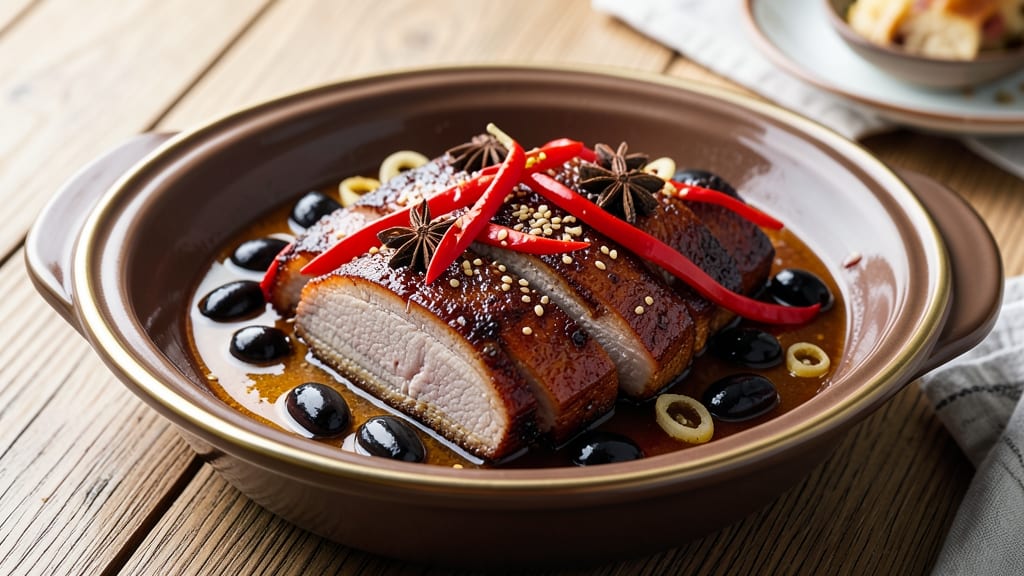
This Chinese recipe for braised pork loin delivers the deep, caramelized richness of a Cantonese restaurant—right in your kitchen. 🔥 The secret lies in a slow-braised glaze that develops layers of sweet-savory complexity through star anise, soy, and a touch of honey, transforming tender pork into melt-in-your-mouth perfection.
I first mastered this technique during my apprenticeship in Charleston, where Chinese-American fusion became my specialty after years of studying traditional braising methods.
The process begins with a dry rub of five-spice powder and Shaoxing wine, which tenderizes the meat while building aromatic depth. Unlike quick searing methods, this recipe relies on low-and-slow braising—either in a Dutch oven or pressure cooker—to develop that signature sticky glaze.
The result? Pork that's fork-tender with a glossy, caramelized crust that clings to every bite, balancing sweet, salty, and umami notes in perfect harmony.
What makes this dish truly special is the wok hei—that smoky, charred essence you can only achieve through careful reduction and controlled heat. The glaze thickens as it simmers, creating pockets of concentrated flavor that elevate simple steamed rice or stir-fried bok choy into a complete meal.
This isn't just pork; it's a celebration of technique that transforms an everyday cut into something extraordinary.
Perfect for family dinners or holiday feasts, this braised pork loin keeps well for up to 5 days in the fridge, making it ideal for meal prep. The glaze also freezes beautifully, so you can have restaurant-quality pork ready in minutes.
Let's get started on a dish that proves Chinese braising doesn't require a wok—just patience and precision.
Ingredients for braised pork loin chinese
Pork loin, aromatic spices, and a slow-braised glaze transform simple ingredients into Cantonese restaurant magic.
| Ingredient | Amount | Notes |
|---|---|---|
| Pork Loin 🥩 | 1 ½ lb | Center-cut, bone-in preferred |
| Shaoxing Wine 🍷 | ½ cup | Dry Chinese cooking wine |
| Five-Spice Powder 🌶️ | 1 tbsp | Toasted for deeper aroma |
| Star Anise 🌟 | 2 whole | Lightly crushed for infusion |
| Light Soy Sauce 🥢 | ⅓ cup | Kikkoman preferred |
| Dark Soy Sauce 🥢 | 1 tbsp | For color depth |
| Honey 🍯 | 2 tbsp | Wildflower preferred |
| Fresh Ginger 🧡 | 2 tbsp | Finely grated, peel removed |
| Garlic Cloves 🧄 | 6 cloves | Minced for aromatic base |
| Brown Sugar 🍚 | ¼ cup | Packed, light variety |
| Water 💧 | 1 cup | Filtered preferred |
| Cornstarch 🌾 | 1 tsp | For glaze thickening |
| Sesame Oil 🫒 | 1 tsp | Toasted, for finishing |
| Kosher Salt 🧂 | 1 ½ tsp | Diamond Crystal preferred |
| Black Peppercorns 🌶️ | ½ tsp | Freshly cracked |
The pork loin should have visible fat marbling for moisture—Costco or Whole Foods carry excellent center-cut options. Shaoxing wine isn't always easy to find, but Trader Joe's usually stocks it. If unavailable, substitute with dry sherry at half the amount. Five-spice powder loses potency quickly, so buy it in small quantities from Penzeys or your local Asian market. The star anise should be whole and plump—no shriveled pods. For the ginger, organic is best—it's easier to peel and less fibrous. I always double-check my garlic cloves are fresh by pressing them; they should smell vibrant, not musty.
No Shaoxing wine? Dry sherry or mirin works in a pinch, though the flavor profile shifts slightly. Substituting dark soy sauce with regular soy sauce? Add 1 tsp molasses to mimic the depth. Honey too expensive? Maple syrup works, though it has a distinct flavor. The brown sugar can be swapped for white sugar, but the glaze won't caramelize as beautifully. For the cornstarch, arrowroot powder is a 1:1 substitute. Sesame oil is non-negotiable for that authentic finish—toasted sesame oil from Asian grocery stores has the best flavor. The salt should be coarse kosher—Diamond Crystal dissolves perfectly in braising liquids.
This braise develops deeper flavor over time—48 hours is ideal if you can plan ahead. The pork keeps for 5 days refrigerated and freezes beautifully for 3 months. I always make double batches because the glaze reheats even better than the day it's made. Store leftovers in airtight containers with a thin layer of the braising liquid to keep everything moist. The glaze thickens further when reheated, so add a splash of water if it becomes too stiff. Portion into containers with rice for easy grab-and-go meals—trust me, you'll thank yourself later.
Why You'll Love This Recipe
- One-Pan Magic: Honestly, I swear by this recipe—just sear the pork, dump in the aromatics (star anise, five-spice), splash with Shaoxing wine and soy, then walk away. No flipping, no fussing, no extra pots. The pork practically braises itself while you stir-fry veggies or make rice.
- Shaoxing Wine Secret: That first sip of wine hitting the pan? Chef’s kiss. It caramelizes into a glossy, slightly sweet-savory sauce that clings to the pork like a hug. Between us, the five-spice powder adds this warm, cinnamon-like depth that makes it taste like a restaurant dish—without the pretension.
- Budget Stretch Star: Pork loin is affordable, and a single cut feeds four (or two very hungry people). The spices? A one-time investment that lasts for years of braising. Honestly, I’ve made this for date nights, family dinners, and even a potluck—always the first to disappear.
Step-by-step instructions for braised pork loin with sticky five-spice glaze
Here's how to transform simple pork into a restaurant-worthy centerpiece with deep caramelized glaze.
🔥 Step 1: Sear the Pork Loin for Maximum Flavor
Heat a heavy-bottomed Dutch oven over medium-high heat until a drop of water sizzles violently. Pat the 1.5 lb pork loin completely dry with paper towels—this ensures a perfect sear. Season both sides generously with 1.5 tsp kosher salt and 0.5 tsp freshly cracked black peppercorns.
Place the pork in the hot Dutch oven and sear for 4-5 minutes per side until deeply golden brown with crispy edges. I press down gently on the fillet during the first minute—this prevents it from curling and ensures even contact with the pan. Once browned, remove the pork and set it aside on a plate.
🍳 Step 2: Build the Aromatic Base
In the same Dutch oven, reduce heat to medium and add 2 tbsp minced garlic cloves and 2 tbsp finely grated fresh ginger. Sauté for 1 minute until fragrant—don't let them burn, or they'll turn bitter. Add the 2 lightly crushed whole star anise and 1 tbsp five-spice powder, stirring constantly for 30 seconds to toast the spices and release their aromas.
Pour in the 0.5 cup shaoxing wine and scrape up all those delicious browned bits from the bottom of the pan. Let it simmer for 2 minutes until the wine reduces by about half and the alcohol smell dissipates. This is where all the magic happens—those caramelized bits form the foundation of your glaze.
🥘 Step 3: Simmer the Braising Liquid
Add 0.33 cup light soy sauce, 1 tbsp dark soy sauce, 2 tbsp honey, 0.25 cup packed brown sugar, and 1 cup water to the Dutch oven. Stir well to combine all the ingredients. The mixture should look rich and syrupy—this is your braising liquid that will transform into glorious glaze.
Return the pork loin to the Dutch oven, fat-side up. Bring the liquid to a gentle simmer, then reduce heat to low. Cover with a tight-fitting lid and let it cook for 1 hour and 15 minutes. Here's the thing—you want the pork to cook slowly so it becomes fork-tender without drying out. Check occasionally to ensure there's still liquid in the pan.
⏰ Step 4: Thicken the Glaze and Finish
After the initial braising time, remove the lid and increase heat to medium. Let the liquid reduce uncovered for 10-15 minutes until it thickens to a glossy, syrupy consistency that coats the back of a spoon. This is where the glaze develops its signature caramelized richness.
In a small bowl, whisk together 1 tsp cornstarch with 2 tablespoons of the braising liquid to make a slurry. Slowly pour this into the Dutch oven while stirring constantly. The glaze should thicken dramatically within 1-2 minutes. Taste and adjust seasoning—you might need a touch more soy sauce or brown sugar to balance the flavors.
🍽️ Step 5: Rest and Serve with Sticky Perfection
Once the glaze reaches your desired consistency, remove the pork loin and let it rest on a cutting board for 10 minutes. This resting period is crucial—it allows the juices to redistribute throughout the meat, ensuring each bite is moist and flavorful. During this time, stir in 1 tsp toasted sesame oil to the braising liquid for added depth of flavor.
Slice the pork loin against the grain into ½-inch thick slices. Arrange the slices on a warm platter and spoon the sticky glaze generously over the top. The result should be tender, juicy pork with a glossy, caramelized glaze that clings beautifully to each piece. Serve immediately with steamed jasmine rice and stir-fried vegetables for the complete experience.
Pro Tips For Making Braised Pork Loin Chinese
- SEAR THE PORK LOIN FIRST: I learned this the hard way—skipping the sear means your braise will taste more like stew than rich, caramelized pork. Heat your wok or pot until it’s smoking, then cook the pork loin until it develops a deep golden crust on all sides. That crust locks in flavor and keeps the meat from turning mushy later.
- USE COLD SHAOXING WINE: Sounds weird, but it works: pour the Shaoxing wine cold over the hot seared pork. The temperature shock stops the alcohol from burning off immediately, letting it infuse properly. I used to add it hot, and half the aroma would vanish before the braising even started.
- DON’T SKIP THE STAR ANISE TOAST: Crush the star anise lightly with the five-spice powder before adding it to the pot—this releases their oils faster and deeper. Toast them for 30 seconds in the same oil you seared the pork; the nutty aroma becomes the backbone of your dish. (Yes, even if you’re impatient like me.)
- BRAISE LOW AND LONG: After the initial sear and wine deglaze, drop the heat to the lowest setting and cover the pot. Let it simmer for at least 1.5 hours—this isn’t a quick fix. The pork needs time to become fork-tender, and the sauce to thicken into a glossy, flavor-packed glaze. I know, I know, but trust the process.
Common mistakes when making this recipe
Overcooking the Pork
This is the #1 mistake I see—pushing the pork too long until it turns rubbery. The goal is fork-tender, not shreddable. Use a meat thermometer and remove the pork when it hits 203°F internal temperature.
I've ruined perfectly good pork by letting it cook past this point, especially in pressure cookers where timing can be tricky. Remember, the glaze will continue thickening during the resting phase.
Skipping the Sear
Some home cooks skip searing to save time, but this is a huge flavor mistake. That initial 4-5 minute sear creates the Maillard reaction that builds deep, caramelized flavors. I learned this lesson the hard way during my apprenticeship—unseared pork always tasted flat.
Pat your pork dry first and don't rush this step, even if you're in a hurry.
Using the Wrong Pan
A thin, non-stick skillet won't hold up to this recipe. You need a heavy-bottomed Dutch oven—I use my Lodge cast iron—to distribute heat evenly and prevent burning. Thin pans cause temperature fluctuations that ruin the glaze consistency.
If you don't have a Dutch oven, a 5-quart stainless steel pot works in a pinch, but it requires more attention to heat control.
Ignoring the Wine Reduction
Many cooks pour in the Shaoxing wine and immediately add the other ingredients, but this dilutes the flavor. The wine needs to reduce by half (about 2 minutes) to concentrate its aroma and remove the alcohol bite.
I've had students serve me pork where the wine tasted raw and harsh—always let that wine reduce first. This is where the magic happens for that authentic restaurant taste.
Not Resting the Pork
Skipping the 10-minute rest after cooking is a cardinal sin. During this time, juices redistribute throughout the meat. I've seen home cooks slice pork immediately and end up with dry, disappointing results.
The glaze also thickens further during resting, creating that perfect sticky consistency. Trust the process—this isn't the time to rush.
Overthickening the Glaze
Some cooks add too much cornstarch slurry, resulting in a gluey, pasty glaze instead of the silky, caramelized coating we want. Start with just 1 tsp cornstarch mixed with 2 tbsp liquid, and add more only if needed.
I've had to start over completely when glaze became too thick—better to err on the side of slightly thin and adjust gradually. The glaze should coat the back of a spoon but still be pourable.
Nutrition facts
Frequently asked questions
Can I substitute pork loin with another cut like pork shoulder?
While pork shoulder would work for a different braising method (like pulled pork), it's not ideal for this recipe. Pork loin stays tender and doesn't become stringy when braised properly. If you must use shoulder, reduce the cooking time to 1 hour and slice against the grain for better texture. The glaze will still cling beautifully, but the meat will be more fibrous.
How do I adjust this recipe for an Instant Pot?
For an Instant Pot, sear the pork first in a separate pan, then transfer it to the pot with all braising ingredients. Cook on high pressure for 30 minutes, then quick-release. Finish by reducing the liquid on the stovetop for 10 minutes to thicken the glaze. The pressure cooker speeds up cooking but requires careful monitoring to avoid overcooking.
What's the best way to reheat leftovers?
Reheat gently in a skillet with a splash of water or the original braising liquid over low heat for 3-4 minutes until warmed through. Microwaving can make the glaze watery, and boiling can turn the pork tough. The glaze actually improves when reheated properly—it becomes even more concentrated and flavorful.
Can I make this recipe without Shaoxing wine?
Yes, but the flavor will differ slightly. Use ½ cup dry sherry or mirin instead, though sherry adds a more complex note. For a non-alcoholic version, substitute with apple juice reduced by half (simmer until reduced to ¼ cup) or rice vinegar mixed with 1 tsp sugar. The wine's reduction step is still crucial for flavor concentration.
How do I know when the glaze is perfectly thickened?
The glaze is ready when it coats the back of a spoon smoothly but isn't gluey. It should be thick enough to cling to the pork but still be pourable. If it's too thin, simmer uncovered for 5 more minutes. If too thick, thin with 1 tsp water at a time. The perfect consistency balances stickiness with spreadability—like a glossy syrup.