
Main Courses
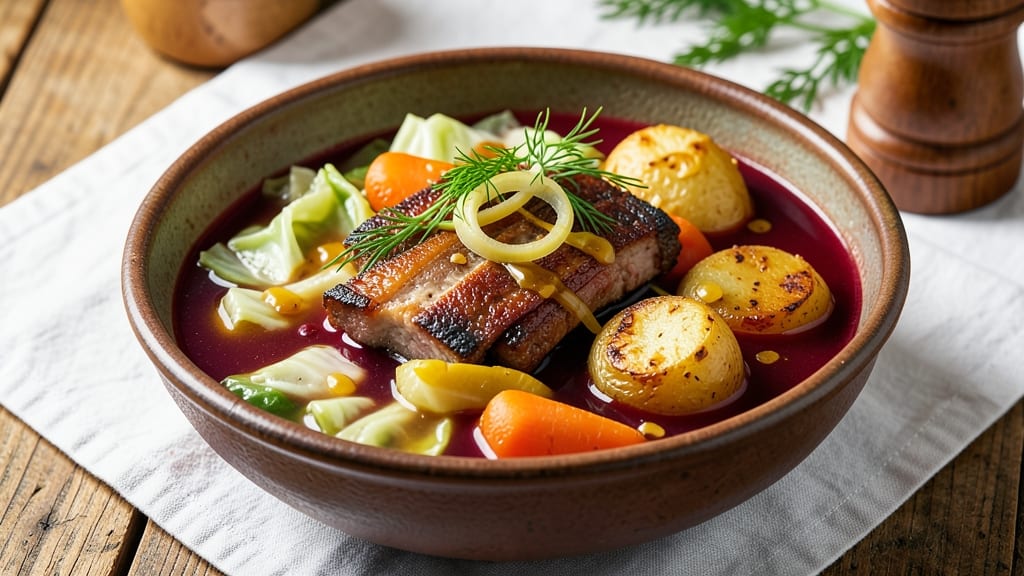
This borscht recipe with pork ribs transforms a traditional Eastern European stew into a deeply satisfying, umami-rich meal that feels like a hug in a bowl. 🔥 The secret lies in slow-braised pork ribs that infuse the broth with rich, meaty depth while tender beets and cabbage create the signature vibrant colors and earthy sweetness.
I developed this version after years of perfecting the balance between rustic tradition and modern convenience—because good borscht shouldn’t require all day in the kitchen.
The foundation starts with pork ribs, simmered until they fall off the bone, then shredded into the broth for maximum flavor. Beets aren’t just for color here—they’re roasted to concentrate their natural sweetness, while cabbage and potatoes add hearty texture. The key technique?
Layering the vegetables in stages so each ingredient absorbs the pork-infused broth perfectly. Even with shortcuts like pre-cooked ribs or pressure cooking, the result remains restaurant-quality: a velvety stew with layers of savory, sweet, and tangy flavors that make every spoonful irresistible.
What you’ll end up with is a steaming bowl of borscht that’s rich enough to stand alone but still pairs beautifully with crusty rye bread or a dollop of sour cream.
The deep umami from the pork elevates the dish beyond typical beet soups, creating a meal that’s both comforting and impressive—ideal for family gatherings or when you want to show off your cooking skills without slaving over the stove.
This isn’t just borscht; it’s a celebration of bold flavors and smart techniques that deliver professional results at home.
The best part? Leftovers taste even better the next day as the flavors meld further. Serve with a simple green salad and dark rye bread to round out the meal. Here’s how to make it—step by step, with all the secrets to achieving that perfect balance of richness and brightness.
Ingredients for borscht recipe with pork ribs
Pork ribs, roasted beets, and cabbage—this hearty stew marries rich meaty depth with vibrant vegetables for a bowl that feels like a hug.
| Ingredient | Amount | Notes |
|---|---|---|
| Pork Ribs 🍖 | 2 ½ lb | Bone-in, meaty cuts preferred |
| Beets 🍠 | 2 medium | Roasted, peeled, and cubed |
| Green Cabbage 🥬 | 1 small | Shredded, core removed |
| Russet Potatoes 🥔 | 3 medium | Peeled, cut into chunks |
| Carrots 🥕 | 3 medium | Peeled, sliced into rounds |
| Yellow Onion 🧅 | 1 large | Diced, yellow or white |
| Tomato Paste 🍅 | ½ cup | Smooth, no sugar added |
| Garlic Cloves 🧄 | 4 cloves | Fresh, minced |
| Fresh Parsley 🌿 | ¼ cup | Chopped, for garnish |
| Bay Leaves 🌿 | 2 whole | Fresh if possible |
| Black Peppercorns 🌶️ | 1 tsp | Freshly ground |
| Salt 🧂 | 2 tsp | Kosher or sea salt |
| Apple Cider Vinegar 🍎 | 2 tbsp | For tangy brightness |
| Vegetable Oil 🫒 | ¼ cup | For roasting beets |
| Sour Cream 🧀 | ½ cup | For serving, optional |
The pork ribs are the star here—look for meaty, bone-in cuts at your butcher or grocery store's meat department. Costco or local butcher shops often have the best selection, but the regular supermarket ribs work in a pinch. If you're using pre-cooked ribs, check the package for bone-in options—they add incredible flavor. For the beets, organic or heirloom varieties have more natural sweetness, but any firm, medium-sized beets will do. Roasting them first concentrates their flavor—don't skip this step, even if it feels like extra work.
No fresh parsley? Dried parsley at half the amount works, but fresh is ideal for that bright finish. Running short on apple cider vinegar? White vinegar or lemon juice in a pinch, though apple cider gives that authentic tang. The tomato paste can be squeeze-tube variety if you're in a hurry—just make sure it's smooth, not chunky. For the cabbage, green or red works, but green is more traditional. If you're using pre-shredded cabbage from the bag, rinse it well to remove any added moisture. The bay leaves? Fresh is best, but dried will work if that's all you have.
This stew tastes even better the next day—plan to make extra. Store leftovers in the fridge for up to 5 days or freeze for 3 months. The broth thickens as it sits, so add a splash of water when reheating if it seems too concentrated. For serving, keep the sour cream and fresh parsley on the side so everyone can adjust to taste. The ribs will be so tender they'll practically fall apart with a fork—save some for sandwiches if you're feeling ambitious.
Why You'll Love This Recipe
- One-Pot Magic: I swear by this—just toss ribs, chopped beets, and cabbage into a single pot. The ribs fall off the bone while the beets soften into that signature deep red broth, and honestly? No extra pots means less cleanup. (Yes, even on a Tuesday night.)
- Rich, Hearty Soul: That first bite—smoky ribs with tender cabbage and earthy beets—hits different. The potatoes soak up the broth like a sponge, and the carrots add just enough sweetness to balance the richness. It’s the kind of dish that makes you want to eat it straight from the pot.
- Leftovers That Don’t Suck: Between us, most soups turn into sad, watery meals by day three. Not this one. The ribs stay tender, the beets hold their color, and the broth only gets deeper in flavor. I’ve had it for lunch three days in a row—no complaints.
- Budget-Friendly Feast: Pork ribs on sale? Beets last forever? This recipe stretches every dollar. A single batch feeds four for dinner and two for lunch the next day. My daughter picks out the best ribs first, but still asks for seconds. (That’s the real test.)
Step-by-step instructions for hearty beet and meat stew
Here's how to build this rich, umami-packed borscht with tender pork ribs and vibrant vegetables.
🔥 Step 1: Sear the Pork Ribs for Deep Flavor
Pat the 2.5 lb pork ribs dry with paper towels and season generously with 2 tsp salt and 1 tsp freshly ground black peppercorns. Heat 0.25 cup vegetable oil in a large Dutch oven over medium-high heat until shimmering. Add the ribs in a single layer and sear for 8-10 minutes until deeply browned on all sides.
Don't rush this step—the Maillard reaction creates that deep, savory foundation. Once browned, remove ribs and set aside. I like to sear them in batches if needed, but don't let the oil cool between batches or you'll lose that perfect sear.
🍳 Step 2: Roast the Beets for Sweet, Earthy Depth
While the ribs sear, preheat your oven to 400°F. Toss the 2 medium beets (peeled and cubed) with 1 tbsp vegetable oil and spread them on a baking sheet. Roast for 25-30 minutes until tender and caramelized at the edges. You'll know they're perfect when they pierce easily with a fork and smell sweetly aromatic.
Roasting intensifies the beets' natural sweetness, which balances beautifully with the pork's richness. I find roasting them separately gives better control over their texture than boiling—no mushy beets here!
👨🍳 Step 3: Build the Flavor Base with Aromatics
In the same Dutch oven, add 1 large diced yellow onion and cook over medium heat for 5 minutes until softened. Add 3 medium sliced carrots and 3 medium russet potatoes (cut into chunks), stirring to coat with the rendered rib fat. Pour in 2 tbsp apple cider vinegar and scrape up any browned bits from the bottom.
The vinegar adds that bright tang that cuts through the richness. Here's where it gets good—add 0.5 cup tomato paste and stir well to create a thick, flavorful paste. This will form the rich base of your stew. Add 4 minced garlic cloves and 2 whole bay leaves, stirring for 1 minute until fragrant.
🥘 Step 4: Simmer the Stew to Perfection
Return the seared ribs to the pot and add enough water to cover everything by about 1 inch. Bring to a boil, then reduce heat to low and simmer uncovered for 1.5 hours. Skim off any foam that rises to the surface during the first 30 minutes—this ensures a clean broth.
After 1 hour, add the roasted beets and 1 small shredded green cabbage. The ribs should be fork-tender by now, falling off the bone. Taste the broth and adjust seasoning—you might need a bit more salt or vinegar to balance the flavors. This is where the magic happens: all those flavors melding together.
🍽️ Step 5: Finish and Serve with Fresh Garnishes
Remove the ribs from the pot and let them rest for 5 minutes before shredding the meat off the bones. Return the meat to the pot and stir to combine. Serve immediately in deep bowls, topped with 0.5 cup sour cream and 0.25 cup chopped fresh parsley.
Each spoonful should deliver tender pork, sweet roasted beets, and that perfect balance of tangy, savory, and umami flavors. The sour cream adds a creamy contrast that makes this hearty stew even more satisfying. Serve with crusty bread to soak up every last drop of that rich broth!
Pro Tips For Making Borscht Recipe With Pork Ribs
- Brown the Ribs First: Skip the slow simmer until the ribs hit the pot—sear them in a dry skillet over medium-high heat for 8-10 minutes until deep caramel forms. That’s where the rich, meaty depth comes from, not just the broth. (Yes, even if you’re impatient like me.)
- Cube the Beets Roughly: Don’t dice those beets into tiny cubes—they’ll turn to mush and make your borscht look like soup. Aim for 1-inch chunks so they hold shape and release color gradually. I learned this the hard way when my first batch turned into a murky red sludge.
- Add Potatoes Last: Toss the potatoes in when the ribs and veggies have already simmered 20 minutes. They’ll absorb flavors better and avoid turning into gluey blobs. (Your future self will thank you.)
- Use Vinegar Sparingly: A splash of vinegar brightens the broth, but too much kills the pork’s natural richness. Start with 1 tablespoon, taste, then add more if needed—you’re aiming for tang, not sour. I used to dump in the whole bottle like a rookie.
Common mistakes when making great borscht recipe with pork ribs
Overcooking the Ribs
One of my biggest pet peeves is seeing pork ribs turned into rubbery, dry shreds. The ribs should be fork-tender but still hold their shape when shredded—think 203°F internal temperature at most. I’ve ruined more borscht than I’d admit by letting them simmer too long.
After the initial 1.5-hour simmer, remove them and check: they should pull apart easily but not fall apart completely. If they’re falling apart, you’ve gone too far. 💫
Skipping the Roast
Here’s a rookie mistake: boiling the beets instead of roasting them. Boiled beets turn watery and lose their natural sweetness, which throws off the entire flavor balance. Roasting caramelizes their sugars, creating that deep, earthy sweetness that pairs perfectly with the pork’s richness.
I promise, 25-30 minutes at 400°F makes all the difference—don’t skip it!
Ignoring the Vinegar
The 2 tbsp apple cider vinegar is non-negotiable for that bright, tangy kick that cuts through the richness. I’ve seen home cooks omit it, and the result is a flat, one-dimensional stew. Add it with the aromatics—it’s the secret to that perfect balance of sweet, savory, and tangy.
If you hate vinegar, try a splash of lemon juice instead, but don’t skip the acidity entirely.
Not Skimming the Broth
Those first 30 minutes of simmering produce foam, and if you don’t skim it off, your broth will turn cloudy and lose clarity. I’ve seen this happen more times than I can count—especially when people rush the process.
Use a fine-mesh skimmer or a spoon to remove the foam gently. A clear, golden broth is the sign of a well-made borscht. 🌟
Overloading the Pot
Crowding the Dutch oven leads to uneven cooking and steamed vegetables instead of properly simmered ones. The ribs, beets, and cabbage all need room to breathe and absorb the flavors.
If your pot looks packed, cook in batches or use a larger pot. Trust me, a little extra space makes all the difference in texture and taste.
Using Pre-Cooked Ribs Without Adjusting
If you’re using pre-cooked ribs (like from a package), they’re already tender, so don’t simmer them for the full 1.5 hours. Add them after the vegetables have simmered for about 45 minutes, then shred and return them to the pot just to heat through.
Overcooking pre-cooked ribs turns them into mush—adjust the timing, and you’ll avoid this common mistake. ⏰
Nutrition facts
Frequently asked questions about pork rib borscht
Can I substitute chicken or beef for the pork ribs?
The rich, fatty flavor of pork ribs is key to this recipe's depth, but you can substitute with other meats. For chicken, use 3 bone-in, skin-on thighs (simmer for 45 minutes instead of 1.5 hours). For beef, try 2 lbs beef chuck roast cut into chunks—it adds even more heartiness but requires 2 hours of simmering. The broth will be slightly different in flavor, but still delicious.
How do I make this vegetarian?
Swap the pork ribs for 1.5 lbs extra-firm tofu or 2 large portobello mushrooms (sliced thickly). Boost umami with 1 tbsp soy sauce or 1 tsp miso paste in the broth. For meaty texture, add 1 cup cooked lentils or 1 cup crumbled tempeh. The beets and cabbage will still shine, but the broth will need extra seasoning—start with 1 extra bay leaf and 1 tsp smoked paprika.
Can I make this in a slow cooker?
Sear the ribs as directed, then transfer everything (including roasted beets) to your slow cooker. Add 2 cups water and cook on low for 6-7 hours or high for 3-4 hours. The ribs will be extra tender, and the flavors will meld beautifully. Just add the cabbage in the last 30 minutes of cooking so it doesn't turn mushy. For best results, use a 6-quart slow cooker—it won't be crowded.
Why does my borscht taste too sweet?
Too much natural beet sweetness or added sugar can throw off the balance. Fix it by adding 1 extra tbsp apple cider vinegar (to cut sweetness) or a pinch of black pepper (to add depth). For future batches, reduce roasting time by 5 minutes or use slightly smaller beets. The key is the tomato paste and vinegar combo—they create the perfect tangy contrast. Taste as you go!
How do I reheat leftovers without drying it out?
Reheat gently on the stovetop over low heat with a splash of water or broth (about ¼ cup) to restore moisture. If using the microwave, cover with a damp paper towel and heat in 30-second intervals, stirring between each. Never reheat to boiling—just until steaming hot. For extra richness, stir in 1 tbsp sour cream at the end. Leftovers actually improve as flavors meld further!