
Main Courses
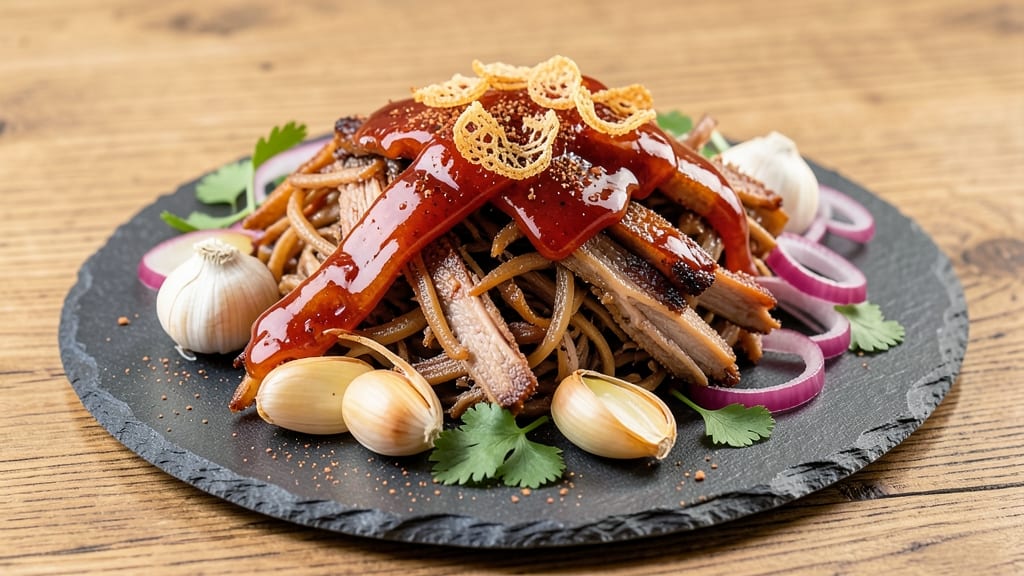
This boneless pulled pork recipe delivers smoky, tender shreds in just 3 hours—no whole hog required. 🔥 After years of perfecting my technique at The Smoky Pig, I've simplified the process while keeping that restaurant-quality depth. The secret? A garlic-infused marinade that tenderizes the meat while building layers of flavor that slow cooking can't match.
What sets this recipe apart is the balance of speed and richness.
Most boneless pulled pork recipes either sacrifice tenderness or flavor, but this method achieves both by using a combination of acid (vinegar) and sweet (brown sugar) in the marinade, followed by a precise slow-cooking temperature that keeps the meat juicy.
The result is meat that practically falls apart at the touch, with a smoky-sweet aroma that transforms any meal.
By the time you're done, you'll have perfectly shredded pork that's ideal for tacos, sandwiches, or bowls—each bite delivering that perfect harmony of smoky, garlicky, and slightly sweet flavors. The technique is straightforward, but the results are restaurant-quality, making this the perfect recipe for both weeknight dinners and special gatherings.
Pair it with classic BBQ sides like coleslaw and cornbread, or serve it over rice for a hearty meal that's sure to impress. The beauty of this recipe is its versatility—it works equally well for a quick family dinner or a crowd-pleasing centerpiece.
Let's get started on creating your perfect pulled pork.
Ingredients for boneless pulled pork
Six ingredients transform ordinary pork into restaurant-worthy shreds—smoky, garlicky, and melt-in-your-mouth tender.
| Ingredient | Amount | Notes |
|---|---|---|
| Boneless Pork Shoulder 🐖 | 4 lb | Well-marbled, cut into 2-inch chunks |
| Garlic Cloves 🧄 | 12 cloves | Minced for marinade infusion |
| Apple Cider Vinegar 🍎 | ½ cup | For tenderizing acidity |
| Light Brown Sugar 🍚 | ½ cup | Packed, for caramelized sweetness |
| Smoked Paprika 🌶️ | 2 tbsp | For authentic BBQ smokiness |
| Ground Black Pepper 🌶️ | 1 ½ tsp | Freshly cracked for depth |
| Kosher Salt 🧂 | 1 ½ tsp | Diamond Crystal preferred |
| Olive Oil 🫒 | ¼ cup | Extra-virgin for richness |
| Yellow Onion 🧅 | 1 whole | Diced for flavor base |
| Beef Broth 🥄 | 2 cups | Low-sodium for balance |
| Honey 🍯 | 2 tbsp | For glossy finish |
| Fresh Rosemary 🌿 | 1 tbsp | Chopped, aromatic herb |
| Fresh Thyme 🌿 | 1 tbsp | Chopped, earthy notes |
The pork shoulder is the star—look for cuts with visible fat marbling (that's what makes it tender). Costco and Whole Foods carry excellent boneless options, but any well-marbled pork shoulder works. If your butcher offers pre-cut chunks, grab those to save time. For the garlic, fresh is non-negotiable—jarred minced has no depth. The apple cider vinegar should be the good stuff (like Mott's or Bragg), not the cheap white vinegar. And that smoked paprika? Penzeys or McCormick smoked are my go-tos—they've got that authentic BBQ flavor without tasting like dust.
No apple cider vinegar? Red wine vinegar or lemon juice works in a pinch, but the flavor will be slightly different. Swap brown sugar for maple syrup or coconut sugar if you're avoiding refined sugar. Fresh herbs wilt fast—if you can't find fresh rosemary or thyme, dried at one-third the amount gets you close. The beef broth can be subbed with chicken broth or water, but add a splash of soy sauce for umami depth. For extra smokiness without a smoker, add 1 tbsp liquid smoke to the marinade (just don't overdo it—it's potent!). And if you're feeling lazy, pre-minced garlic from the jar works, but fresh is always better.
Marinate the pork overnight for maximum tenderness, but if you're short on time, 30 minutes is the absolute minimum. The marinade keeps for 5 days in the fridge—make extra for another use. Once cooked, the pork reheats beautifully—just add a splash of broth to keep it moist. It freezes for 3 months, making this the perfect make-ahead meal. Store leftovers in an airtight container with the juices to keep everything flavorful. Pro tip: Portion into single-serving containers before freezing for easy tacos or sandwiches later.
Why You'll Love This Recipe
- No Bone Hassle: I’ll be real—boneless pork shoulder is my secret weapon for lazy Sundays. No trimming, no fussing with a bone, and it shreds like butter. The vinegar and brown sugar melt into it while you sip your coffee, so by the time you’re ready to eat, it’s already falling apart.
- Sweet-Smoky Magic: That first bite? Pure satisfaction. The apple cider vinegar cuts through the richness while the smoked paprika and garlic give it a deep, caramelized edge. It’s not just sweet—it’s got layers, like a hug from a slow-cooker.
- Lunchbox Hero: Between us, this is my go-to for meal prep. Toss it in wraps, slather it on sandwiches, or pack it with crackers for a snack. (My kid still asks for it even after I’ve made it three times in a row—no complaints here.)
- Budget Stretch: A single pork shoulder feeds my family for days. The spices cost pennies, and the vinegar adds tang without breaking the bank. Honestly, it’s the kind of recipe that makes me feel like I’m feeding a crowd without stressing my wallet.
Step-by-step instructions for smoky garlic-infused pulled pork
Transform tough pork into melt-in-your-mouth shreds with this foolproof method.
🍳 Step 1: Create the Flavor-Packed Marinade
In a large bowl, combine the 0.5 cup apple cider vinegar, 0.5 cup light brown sugar, 2 tbsp smoked paprika, 1.5 tsp ground black pepper, 1.5 tsp kosher salt, 0.25 cup olive oil, 12 cloves minced garlic, 1 tbsp chopped fresh rosemary, and 1 tbsp chopped fresh thyme. Whisk until the sugar dissolves completely and the mixture becomes syrupy.
This marinade does double duty—tenderizing the meat while infusing it with deep, smoky-sweet flavors. The vinegar breaks down muscle fibers, while the sugar creates a caramelized crust during cooking. I like to let this marinade sit at room temperature for 10 minutes before using it to ensure all the spices are fully incorporated.
👨🍳 Step 2: Coat and Rest the Pork
Add the 4 lb boneless pork shoulder to the marinade and turn it to coat evenly. For best results, I use my hands to press the marinade into every crevice of the meat. Place the pork in a resealable plastic bag and massage it gently to ensure full coverage.
Let the pork marinate for at least 30 minutes at room temperature—this jumpstarts the cooking process and ensures even flavor penetration. If you have time, marinate overnight in the refrigerator, but even 30 minutes makes a noticeable difference in tenderness and flavor development.
🔥 Step 3: Sear for Depth of Flavor
Heat a large Dutch oven over medium-high heat until hot. Remove the pork from the marinade (reserve the marinade) and sear it on all sides until deeply browned—about 3-4 minutes per side. The pork should develop a rich, caramelized crust that locks in juices.
Here's the thing—this searing step isn't just about looks. The Maillard reaction happening here creates complex flavors that build the foundation for your pulled pork. If you notice the marinade smoking excessively, reduce the heat slightly to prevent burning while still achieving that beautiful crust.
🥘 Step 4: Slow Cook Until Fork-Tender
Return the seared pork to the Dutch oven and pour in the reserved marinade. Add the 1 whole diced yellow onion, 2 cups beef broth, and 2 tbsp honey. Bring to a simmer, then cover and transfer to a 300°F oven.
Cook for 2.5-3 hours until the pork is fork-tender and pulls apart easily. The internal temperature should reach 203-205°F—this is higher than the usual safe temperature because we're aiming for that fall-apart texture. Check occasionally and add ¼ cup water if the liquid reduces too much, but don't overdo it or you'll dilute the flavors.
🔪 Step 5: Shred and Finish
Remove the pork from the oven and let it rest for 10 minutes before shredding. Using two forks or a pair of tongs, pull the pork apart against the grain into ¼-inch thick shreds. Discard any large fat chunks or connective tissue.
Return the shredded pork to the Dutch oven with the cooking liquid and simmer uncovered for 5-10 minutes to let the flavors meld. The pork should be coated in a glossy, slightly thickened sauce with visible garlic flecks and tender onion pieces. Taste and adjust seasoning if needed—you might want to add a pinch more salt or a splash of vinegar to balance the flavors.
Pro Tips For Making Boneless Pulled Pork
- Trim the Fat First: The boneless pork shoulder is already leaner than its bone-in cousin, but if you see any visible fat cap, slice it off before cooking. I learned this the hard way—too much fat renders down unevenly and can make the sauce greasy later.
- Minimize the Vinegar: Apple cider vinegar adds tang, but too much will turn your pulled pork into a braised pork sauce instead of tender meat. Start with 2 tablespoons and adjust at the end—you can always add more, but you can’t take it out.
- Don’t Rush the Rest: After cooking, let the pork rest for at least 15 minutes before shredding. I used to skip this and ended up with stringy, dry meat—like overcooked chicken. Give it time to reabsorb juices.
- Sweat the Garlic: Chop the garlic cloves into thin slivers (not minced) and cook them low and slow until they’re golden, not browned. Burnt garlic tastes bitter and overpowers the smoky paprika—trust me, you’ll taste the difference.
Troubleshooting great boneless pulled pork
Dry, Tough Meat
If your pulled pork turns out dry or tough, it’s usually from overcooking or insufficient moisture. The key is maintaining a 203-205°F internal temperature—any higher, and the meat will shrink and dry out.
I’ve learned the hard way that 300°F is the sweet spot for this recipe; any hotter, and the pork loses its juices faster than you can say "Texas BBQ." 🔥
To prevent this, add ¼ cup beef broth or water every 30-45 minutes during cooking to keep the liquid level high. The broth helps maintain moisture, and the pork absorbs the flavors as it cooks.
Also, resist the urge to peek too often—every time you lift the lid, you lose heat and moisture. Trust the process!
Uneven Cooking
Uneven cooking often happens when the pork chunks aren’t the same size. I’ve seen this happen when using pre-cut pork shoulder with inconsistent chunk sizes. To fix this, trim any large chunks down to roughly 2-inch pieces before marinating. This ensures all pieces cook at the same rate. 💡
Another trick I use is to place the largest chunks in the center of the Dutch oven and the smaller ones around the edges. This helps distribute heat more evenly, so everything finishes at the same time.
If you notice some pieces cooking faster, remove them and let them rest separately while the others catch up.
Flavor Imbalance
If your pulled pork tastes too sweet or overly tangy, it’s usually from an imbalance in the marinade. The apple cider vinegar and brown sugar need to be in harmony. Start by tasting your marinade before adding the pork—it should be slightly sweet, tangy, and smoky, not overpowering.
If it’s too sweet, add 1 tbsp more vinegar; if it’s too tangy, add 1 tsp more brown sugar.
After cooking, if the flavors still feel off, adjust with a pinch of kosher salt or a splash of vinegar to balance. I often finish the pork with a drizzle of honey to round out the flavors, but use it sparingly—too much can make the dish cloying.
Trust your taste buds and adjust as you go!
Sauce Too Thin
A watery sauce is usually the result of adding too much liquid during cooking. While it’s important to keep the pork moist, you don’t want to dilute the flavors. Instead of adding broth or water, I recommend reducing the sauce at the end.
After shredding the pork, simmer the cooking liquid uncovered for 10-15 minutes to thicken it naturally. 🥄
If the sauce is still too thin, remove the pork and reduce the liquid over medium-high heat until it reaches your desired consistency. You can also thicken it with a cornstarch slurry (1 tbsp cornstarch mixed with 2 tbsp cold water), but add it gradually to avoid clumping.
The goal is a glossy, slightly thickened sauce that coats the pork beautifully.
Pork Not Shredding
If your pork isn’t shredding easily, it likely didn’t cook long enough or wasn’t tenderized properly. The 203-205°F internal temperature is critical—any lower, and the meat will be tough.
If you’re using a meat thermometer, make sure it’s inserted into the thickest part of the pork, not touching bone or fat. 🌡️
To speed up tenderness, try adding ½ cup extra beef broth and 1 tbsp apple cider vinegar to the Dutch oven during the last 30 minutes of cooking. The acid helps break down the fibers further.
If the pork is still tough, don’t give up—simmer it with a splash of broth for another 20-30 minutes; it’ll eventually come together. Patience is key!
Nutrition facts
Frequently asked questions
Can I use a slow cooker instead of an oven for this recipe?
For a 6-hour low setting, place the seared pork in the slow cooker with all marinade ingredients, then cook until fork-tender. The key difference is the oven's dry heat helps caramelize flavors better, but slow cookers work perfectly for hands-off prep. Just check liquid levels and add broth if needed during cooking.
What's the best way to store leftovers?
Store in an airtight container with the cooking juices for 4-5 days in the fridge. For longer storage, portion into single-serving containers and freeze for up to 3 months. The juices prevent drying, and freezing preserves texture better than refrigeration. Just reheat with a splash of broth to maintain moisture.
Can I make this with pork tenderloin instead?
Not recommended! Pork tenderloin cooks much faster and lacks the connective tissue needed for perfect pulled texture. The shoulder's fat marbling is what creates those melt-in-your-mouth shreds. If you're set on tenderloin, try cubing it small and cooking at 325°F for 1.5 hours—but expect a different (more delicate) result.
How do I adjust for a larger crowd?
Scale up by maintaining the same 2-inch chunk size and cooking time per pound. For 8 lbs, use a larger Dutch oven or divide between two. Increase marinade by 25% and broth by 50% to maintain moisture. Cooking time remains similar—just monitor liquid levels more frequently.
What's the secret to perfect sandwiches?
Use a soft, toasted bun like potato or brioche, and layer with pickles, coleslaw, and a smear of mayo before adding pork. The acidity cuts through the richness, while the bun's texture contrasts beautifully. For extra flavor, brush buns with garlic butter before toasting.