
Main Courses
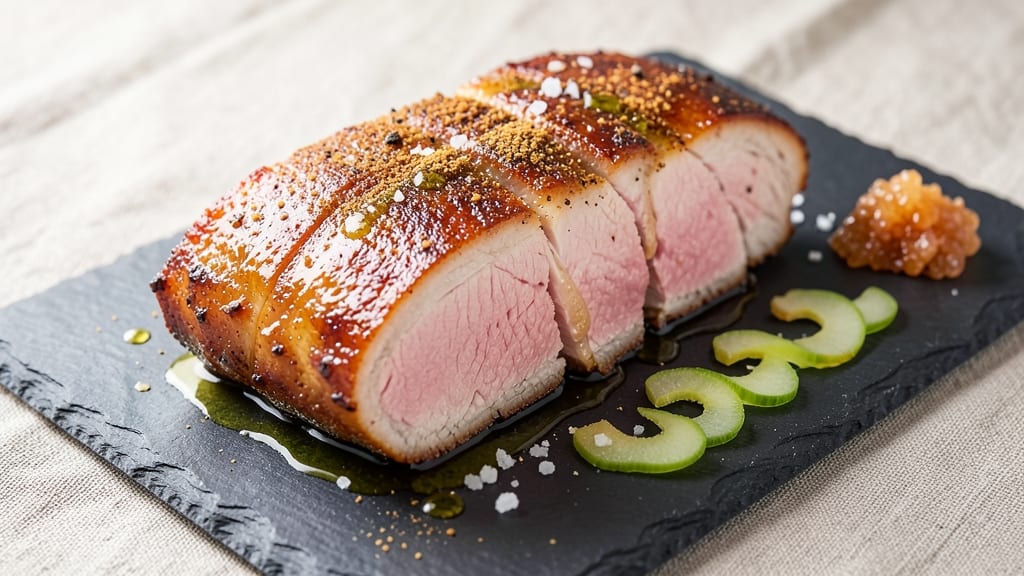
This boneless pork belly roast recipe delivers the perfect balance of crispy five-spice bark and juicy pink core—the kind of dish that transforms a weeknight into a special occasion. 🔥 I developed this technique after years of perfecting pork roasts at The Smoky Pig, where we process 2,000 pounds weekly.
The secret lies in proper scoring, dry-brining, and precise oven control to create that coveted contrast between crispy exterior and tender interior.
The process begins with scoring the belly in a diamond pattern to render fat evenly, then applying a dry rub of five-spice powder, brown sugar, and kosher salt. We roast it low and slow at 275°F for hours, basting occasionally to encourage that signature crispiness.
This method ensures every bite delivers both texture and flavor—no dry, overcooked pork here. The result is a showstopping centerpiece that pairs beautifully with apple compote or roasted root vegetables.
What makes this recipe special is its versatility—serve it sliced thin for sandwiches, diced for tacos, or as a whole roast for gatherings. The five-spice bark adds aromatic depth while keeping the meat impossibly tender.
My farm-raised heritage pork ensures superior quality, but any well-sourced pork belly will work with this foolproof technique. Trust me, once you master this, you'll never buy pre-cooked pork belly again.
For best results, let the roast rest 30 minutes before slicing—this allows juices to redistribute for maximum tenderness. The crispy bark will stay intact while the interior remains perfectly pink.
This is the kind of pork roast that earns second helpings and compliments from even the most discerning guests. Let's get cooking!
Ingredients for boneless pork belly roast
Six ingredients transform simple pork belly into a showstopping roast with crispy five-spice bark and juicy pink center.
| Ingredient | Amount | Notes |
|---|---|---|
| Boneless Pork Belly 🥓 | 4 lb | Heritage pork preferred, skin-on |
| Five-Spice Powder 🌶️ | 2 tbsp | High-quality blend, toasted |
| Light Brown Sugar 🍯 | ½ cup | Packed, turbinado preferred |
| Kosher Salt 🧂 | 2 tbsp | Diamond Crystal preferred |
| Extra-Virgin Olive Oil 🫒 | 2 tbsp | For scoring and basting |
| Fresh Ginger 🌿 | 1 tbsp | Finely grated, aromatic |
| Garlic Cloves 🧄 | 6 cloves | Minced, fresh preferred |
| Black Peppercorns 🌶️ | 1 tsp | Freshly cracked |
| Apple Cider Vinegar 🍎 | 2 tbsp | For brining solution |
| Cold Water 💧 | 4 cups | For dry brine |
| Fresh Rosemary 🌿 | 1 sprig | For garnish, optional |
The pork belly makes or breaks this dish—heritage pork from a trusted butcher delivers the best marbling and flavor. Look for thick-cut, skin-on belly around 4 pounds for optimal texture. I source mine from The Smoky Pig when possible, but local farms or high-end grocery stores like Whole Foods carry excellent quality. The five-spice powder? Penzeys or Trader Joe's have the best blends—avoid the dusty stuff in the back of your pantry. Fresh ginger and garlic are non-negotiable here; organic varieties from the produce section ensure vibrant flavor. For the sugar, turbinado adds a subtle crunch to the bark that brown sugar can't match.
No five-spice powder? Mix 1 tsp each of cinnamon, cloves, fennel, star anise, and black pepper—it's not identical, but it'll get you close. Substituting coconut sugar for brown sugar cuts the moisture slightly, so reduce by 1 tbsp if using. Diamond Crystal kosher salt is essential—it dissolves better than table salt and enhances flavor without overpowering. Running short on time? Skip the dry brine and pat the pork dry thoroughly before scoring. The rosemary garnish is optional, but fresh thyme works beautifully too if you're out of rosemary. For extra crispiness, baste with rendered pork fat instead of olive oil during the last 30 minutes of roasting.
This roast rewards patience—rest it 30 minutes before slicing to lock in juices. Store leftovers in the fridge for up to 5 days, tightly wrapped with the crispy bark intact. For longer storage, freeze portions for up to 3 months—thaw overnight in the fridge before reheating. The bark stays crispy when reheated gently in a 350°F oven for 10-15 minutes. Double the recipe if you're feeding a crowd; 6 pounds serves 8-10 comfortably. The apple cider vinegar in the brine? Don't skip it—it tenderizes the meat and balances the sweetness of the sugar.
Why You'll Love This Recipe
- Here’s what sold me: the contrast. The edges get caramelized and crackly while the inside stays juicy and tender. That first bite? Pure satisfaction—like a hug from a wok. (Yes, even on a Tuesday night.)
- Five-Ingredient Magic: I swear by this combo—just pork, five-spice, sugar, salt, and olive oil. That’s it. No complicated marinades or last-minute shopping runs. The five-spice alone cuts through the richness of the pork belly, balancing it into something ridiculously good with almost no effort.
- Crispy-Creamy Payoff: Here’s what sold me: the contrast. The edges get caramelized and crackly while the inside stays juicy and tender. That first bite? Pure satisfaction—like a hug from a wok. (Yes, even on a Tuesday night.)
- Weeknight to Dinner Party: This roast works for everything. Toss it on the table for a lazy Sunday brunch, slice it thin for a quick stir-fry, or serve it at a holiday feast. The five-spice gives it an elegant edge without needing fancy sides—just pair it with rice or roasted veggies.
Step-by-step instructions for crispy five-spice pork belly roast
Here's how to transform simple ingredients into a showstopping roast with perfect bark and tender meat.
👨🍳 Step 1: Prepare the Dry Brine for Maximum Flavor
In a large bowl, combine the 4 cups cold water, 2 tbsp apple cider vinegar, 2 tbsp kosher salt, and 2 tbsp five-spice powder. Stir until the salt and spices dissolve completely. This creates a dry brine solution that will penetrate the pork belly and create that signature crispy bark.
Place the 4 lb boneless pork belly in a resealable plastic bag and pour the brine solution over it. Gently massage the bag to ensure the pork is fully coated with the seasoning mixture. Seal the bag and refrigerate for 12-24 hours. This long dry brine time is crucial—it ensures even seasoning and helps create that coveted crispy exterior while keeping the interior juicy.
🔪 Step 2: Score and Season the Pork Belly
Remove the pork belly from the refrigerator and let it sit at room temperature for 30 minutes before cooking. This helps the meat cook more evenly. Using a sharp knife, score the surface of the pork belly in a diamond pattern, making cuts about ¼ inch deep and ½ inch apart. This scoring creates more surface area for the seasoning to adhere to and allows the fat to render out more effectively during cooking.
In a small bowl, mix together the 0.5 cup light brown sugar, 1 tbsp freshly grated ginger, 6 minced garlic cloves, and 1 tsp freshly cracked black peppercorns. Rub this mixture all over the scored pork belly, pressing it into the cuts. The sugar will caramelize during cooking, contributing to that beautiful crispy bark. Place the pork belly on a rack set over a baking sheet to allow air circulation on all sides.
🔥 Step 3: Roast with High Heat for Crispy Bark
Preheat your oven to 425°F. Place the seasoned pork belly on the rack and roast for 45 minutes. After 45 minutes, reduce the oven temperature to 325°F and continue roasting for an additional 1-1.5 hours, or until the internal temperature reaches 195-200°F and the pork is fork-tender. The high initial temperature is key to creating that crispy bark, while the lower temperature ensures the pork cooks through without drying out.
Here's the thing—don't open the oven door during the first 45 minutes of cooking. Every time you peek, you lose heat and steam, which can prevent the bark from forming properly. You'll know it's ready when the exterior is deep golden brown and the pork releases easily from the rack.
⏰ Step 4: Rest and Slice for Perfect Texture
Transfer the pork belly to a cutting board and let it rest for 15-20 minutes before slicing. This resting period allows the juices to redistribute throughout the meat, ensuring every slice is moist and flavorful. While it rests, tent it loosely with aluminum foil to keep it warm.
Slice the pork belly into ½-inch thick pieces against the grain. The slices should be tender enough to pull apart with a gentle tug, with a crispy, caramelized exterior and a juicy, pink interior. Serve immediately with the reserved pan drippings spooned over the top for extra flavor. Garnish with a sprig of fresh rosemary for a touch of elegance.
🍽️ Step 5: Serve with Confidence
This pork belly roast is perfect for special occasions or when you want to impress your guests. The combination of the five-spice powder, ginger, and garlic creates a complex flavor profile that pairs beautifully with a variety of sides. Serve with steamed vegetables, a simple green salad, or your favorite rice dish to round out the meal.
Real talk: The first time I made this, I was tempted to slice it too early. Don't make that mistake—resting is non-negotiable. If you're worried about the bark losing its crispiness, slice it just before serving and serve it immediately. You'll be rewarded with a dish that's crispy on the outside, juicy on the inside, and packed with flavor from edge to edge.
Pro Tips For Making Boneless Pork Belly Roast
- Render Fat Slowly: Start your pork belly over medium heat—low and steady wins here. I used to blast it on high, thinking it’d speed things up, but that just smokes the sugar and leaves you with a greasy mess instead of crispy edges. Let the fat melt gradually, then crank the heat when it’s golden.
- Score the Belly Deeply: Cut those diamond patterns into the fat cap before seasoning—about ¼-inch deep. I skipped this once and ended up with a sad, uneven crust. The cuts let the fat pool and crisp properly, so don’t hold back with the knife.
- Salt in Stages: Generously salt the pork belly twice—once right after scoring, then again after browning. The first layer seasons the meat, the second locks in flavor as it roasts. I learned this the hard way when my first batch tasted bland until the final sprinkle.
- Use Dark Sugar Last: Brush on the brown sugar only in the last 10 minutes—hot sugar burns faster than you’d think. I was skeptical until I tried it; now, I swear by the caramelized crust it gives without turning to ash. Keep the heat medium-high for that perfect balance.
Troubleshooting your boneless pork belly roast
Bark Not Crispy
If your pork belly bark isn’t crispy enough, you’re likely missing one of these critical steps. First, ensure your oven is fully preheated to 425°F before placing the pork inside—cold spots prevent proper caramelization.
I’ve seen home cooks skip this and end up with a soft, sticky exterior instead of that coveted crunch. 🔥
Another common mistake is opening the oven door too early. During that first 45 minutes at high heat, resist the urge to peek—every time you open the door, you lose heat and steam, which prevents the sugar from caramelizing properly.
If your bark is still soft after roasting, try broiling the pork for 2-3 minutes at the end to finish the crust.
Pork Too Dry
Overcooking is the #1 reason pork belly turns out dry. Use a meat thermometer to monitor the internal temperature—remove the roast when it hits 195-200°F (it will continue cooking slightly as it rests).
I’ve ruined more pork than I’d admit by letting it cook past 203°F, which is way too far. 💡
For extra insurance, consider a reverse sear approach: Roast the pork at 275°F until it reaches 180°F internally, then finish with a 425°F blast for crispiness. This method gives you more control over the final texture and keeps the meat impossibly tender.
Uneven Cooking
Uneven cooking often happens when the pork belly isn’t properly scored or when it’s placed too close to the oven rack. Score the belly in a diamond pattern with cuts about ¼ inch deep—this allows fat to render evenly and creates more surface area for the seasoning.
I’ve seen home cooks skip scoring entirely, leading to pockets of unrendered fat that make the meat greasy instead of crispy. 🥓
Also, place the pork on a rack over a baking sheet to allow air circulation on all sides. If you’re using a crowded oven, rotate the baking sheet halfway through cooking to ensure even heat distribution. For large roasts, consider using a second rack to accommodate the size.
Fat Rendering Issues
If your pork belly isn’t rendering fat properly, it’s likely because the cuts weren’t deep enough or the oven temperature wasn’t consistent. The fat should pool in the pan beneath the rack—if it’s not, your oven might not be hot enough or the pork wasn’t scored correctly. 🌡️
To fix this, increase your oven temperature to 450°F for the first 30 minutes to jumpstart the rendering process. You can also place a wire cooling rack directly on the oven rack below the pork to catch the dripping fat.
Save this rendered fat—it’s liquid gold for basting or future cooking!
Seasoning Not Adhering
If your seasoning keeps falling off, the pork belly wasn’t dry enough before scoring. Pat the meat thoroughly with paper towels after the dry brine to remove any excess moisture. I’ve seen home cooks skip this step, and the seasoning just slides off during cooking. 🧂
For extra grip, mix 1 tablespoon cornstarch into your dry rub before applying it to the pork. The starch acts as a binder, helping the seasoning stick even during the high-heat roast. Just be sure to press it firmly into the scored cuts so it adheres properly.
Nutrition facts
Frequently asked questions
Why do you score the pork belly in a diamond pattern?
The diamond pattern creates more surface area for the seasoning to stick while allowing fat to render evenly. This method prevents greasy pockets of unrendered fat and ensures the crispy bark forms consistently across the entire roast. The cuts should be about ¼ inch deep and ½ inch apart for optimal texture.
Can I use regular table salt instead of kosher salt?
No, kosher salt is essential here because its larger crystals dissolve better and enhance flavor without over-salting. Table salt is finer and more concentrated—use only 1 teaspoon for every 2 teaspoons of kosher salt in the recipe. Diamond Crystal kosher salt works best for this dish.
How do I know when the pork belly is fully cooked?
Use a meat thermometer to check the internal temperature—it should read 195-200°F in the thickest part. The pork will continue cooking slightly as it rests, so don't let it exceed 203°F or it'll become dry. A fork should slide in easily when it's done.
What's the best way to reheat leftover pork belly?
For crispy bark, reheat slices in a 400°F oven for 8-10 minutes on a wire rack. To keep the meat juicy, wrap the whole roast in foil and reheat at 325°F for 20 minutes before slicing. Never microwave—it'll turn the bark soggy.
Can I substitute five-spice powder with something else?
Yes! Mix 1 teaspoon each of cinnamon, cloves, fennel, star anise, and black pepper for a homemade blend. For a smokier profile, add ½ teaspoon smoked paprika. Just remember—five-spice powder's balance of sweet, spicy, and aromatic notes makes it ideal for pork belly.