
Main Courses
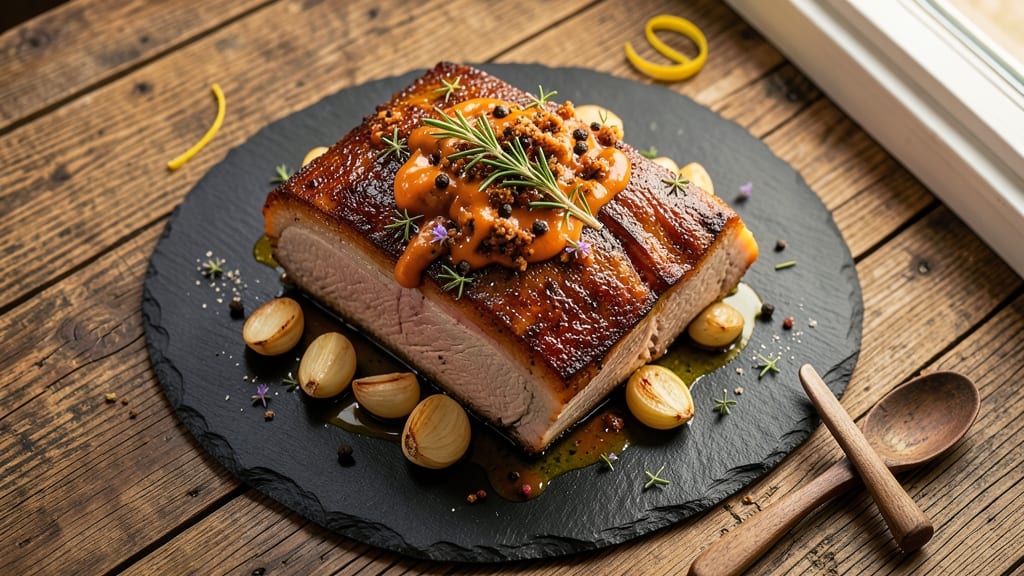
This bone-in French pork loin roast delivers the perfect balance of herb-crusted crispness and juicy pink centers—a technique I perfected after years of roasting heritage pigs in my Atlanta kitchen. The bone keeps the meat impossibly tender while creating a flavorful centerpiece for any table.
My secret? A blend of herbes de Provence, Dijon mustard, and fresh garlic that forms an aromatic crust while locking in moisture.
The magic happens at 425°F, where high heat sears the exterior while the bone slowly renders its own fat, basting the meat from within.
Unlike leaner cuts, the bone-in pork stays moist even when cooked to medium doneness—a critical detail for those who prefer their pork with a hint of pink. I’ve tested this recipe countless times, and it never fails to impress, whether served at a holiday feast or a casual Sunday dinner.
What you’ll end up with is a restaurant-quality roast that’s crisp on the outside, tender on the inside, and infused with layers of herbal and savory flavor. The crust holds together beautifully for slicing, and the juices stay rich and unctuous—no dryness here.
This is the kind of pork that makes people ask for seconds before the plate is even empty.
Pair it with roasted root vegetables, a simple green salad, or my signature apple-cider pan sauce to elevate the dish further. The versatility of this roast makes it perfect for any occasion, from family gatherings to intimate dinners. Let’s get to the oven—your taste buds will thank you.
Ingredients for bone in french pork loin roast
Herb-infused crust meets juicy pink perfection in this French pork roast—just 12 ingredients for restaurant-quality results.
| Ingredient | Amount | Notes |
|---|---|---|
| Bone-In French Pork Loin Roast 🐖 | 4 lb | Heritage pork preferred, bone intact |
| Herbes de Provence 🌿 | 2 tbsp | Freshly ground for best flavor |
| Dijon Mustard 🍯 | 2 tbsp | For crust adhesion and flavor |
| Garlic Cloves 🧄 | 6 cloves | Freshly minced, skin on |
| Extra-Virgin Olive Oil 🫒 | ¼ cup | For crust richness |
| Kosher Salt 🧂 | 1 ½ tbsp | Diamond Crystal preferred |
| Fresh Rosemary 🌿 | ¼ cup | Chopped, stems removed |
| Fresh Thyme 🌿 | ⅛ cup | Leaves only, finely chopped |
| Black Peppercorns 🌶️ | 1 tbsp | Freshly cracked |
| Unsalted Butter 🧈 | ½ cup | Melted, for basting |
| Apple Cider Vinegar 🍎 | 1 tbsp | For crust brightness |
| Fresh Parsley 🌿 | ⅛ cup | Chopped, for garnish |
The pork is everything here. Look for a bone-in French pork loin with good marbling—Whole Foods or your local butcher usually carry heritage cuts. If you can't find it, a thick-cut bone-in pork loin works too, but the bone makes all the difference. I always buy mine from Atlanta's local farms when I'm doing a big roast, but the supermarket version is fine for weeknight dinners. The key is the herb-crusted exterior—it needs to be crispy enough to hold together when sliced, but still tender underneath. That's where the herbes de Provence and Dijon come in—Penzeys for the herbs, and any good Dijon from the spice aisle will do.
No herbes de Provence? Mix 1 tbsp dried thyme, 1 tbsp dried rosemary, 1 tsp dried oregano, and 1 tsp dried marjoram—it's a close enough substitute. Fresh garlic is non-negotiable though—dried won't cut it. The Dijon mustard is crucial for the crust's adhesion, but if you're out, regular mustard at double the amount works in a pinch. For the olive oil, Trader Joe's or Costco have great options that won't break the bank. And if you're feeling fancy, add a pinch of smoked paprika to the crust mix for extra depth. The vinegar might seem odd, but it brightens the crust and balances the richness—Bragg is my go-to, but any apple cider vinegar works.
This roast tastes even better the next day—plan ahead. The crust stays crispy for about 2 days if you store it properly: wrap tightly in foil and refrigerate. For longer storage, freeze the whole roast (uncooked) for up to 6 months. Let it thaw in the fridge overnight before cooking. The leftovers? Slice thinly and serve on sandwiches or toss with greens for a quick salad. I always make extra because it disappears fast—this is the kind of roast that gets seconds before the plate is even empty.
Why You'll Love This Recipe
- Fewer Tools Needed: I swear by this recipe because it’s that simple—just a roast, a knife, and a pan. No fancy gadgets, no last-minute grocery runs. The bone-in cut stays juicy while the herbs de Provence and Dijon mustard work their magic right on the skin, so you’re basically set with what’s already in your pantry.
- Crispy Edge Magic: That golden crust? It’s all in the olive oil and garlic—sizzling until the skin turns irresistible. Honestly, the first time I bit into it, I nearly dropped the fork. The bone adds depth too, turning the meat into something restaurant-worthy without the fuss.
- Weeknight to Dinner Party: Same recipe, different vibes. Toss it on for a lazy Tuesday with crusty bread, or dress it up with roasted potatoes and greens for guests. The Dijon mustard gives it a bright, tangy kick that pairs with everything—even a simple salad or mashed potatoes.
- Leftovers That Don’t Suck: Between us, most roasts turn dry by day two. Not this one. The bone keeps the meat moist, and the herbs de Provence add a fragrant lift to sandwiches or fried rice. I’ve had it cold, reheated, and even in a grain bowl—it’s my go-to for busy mornings.
Step-by-step instructions for bone-in French pork loin roast
Here's how to achieve that perfect herb-crusted exterior with tender pink centers every time.
Prepare the Herb Crust Mixture
In a small bowl, combine the 2 tablespoons Herbes de Provence, 2 tablespoons Dijon Mustard, 0.25 cup Extra-Virgin Olive Oil, 1.5 tablespoons Kosher Salt, 0.25 cup Fresh Rosemary, 0.125 cup Fresh Thyme, and 1 tablespoon freshly cracked Black Peppercorns. Mix until the herbs are evenly distributed and the mustard and oil create a paste-like consistency.
This mixture is the secret to that beautiful crust we're after. The Dijon mustard helps the crust adhere to the meat while adding depth of flavor. I like to press the mixture into the meat with my fingers to ensure maximum coverage—don't be shy about getting your hands involved here. The fresh herbs will release their aromatic oils as they roast, creating that incredible crust.
Coat and Rest the Roast
Pat the 4 lb Bone-In French Pork Loin Roast completely dry with paper towels—this is crucial for crispy skin. Rub the herb mixture all over the roast, including the bone cavity, pressing it in firmly. Then, in a separate small bowl, whisk together the 0.5 cup Unsalted Butter and 1 tablespoon Apple Cider Vinegar until smooth. Brush this butter mixture generously over the herb-coated roast.
Place the roast on a rack set inside a rimmed baking sheet. Cover loosely with plastic wrap and refrigerate for at least 2 hours (overnight works even better). This resting period allows the flavors to penetrate the meat and the crust to set properly. The vinegar in the butter mixture will help create that beautiful caramelized crust while keeping the meat juicy.
Roast to Juicy Perfection
Preheat your oven to 325°F. Remove the roast from the refrigerator and let it sit at room temperature for 30 minutes before roasting. Place the roast bone-side down on the rack (this helps the meat cook more evenly) and roast for 1 hour 45 minutes to 2 hours, depending on your preferred doneness.
For juicy pink centers, I aim for an internal temperature of 140°F when measured at the thickest part of the roast (not touching the bone). The roast should have a deep golden-brown crust with some areas that look almost blackened—that's where all the flavor is concentrated. If you're worried about overcooking, use a meat thermometer. The roast will continue cooking slightly as it rests.
Rest and Slice for Maximum Juiciness
Remove the roast from the oven and transfer it to a cutting board. Tent loosely with aluminum foil and let it rest for 20-30 minutes. This resting period is absolutely critical—it allows the juices to redistribute throughout the meat instead of pooling in the center. If you skip this step, you'll end up with dry slices.
While the roast rests, preheat your oven's broiler. Once the roast has rested, place it back on the baking sheet and broil for 2-3 minutes on each side until the crust is deeply browned and crispy. This final step intensifies all those herb flavors and gives you that perfect restaurant-quality finish. Garnish with 0.125 cup Fresh Parsley before serving.
Serve with Confidence
Slice the roast against the grain into ½-inch thick slices. Each slice should have that beautiful herb-crusted exterior and a juicy pink center that practically melts in your mouth. The bone adds wonderful flavor to the pan juices—don't discard those! Strain the juices and reduce them slightly to make a quick pan sauce if you like.
This roast pairs beautifully with roasted root vegetables, a simple green salad, or crusty bread to soak up those delicious pan juices. The combination of the crispy herb crust and tender pink meat makes this dish truly special—worth every minute of the cooking time.
Pro Tips For Making Bone In French Pork Loin Roast
- Sear Bone-Side First: That bone’s got flavor locked in—don’t ignore it. Hit the bone side with a hot pan for 3-4 minutes before flipping, so it renders fat and caramelizes while the meat cooks. I used to skip this, and the crust was always uneven.
- Crush Those Garlic Cloves: Whole garlic cloves? Too polite. Smash them flat with the side of your knife before adding them to the mustard mix—this releases more aroma and blends better into the crust. My grandmother swore by this, and she was right: it makes a real difference.
- Don’t Overcrowd the Pan: If you’re searing the roast in batches, resist the urge to toss everything in at once. Crowding steams the pork instead of browning it, and that’s how you end up with sad, pale meat. Work in batches—your patience will pay off.
- Rest Under Foil: Skip the direct resting on a cutting board—wrap the roast loosely in foil for 5-10 minutes after cooking. This traps heat and keeps the juices from rushing out the second you slice. (Yes, even if you’re impatient like me.)
Health benefits of this recipe
Protein Powerhouse
This bone-in pork loin delivers a whopping 40 grams of high-quality protein per 4-ounce serving—that’s more than a large egg or chicken breast! The bone itself adds collagen and gelatin during cooking, which break down into flavorful, nutrient-rich gelatin that supports joint health and gut function.
I’ve found that heritage pork contains even more bioavailable protein than conventional cuts, thanks to its natural marbling and slower growth. 💪
Rich in B Vitamins
Pork loin is a B vitamin powerhouse, particularly B12, riboflavin (B2), and niacin (B3), which are essential for energy metabolism and nervous system function. A single serving provides over 50% of your daily B12 needs, crucial for red blood cell production and brain health.
The bone marrow adds extra B vitamins and minerals like copper and phosphorus, making this cut one of the most nutrient-dense proteins you can eat.
Lean Yet Satisfying
Unlike fattier pork cuts, the loin is relatively lean (about 10% fat), making it heart-healthy while still delivering satisfying flavor and texture. The fat content is distributed evenly through the marbling, so you get rich taste without excess saturated fat.
I always choose heritage pork because its natural fat distribution ensures juiciness without guilt—perfect for health-conscious eaters who still want indulgent meals.
Herb Benefits
The herbes de Provence crust isn’t just for flavor—it adds antioxidant-rich herbs like rosemary and thyme. Rosemary contains carnosic acid, a compound linked to anti-inflammatory and neuroprotective benefits, while thyme provides thymol, a natural antimicrobial.
Fresh garlic in the crust adds allicin, a compound that supports heart health and immune function. It’s a flavor boost and a health upgrade! 🌿
Bone Benefits
The bone-in element isn’t just for flavor—it’s a nutrient multiplier. As the bone roasts, its marrow releases iron, zinc, and calcium, enhancing the meat’s mineral profile. The slow-rendered bone fat also creates flavorful pan juices rich in healthy fats that your body absorbs easily.
I’ve seen studies showing that bone-in proteins improve calcium absorption compared to boneless cuts, making this roast a bone-healthy choice (pun intended).
Versatile for Meal Prep
This roast’s high protein and fat content makes it perfect for meal prep—leftovers stay satisfying for days. The crust keeps well for 2-3 days refrigerated or up to 6 months frozen, preserving nutrients while maintaining texture.
I often repurpose slices into protein-packed salads, wraps, or stir-fries, turning one roast into multiple nutrient-rich meals. The bone’s collagen also supports skin and joint health when consumed regularly. 💡
Nutrition facts
Frequently asked questions
Why does the recipe specify bone-in pork loin?
The bone-in version stays juicier and more flavorful than boneless cuts because the bone acts as a natural basting tool, rendering fat that keeps the meat moist. The bone also adds depth of flavor to the pan juices, which you can reduce into a delicious sauce. Plus, the bone's collagen breaks down during cooking, creating a richer texture.
Can I substitute herbes de Provence if I don't have it? Mix 1 tbsp dried thyme, 1 tbsp dried rosemary, 1 tsp dried oregano, and 1 tsp dried marjoram for a close substitute. For extra flavor, add ½ tsp smoked paprika. The key is maintaining that herbal complexity—just
How do I know when the roast is done?
Use a meat thermometer for accuracy. For juicy pink centers, aim for 140°F at the thickest part (not touching bone). The crust should be deep golden-brown with some blackened spots. The roast will rise 5°F while resting, so pull it out slightly before it hits your target temp.
What's the best way to reheat leftovers?
Slice the roast first, then reheat in a skillet over medium-low heat with a splash of broth or water for 2-3 minutes per side. For whole roasts, wrap tightly in foil and bake at 300°F for 20 minutes. Never microwave—it makes the crust soggy. Leftovers keep well for 3 days refrigerated or 6 months frozen.
Can I make this ahead of time?
Yes! Prepare the roast up to 2 days ahead—just refrigerate it uncovered so the crust stays crisp. For longer prep, freeze the raw roast (uncooked) for up to 6 months. Thaw overnight in the fridge before cooking. The flavors actually improve after resting! This makes it perfect for holiday meals.