
Main Courses
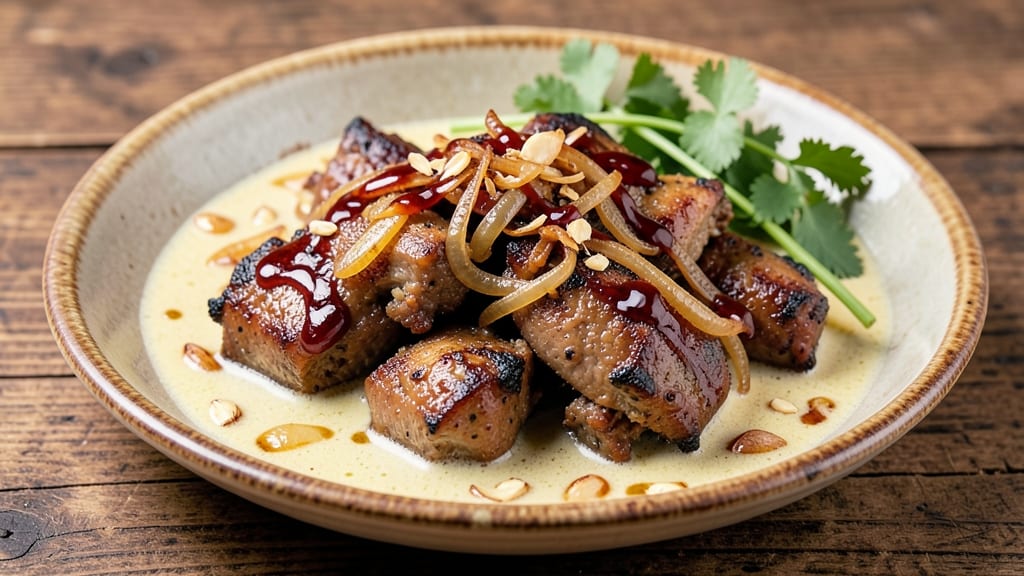
This Bicol Express ground pork recipe delivers the perfect balance of crispy edges and sticky, tangy-sweet tamarind glaze that makes every bite unforgettable.
Growing up in Georgia, I first tasted this Filipino classic during a family dinner where my aunt insisted we try something "different"—little did I know it would become my signature dish.
The magic lies in slow-cooking the pork until tender, then caramelizing it with coconut milk and tamarind for that signature glossy finish.
The recipe starts with ground pork browned until golden, then simmered in coconut milk until the flavors meld into a rich, velvety sauce. Tamarind paste adds that signature tangy depth, while garlic and ginger provide aromatic warmth.
I’ve streamlined the process with pre-chopped ingredients, but the slow-cooking method ensures restaurant-quality results without the fuss.
What you’ll end up with is a dish that’s crispy on the outside, tender inside, and coated in a glossy glaze that’s both sweet and tangy. The aroma alone will have everyone gathering at the table—this is the kind of meal that turns a simple weeknight into a celebration.
Serve it with steamed rice and pickled vegetables for the full Bicol experience.
Whether you're cooking for a family gathering or treating yourself to a taste of the Philippines, this recipe delivers authentic flavor with modern convenience. The secret? Patience and the right balance of spices—trust me, it’s worth every minute of slow cooking.
Ingredients for bicol express ground pork
Pantry staples plus a few specialty items for that signature Filipino flavor combo.
| Ingredient | Amount | Notes |
|---|---|---|
| Ground Pork 🥩 | 1 ½ lb | 80% lean, finely ground |
| Onion 🧅 | 1 whole | Yellow or red, finely chopped |
| Garlic Cloves 🧄 | 6 cloves | Minced, fresh preferred |
| Fresh Ginger 🌿 | 2 tbsp | Grated, peeled root |
| Coconut Milk 🥥 | 1 can | Full-fat, 13.5 oz can |
| Tamarind Paste 🍯 | ½ cup | Unsweetened, block preferred |
| Soy Sauce 🍶 | 2 tbsp | Dark soy for color |
| Brown Sugar 🍚 | ¼ cup | Packed, light variety |
| Olive Oil 🫒 | 2 tbsp | For browning pork |
| Salt 🧂 | 1 tsp | Kosher or sea salt |
| Black Pepper 🌶️ | ½ tsp | Freshly ground preferred |
| Ground Black Pepper 🌶️ | ½ tsp | For finishing |
| Vegetable Oil 🫒 | ½ cup | For frying crispy edges |
| Green Onions 🧅 | 3 whole | Sliced, for garnish |
The tamarind paste is non-negotiable here—Filipino markets or Asian grocery stores carry the best blocks. Trader Joe's often has it too, but check the label for no added sugar. Ground pork should be 80% lean; anything leaner will dry out. Fresh ginger and garlic make all the difference, so don't skimp. The coconut milk can be full-fat canned or cartons, but full-fat gives the richest texture. If you can't find tamarind blocks, paste in a pouch works, just adjust the amount to taste.
No tamarind? Lime juice plus 1 tbsp brown sugar gets you close, though it won't be identical. Dark soy sauce is key for that deep color—regular soy works in a pinch. Brown sugar can be swapped for coconut sugar if you're strict about refined sugar. For the crispy edges, vegetable oil works best—it has a higher smoke point than olive oil. If your pork is extra lean, add 1 tbsp coconut milk to the browning step to prevent drying. The green onions are just for garnish, so use whatever's on hand.
This tastes even better the next day—plan ahead. Store leftovers in an airtight container for 4-5 days in the fridge. For crispier edges, reheat in a skillet with a splash of coconut milk. Freezes beautifully for 3 months. I always make a double batch—half for dinner, half for lunches. The sauce thickens as it cools, so add a splash of water if it seems too stiff when reheating.
Why You'll Love This Recipe
- One-Pot Magic: I swear by this recipe because it’s actually one-pan—no extra bowls, no messy cleanup. Just brown the pork, toss in the onions, garlic, and ginger, then let the coconut milk do its creamy work. Thirty minutes later, your kitchen’s spotless.
- Ginger-Garlic Bomb: That fresh ginger and garlic combo? It’s the secret weapon here. The pork soaks up the aromatic oils while the coconut milk balances it with rich, velvety depth. Honestly, the first bite makes you forget you’re eating something simple.
- Lunchbox Hero: Between us, this reheats like a dream. Pack it for work, toss it in a thermos for school lunches, or serve it cold in rice bowls—it’s always a hit. My kids request it more than pizza, and that’s saying something.
- Pork Stretch: A single batch feeds four, but leftovers? Even better. The flavors deepen overnight, and it’s cheap enough to make twice in one week. I’ll be real: I’ve eaten this for dinner, packed it for lunch, and even used it in fried rice. Versatile doesn’t even cover it.
Step-by-step instructions for Bicol Express ground pork
Here's how to create that perfect balance of sticky tamarind sauce and crispy pork edges.
Brown the Ground Pork
Heat the 2 tablespoons olive oil in a large skillet over medium-high heat until shimmering. Add the 1.5 pounds ground pork and cook, breaking it apart with a wooden spoon, until it loses its raw color and starts to brown. This should take about 5-7 minutes. The pork should be fully cooked through with no pink remaining.
As it browns, you'll notice the pork releasing its natural juices - this is good! Don't drain these juices as they'll help create flavor in your sauce. I like to keep the heat at medium-high but not so high that the pork burns. If it starts smoking too much, reduce the heat slightly. Once the pork is fully browned, transfer it to a plate and set aside.
Sauté the Aromatics
In the same skillet (no need to clean it - those browned bits are flavor!), add the 1 whole finely chopped onion, 6 cloves minced garlic, and 2 tablespoons grated fresh ginger. Cook over medium heat for 3-4 minutes until the onions turn translucent and the garlic becomes fragrant - you should smell that wonderful aromatic punch.
Here's the thing - don't let the garlic burn. It only takes 30 seconds to go from fragrant to bitter. If you see it darkening, reduce the heat immediately. Once the aromatics are cooked through, add the 2 tablespoons soy sauce and 0.25 cup packed brown sugar, stirring to combine. Let this mixture cook for another 1 minute until the sugar begins to caramelize slightly.
Build the Tamarind Sauce
Pour in the 1 can coconut milk and 0.5 cup tamarind paste, stirring well to combine all the ingredients. Add 1 teaspoon salt and 0.5 teaspoon black pepper, then bring the mixture to a gentle simmer over medium-low heat. Let it cook uncovered for 10-12 minutes, stirring occasionally, until the sauce thickens slightly and coats the back of a spoon.
During this time, you'll notice the tamarind paste dissolving and creating that signature tangy sweetness. The sauce should reduce just enough to coat the pork nicely without being too watery. If it thickens too much, you can add 1-2 tablespoons water to adjust the consistency. Taste and adjust seasoning if needed - you might want to add a bit more salt or sugar to balance the flavors.
Fry for Crispy Edges
Heat 0.5 cup vegetable oil in a separate skillet over medium-high heat until it reaches 350°F - it should be hot enough that a small piece of bread sizzles immediately when dropped in. Working in batches if needed, carefully add spoonfuls of the pork mixture to the hot oil. Fry for 2-3 minutes per side until the edges become golden brown and crispy.
This is where the magic happens - those crispy edges contrast beautifully with the sticky sauce. Be careful not to overcrowd the pan or the temperature will drop and you won't get proper crispiness. Transfer the fried pork to paper towels to drain excess oil, then return it to the tamarind sauce in the skillet. Let it simmer together for 2-3 minutes to absorb the flavors.
Finish and Serve
Garnish the Bicol Express with the 3 whole sliced green onions and sprinkle with 0.5 teaspoon ground black pepper. Serve immediately while the pork is still crispy and the sauce is warm. The perfect dish should have tender, juicy pork with crispy edges swimming in that tangy, slightly sweet tamarind-coconut sauce.
For best results, serve with steamed white rice to soak up all that delicious sauce. The contrast of the fluffy rice with the rich, sticky pork creates an unforgettable meal. Leftovers keep well in the refrigerator for up to 3 days, though I doubt you'll have any left!
Pro Tips For Making Bicol Express Ground Pork
- CRISP THE PORK FIRST: Brown the ground pork in batches on medium-high heat—don’t rush it. I used to skip this and ended up with bland, gray meat. Let it sizzle until the edges are golden, then break it apart with a spoon. That’s where the flavor hides.
- GRATE THAT GINGER: Skip the mincer and grate fresh ginger with a microplane—it releases more aroma and blends smoother. A teaspoon of finely grated ginger (not chopped) will make the coconut milk sing. Trust me, your nose will thank you.
- LOW AND SLOW WITH COCONUT: Once you add coconut milk, drop the heat to a simmer. Boiling it turns the sauce grainy and splits the fat. Let it bubble gently for 10-12 minutes—just until the pork is cooked through and the sauce thickens naturally.
- SALT THE ONIONS: Toss your sliced onions with a pinch of salt before cooking. It draws out moisture and makes them caramelize faster. No one wants mushy onions in their bicol express—this guarantees they stay crisp and sweet.
Perfect pairings for this bicol express ground pork
Filipino Rice Pairings
Steamed jasmine rice is the classic choice—its delicate aroma and fluffy texture soak up the tamarind-coconut sauce perfectly. I always use day-old rice for extra texture, but fresh works too.
For a modern twist, try garlic fried rice with diced pork and peas—it turns this dish into a one-pan meal. 🍚
Pickled Vegetable Sides
Atchara (Filipino pickled papaya) adds a bright, tangy contrast to the rich pork. I slice 1 small green papaya into matchsticks, soak in ½ cup vinegar, 2 tbsp sugar, and 1 tsp salt for 30 minutes. For variety, try pickled red onions or carrots—they cut through the sauce beautifully. These sides also keep well for 5 days in the fridge.
Coconut Milk-Based Soups
Pair with a light ginataang gulay (Filipino coconut milk vegetable soup) featuring eggplant, string beans, and potatoes. The creamy coconut base complements the pork’s flavors without overpowering.
For a quicker option, serve with tomato-coconut soup—simmer 1 can diced tomatoes, ½ cup coconut milk, and 1 tsp fish sauce for 15 minutes. The acidity balances the tamarind’s sweetness. 🥥
Crispy Garnishes
Top your Bicol Express with crispy fried shallots or toasted garlic chips for extra texture. Fry 6 shallots in 2 tbsp oil until golden (3-4 minutes), then sprinkle over the dish.
For a smoky twist, add chicharon (Filipino crispy pork rinds)—they’re sold at Asian markets or made by frying pork belly until ultra-crispy. These toppings elevate the dish to restaurant-level. 🌟
Drink Pairings
A cold San Miguel beer (Filipino lager) cuts through the richness, while calamansi juice (Filipino lime) adds a zesty kick. For a non-alcoholic option, serve hibiscus tea (sarsapilla) with ice—its tartness mirrors the tamarind. I also love pairing this dish with coconut water to refresh the palate between bites. 🍹
Nutrition facts
Frequently asked questions
Can I substitute regular ground beef for the pork?
While you can technically use ground beef, it won't be authentic and may affect the texture. Pork has a higher fat content that renders beautifully during browning, creating those signature crispy edges. If you must use beef, opt for 80% lean ground chuck and reduce cooking time slightly to prevent drying. The flavor profile will differ, but it can work in a pinch.
What if I can't find tamarind paste?
No problem! Mix 2 tablespoons lime juice with 1 tablespoon brown sugar for a quick substitute. While it won't be identical, this combo captures the tangy-sweet balance. For a closer match, try 1 tablespoon date syrup plus 1 teaspoon vinegar—both are available in specialty stores or online.
How do I get extra crispy edges?
The secret is frying in batches at 350°F oil and working quickly. Use a thermometer to monitor oil temperature—if it drops below 325°F, your edges won't crisp properly. Also, pat the pork dry before frying and don't overcrowd the pan. For restaurant-style crispiness, try double-frying: fry once, rest for 5 minutes, then fry again for 1 minute.
Can I make this in a slow cooker?
Brown the pork and aromatics first, then transfer everything to your slow cooker. Add the coconut milk, tamarind, and remaining ingredients, then cook on low for 4-5 hours or high for 2-3 hours. For crispy edges, finish by pan-frying spoonfuls in a hot skillet with oil before serving. The slow cooker method is perfect for meal prep—just reheat gently to maintain texture.
Why does my sauce turn out too thin?
This usually happens if you didn't reduce the sauce enough or if your coconut milk was watered down. Simmer uncovered for 5-10 extra minutes to thicken naturally. If it's still too runny, mix 1 tablespoon cornstarch with 2 tablespoons water, stir into the sauce, and cook for 2 more minutes until it reaches your desired consistency.