
Main Courses
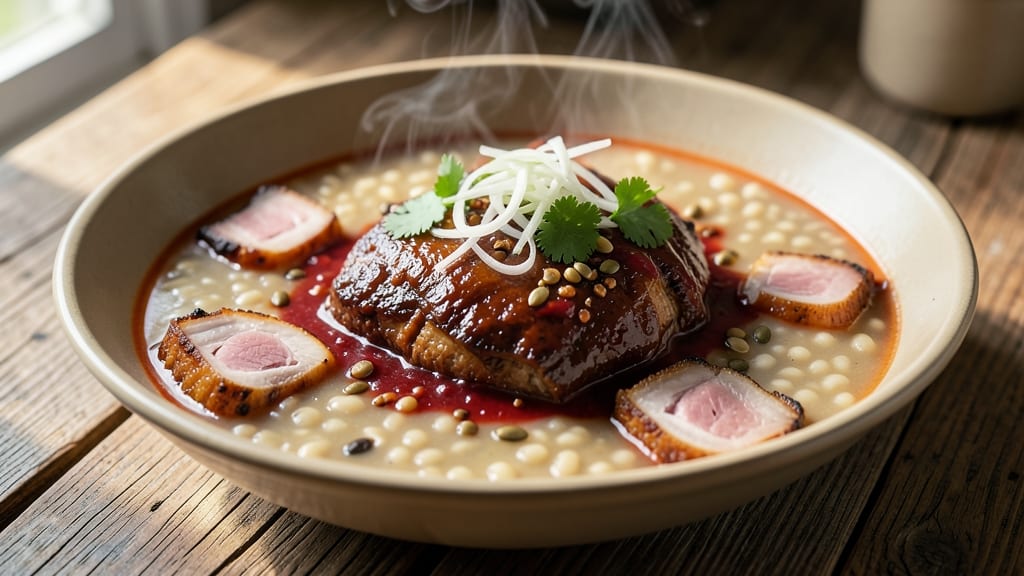
This authentic red pork pozole recipe brings the soul of Mexican home cooking to your table in one deep, smoky pot. 🔥 Growing up in Georgia, I learned how pork transforms into something magical when slow-cooked with hominy and spices—just like my abuela used to make.
The secret lies in rendering fat from the pork shoulder and head, which builds rich, caramelized depth in the broth while keeping every bite tender.
The beauty of pozole is its balance: the pork shoulder breaks down into shreds, the pork head adds gelatinous richness, and hominy soaks up the smoky flavors. Traditional garnishes like radishes, lettuce, lime, and oregano elevate each bowl, turning a simple stew into a celebration.
This isn’t just a recipe—it’s a tradition you can recreate at home with patience and the right technique.
What makes this version special is the smoky, homestyle comfort that comes from low-and-slow cooking. The broth develops layers of flavor as it simmers, while the pork stays juicy and the hominy absorbs just enough to be tender without falling apart.
The result? A steaming bowl of authentic, restaurant-quality pozole that tastes like a family gathering in every spoonful.
Serve it with warm tortillas, pickled onions, and a side of avocado—this is the kind of dish that disappears quickly. Once you try it, you’ll understand why pozole has been a staple for generations. Let’s get cooking!
Ingredients for authentic red pork pozole
Six pounds of pork, smoky chiles, and hominy soaked overnight—this is where tradition meets your pot.
| Ingredient | Amount | Notes |
|---|---|---|
| Pork Shoulder (Boston Butt) 🥓 | 3 lb | Bone-in for richer flavor |
| Pork Head (or Spare Pork Jowl) 🐷 | 1 whole | For gelatinous richness |
| Dried Pozole Hominy (White or Yellow) 🌽 | 2 cups | Soaked overnight, drained |
| Dried Guajillo Chiles 🌶️ | 4 whole | Stems/seeds removed |
| Dried Ancho Chiles 🌶️ | 2 whole | Stems/seeds removed |
| Garlic Cloves 🧄 | 6 cloves | Peeled, lightly toasted |
| White Onions 🧅 | 2 whole | Quartered, skin on |
| Tomatoes (Roma or Vine) 🍅 | 4 whole | Roasted, peeled |
| Bay Leaves 🌿 | 2 whole | Fresh preferred |
| Ground Cumin 🌿 | 1 tbsp | Toasted for depth |
| Mexican Oregano 🍃 | 1 tbsp | Dried, not Italian |
| Salt 🧂 | 1 ½ tsp | Kosher or sea salt |
| Black Peppercorns 🌶️ | 1 tsp | Freshly cracked |
| Limes 🍋 | 4 whole | Juiced, zest reserved |
| Fresh Cilantro 🌿 | ½ cup | Chopped, for garnish |
| Radishes 🥕 | 2 whole | Thinly sliced, for garnish |
| Iceberg Lettuce 🥬 | 1 head | Thinly sliced, for garnish |
The pork shoulder and head are non-negotiable for that gelatinous richness and deep flavor. Look for bone-in pork shoulder at your local butcher or Costco—it’s cheaper per pound and adds incredible depth. If you can’t find a whole pork head, substitute with pork jowl, but don’t skip it entirely. The chiles? MexGrocer or H-Mart carry dried guajillo and ancho in bulk—check for vibrant color and no moisture. Toast them lightly in a dry pan before soaking to deepen their smokiness. The hominy? Maseca or Bob’s Red Mill brands are reliable, but soak it for at least 8 hours—overnight is best.
No pork head? Double the jowl or add 1 cup pork broth to mimic the richness. Short on guajillo chiles? Ancho chiles alone work at double the amount, but you’ll lose that fruity depth. For the tomatoes, roasting them (broil-side up on a sheet pan) brings out their sweetness—don’t skip this step. The garlic and onions should be charred slightly at the edges for that smoky aroma. And if you’re feeling fancy, toast the cumin and oregano in the same pot where you’ll cook the pozole—they’ll infuse the fat with flavor. Fresh oregano is ideal, but dried works at half the amount if that’s all you’ve got.
This pozole tastes even better the next day—plan ahead. Store it in the fridge for up to 5 days or freeze portions for 3 months. The hominy absorbs flavors beautifully, so reheat gently with a splash of water or broth. Garnishes like radishes, cilantro, and lime should be added fresh when serving—they brighten up every bowl. Double the recipe if you’re feeding a crowd; pozole only gets better with more time to develop. Serve with warm tortillas and pickled onions for the full experience.
Why You'll Love This Recipe
- One-Pot Magic: I swear by this recipe for lazy nights—just toss the pork shoulder, pork head (or jowl), and hominy into a pot with the chiles and broth, then let it simmer. No chopping, no fuss, and the flavors meld into something rich and smoky without me lifting a finger after the initial setup.
- Deep Umami Bomb: That pork head? It’s the secret weapon—crispy edges and gelatinous richness that turn this into something ridiculously satisfying. The guajillo and ancho chiles give it a smoky-sweet depth that lingers, while the hominy adds that perfect chewy bite. Honestly, one bowl and I’m already planning the next batch.
- Crowd-Pleaser Flex: This dish works for game days, family dinners, or even a cozy Sunday with friends. Serve it with radishes, lime, and tortillas for a full spread, or keep it simple with just a sprinkle of cilantro. My in-laws asked for the recipe after one bite—no exaggeration.
- Budget Feast: Pork shoulder and jowl stretch for miles, and dried chiles cost pennies compared to fresh. A single batch feeds six, and leftovers reheat like a dream—better the next day, if you ask me. Between us, this is how I feed my crew without breaking the bank.
Step-by-step instructions for authentic red pork pozole
This is where the magic happens—where smoky chiles meet tender pork in a simmering embrace.
🔥 Step 1: Prepare the Pork and Hominy
Start by soaking the 2 cups dried pozole hominy in plenty of cold water for at least 8 hours (overnight works best). This rehydration step is crucial—the hominy should be plump and tender when ready. While it soaks, prepare the pork: cut the 3 lb pork shoulder into 2-inch chunks and separate the pork head into larger sections. The bone-in pieces will infuse the broth with rich gelatinous depth.
In a large, heavy pot (I prefer Dutch ovens for even heat distribution), combine the pork pieces, 2 whole white onions (quartered with skin on), 4 whole tomatoes (halved), 6 garlic cloves (lightly toasted), 2 bay leaves, 1 tbsp toasted ground cumin, 1 tbsp Mexican oregano, 1.5 tsp salt, and 1 tsp cracked black peppercorns. Add enough cold water to cover everything by about 2 inches. Bring to a boil over high heat, then immediately reduce to a gentle simmer—this prevents the meat from toughening.
🍳 Step 2: Build the Smoky Chile Base
While the pork simmers, prepare the chiles: remove stems and seeds from the 4 dried guajillo chiles and 2 dried ancho chiles, then toast them lightly in a dry skillet over medium heat for 30 seconds per side until fragrant. This step deepens their smoky flavor without burning. Transfer the toasted chiles to a bowl and cover with 2 cups hot water from the pot. Let them steep for 15 minutes to soften.
After 2 hours of simmering the pork (until the meat is fork-tender), carefully strain the broth through a fine-mesh sieve into a clean pot, pressing on the solids to extract maximum flavor. Discard the solids. Return the strained broth to the pot and add the steeped chiles and their soaking liquid. Bring to a gentle simmer again—you're building the foundation for that authentic red pozole color and depth.
🥘 Step 3: Cook the Hominy and Finish the Broth
Drain the soaked hominy and add it to the simmering broth. The hominy should float just below the surface—if it's too far down, add a splash of hot water. Return the pork to the pot and simmer uncovered for another 1.5 hours, stirring occasionally. The broth should reduce slightly, intensifying its flavor. Here's the thing—don't rush this step. The longer the pork cooks in its own juices, the more tender and flavorful it becomes.
Taste the broth and adjust seasoning: add more salt if needed, or a pinch of Mexican oregano for depth. The hominy should be tender but still hold its shape when pierced with a fork. If it's too mushy, it's overcooked—pozole hominy should have a satisfying bite.
🍽️ Step 4: Serve with Traditional Garnishes
Ladle the hot pozole into bowls, reserving some broth for serving. For garnishes, prepare the 0.5 cup chopped fresh cilantro, thinly sliced radishes from the 2 whole radishes, and thinly sliced iceberg lettuce from the 1 head. Squeeze the juice from 4 whole limes and have them ready for serving alongside.
Let everyone customize their bowls: the crisp radishes cut through the richness, the cilantro adds brightness, and the lime juice balances the smoky depth. The key to authentic pozole is this communal experience—everyone builds their own perfect bite. Serve with warm corn tortillas and watch as your guests transform this humble one-pot meal into something truly special.
Pro Tips For Making Authentic Red Pork Pozole
- CHAR THE CHILES RIGHT: Toss your guajillo and ancho chiles in a hot, dry skillet for 30 seconds per side before soaking—this cracks their skins so they soften faster and release more color. I used to just soak them raw, and the broth always looked dull. (Yes, even if you're impatient like me.)
- SIMMER THE PORK LOW AND LONG: After the initial sear, drop the pork shoulder and head into the broth and cook it at a bare simmer—no boiling—for at least 3 hours. I learned this the hard way when my meat turned out chewy because I rushed it. The slow cook keeps the collagen melting just right.
- SKIP THE RAW HOMINY SHORTCUT: Soak your dried pozole hominy in hot (not boiling) water for at least 2 hours, then parboil it for 10 minutes before adding to the broth. Using it straight from the package without prepping makes the texture gummy. Trust me, the extra work is worth it.
- SAVE THE BROTH FAT: Strain the broth through a fine-mesh sieve, then skim the fat off the top after it cools slightly—it’ll solidify and make it easier to remove. I used to toss it all, but that rich fat is what gives pozole its depth. (Your future self will thank you.)
Common mistakes when making perfect results
Skipping the Soak
One of the biggest mistakes is rushing the hominy soak. I’ve seen cooks toss dried hominy straight into the pot, thinking it’ll soften as it simmers—but that’s a recipe for mushy, flavorless kernels. The 8-hour soak is non-negotiable; it’s how the hominy absorbs the broth’s depth.
If you’re short on time, at least soak it for 4 hours—but trust me, overnight is worth it. The texture difference is night and day. 🌽
Overcrowding the Pot
Too many pork pieces in too small a pot leads to uneven cooking and a weak broth. I’ve made this mistake with my Dutch oven—when the pot is packed, the pork steams instead of simmering, and the broth turns murky.
Use a 6-quart pot minimum for this recipe; the pork should have room to move. If you’re feeding a crowd, work in batches or use a larger pot. The goal is tender meat and a rich, concentrated broth, not a watery stew.
Ignoring the Pork Head
The pork head isn’t just for flavor—it’s the secret to that luxurious, gelatinous texture that makes pozole feel like a hug in a bowl. I once made pozole without it (using only shoulder and jowl) and the broth lacked that silky mouthfeel.
If you can’t find a whole head, substitute with pork jowl or add 1 cup pork broth—but don’t skip it entirely. The collagen from the head transforms the broth into something truly special. 🐷
Rushing the Simmer
Pozole isn’t a quick meal—it’s a labor of love. I’ve seen cooks impatiently crank the heat to speed things up, but that’s how you end up with tough pork and a thin broth. The magic happens at a gentle simmer over low heat for at least 4 hours total.
The longer it cooks, the more the flavors meld and the pork becomes fork-tender. If you’re in a hurry, at least give it 3 hours—but don’t expect the same depth of flavor.
Using the Wrong Chiles
Not all dried chiles are created equal. I’ve had pozole turn out bland when cooks used pasilla or arbol chiles instead of guajillo and ancho. Guajillo brings fruity sweetness, while ancho adds deep, earthy richness—they’re the backbone of red pozole.
If you can’t find them, double the ancho chiles and add a pinch of smoked paprika for depth. Toasting them lightly is also crucial—it deepens their flavor without burning. 🌶️
Skipping the Garnishes
Pozole isn’t just about the broth—it’s about the toppings. I’ve served pozole without radishes, cilantro, or lime, and it felt incomplete. The radishes add crunch, the cilantro brightens the flavors, and the lime cuts through the richness.
Serve everything on the side so guests can customize their bowls—it’s part of the tradition. And for the love of pozole, don’t skip the lime! The acidity balances the smoky, spicy broth perfectly. 🍋
Nutrition facts
Frequently asked questions
Can I make pozole without a pork head?
You can substitute with 1 cup pork broth or pork jowl to maintain richness, but the pork head adds that signature gelatinous texture. The collagen from the head creates a silky broth that's essential for authentic pozole. If you're missing it, add an extra 30 minutes of simmering time to help the broth thicken naturally.
How do I find dried guajillo and ancho chiles?
Look for them in the Mexican foods aisle at stores like H-Mart, MexGrocer, or even well-stocked grocery chains. If you can't find them fresh, check online retailers like Amazon or specialty spice shops. For a substitute, use double the amount of ancho chiles plus a pinch of smoked paprika to mimic the smoky depth.
Can I make pozole in a slow cooker? Follow the same steps but transfer everything to your slow cooker after the initial 2-hour simmer on the stovetop. Cook on low for 6-8 hours or high for 4-5 hours. The slow cooker will help tenderize the pork beautifully while maintaining that rich broth. Just
What's the best way to reheat pozole?
Reheat gently on the stovetop over medium-low heat with a splash of water or broth to prevent drying out. Never microwave it directly—this can make the hominy mushy. If storing, keep it in the fridge for up to 5 days or freeze portions for 3 months. The flavors actually improve after the first day!
How spicy should pozole be?
Traditional pozole has a mild, smoky heat from the chiles—not overwhelming spice. The heat comes from the chiles themselves, not added chili powder. For extra heat, add a pinch of cayenne or chili powder to taste, but the authentic version relies on the natural flavor of the chiles. The broth should be flavorful, not fiery.