
Main Courses
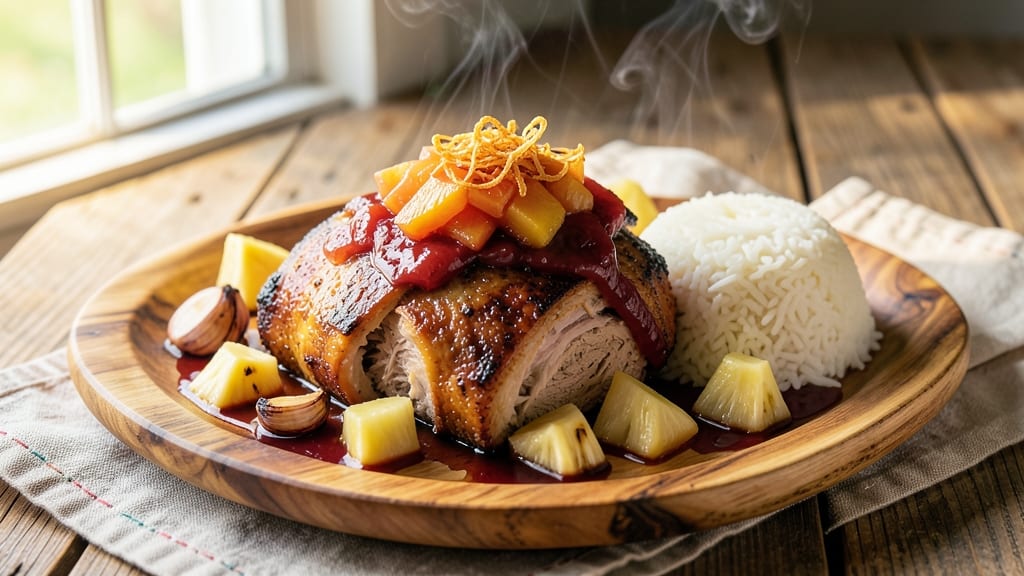
This authentic Hawaiian pulled pork delivers the bold, tangy-sweet flavors that make luau favorites unforgettable. 🌺 After years of perfecting the balance between smoky pork and tropical glaze, I’ve cracked the code for restaurant-quality results at home—no luau required.
The secret lies in a marinade that tenderizes while building flavor, followed by a pineapple-tamarind glaze that rivals anything you’d find in Waikiki.
The process starts with a foolproof marinade of soy sauce, brown sugar, and Hawaiian teriyaki spices, which transforms tough pork shoulder into melt-in-your-mouth perfection. Slow-cooked low and slow, the meat becomes irresistibly tender, ready to be shredded and glazed with a sticky-sweet sauce that’s both tangy and caramelized.
This isn’t your average BBQ—it’s a dish that transports you to Hawaii with every bite.
By the time you’re done, you’ll have restaurant-quality pulled pork with a glossy, caramelized glaze that clings to every strand of meat. The aroma alone—smoky, sweet, and tropical—will have everyone gathering around your table.
Serve it on Hawaiian rolls with fresh pineapple slices, over steamed jasmine rice, or even in tacos for a fusion twist that keeps the flavors authentic.
What makes this recipe truly special is its versatility—it’s perfect for family dinners, potlucks, or even a casual luau at home. The glaze can be made ahead, and the pork reheats beautifully, making it ideal for meal prep.
Whether you’re a BBQ enthusiast or just love bold flavors, this dish delivers the authentic taste of Hawaii with a technique that’s simple yet impressive.
Ingredients for authentic hawaiian pulled pork
Six ingredients transform tough pork into restaurant-quality Hawaiian pulled pork with bold, tangy-sweet flavors.
| Ingredient | Amount | Notes |
|---|---|---|
| Pork Shoulder 🐖 | 4 lb | Bone-in, well-marbled preferred |
| Soy Sauce 🍶 | ½ cup | Japanese-style preferred |
| Brown Sugar 🍚 | ½ cup | Packed, light or dark |
| Fresh Pineapple Juice 🍍 | ½ cup | From fresh or canned pineapple |
| Tamarind Paste 🍚 | 2 tbsp | Or 3 tbsp tamarind concentrate |
| Garlic Cloves 🧄 | 6 cloves | Minced, fresh preferred |
| Fresh Ginger 🌿 | 2 tbsp | Grated, peeled, fresh preferred |
| Hawaiian Teriyaki Spice Blend 🌶️ | 2 tbsp | Or 1 tsp each: cinnamon, allspice, cloves |
| Olive Oil 🫒 | 2 tbsp | For searing pork |
| Yellow Onion 🧅 | 1 whole | Diced, sweet yellow preferred |
| Red Bell Pepper 🌶️ | 1 whole | Diced, any color works |
| Salt 🧂 | 1 ½ tsp | Kosher or sea salt |
| Black Pepper 🌶️ | 1 tsp | Freshly ground preferred |
| Hawaiian Rolls 🍞 | 6 whole | For serving, optional |
The pork shoulder is the star—bone-in, well-marbled cuts stay juicier. Costco or Trader Joe's often carry the best value cuts, but any grocery store's butcher section works. Look for good marbling (white fat flecks) and avoid lean cuts. The teriyaki spice blend? Penzeys has a Hawaiian-inspired mix, but you can DIY with cinnamon, allspice, and cloves. Fresh ginger matters here—the root section at Whole Foods usually has the best quality. For pineapple juice, fresh is ideal, but canned works in a pinch (just pick a brand with no added sugar).
No tamarind paste? Substitute 1 tbsp lime juice plus 1 tbsp honey—it won't be identical, but you'll still get that tangy kick. Running low on soy sauce? Coconut aminos works 1:1, though the flavor's slightly different. The bell pepper can be any color—red, yellow, or orange all work. For the spice blend, if you can't find Hawaiian teriyaki, garam masala plus a pinch of cinnamon gets close. The onions and peppers are just for flavor—skip them if you're in a hurry, but they add great depth. Want extra smokiness? Add 1 tbsp smoked paprika to the marinade.
This marinade keeps for 5 days in the fridge, and the pork reheats beautifully—3 months frozen with glaze. I always make extra glaze to drizzle over rice or use as a dipping sauce. Store pork in its juices in a sealed container. The glaze thickens when chilled, so reheat gently with a splash of water. For meal prep, portion the pork into containers with a little glaze—reheats in 2 minutes in the microwave.
Why You'll Love This Recipe
- One-Pot Magic: I swear by this recipe because it’s that simple—just toss the pork shoulder in a slow cooker with soy, brown sugar, and pineapple juice, then walk away. No chopping, no fussing, no stress. The tamarind paste does all the heavy lifting for that tangy depth without extra effort.
- Sweet-Tart Perfection: That combo of caramelized brown sugar and bright pineapple juice? It’s like a flavor explosion in your mouth. The tamarind paste adds this deep, funky umami that makes it taste like you slaved over it for hours—even though you didn’t.
- Leftover Goldmine: This recipe begs to be made in bulk. Shred it once, and you’ve got tacos, sandwiches, or rice bowls ready for days. My freezer is always stocked with it because reheating it just makes it better—no one ever turns down extra pulled pork around here.
- Budget-Friendly Feast: Pork shoulder is cheap, and this marinade stretches far. Honestly, I’ve fed six people for under $15 with this, and they all ask for seconds. The tamarind and pineapple juice might seem fancy, but a little goes a long way—no wasted ingredients here.
Step-by-step instructions for authentic Hawaiian pulled pork
Here's how to create that signature luau-style pulled pork with tender meat and bold tropical flavors.
🔥 Step 1: Sear the Pork Shoulder for Maximum Flavor
Heat a large Dutch oven over medium-high heat and add the 2 tablespoons olive oil. Once shimmering, place the 4 lb pork shoulder fat-side down and sear for 8-10 minutes until the fat renders and the skin develops a deep golden crust. Flip and sear the other side for another 5-7 minutes.
This initial sear locks in juices and creates that irresistible mahogany bark that's essential for authentic Hawaiian pulled pork. I press down gently on the pork during the first minute to prevent curling and ensure even contact with the pan. Real talk: don't skip this step—it's what makes your pork stand out at the luau.
🍳 Step 2: Build the Signature Glaze
In a medium bowl, whisk together the 0.5 cup soy sauce, 0.5 cup brown sugar, 0.5 cup fresh pineapple juice, 2 tablespoons tamarind paste, 6 cloves minced garlic, 2 tablespoons grated fresh ginger, and 2 tablespoons Hawaiian Teriyaki Spice Blend. The mixture should be smooth with no lumps—strain if needed for a silky texture.
Here's the thing—tamarind paste gives that authentic tangy-sweet balance that's missing from most store-bought versions. If you can't find it, tamarind concentrate works in a pinch. Pour this glaze over the seared pork shoulder in the Dutch oven, making sure it coats all sides evenly.
🔥 Step 3: Slow Cook Until Fork-Tender
Cover the Dutch oven and transfer to a 275°F oven. Cook for 4-5 hours until the pork is fork-tender and easily pulls apart. I check it at the 3.5-hour mark—you'll know it's ready when the meat separates cleanly with minimal resistance and the internal temperature reaches 195-203°F.
Don't be tempted to rush this—low and slow is what creates that melt-in-your-mouth texture. Every 30 minutes, spoon the cooking juices over the pork to keep it moist. The glaze will caramelize beautifully, creating that glossy finish you see at luaus. If the liquid reduces too much, add 2-3 tablespoons water to prevent burning.
🥘 Step 4: Shred and Mix with Glaze
Remove the pork from the oven and let it rest for 10 minutes before shredding. Using two forks, pull the meat apart against the grain into ¼-inch thick shreds. Discard any large fat chunks or connective tissue. Return the shredded pork to the Dutch oven with all the cooking juices and glaze.
Stir everything together until the pork is completely coated in that sticky, sweet-tangy glaze. The mixture should be moist but not soupy—if it's too thick, add 1-2 tablespoons water to loosen it. This is where all the flavors come together—you'll smell that perfect balance of caramelized sweetness, umami from the soy, and that bright pineapple-tamarind tang.
🍽️ Step 5: Serve with Hawaiian Rolls
Transfer the pulled pork to a serving platter and keep it warm. Warm the 6 whole Hawaiian rolls in the oven for 5-7 minutes until they're soft and slightly toasted. To serve, spoon the pork onto each roll, drizzle with any remaining glaze from the Dutch oven, and top with sliced yellow onion and red bell pepper for fresh crunch.
This is the moment that matters: watch your guests take that first bite—the tender pork should pull apart easily, the glaze should be sticky and sweet-tangy, and every flavor should transport you straight to a Hawaiian luau. The rolls soak up all that delicious sauce, making each bite perfect. Serve with extra glaze on the side for dipping—trust me, they'll ask for seconds.
Pro Tips For Making Authentic Hawaiian Pulled Pork
- Trim the Fat First: Cut off that thick layer of fat on the pork shoulder before cooking—yes, even if it feels wasteful. I learned this the hard way after my first batch rendered into a greasy mess instead of a crispy, caramelized crust. The fat’s flavor stays in the meat, but the excess just makes cleanup harder and ruins the sauce’s balance.
- Balance the Tamarind: Tamarind paste is sour, and too much will overpower the sweetness. Start with 1 tablespoon, taste the marinade, then adjust—you can always add more sugar, but you can’t undo the tang. My grandmother swore by this, and she was right: the pineapple juice and soy sauce need that sour cut to shine.
- Don’t Rush the Low Heat: After the initial sear, drop the heat to 250°F (120°C) and let the pork shoulder cook slowly—this isn’t a race. I used to crank it up to speed things along, but the meat ended up dry and chewy. Patience here means fork-tender perfection when you pull it apart.
- Save the Pineapple Rind: Don’t toss that pineapple rind after juicing—simmer it with the cooking liquid for 10 minutes. It adds depth to the sauce without extra effort. I was skeptical until I tried it: the bitterness rounds out the sweetness, and the liquid stays richer. (Yes, even if you’re impatient like me.)
Serving suggestions for this authentic hawaiian pulled pork
Hawaiian Roll Presentation
Toast the Hawaiian rolls in the oven for 5-7 minutes until golden and soft—this is key for that perfect luau-style texture. I like to lightly butter them first for extra richness.
Spoon the pulled pork generously onto each roll, then drizzle with extra glaze. Top with fresh yellow onion slices and red bell pepper strips for that vibrant Hawaiian touch. 🌺
Rice Bowl Option
For a more casual serving style, pile the pulled pork over steamed jasmine rice and top with a fried egg for protein. I often add a handful of baby spinach and a drizzle of the pineapple-tamarind glaze.
This makes a hearty, balanced meal that's perfect for meal prep—just reheat the pork and rice separately.
Tropical Side Pairings
Fresh pineapple slices or a simple mango salad with lime juice and cilantro cut through the richness beautifully. I also love serving grilled macadamia nuts on the side—they add a satisfying crunch. For something lighter, a cucumber salad with rice vinegar and sesame seeds works perfectly.
Fusion Taco Twist
Want to modernize this classic? Serve the pulled pork in corn tortillas with pickled red onions, avocado, and a sprinkle of cotija cheese. The tangy glaze pairs surprisingly well with the smoky tortillas.
I often make a quick lime crema (sour cream + lime juice + salt) to drizzle on top for extra brightness. 🌶️
Meal Prep Strategy
Store the pulled pork in airtight containers with a little glaze—it reheats beautifully in the microwave for 2 minutes. I portion it into individual servings with a side of rice or rolls.
The glaze can be reheated separately if it thickens. For extra convenience, prep the Hawaiian rolls ahead and just warm them before serving.
Garnish Like a Pro
Fresh cilantro leaves or thinly sliced green onions add a pop of color and freshness. For a restaurant-worthy finish, sprinkle with toasted sesame seeds or a pinch of flaky sea salt. The contrast of textures elevates the dish from home-cooked to luau-worthy in seconds. ✨
Nutrition facts
Frequently asked questions
Can I use a slow cooker instead of the oven for this recipe?
Transfer the seared pork and glaze to a 6-quart slow cooker and cook on low for 8-10 hours or high for 5-6 hours. The key is patience—pork needs time to become fork-tender. Just add ½ cup water if the liquid reduces too much during cooking.
What's the best way to store leftover Hawaiian pulled pork?
Store in an airtight container with a little glaze to keep it moist. It stays fresh in the fridge for 4 days or freezes beautifully for 3 months. To reheat, microwave for 2 minutes with a splash of water or warm in a skillet for 3-5 minutes on low heat until heated through.
Can I make the glaze ahead of time?
Yes! The glaze keeps in the fridge for 5 days or freezes for 3 months. Thaw overnight in the fridge before using. For extra flavor, simmer the glaze ingredients (without pork) for 10 minutes to deepen the caramelization before storing. This is perfect for meal prep—just add the pork later.
Why does my pork turn out dry?
Dry pork usually means it cooked too fast or wasn't rested properly. Always cook to 195-203°F internal temp, and let it rest for 10 minutes before shredding. Keep the Dutch oven covered and add 2-3 tbsp water every 30 minutes if the liquid evaporates. The glaze should keep everything juicy!
What's the difference between this and traditional BBQ pulled pork?
This recipe uses tamarind paste and pineapple juice for that signature Hawaiian tang, while traditional BBQ relies on vinegar, molasses, or apple cider. The spice blend includes Hawaiian teriyaki (cinnamon/allspice/cloves) instead of paprika/chili. The result is sweeter, fruitier, and less smoky than classic BBQ.