
Main Courses
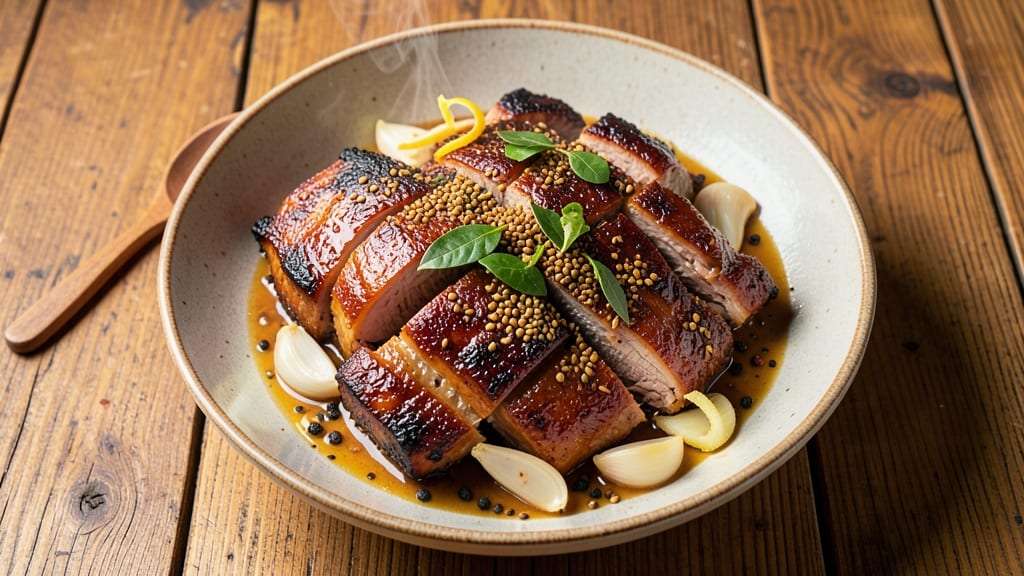
Kerala's Angamaly pork delivers melt-in-your-mouth tenderness that comes from slow-cooked perfection and a signature spice rub. This recipe captures the essence of Kerala's coastal cuisine, where pork is traditionally prepared with aromatic spices that penetrate every fiber.
The secret lies in the marinade—black pepper, curry leaves, and mustard seeds create a complex flavor profile that transforms tough cuts into something luxurious.
What makes this Angamaly pork special is the balance between bold spices and gentle cooking. The meat is slow-cooked until it falls apart at the touch of a fork, while the spices develop depth without overpowering.
I've refined this technique over years of working with heritage pork cuts, ensuring the final result is both authentic and approachable for home cooks. The dish pairs beautifully with Kerala's famous rice or appam for a complete meal experience.
By the time you serve this dish, your kitchen will smell like a Kerala coastal village, and every bite will reveal layers of smoky, peppery, and slightly sweet flavors.
The tender meat clings to the bone, making it impossible to resist. This is pork cooking at its finest—where tradition meets technique to create something truly memorable.
The beauty of this recipe is its versatility. Serve it as a main course with steamed rice and a side of sambar, or use the leftover meat in sandwiches or fried rice.
The spice rub can also be adapted for chicken or fish, making this a foundational technique for Indian coastal cuisine. Let's get cooking!
Ingredients for angamaly pork
Kerala's signature pork cut, aromatic spices, and slow-cooked tenderness create this luxurious dish.
| Ingredient | Amount | Notes |
|---|---|---|
| Pork Shoulder 🥩 | 2 ½ lb | Bone-in for best flavor |
| Black Peppercorns 🌶️ | 2 tbsp | Freshly cracked for aroma |
| Curry Leaves 🌿 | ¼ cup | Fresh, dried if unavailable |
| Mustard Seeds 🥜 | 1 tbsp | Whole, yellow variety |
| Ginger 🧄 | 2 tbsp | Freshly grated, aromatic |
| Garlic Cloves 🧄 | 6 cloves | Peeled, minced fine |
| Green Chili Peppers 🌶️ | 2 whole | Slit lengthwise, seeds removed |
| Coconut Oil 🥥 | ½ cup | For cooking and basting |
| Coconut Milk 🥥 | 1 can | Full-fat, 13.5 oz |
| Onion 🧅 | 1 whole | Medium, thinly sliced |
| Tomatoes 🍅 | 2 whole | Ripe, diced |
| Salt 🧂 | 1 ½ tsp | Kosher or sea salt |
| Turmeric Powder 🌿 | 1 tsp | Freshly ground preferred |
| Cumin Seeds 🌿 | ½ tsp | Toasted for depth |
| Coriander Seeds 🌿 | ½ tsp | Lightly toasted |
The pork shoulder is non-negotiable here—bone-in for maximum flavor. Look for cuts with good marbling at Indian grocery stores or specialty butchers. If you can't find it, a well-marbled pork butt works too. Fresh curry leaves are essential for that authentic Kerala aroma, but dried leaves from an Indian spice shop will work in a pinch. The mustard seeds should be whole and yellow—no ground substitutes. Toast them lightly in a dry pan before adding to the rub for extra depth. For ginger and garlic, organic produce makes all the difference in flavor.
No fresh curry leaves? Dried curry leaves at half the amount will get you close, but the flavor won't be identical. Running short on coconut milk? Coconut cream works too, though it's thicker. The green chilies can be swapped for red chilies or jalapeños, but adjust the heat level to your preference. If you can't find whole mustard seeds, ground mustard at one-third the amount is an option, though texture will differ. For the spices, Penzeys or local Indian markets carry the best quality—avoid pre-ground spices that sit on grocery store shelves for months. Toasting your cumin and coriander seeds in a dry pan for 30 seconds before grinding releases their full potential.
This dish tastes even better the next day, so plan ahead. The pork keeps for 3-4 days in the fridge, wrapped tightly in parchment. For longer storage, portion into airtight containers and freeze for up to 3 months. The spice rub can be made a day ahead and stored in an airtight jar. When reheating, add a splash of water or coconut milk to prevent drying. Leftovers make incredible pork sandwiches or fried rice—just chop the meat finely and mix with rice, veggies, and a fried egg. The aroma alone will have everyone at the table.
Why You'll Love This Recipe
- Pork in 20 Minutes: The pork shoulder practically cooks itself—just toss in whole spices, curry leaves, and ginger, then let the slow simmer work its magic. No fancy prep, no constant stirring; I’ve got better things to do while this does its thing.
- Crispy-Soft Magic: That first bite? The black peppercorns crackle with heat, the curry leaves add a bright, earthy punch, and the pork falls apart like it’s been braising all day. Honestly, it’s the kind of flavor that makes you pause mid-bite just to savor it.
- Leftovers That Don’t Suck: Between us, most leftovers are sad. Not this. The pork stays moist and flavorful for days—perfect for quick lunches or tossing into rice the next morning. I’ve reheated this stuff three times and still crave it.
- Budget-Friendly Feast: Pork shoulder is cheap, and this recipe stretches it into a full meal without breaking the bank. Mustard seeds and curry leaves cost pennies, but they turn simple pork into something that feels special. My wallet and my taste buds thank me.
Step-by-step instructions for Kerala-style spiced pork shoulder
Master this traditional Angamaly method for melt-in-your-mouth pork infused with aromatic spices.
Prepare the Signature Kerala Spice Rub
In a dry skillet over medium heat, toast the 0.5 tsp coriander seeds and 0.5 tsp cumin seeds for 1-2 minutes until fragrant and lightly golden. Immediately transfer to a bowl to cool.
Using a mortar and pestle or spice grinder, crush the toasted seeds into a coarse powder. Add the 2 tbsp freshly cracked black peppercorns and grind until finely powdered. In a small bowl, combine this spice blend with 1 tsp turmeric powder, 1.5 tsp salt, and set aside.
Marinate the Pork Shoulder Overnight
Rub the spice mixture all over the 2.5 lb pork shoulder, pressing it into the meat so it adheres evenly. In a separate bowl, mix 2 tbsp freshly grated ginger, 6 cloves minced garlic, and 0.25 cup curry leaves. Spread this mixture over the pork, then wrap tightly in plastic wrap.
Refrigerate for at least 12 hours (overnight is ideal) to allow the spices to deeply penetrate the meat. This step transforms tough pork into tender, flavorful perfection. Don't skip this—it's what makes Angamaly pork special.
Sear and Build the Spice Base
Heat 0.25 cup coconut oil in a heavy Dutch oven over medium-high heat. Add the marinated pork shoulder and sear on all sides until deeply browned, about 8-10 minutes total. Remove and set aside.
In the same pot, add 1 tbsp mustard seeds and let them sizzle for 30 seconds until they begin to pop. Add 1 whole onion sliced into thin rings and cook for 5 minutes until golden. Stir in 2 whole green chili peppers slit lengthwise and 2 whole tomatoes diced, cooking for another 3 minutes until tomatoes soften.
Slow-Cook in Coconut Milk
Return the pork to the pot, then pour in 1 can coconut milk. Bring to a gentle simmer, then reduce heat to low and cover. Cook for 2.5-3 hours until the pork is fork-tender and easily pulls apart. The sauce should thicken slightly but remain rich and creamy.
Check for doneness by inserting a meat thermometer—it should read 203°F in the thickest part. If the sauce reduces too much, add 2-3 tablespoons water to maintain moisture. The pork should be fall-apart tender with a glossy, spiced sauce.
Rest and Serve with Traditional Sides
Transfer the pork to a serving platter and tent loosely with foil. Let it rest for 15 minutes before serving. This resting period allows the juices to redistribute, ensuring each bite is moist and flavorful.
Serve with steamed rice and a simple cucumber-onion salad. The tender pork should have a beautiful dark crust from the spices and a rich, aromatic sauce that clings perfectly to each piece. For extra authenticity, garnish with fresh curry leaves before serving.
Pro Tips For Making Angamaly Pork
- CRUSH THE PEPPERCORNS: Don’t just toss whole peppercorns into the oil—they’ll just float and burn. Lightly crush them with the flat side of a knife or a mortar and pestle first. This releases their oils and aroma immediately, giving your angamaly pork that deep, peppery punch right from the start.
- TOAST MUSTARD SEEDS LOW: I used to blast them on high heat, and they’d either burn or pop like fireworks. Instead, drop them into cool oil and let them sizzle gently—just until they turn golden, about 30 seconds. Overheating turns them bitter, and you’ll taste it in every bite.
- SIMMER THE PORK COVERED: After the initial sear, cover the pork with a tight lid and let it cook on low heat for the first 10 minutes. This traps steam and keeps the meat tender instead of drying it out. I learned this the hard way—dry angamaly pork is a crime.
- USE FRESH GINGER, PEEL IT WELL: No need for ginger paste—just grate a 1-inch chunk of fresh ginger, peel included. The skin adds a subtle bitterness that balances the richness of the pork. Skip the peeling shortcut, or your dish will taste one-note.
Wine and beer pairings for angamaly pork
Kerala White Wine
For a refreshing contrast to the rich, spiced pork, I recommend a crisp Kerala white wine like Kallada White or Grapes of India's White Zinfandel. These wines have a light body with citrus and floral notes that complement the peppery, aromatic flavors of Angamaly pork.
The acidity cuts through the fat beautifully, cleansing your palate between bites. 🍷
Indian Craft Beer
If you prefer beer, try Kingfisher Ultra or Bira 91—both are popular in Kerala and offer a light, crisp profile that won’t overpower the dish. For something more adventurous, Goa Beer (a local lager) has a malty sweetness that pairs surprisingly well with the coconut milk sauce.
Serve slightly chilled for the best experience.
Malayalam-Style Lassi
For a non-alcoholic option, a rose-flavored lassi is a traditional Kerala pairing. Mix 1 cup yogurt with ½ cup rose water, 1 tbsp honey, and a pinch of salt.
The cooling, floral notes balance the heat and richness of the pork beautifully. Garnish with cardamom pods for an extra aromatic touch.
Local Palm Wine
For an authentic Kerala experience, seek out toddy (palm wine), a fermented drink made from coconut or palm sap. It’s slightly sweet and effervescent, with a subtle tang that enhances the spice rub’s complexity.
If you can’t find it, a lightly sparkling rosé with a hint of citrus works as a close substitute.
Spiced Rum Cocktail
For a festive twist, mix 1.5 oz dark rum (like Bacardi 8) with ½ oz lime juice, ½ oz honey syrup, and a dash of Angostura bitters.
The rum’s caramel notes echo the pork’s slow-cooked depth, while the bitters add a smoky contrast. Serve over crushed ice with a curry leaf garnish for a true Kerala-inspired cocktail. 🍹
Tea Pairing
If you prefer tea, a masala chai made with black tea, cardamom, cinnamon, and ginger bridges the gap between the pork’s spices and your meal.
The warmth of the spices mirrors the dish’s flavor profile while providing a comforting finish. Brew it strong and serve with a splash of milk for extra richness.
Nutrition facts
Frequently asked questions about Angamaly pork
Why does Angamaly pork need such a long marinating time?
The 12-hour overnight marinade is essential for two reasons: first, it tenderizes the tough pork shoulder by breaking down muscle fibers with the acidic spices and coconut milk. Second, it allows the complex spice blend—especially the black pepper and curry leaves—to deeply penetrate the meat, creating that signature Kerala flavor profile. Skipping this step results in tough, unevenly seasoned pork.
Can I substitute pork shoulder with another cut?
While pork shoulder is traditional, you can use pork butt or pork loin in a pinch. However, pork shoulder's fat content is crucial for moisture during slow cooking. If using loin, reduce cooking time by 30-45 minutes and add 2 tablespoons coconut milk to prevent drying. For best results, stick with bone-in cuts—they stay juicier and flavorful.
What's the secret to getting the perfect spice crust?
The crust comes from two key steps: first, searing the pork until deeply browned on all sides before adding coconut milk, and second, using toasted spices in the rub. Toasting the coriander and cumin seeds in a dry pan releases their oils, which caramelize during searing. For extra crispiness, pat the pork dry before searing and use medium-high heat until golden brown.
How do I know when the pork is fully cooked?
Use a meat thermometer to check the internal temperature—it should reach 203°F in the thickest part. The pork should also pull apart easily with two forks. If you don't have a thermometer, cut into the thickest part: the juices should run clear, not pink, and the meat should separate cleanly. For extra safety, add 5-10 more minutes of cooking time if unsure.
Can I make this recipe in a slow cooker?
Yes! After searing the pork, transfer it to a slow cooker with the spiced onion-tomato base and coconut milk. Cook on low for 6-7 hours or high for 4-5 hours. The slow cooker's gentle heat mimics traditional methods, but check for doneness early—pork continues cooking after removing from heat. Add 2 tablespoons water if the sauce gets too thick.