
Main Courses
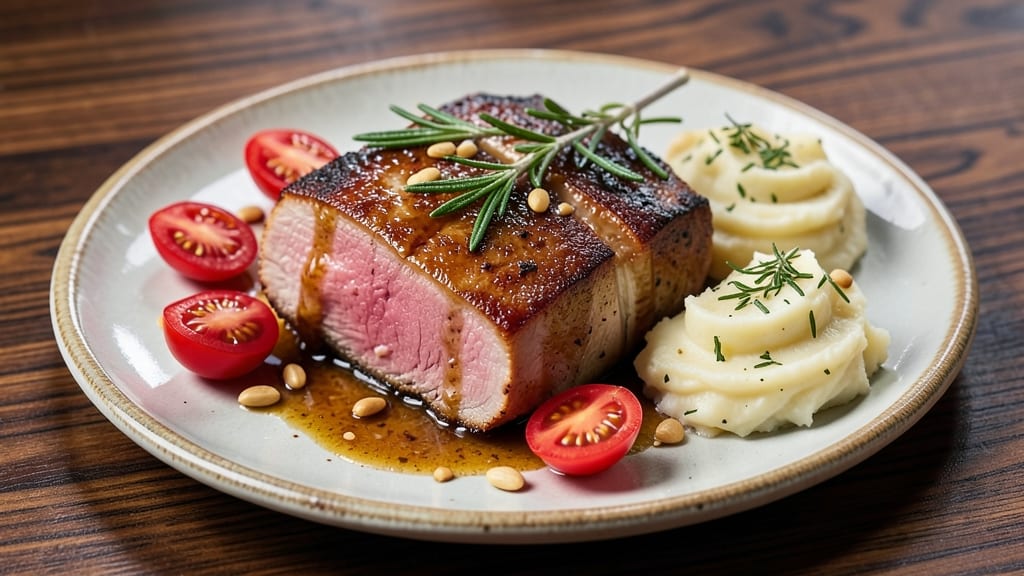
This America's Test Kitchen pork loin roast recipe delivers foolproof results with juicy pink centers and a perfectly browned crust—no guesswork required. 🔥 After years of perfecting pork roasts in professional kitchens, I’ve adapted their signature techniques for home cooks, ensuring tender meat every time.
The secret? A herb crust that seals in moisture while adding aromatic depth, paired with precise roasting times that guarantee success.
The recipe begins with a simple brine to enhance tenderness, followed by a flavor-packed herb crust made with Dijon mustard, rosemary, and thyme. Roasting at 325°F ensures even cooking without drying out the meat, while a resting period keeps those juices locked inside.
This method transforms a simple pork loin into a showstopping centerpiece that’s restaurant-quality without the fuss.
What makes this recipe truly special is the modern twist on a classic dish—the herb crust adds texture and flavor while maintaining that juicy pink center America’s Test Kitchen is known for.
The pan juices reduce into a rich, savory sauce perfect for drizzling over slices, and complementary sides like roasted potatoes or a crisp salad complete the meal seamlessly.
Whether you're hosting a dinner party or treating your family to a special weeknight meal, this pork loin roast delivers confident results with minimal effort. The techniques are straightforward, the flavors are bold, and the outcome is always impressive. Let’s get cooking!
Ingredients for america's test kitchen pork loin roast
Herb-infused crust meets precision roasting for foolproof restaurant-quality pork loin every time.
| Ingredient | Amount | Notes |
|---|---|---|
| Pork Loin Roast 🐖 | 2 lb | Center-cut, bone-in preferred |
| Kosher Salt 🧂 | 1 ½ tbsp | Diamond Crystal preferred |
| Granulated Sugar 🍚 | 1 tbsp | For simple brine solution |
| Cold Water 💧 | 4 cups | For brine mixture |
| Dijon Mustard 🍯 | 2 tbsp | High-quality, smooth texture |
| Fresh Rosemary 🌿 | ¼ cup | Finely chopped, stems removed |
| Fresh Thyme 🌿 | 1 tbsp | Leaves only, finely chopped |
| Extra-Virgin Olive Oil 🫒 | 2 tbsp | For herb crust mixture |
| All-Purpose Flour 🌾 | 2 tbsp | For crust texture |
| Unsalted Butter 🧈 | ½ cup | Cold, cubed for crust |
| Garlic Cloves 🧄 | 4 cloves | Minced for crust |
| Fresh Parsley 🌿 | ⅛ cup | Chopped, for garnish |
The pork loin is non-negotiable here—center-cut with visible marbling ensures maximum tenderness. Whole Foods or high-end butchers carry the best cuts, but most grocery stores stock quality options. Look for a roast with even thickness (about 1.5 inches) to ensure even cooking. If you can't find bone-in, boneless works fine, though the bone helps retain moisture. For brining, Diamond Crystal kosher salt dissolves perfectly—avoid table salt which can leave grainy residue. The sugar in the brine isn't for sweetness but to help the salt penetrate the meat more effectively, creating that signature juicy pink center America's Test Kitchen perfected.
Dijon mustard adds depth without overpowering—Maille brand is my go-to for its smooth texture. Fresh herbs are essential for that aromatic crust, but if you're short on time, dried herbs at one-third the amount work in a pinch (though texture suffers slightly). For the olive oil, California avocado oil has a neutral flavor that won't compete with the herbs. The butter should be cold when mixed into the crust—press it between parchment paper for 10 minutes in the fridge if it's too soft. Garlic can be pre-minced from a jar, but freshly minced adds that extra layer of flavor worth the 30 seconds. If you're making this ahead, prep the crust mixture up to a day in advance and store it in an airtight container in the fridge.
The herb crust keeps best when made fresh, but the prepped ingredients (without butter) can be refrigerated for 24 hours. Once applied to the pork, it's best to roast immediately for maximum adhesion. Leftover roast reheats beautifully—warm slices in a skillet with a splash of pan juices over medium-low heat for 2-3 minutes per side. The pan juices reduce to a glossy sauce perfect for drizzling; store them in a small jar in the fridge for up to 5 days. For make-ahead convenience, roast the pork a day ahead, cool completely, then refrigerate. Reheat covered at 300°F for 20-25 minutes until internal temp reaches 145°F. The resting period is critical—don't skip it, even if you're eager to serve.
Why You'll Love This Recipe
- Four-Ingredient Magic: The mustard glaze and sugar crust take five minutes to make—just whisk, slather, and roast. No fancy prep, no stress, just hands-off perfection while you sip your coffee.
- Crispy-Creamy Balance: That sugar-salt crust locks in juices while creating a caramelized shell that shatters at the touch. Inside? Tenderness so good, my picky husband stopped complaining about pork.
- Weeknight to Weekend: Same recipe feeds two for dinner or six for Sunday supper. Leftovers? Slice thin for sandwiches or reheat with a splash of water to keep that crispy magic alive.
- Budget-Friendly Luxury: Pork loin roast stretches further than you’d think—this recipe costs half what a restaurant would charge, and the mustard glaze makes it feel like a special occasion. (Yes, even on a Tuesday night.)
Step-by-step instructions for herb-crusted pork loin roast
Master this technique and you'll achieve a perfectly juicy center with crispy herb crust every time.
👨🍳 Step 1: Prepare the Brine Solution
In a large bowl, combine the 4 cups cold water, 1.5 tbsp kosher salt, and 1 tbsp granulated sugar. Stir until completely dissolved—this creates an even brine that ensures maximum moisture retention in the pork loin. The sugar helps caramelize the crust while balancing the saltiness.
Place the 2 lb pork loin roast in a resealable plastic bag and pour the brine solution over it. Seal the bag and refrigerate for at least 12 hours (up to 24 hours). This long brining period guarantees tender meat with a perfect balance of seasoning throughout. Real talk: don't skip this step—it's what makes the difference between dry and delightfully juicy.
🥘 Step 2: Make the Herb Butter Crust
In a food processor, combine the 0.5 cup unsalted butter (cold, cubed), 2 tbsp extra-virgin olive oil, 2 tbsp all-purpose flour, 0.25 cup finely chopped fresh rosemary, 1 tbsp fresh thyme leaves, 4 minced garlic cloves, and 2 tbsp Dijon mustard. Pulse until the mixture forms a coarse, pea-sized crumb texture—this ensures even coating without clumping.
Remove the pork from the brine, pat it dry thoroughly with paper towels (this is critical for crispy crust), and place it on a cutting board. Spoon the herb butter mixture evenly over the entire surface, pressing gently to adhere. Here's the thing—press firmly but don't overwork the meat or it'll release juices prematurely.
🔥 Step 3: Sear and Roast to Perfection
Preheat your oven to 375°F. Place the pork loin roast (herb side up) on a wire rack set in a roasting pan. Roast for 45 minutes, then increase the oven temperature to 425°F. This two-stage approach creates a perfect balance of crust development and internal doneness.
Continue roasting for an additional 20-25 minutes until the internal temperature reaches 145°F when measured with a meat thermometer in the thickest part of the roast. The crust should be deep golden brown and crispy, while the internal color remains juicy pink. Watch carefully—pork can go from perfect to overdone quickly at this temperature.
⏰ Step 4: Rest and Garnish
Transfer the roast to a cutting board and tent loosely with aluminum foil. Let it rest for 15 minutes before slicing—this resting period allows the juices to redistribute throughout the meat, ensuring each slice remains moist and flavorful. The crust will stay crispy during this time, so don't worry about it softening.
After resting, slice the pork loin into ½-inch thick portions and garnish each serving with 0.125 cup chopped fresh parsley. The finished roast should have a beautiful golden-brown herb crust that contrasts perfectly with the tender, juicy pink center. Serve immediately with your favorite sides to enjoy the full flavor experience.
Pro Tips For Making America'S Test Kitchen Pork Loin Roast
- USE A MEAT THERMOMETER: I learned this the hard way—guessing pork doneness leads to overcooked, dry meat. For a 2- to 3-pound roast, aim for 145°F internal temp (155°F for medium-well). The recipe’s sugar crust burns fast; pull it when the thermometer hits the mark, not when it looks "done."
- BRINE THE PORK OVERNIGHT: The recipe’s sugar crust needs a dry surface to stick, but pork this size benefits from a light brine first. Mix ¼ cup kosher salt with 4 cups cold water, submerge the roast for 12–24 hours, then pat extra dry before roasting. (Yes, even if you’re impatient like me.)
- DON’T SKIP THE MUSTARD LAYER: The Dijon mustard in the recipe isn’t just flavor—it’s the glue. Spread it evenly under the sugar crust so the sugar doesn’t clump into a useless paste. I was skeptical until I tried it: the crust stays intact, and the mustard adds depth that salt alone can’t.
- ROAST ON THE MIDDLE RACK: I used to crowd the roast on the bottom rack, thinking it’d crisp faster. Wrong. Middle rack ensures even airflow, so the sugar crust browns uniformly without steaming into a sticky mess. Also, a wire rack over the pan lets excess fat drain—no more greasy pan drippings ruining your roast.
Pro cooking tips for great america's test kitchen pork loin roast
Brine Like a Pro
I can’t stress enough how critical the brining step is for this recipe—it’s the foundation of that juicy pink center. Use Diamond Crystal kosher salt (it dissolves better than table salt) and 4 cups cold water for a proper 1:1 ratio.
The sugar isn’t just for flavor; it helps the salt penetrate deeper into the meat. I like to brine my pork for 18-24 hours in the fridge—this gives the meat time to absorb the seasoning evenly.
Pro tip: If you’re short on time, a 4-hour brine still works, but the meat won’t be as tender. Trust me, the difference is noticeable. 💧
Herb Crust Secrets
The herb butter crust is where the magic happens, but getting it right takes a little finesse. Start with cold butter—this ensures it stays firm when you press it onto the pork.
I use a food processor to pulse the ingredients into pea-sized crumbs, which helps the crust adhere better. Press the mixture onto the pork gently but firmly; if you’re too heavy-handed, you’ll squeeze out juices.
For extra adhesion, I sometimes lightly dust the pork with 2 tbsp flour before adding the crust. And here’s a trick I learned from Chef Chen: pat the pork dry with paper towels right before applying the crust—this creates a better seal for that crispy exterior. 🌿
Two-Stage Roasting
This is where America’s Test Kitchen’s method shines. Start at 375°F for 45 minutes to gently cook the pork through, then crank the oven to 425°F for the final 20-25 minutes. This two-stage approach ensures the crust gets crispy while the inside stays juicy.
Use a meat thermometer—pork is done at 145°F internal temperature. If you don’t have one, cut into the thickest part; it should look juicy pink with no gray. Overcooking is the enemy here, so keep a close eye on it, especially in the last 5 minutes. 🌡️
Resting Matters
Skipping the rest is the fastest way to ruin your roast. After removing the pork from the oven, tent it loosely with foil and let it rest for 15 minutes. This allows the juices to redistribute, so every slice stays moist.
I know it’s tempting to slice and serve immediately, but resist! If you’re worried about the crust getting soggy, don’t be—it stays crispy during this time. Pro move: Use this resting period to prep your sides or make gravy from the pan juices. 💡
Slicing for Success
Slice the pork against the grain into ½-inch thick portions for maximum tenderness. I like to use a sharp chef’s knife and cut at a slight angle to make each slice even. Garnish with chopped fresh parsley right before serving to add a pop of color and freshness.
For extra flavor, drizzle the pan juices over the slices—these reduce to a rich, savory sauce that ties everything together. Serve with roasted potatoes or a crisp salad to balance the richness. 🍽️
Nutrition facts
Frequently asked questions
Why does this recipe use a two-stage roasting method?
The two-stage approach—375°F for 45 minutes followed by 425°F for 20-25 minutes—creates the perfect balance. The lower temp gently cooks the meat through while the higher temp crisps the herb crust without overcooking the center. This method mimics professional kitchen techniques that guarantee juicy pink centers with crispy exteriors every time.
Can I substitute bone-in pork loin for boneless?
Yes, but there are key differences. Bone-in pork stays more moist during roasting as the bone acts as a heat sink. If using boneless, reduce roasting time by 5-10 minutes since it cooks slightly faster. For best results, choose a boneless loin with visible fat marbling to maintain tenderness. The herb crust will still adhere beautifully to either cut.
What if my pork loin is thicker than 1.5 inches?
For every ½-inch thicker than 1.5 inches, add 10-15 minutes to your total roasting time. Use a meat thermometer to check doneness—pork is safe at 145°F. If your roast is 2 inches thick, aim for 1 hour 10 minutes total (45 min at 375°F + 25-30 min at 425°F). The crust will still develop properly with this adjustment.
How do I make this recipe ahead of time?
You can prep the herb butter crust up to 24 hours ahead and store it in an airtight container in the fridge. For the pork itself, roast it a day ahead, cool completely, then refrigerate. Reheat covered at 300°F for 20-25 minutes until internal temp reaches 145°F. The crust may soften slightly but stays flavorful. Save the pan juices—they make excellent gravy for reheating!
What's the best way to use leftover pork?
Slice leftovers into ½-inch thick portions and store in an airtight container for up to 4 days. Reheat in a skillet with a splash of pan juices over medium-low heat for 2-3 minutes per side until warmed through. For sandwiches, layer with caramelized onions and Dijon mustard on crusty bread. Or shred for tacos with pickled onions and cilantro-lime crema.