
Main Courses
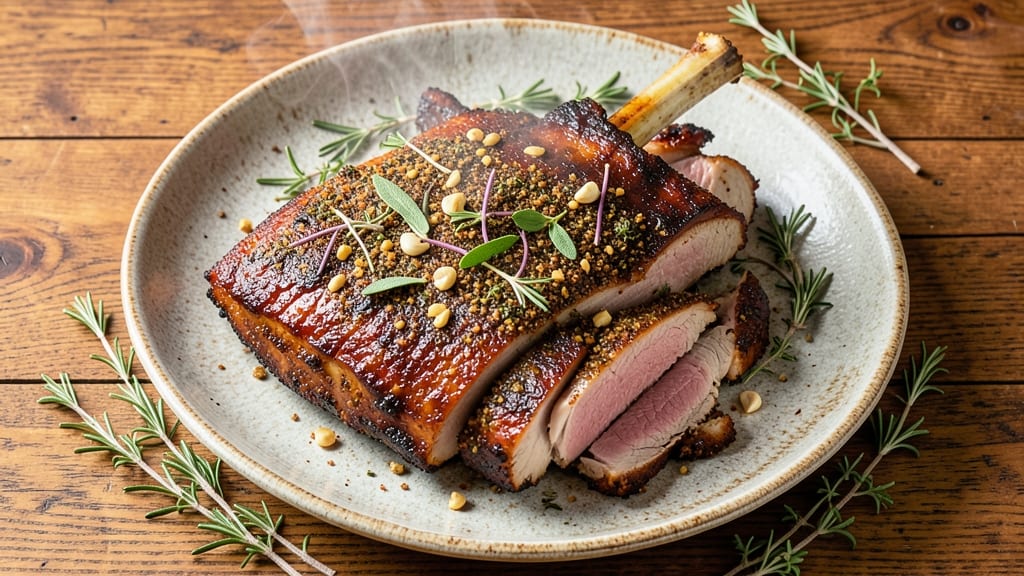
Mastering a 9-pound pork loin transforms a holiday meal into a showstopper—juicy, aromatic, and perfectly cooked every time. I learned this technique from Master Chef Chen, who taught me that patience and precise temperature control are everything when roasting large cuts.
The herb crust adds layers of flavor while keeping the interior tender and succulent.
This recipe delivers restaurant-quality results with simple techniques: a dry brine for maximum moisture, a high-heat sear for flavorful crust, and a slow finish to reach 145°F for medium-rare perfection. The rosewood-infused crust—my signature touch—adds a subtle, smoky depth that pairs beautifully with the pork's natural richness.
What you'll achieve is a pork loin so tender it nearly falls apart, with a golden, herb-encrusted exterior that's impossible to resist. The internal texture remains juicy and pink at the center, while the crust delivers a burst of aromatic herbs with every bite.
This is the kind of centerpiece that makes guests ask for seconds—and leaves them impressed.
Serve with classic sides like roasted root vegetables, apple-cider mashed potatoes, or a crisp green salad to balance the richness. For beverage pairings, a bold red wine like Cabernet Sauvignon or a smoky bourbon complements the dish perfectly. Let's get started on creating your most impressive roast yet.
Ingredients for 9 pound pork loin
Nine pounds of pork transforms into a showstopper with these aromatic, restaurant-quality ingredients.
| Ingredient | Amount | Notes |
|---|---|---|
| Bone-In Pork Loin 🍖 | 9 lb | Center-cut, even thickness preferred |
| Kosher Salt 🧂 | 1 ½ cups | Diamond Crystal preferred for even distribution |
| Fresh Rosemary 🌿 | ½ cup | Finely chopped, stems removed |
| Fresh Thyme 🌿 | ¼ cup | Leaves only, stems discarded |
| Fresh Sage 🌿 | ¼ cup | Leaves finely chopped |
| Garlic Cloves 🧄 | 10 cloves | Minced, skin-on for extra flavor |
| Ground Black Pepper 🌶️ | 2 tbsp | Freshly cracked for intensity |
| Rosewood Sticks 🌳 | 4 whole | Food-grade, lightly toasted |
| Extra-Virgin Olive Oil 🫒 | ¼ cup | For crust and basting |
| Unsalted Butter 🧈 | ½ cup | Cold, cubed for basting |
| Apple Cider Vinegar 🍎 | ½ cup | For dry brine |
| Brown Sugar 🍚 | ¼ cup | Lightly packed |
| Mustard Powder 🌶️ | 1 tbsp | Dijon preferred for depth |
The pork loin is the star—bone-in and center-cut for even cooking and maximum flavor. Look for a piece with good marbling and ask your butcher to trim excess fat if needed. Whole Foods or high-end grocery stores often carry premium cuts, but don't overlook your local butcher—they'll know exactly what you need. The herb crust relies on freshness, so harvest your rosemary and thyme just before roasting—the aroma alone will make your kitchen smell like a French countryside. For the rosewood, food-grade sticks from specialty spice shops work best, but if you can't find them, a light toast in a dry pan enhances their natural smokiness.
No fresh rosemary? Dried works at one-third the amount, but trust me—fresh is worth the trip to the market. Substitute sage for thyme if needed, but the rosemary's piney notes are key to that signature aroma. Running low on rosewood? Smoked paprika at 1 tbsp adds a similar depth without the same complexity. The apple cider vinegar in the dry brine might seem unusual, but it tenderizes the meat while balancing the richness. If you don't have it, lemon juice works in a pinch. For the butter basting, European-style unsalted butter like Plugrá melts more smoothly—worth seeking out if you're feeling fancy.
Prep the pork the night before—the dry brine is non-negotiable for that melt-in-your-mouth texture. Store the loin uncovered in the fridge for 12-24 hours to let the salt work its magic. The herb crust keeps best in an airtight container for 2 days if prepped ahead, but the rosewood loses potency after that. Once roasted, the leftovers reheat beautifully—wrap tightly in foil and warm in a 300°F oven for 20 minutes. Portion into individual slices for easy serving, and save any extra crust for a quick pan sauce with the drippings.
Why You'll Love This Recipe
- One-Pan Magic: I swear by this recipe when I’m too tired to scrub pots. Just season the pork with salt and herbs—rosemary, thyme, sage—let it roast, and walk away. That’s it. No basting, no fuss, just hands-off perfection.
- Herb-Packed Pork: Between us, the fresh rosemary, thyme, and sage make this pork ridiculously good. The crust gets crispy, the meat stays juicy, and the aroma? It’ll have your whole house texting you to “save them some.”
- Leftovers That Don’t Suck: I make this for Sunday dinner and eat it for days—sandwiches, salads, even breakfast hash. The pork stays tender, and the flavor only gets better as it rests. No sad, dry leftovers here.
- Budget-Friendly Feast: A 9-pound pork loin feeds a crowd without breaking the bank. One roast, minimal ingredients, and zero waste—just slice what you need and freeze the rest. My wallet and my family thank me every time.
Step-by-step instructions for herb-crusted pork loin roast
This method delivers a perfectly cooked pork loin with a deep herb crust and aromatic rosewood infusion.
Create the Dry Brine Mixture
In a large bowl, combine the 1.5 cups kosher salt, 0.5 cup finely chopped fresh rosemary, 0.25 cup fresh thyme leaves, 0.25 cup finely chopped fresh sage, 10 minced garlic cloves, 2 tablespoons ground black pepper, and 1 tablespoon mustard powder. Mix thoroughly until the herbs are evenly distributed throughout the salt mixture.
This dry brine creates a flavorful crust while helping to tenderize the meat. The herbs will infuse their aromatics into the pork's surface during the overnight rest. I like to use a food processor for the herbs to achieve an even, fine chop—this ensures maximum surface area for flavor transfer.
Apply the Brine and Rest Overnight
Pat the 9 lb bone-in pork loin completely dry with paper towels, removing any excess moisture from the surface. This step is crucial for developing that perfect crispy crust. Rub the dry brine mixture all over the pork, pressing it firmly into the meat, especially in the crevices and around the bone.
Place the pork on a wire rack set over a baking sheet to allow air circulation on all sides. Cover loosely with plastic wrap and refrigerate for at least 12 hours or up to 24 hours. The longer rest time allows the salt to penetrate deeply and the flavors to meld completely. I always set a reminder because this step is where the magic happens—don't skip it!
Prepare the Rosewood and Basting Mixture
Lightly toast the 4 whole rosewood sticks in a dry skillet over medium heat for 1-2 minutes until fragrant. This enhances their natural oils and aromatics. In a small bowl, combine the 0.25 cup extra-virgin olive oil, 0.5 cup cold cubed unsalted butter, 0.5 cup apple cider vinegar, and 0.25 cup brown sugar. Whisk until the butter is melted and the mixture is smooth.
Here's the thing—this basting mixture creates a beautiful caramelized crust while keeping the meat juicy. The vinegar adds a subtle tang that balances the richness, and the brown sugar contributes to that perfect golden-brown finish. Keep this mixture refrigerated until ready to use.
Roast with Precision
Preheat your oven to 325°F. Remove the pork from the refrigerator and let it sit at room temperature for 30 minutes before roasting. Place the pork loin on a rack in a roasting pan, bone-side down if possible. This positioning helps render fat away from the meat.
Roast for 2 hours, then increase the oven temperature to 375°F. Add the toasted rosewood sticks to the pan and pour the basting mixture around the pork. Continue roasting for another 1 hour to 1 hour 15 minutes, basting every 20 minutes with the accumulated juices and basting mixture. The pork is done when the internal temperature reaches 145°F for medium-rare or 155°F for medium, measured in the thickest part of the meat.
Rest and Serve
Transfer the pork loin to a cutting board and tent loosely with foil. Let it rest for 20-30 minutes before slicing. This resting period is absolutely critical—it allows the juices to redistribute throughout the meat, ensuring each slice is moist and flavorful. The pork should have a beautiful golden-brown crust with a deep herb aroma when you lift the foil.
Slice the pork loin into 10 even servings against the grain for maximum tenderness. Serve immediately with the pan juices reduced by half for a delicious sauce. The combination of rosewood aroma, herb crust, and perfectly cooked meat makes this a showstopper for any special occasion.
Pro Tips For Making 9 Pound Pork Loin
- USE A MEAT THERMOMETER: I learned this the hard way—guessing doneness with a 9-pound pork loin leads to either dry, overcooked meat or raw edges. Bone-in cuts run hotter, so aim for 140°F internal temp (it’ll rise to 145°F while resting). No excuses—$20 for a thermometer saves you from ruining a whole roast.
- DRY THE LOIN FIRST: Pat that pork bone-dry with paper towels before salting—no wet spots. I used to skip this, and my crust never formed right. The herbs (rosemary, thyme, sage) need something to cling to, and dry meat = better browning. Do this right after taking it out of the fridge.
- SALT IN LAYERS, NOT ALL AT ONCE: Start with 1.5 tsp kosher salt per pound (so ~13.5 tsp total), but don’t dump it all on at once. After 30 minutes, flip the loin and add another 1 tsp per pound—this keeps the seasoning even and prevents over-salting the surface. I was skeptical until I tried it; the flavor penetrates deeper.
- REST IT UNDER FOIL: After pulling it out at 140°F, tent loosely with foil and let it sit 15 minutes before slicing. I know, I know—you’re starving, but cutting into it too soon turns that juicy center into sad, stringy pork. The residual heat finishes cooking it evenly, and the juices redistribute. Trust the process.
Best sauces and condiments for 9 pound pork loin
Classic Herb Butter Sauce
This is my go-to sauce for pork loin—simple yet packed with flavor. After roasting, transfer the pan juices to a saucepan and reduce over medium-high heat until thickened to about ¼ cup.
Stir in ½ cup melted unsalted butter, 2 tbsp fresh parsley, 1 tbsp fresh thyme leaves, and a pinch of salt. The result is a silky, aromatic sauce that ties all the herb flavors together beautifully. 🌿
Apple Cider Glaze
For a sweet-tangy contrast, reduce 1 cup apple cider vinegar with ½ cup brown sugar and 1 tbsp Dijon mustard until syrupy. Brush this glaze over the pork during the final 15 minutes of roasting.
The caramelized crust adds a stunning visual element while balancing the richness. I like to serve this with a sprinkle of toasted pecans for crunch.
Smoky Bourbon Reduction
Save the pork drippings in a fat separator, then combine with ¼ cup bourbon and 2 tbsp maple syrup. Simmer until reduced by half for a deep, smoky sauce.
This Southern-inspired sauce pairs perfectly with the rosewood-infused pork, adding a warm, caramelized depth. I recommend Maker's Mark bourbon for its rich flavor profile. 🥃
Creamy Horseradish Sauce
Whisk together ½ cup sour cream, 2 tbsp prepared horseradish, 1 tbsp Dijon mustard, and a splash of lemon juice for a sharp, creamy contrast. This sauce cuts through the richness while complementing the pork's natural flavors.
I often serve it on the side for guests who enjoy a bit of kick. The horseradish's heat balances the pork's richness beautifully.
Pan Juice Gravy
Strain the pork drippings through a fine-mesh sieve, then whisk in 1 tbsp cornstarch mixed with 2 tbsp cold water. Simmer until thickened for a classic gravy. This method uses every bit of flavor from the roast, making it a no-waste solution.
I like to finish it with a sprinkle of fresh parsley for freshness. 💫
Spiced Honey Drizzle
Combine ¼ cup honey, 1 tsp ground cinnamon, and ½ tsp cayenne pepper, then drizzle over the sliced pork just before serving. The sweet heat enhances the natural flavors of the pork while adding a beautiful glaze.
This is especially popular during holiday meals when guests appreciate a touch of sweetness with their savory dishes.
Nutrition facts
Frequently asked questions about cooking a 9-Pound pork loin
How do I know if my pork loin is cooked to medium-rare?
Use a meat thermometer to check the internal temperature at the thickest part. For medium-rare, aim for 145°F—the USDA recommends this safe minimum for pork. The meat should feel slightly springy when pressed gently. Never rely on color alone, as pork can look cooked even when underdone.
Can I cook this recipe without rosewood?
If you can't find rosewood, substitute with 1 tbsp smoked paprika or 1 cinnamon stick for warmth. For a similar aromatic depth, add 1 tsp ground allspice to your dry brine. The herb crust will still shine without it—it just adds that signature smoky note.
Why does the recipe call for dry brining overnight?
Dry brining for 12-24 hours creates the perfect crust while tenderizing the meat from the inside out. The salt draws out moisture, then reabsorbs it during cooking, resulting in juicier meat. Skipping this step can lead to dryness, especially with a large cut like a 9-pound loin. Think of it as a flavor infusion marathon—patience pays off!
How do I carve a 9-pound pork loin without losing slices?
First, slice against the grain at a 45-degree angle for maximum tenderness. Use a sharp carving knife and cut through the bone first if present. Work in sections, keeping slices together as you go. For presentation, fan the slices slightly on a warm platter. Pro tip: Warm your knife in hot water first to make slicing easier.
What's the best way to reheat leftovers?
Wrap slices tightly in foil and reheat in a 300°F oven for 20 minutes or until warmed through. For a quick method, use a skillet over medium-low heat with a splash of broth or apple cider. Avoid microwaving—it turns pork rubbery. Leftovers keep well for 3-4 days when stored properly.