
Main Courses
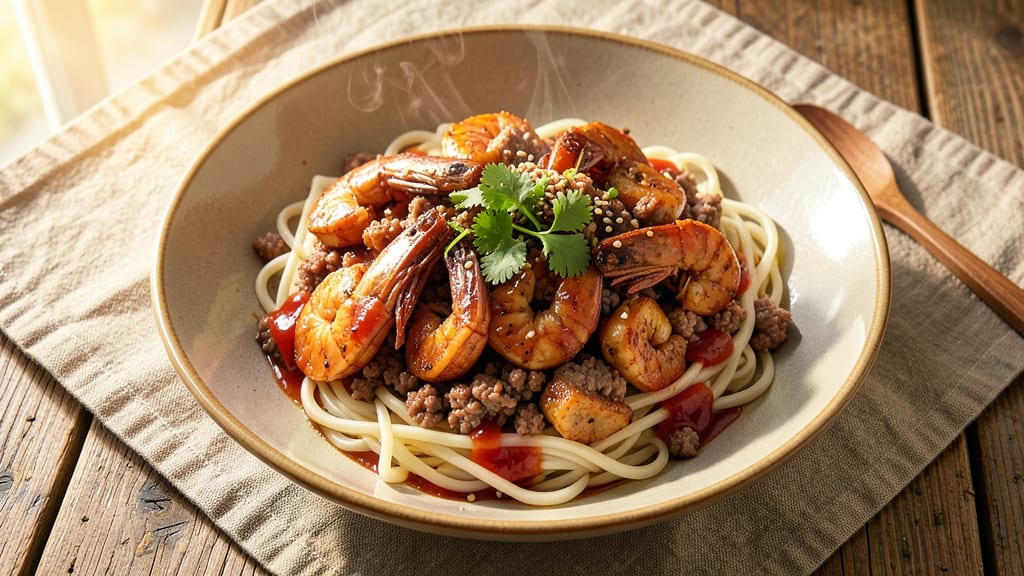
This minced pork and prawn recipe delivers restaurant-quality wok searing with a perfect balance of textures and flavors. The secret lies in high-heat cooking that transforms tender prawns into delicate pink perfection while rendering the pork into crisp-edged, savory bits.
I developed this dish during my time in Charleston, where fresh seafood and pork were staples in every market—it’s the kind of recipe that feels both comforting and exciting.
The magic happens in two stages: first, searing the prawns and pork separately to lock in their natural flavors, then combining them with a fragrant wok sauce that’s rich with umami from soy, garlic, and ginger.
The result is a dish where each bite delivers a symphony of textures—silky prawns, tender pork, and chewy noodles—all coated in a glossy, aromatic sauce. This isn’t just a stir-fry; it’s a complete meal that pairs beautifully with steamed jasmine rice or silky egg noodles.
What sets this recipe apart is the harmony between the two proteins—prawns add a delicate sweetness that contrasts with the deeper, meatier notes of the pork. The high-heat wok technique ensures the prawns stay tender while the pork develops a satisfying crispness at the edges.
Whether you’re serving it for a weeknight dinner or a weekend gathering, this dish delivers professional-quality results with minimal fuss.
For extra depth, I recommend finishing with a sprinkle of toasted sesame seeds and fresh cilantro, which adds both visual appeal and a bright, herbaceous note. The recipe also scales effortlessly, so you can easily double it for a crowd.
Let’s get cooking—this is one dish that always disappears faster than you can say “umami bomb.”
Ingredients for minced pork and prawn
Fresh seafood, tender pork, and aromatic wok sauce—here’s what you’ll need for this restaurant-style umami bomb.
| Ingredient | Amount | Notes |
|---|---|---|
| Large Prawns 🦐 | 1 ½ lb | Shell-on, heads removed, peeled |
| Ground Pork 🥓 | 1 lb | Lean, not fatty, for even cooking |
| Egg Noodles 🍜 | 8 oz | Fresh or dried, silky texture preferred |
| Light Soy Sauce 🥄 | ⅓ cup | High-quality for umami depth |
| Dark Soy Sauce 🥄 | 1 tbsp | For color and richer flavor |
| Sesame Oil 🫒 | 1 tbsp | Toasted, for aroma |
| Garlic Cloves 🧄 | 6 cloves | Minced, fresh for bright flavor |
| Fresh Ginger 🌿 | 2 tbsp | Grated, peeled, for zing |
| Cornstarch 🌾 | 1 tbsp | For prawn coating |
| Vegetable Oil 🫒 | ½ cup | High smoke point for searing |
| Toasted Sesame Seeds 🥜 | 1 tbsp | For garnish, optional |
| Fresh Cilantro 🌿 | ¼ cup | Chopped, for fresh finish |
| Green Onions 🧅 | 3 whole | Sliced thin, for brightness |
| Salt 🧂 | 1 tsp | Kosher or sea salt |
| White Pepper 🌶️ | ½ tsp | Freshly ground for heat |
The prawns are non-negotiable here—freshness is everything. Hit up the seafood counter at Whole Foods for the best quality. Look for plump, translucent shells and a sweet, briny smell. If you can’t find shell-on, peeled prawns work too, but they lose some of that natural sweetness. The pork should be lean ground pork—fat makes it greasy when seared. I always grab mine from the butcher section at Trader Joe’s because it’s fresh and affordable. For the noodles, fresh egg noodles have that silky bite, but dried works in a pinch if you’re short on time.
No sesame oil? Toasted peanut oil works in a pinch, though it’s not the same. Swap dark soy sauce for a splash of oyster sauce if you’ve got it—it adds depth. Fresh ginger too expensive? Ginger powder at half the amount gets you close. The cornstarch is key for that crisp-tender prawn texture—don’t skip it. If you’re feeling fancy, toss in 1 tsp of white miso paste with the soy sauces for extra umami. And if you’ve got scallions instead of green onions, they’ll work just as well.
Prawns and pork cook fast—keep them cold until ready to use. The prawns will stay fresh for 1 day in the fridge, but use them ASAP for best texture. The cooked noodles reheat beautifully—just toss with a splash of water and steam for 30 seconds. For leftovers, store everything separately in airtight containers. The sauce keeps for 3 days in the fridge, and the prawns/pork can be pre-cooked and frozen for 2 months. Garnishes like sesame seeds and cilantro stay fresh for 5 days wrapped in damp paper towels.
Why You'll Love This Recipe
- Here’s what sold me: it reheats like a dream. Pack leftovers for work or school, and they’ll taste just as good cold or warmed up. My kids actually ask for this in their bento boxes—no complaints.
- One-Pan Magic: Honestly, I swear by this recipe—just toss everything in one wok, stir, and walk away. The prawns and pork sizzle together while the noodles cook right in the same pan, so no messy transfers or extra bowls.
- Umami Bomb: Between us, that combo of light and dark soy sauce? It’s where the flavor happens. The dark sauce gives it that glossy, caramelized depth, while the light keeps it bright—like a perfect balance of rich and clean.
- Lunchbox Hero: Here’s what sold me: it reheats like a dream. Pack leftovers for work or school, and they’ll taste just as good cold or warmed up. My kids actually ask for this in their bento boxes—no complaints.
Step-by-step instructions for wok-seared pork and prawn noodles
Here's how to turn simple ingredients into a restaurant-worthy dish with bold flavors and perfect textures.
Prep the Prawns for Maximum Crispiness
Pat the 1.5 lb large prawns completely dry with paper towels—this is non-negotiable for that golden crust. In a small bowl, whisk together 1 tbsp cornstarch, 1 tsp salt, and 0.5 tsp white pepper. Toss the prawns in this mixture until evenly coated, pressing gently to help the seasoning stick.
Let them sit for 5 minutes while you prep the rest. This resting time helps the cornstarch adhere better, ensuring a crispy exterior while keeping the inside tender. Don't skip this step—it makes all the difference in texture.
Cook the Ground Pork Until Fully Browned
Heat 0.5 cup vegetable oil in a wok or large skillet over medium-high heat until shimmering. Add the 1 lb ground pork and break it up with a wooden spoon, cooking for 4-5 minutes until the meat is fully browned and any pink disappears.
Drain most of the fat through a fine-mesh strainer, leaving about 1 tbsp in the pan for flavor. Add 6 cloves minced garlic and 2 tbsp grated fresh ginger, cooking for 30 seconds until fragrant. Stir in 0.33 cup light soy sauce and 1 tbsp dark soy sauce, letting the mixture simmer for 1 minute to develop depth of flavor.
Wok-Sear the Prawns to Perfection
Increase the heat to high and add another 1 tbsp vegetable oil if needed. Working in batches if necessary, add the prawns in a single layer and cook undisturbed for 1-2 minutes per side until they turn a beautiful opaque pink and develop a crispy crust. Don't overcrowd the pan—this ensures even cooking.
Transfer the cooked prawns to a plate and set aside. To the same wok, add 1 tbsp sesame oil and swirl to coat. Return the prawns to the wok along with any accumulated juices, tossing gently to combine with the pork mixture. Cook for another 30 seconds to meld all the flavors together.
Prepare and Combine with Noodles
Cook the 8 oz egg noodles according to package instructions until al dente, then drain and rinse briefly with cold water to stop the cooking process. Return the noodles to the pot and toss with 1 tbsp sesame oil to prevent sticking.
Divide the noodles among four serving bowls. Top each portion with the pork and prawn mixture, then garnish with 0.25 cup chopped fresh cilantro, 3 sliced green onions, and 1 tbsp toasted sesame seeds. Serve immediately while everything is hot and the prawns are still crispy.
Finish with Fresh Aromatics
This dish shines when served fresh, so don't let it sit too long after assembly. The prawns will stay crispy for about 5 minutes after cooking, so work quickly once everything comes together.
For extra brightness, squeeze a little lime wedge over each serving just before eating. The acidity cuts through the richness of the pork and prawns, balancing all the umami flavors perfectly. Enjoy immediately—the flavors are at their peak when everything is piping hot!
Pro Tips For Making Minced Pork And Prawn
- STIR-FRY THE PRAWNS FIRST: I learned this the hard way—dumping raw prawns and pork together means the pork gets soggy while the prawns overcook. Sear the prawns in a screaming-hot wok with a glug of oil for 30 seconds per side until they curl, then pull them out. The pork gets its turn without turning into mush, and the prawns stay juicy. (Yes, even if you're impatient like me.)
- USE COLD PORK, NOT ROOM TEMP: Cold ground pork browns better and doesn’t release grease like a panicked sweaty pig. Scoop it straight from the fridge, form it into loose balls (no need to overwork it), and let it hit the pan. The cold surface sears faster, giving you that deep, caramelized crust before the inside cooks through. Skip the "warming up" step—it’s a flavor killer.
- DON’T OVERMIX THE SOY SAUCES: Dark soy sauce is for color, not flavor—use just ½ teaspoon to stain the pork and prawns that glossy dark brown. Light soy sauce does all the salty, umami work. Mix them in at the very end with a splash of water to deglaze the pan, then toss everything together. Overdoing the dark soy turns your dish into a muddy brick instead of a vibrant stir-fry.
- PRE-COOK THE NOODLES AL DENTE: Egg noodles finish cooking in the final stir-fry, but they’ll turn to glue if you start with fully cooked, limp strands. Boil them one minute less than package instructions, drain, and rinse with cold water to stop cooking. Toss them in the pan with the pork and prawns for the last 30 seconds—the residual heat will firm them up perfectly. (Your future self will thank you.)
Flavor customization for this recipe
Spice Level Control
Adjust the heat to match your crowd by tweaking the white pepper and ginger levels. For mild heat, reduce the white pepper to 0.25 tsp and use 1 tbsp ginger instead of 2 tbsp. For medium heat, keep the recipe as written.
If you want it fiery, add 1 tsp chili flakes or ½ tsp red pepper flakes when tossing the prawns in cornstarch.
I once served this to a group of friends who loved spice—adding 1 tsp gochujang with the soy sauces turned it into a Korean-inspired fusion that had everyone begging for seconds. 🌶️
Sweet and Savory Fusion
Balance the umami with a touch of sweetness by adding 1 tbsp honey or 1 tbsp brown sugar to the soy sauce mixture. This works especially well if you're serving it to kids or guests who prefer milder flavors.
For extra depth, swap the dark soy sauce for 1 tbsp hoisin sauce—it adds a sticky, slightly sweet dimension that pairs beautifully with the prawns. I often make this version for family gatherings, and it’s always a hit with my mom’s side of the family. 🍯
Herb and Aromatic Variations
Swap out the cilantro for Thai basil or Italian parsley to change the dish’s profile entirely. Thai basil adds a licorice-like sweetness that complements the prawns, while parsley keeps it bright and fresh.
For a Southeast Asian twist, toss in ½ cup chopped mint leaves along with the cilantro—it’s a nod to Vietnamese flavors and adds a refreshing contrast. I love using mint when I’m feeling adventurous, but cilantro is my go-to for classic umami balance. 🌿
Protein Swaps and Substitutions
If you can’t find prawns, scallops or shrimp work beautifully—just reduce the cooking time to 30-45 seconds per side to avoid overcooking. For a vegetarian version, swap the pork for extra-firm tofu pressed and cubed, then pan-fry until crispy.
If you’re avoiding pork entirely, try chicken thigh meat finely minced for a lighter texture. I once made this with duck breast instead of pork, and it added a rich, gamey depth that was incredible. 🦆
Noodle Alternatives
Egg noodles are classic, but rice noodles or udon noodles add exciting textures. Rice noodles soak up the sauce beautifully, while udon brings a heartier, chewier bite. For a gluten-free option, use shirataki noodles (konjac-based) and cook them for 2 minutes less than package instructions.
I also love serving this over cauliflower rice for a low-carb twist—just toss it with the sauce and let everyone build their own bowls. 🍜
Sauce Depth Boosters
Take the sauce to the next level by adding 1 tsp fish sauce for extra umami or 1 tsp oyster sauce for richness. For a smoky touch, stir in ½ tsp smoked paprika or a dash of chili oil at the end.
If you’re feeling fancy, finish with a drizzle of chili crisp or sriracha mayo on the side. I once added 1 tsp of white miso paste to the sauce, and it gave the dish a fermented depth that was absolutely amazing. 💫
Nutrition facts
Frequently asked questions
Can I use frozen prawns instead of fresh?
Fresh prawns are ideal, but frozen works in a pinch! Thaw them overnight in the fridge, then pat completely dry before coating with cornstarch. For best texture, avoid thawing at room temperature—this can make the prawns rubbery. If you're short on time, you can even cook them from frozen, but increase the cooking time by 30-60 seconds per side.
How do I prevent the pork from becoming greasy?
Use lean ground pork (not fatty) and drain most of the fat after browning. Leave about 1 tbsp in the pan for flavor, then strain the rest. For extra crispiness, spread the pork in a thin layer instead of piling it—this helps render the fat more evenly. If you're concerned about grease, you can also press the pork with paper towels before cooking.
What's the best way to reheat leftovers?
Reheat only the pork and prawn mixture (not the noodles) in a skillet over medium heat with a splash of water to keep it moist. Add the noodles back in just before serving and toss with a little sesame oil to restore that fresh, silky texture. Avoid microwaving—it makes the prawns rubbery. For best results, reheat for 2-3 minutes until piping hot.
Can I make this dish ahead of time?
Cook the pork and prawn mixture ahead, then store it separately in airtight containers for up to 3 days in the fridge. Reheat just before serving with fresh noodles. For prawns, cooking them ahead works, but they'll lose some crispiness—so it's best to sear them fresh if possible. The sauce can also be prepped in advance and reheated gently.
What if I don't have a wok?
A large skillet or even a cast-iron pan works perfectly! The key is using high heat and keeping the pan well-oiled. If your pan isn't wide enough, cook the prawns and pork in batches—just make sure not to overcrowd. The high heat is what creates that beautiful crust on the prawns, so don't rush this step even if you're using a different pan.