
Main Courses
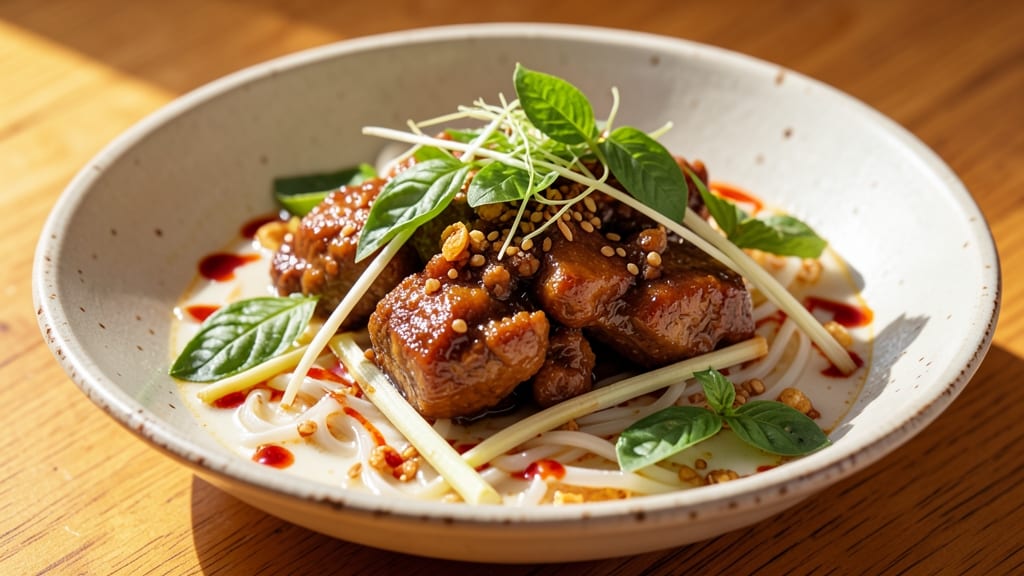
This mince pork Thai recipe brings the vibrant flavors of Bangkok to your kitchen with a fragrant coconut curry that dances on the palate. 🌟 I developed this dish after years of perfecting the balance between sweet, spicy, and umami—just like the street food I fell in love with during my time in Thailand.
The secret lies in fresh herbs and a slow simmer that lets the flavors meld into something irresistible.
What sets this recipe apart is the silky rice noodles that soak up the rich coconut curry while maintaining their delicate texture. We'll start with a fragrant paste of lemongrass, galangal, and kaffir lime leaf—classic Thai aromatics that build the foundation.
The minced pork gets seared just enough to lock in juices before simmering in coconut milk until tender and infused with those bright, complex flavors.
By the time you're done, you'll have a dish that's restaurant-quality at home—golden coconut curry with tender pork, fragrant herbs, and noodles that melt in your mouth.
The aroma alone will have everyone gathering around your table. Serve it with fresh cilantro, Thai basil, and a squeeze of lime to brighten each bite.
This recipe scales beautifully for a crowd, and leftovers reheat perfectly for lunch the next day. The balance of flavors is what makes it special—sweet from the coconut, heat from the chiles, and freshness from the herbs. Let's bring Thailand to your dinner table tonight.
Ingredients for mince pork thai
Fresh herbs and pantry staples bring Bangkok's bold flavors to your table tonight.
| Ingredient | Amount | Notes |
|---|---|---|
| Ground Pork 🥩 | 1 ¼ lb | Lean, finely minced |
| Rice Noodles 🍜 | 8 oz | Thin, silky variety |
| Coconut Milk 🥥 | 13 ½ oz | Full-fat, canned |
| Lemongrass 🌿 | 1 whole | Lower stalk only |
| Galangal 🌿 | 1 piece | 3-inch piece |
| Kaffir Lime Leaves 🍃 | 4 whole | Fresh, outer leaves |
| Red Curry Paste 🌶️ | 2 tbsp | Thai brand preferred |
| Bird's Eye Chiles 🔥 | 2 whole | Adjust for heat |
| Garlic Cloves 🧄 | 6 cloves | Minced |
| Shallots 🧅 | 4 whole | Minced |
| Fish Sauce 🍶 | 2 tbsp | Thai brand preferred |
| Brown Sugar 🍚 | 1 tbsp | Packed |
| Fresh Cilantro 🌿 | ¼ cup | Chopped, for garnish |
| Thai Basil 🌿 | ¼ cup | Chopped, for garnish |
| Lime Juice 🍋 | 2 tbsp | Freshly squeezed |
The aromatics are non-negotiable here. Thai markets carry fresh galangal and kaffir lime leaves—if you can't find them, Asian grocery stores usually stock them. Look for lemongrass with tight, pale layers and no brown spots. The fish sauce? Red Boat or Tiparos are my go-tos—they've got that perfect umami punch. Galangal should smell citrusy and peppery, not musty. If it's hard to find, ginger works in a pinch (though it won't be identical). For the curry paste, Maesri or Mae Ploy are the gold standards—avoid the watered-down stuff in regular supermarkets.
No fresh galangal? Ginger plus a pinch of cardamom gets you closer than just ginger alone. Short on kaffir lime leaves? Lime zest plus a bay leaf works in a bind. The pork can be swapped for shrimp or tofu if you're vegetarian, but the cooking time changes. For the chiles, serrano peppers are a milder substitute, but remember—Thai food is all about balance. If you're adding extra heat, reduce the fish sauce slightly to keep the flavors in harmony. The rice noodles? Look for 'vermicelli' or 'sen lek' labels—they're the silky kind you want.
Coconut milk separates when refrigerated, so store it in the pantry until ready to use. The curry paste keeps for 6 months in the fridge, but once opened, use it within 3 months. Fresh herbs like cilantro and Thai basil? Wrap them in damp paper towels and store in a bag—they'll stay fresh for 5-7 days. This curry tastes even better the next day as the flavors meld, so make extra. Portion into containers for easy lunches—just reheat with a splash of water to restore that silky texture.
Why You'll Love This Recipe
- One-Pot Magic: I swear by this recipe when I’m too tired to wash dishes. The ground pork browns in the same pan where the lemongrass and galangal simmer—no extra pots, no fuss. Just stir, let it meld, and boom: a fragrant, cohesive dish with zero cleanup stress.
- Rich, Layered Depth: That first bite? Creamy coconut milk hugs the tender pork, but the galangal and lemongrass cut through with a zesty, almost citrusy punch. It’s like Thai takeout—just without the grease trap guilt.
- Lunchbox Hero: Between us, this is my go-to for meal prep. The sauce clings to rice noodles like glue, so they stay plump even after a day in the fridge. Pack it cold or reheat it—either way, it’s a hit at work or picnics.
- Budget-Friendly Feast: Ground pork stretches far, and rice noodles cost pennies. Add a handful of Thai basil or bean sprouts at the end, and suddenly you’ve got a restaurant-worthy bowl for half the price. My wallet and my taste buds thank me every time.
Step-by-step instructions for fragrant coconut curry with silky rice noodles
Here's how to create a vibrant Thai curry that balances rich coconut milk with aromatic herbs and spicy chiles.
🍳 Step 1: Prepare the Aromatic Base
First, pound the lemongrass and galangal with the side of a knife to release their oils. Then, slice the lemongrass into 2-inch pieces and cut the galangal into thin slices. In a large skillet over medium heat, add the lemongrass, galangal, bird's eye chiles, shallots, and garlic cloves. Let them cook for 3-4 minutes until fragrant and the shallots turn translucent.
This step builds the foundation of your curry. The galangal and lemongrass add a citrusy, peppery depth that's essential for authentic Thai flavor. Don't skip this—it's where the magic happens. If you're sensitive to heat, remove the seeds from the bird's eye chiles before adding them.
🍳 Step 2: Build the Curry Sauce
Add the 2 tablespoons red curry paste to the skillet and stir for 1 minute until it darkens slightly and releases its oils. Slowly pour in the 13.5 oz coconut milk, stirring constantly to prevent the paste from clumping. Bring to a gentle simmer and let it cook for 5 minutes until slightly thickened.
Here's the thing—don't rush this step. The curry paste needs time to bloom and develop its complex flavors. You'll see the sauce transform from raw to rich and aromatic. If it starts to split or curdle, whisk vigorously to bring it back together.
🍳 Step 3: Cook the Ground Pork
Push the aromatic mixture to one side of the skillet and add the 1.25 lb ground pork to the empty space. Cook for 3-4 minutes until the pork loses its raw color. Stir everything together, then add the 2 tablespoons fish sauce and 1 tablespoon brown sugar. Simmer for 5 minutes more until the pork is fully cooked through and the flavors meld.
I like to press down gently on the pork during the first minute—this prevents it from curling and ensures even contact with the pan. The fish sauce and brown sugar should balance the heat from the chiles and create a perfect harmony of flavors. Taste and adjust seasoning if needed, adding more fish sauce for saltiness or brown sugar for sweetness.
🥘 Step 4: Prepare and Assemble the Noodles
While the curry simmers, prepare the 8 oz rice noodles according to package instructions—usually soaking in hot water for 5-7 minutes until pliable but not mushy. Drain and set aside. In a separate bowl, combine the 2 tablespoons lime juice with the drained noodles.
This is where the dish comes together. The lime juice adds a bright, tangy contrast to the rich curry. Don't skip this step—it cuts through the coconut milk's richness and balances the overall flavor. The noodles should be tender but still hold their shape when drained.
🍽️ Step 5: Combine and Garnish
Divide the cooked rice noodles among four bowls. Ladle the pork curry sauce over the noodles, reserving some for garnish. Top each serving with 2 tablespoons chopped fresh cilantro and 2 tablespoons chopped Thai basil. Serve immediately while the noodles are still warm and the sauce is vibrant.
Real talk: this dish tastes best fresh out of the pan. The basil and cilantro add freshness that contrasts beautifully with the creamy, spicy curry. If you're serving a crowd, keep the curry warm in a slow cooker and garnish each serving just before eating to maintain that restaurant-quality presentation.
Pro Tips For Making Mince Pork Thai
- CRISP THE PORK FIRST: I used to skip this, but browning the ground pork in a screaming-hot pan for 3-4 minutes—until it’s actually golden—builds flavor that coconut milk alone can’t hide. Just don’t overcrowd the pan, or you’ll steam it instead of sear it.
- GRATE GALANGAL FRESH: Store-bought galangal paste has its place, but if you’re using fresh, zest it like ginger—thin strips, not chunks—so it infuses the coconut milk evenly. Skip the grating? You’ll end up with a dish that tastes like it’s missing something.
- SIMMER COCONUT MILK LOW: Reduce the heat to a whisper once the coconut milk comes in, or it’ll split into a greasy mess. I learned this after one disastrous batch where the sauce looked like curdled butter—now I keep it at a bare simmer for 10 minutes.
- SOAK NOODLES JUST BEFORE SERVING: Rice noodles turn gummy if soaked too early, but a 30-second rinse in hot water right before tossing keeps them tender. Add them to the pan too soon, and you’ll drown the pork in soggy noodles.
Dietary considerations for this mince pork thai
Gluten-Free Adaptations
This recipe is naturally gluten-free, thanks to the rice noodles and fresh ingredients—but always double-check your curry paste and fish sauce labels. Some brands add wheat-based thickeners. I recommend Maesri red curry paste (certified gluten-free) and Red Boat fish sauce, both reliable choices.
The silky rice noodles are inherently gluten-free, but if you're using store-bought, verify the package. For extra caution, cook the pork in a dedicated gluten-free skillet. 🌱
Vegetarian Swaps
Swap the pork for extra-firm tofu or mushrooms (shiitake or oyster) for a meaty texture. Press tofu blocks, then cube and pan-fry until golden before adding to the curry. For mushrooms, slice 8 oz thick and sauté until tender.
Reduce cooking time by 3-4 minutes—vegetarian proteins cook faster. The coconut milk and herbs will still shine, but the texture changes slightly. Adjust fish sauce to 1 tbsp to avoid overpowering the dish.
Low-Carb Options
Replace rice noodles with shirataki noodles (konjac-based) or zucchini noodles for a low-carb twist. Shirataki noodles need thorough rinsing and a quick sauté in oil to remove that signature "seaweed" flavor. For zucchini noodles, spiralize 2 medium zucchinis and blanch for 1 minute in boiling water before draining.
These swaps cut carbs dramatically while keeping the dish vibrant. The curry sauce remains unchanged—it's the star of the show. 🥦
Allergen Awareness
This recipe contains fish (via fish sauce) and coconut (coconut milk). For coconut allergies, substitute with light coconut milk (lower fat) or cashew cream (blend 1 cup soaked cashews with ½ cup water).
Fish sauce allergies are rare but serious—replace with soy sauce (check for gluten) or vegetable broth plus ½ tsp salt. Always taste test when substituting to balance flavors. Cross-contamination matters too: use separate utensils if cooking for highly sensitive guests.
Protein Flexibility
Need a different protein? Try chicken thigh (diced) or shrimp (peeled and deveined). Chicken requires 5-6 minutes of cooking time, while shrimp cooks in just 2-3 minutes—add them at the very end to avoid overcooking.
For a seafood twist, swap pork for scallops (sear first, then add to the sauce). The curry's rich coconut base complements all these proteins beautifully. Just remember: shrimp and scallops need minimal time in the sauce to stay tender. 🦐
Nutrition facts
Frequently asked questions
Can I use regular ground pork instead of finely minced pork?
Yes, but the texture will be slightly different. Regular ground pork works fine—just make sure it's lean and finely chopped for even cooking. For a more authentic texture, ask your butcher to grind it extra fine or pulse it in a food processor. The dish will still taste amazing, just with a slightly chunkier bite.
What if I can't find kaffir lime leaves or galangal?
No problem! For kaffir lime leaves, use lime zest plus a bay leaf—it won't be identical, but it adds citrusy brightness. For galangal, substitute with ginger plus a pinch of cardamom (½ tsp). The dish will still be flavorful, just with a slightly different aromatic profile.
How spicy should this curry be?
The recipe uses 2 bird's eye chiles for a medium heat level. For milder heat, remove the seeds and membranes or reduce to 1 chile. If you love spice, add an extra ½ chile or a dash of chile flakes. Remember, you can always add more lime juice later to balance the heat.
Can I make this recipe ahead of time?
The curry sauce actually tastes better the next day as flavors meld. Store it in an airtight container in the fridge for up to 3 days. Reheat gently on low heat, adding a splash of water if it thickens too much. The noodles are best cooked fresh, but you can prepare them ahead and reheat in hot water for 30 seconds before serving.
What's the best way to serve this dish?
Garnish each serving with fresh cilantro and Thai basil right before eating to keep the herbs vibrant. Serve with steamed jasmine rice or extra noodles on the side. For a complete meal, add a simple cucumber salad with rice vinegar and a sprinkle of chile flakes. The contrast of cool, crisp veggies balances the rich, spicy curry perfectly.