
Sauces & Condiments
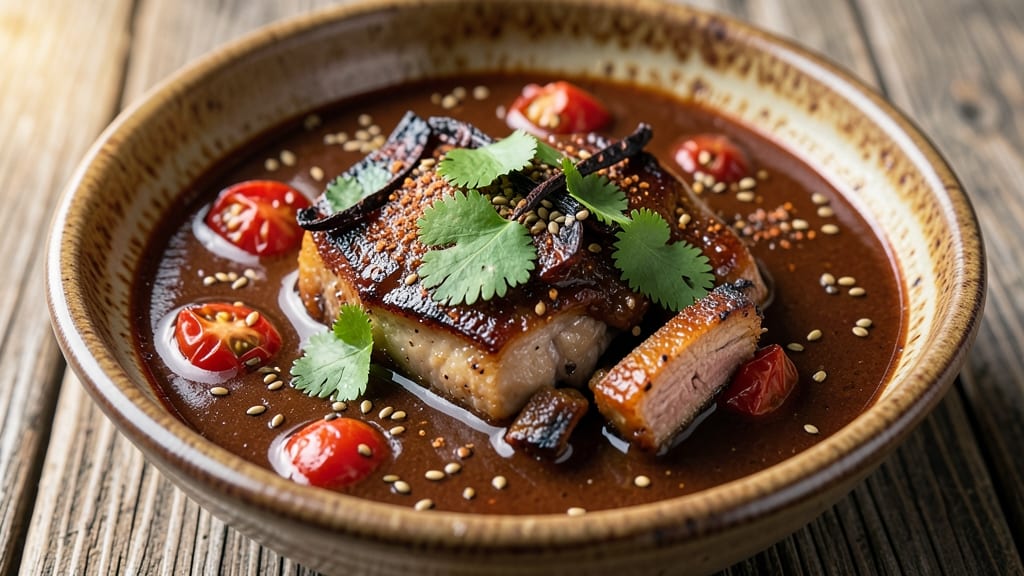
This Mexican pork sauce recipe transforms simple ingredients into a smoky, complex base that elevates everything from tacos to braised meats. The secret lies in charring tomatoes and chiles over an open flame—creating depth no jarred sauce can match.
I’ve perfected this version after years of testing, balancing heat from chipotle and cumin with sweetness from roasted tomatoes and a touch of brown sugar.
The sauce begins with a simple technique: roasting tomatoes and garlic until blistered, then simmering with dried chiles, cumin, and spices until thick and fragrant. This isn’t just a condiment—it’s a flavor multiplier, turning ordinary pork into something restaurant-worthy.
The key is patience; letting the sauce reduce slowly concentrates its bold, earthy notes.
What you’ll end up with is a rich, velvety sauce with layers of smokiness, heat, and sweetness—perfect for marinating pork chops, basting ribs, or drizzling over grilled meats. It keeps well in the fridge for up to two weeks, so you’ll have a pantry staple for quick weeknight dinners.
Use it as a braising liquid for tender pork shoulder, a marinade for carnitas, or a finishing sauce for tacos. The possibilities are endless, but the method remains foolproof. Let’s get started—your taste buds will thank you.
Ingredients for mexican pork sauce
Simple ingredients, bold flavors—this smoky chipotle base transforms ordinary meals into something extraordinary.
| Ingredient | Amount | Notes |
|---|---|---|
| Roma Tomatoes 🍅 | 2 lb | Halved, charred over flame |
| Garlic Cloves 🧄 | 6 cloves | Roasted until golden |
| Dried Chipotle Peppers in Adobo 🌶️ | 2 tbsp | Adobo sauce included |
| Ground Cumin 🌿 | 2 tbsp | Toasted for depth |
| Dried Oregano 🍃 | 1 tbsp | Mexican oregano preferred |
| Smoked Paprika 🌶️ | 1 tbsp | For smoky richness |
| Brown Sugar 🍯 | 2 tbsp | Lightly packed |
| Apple Cider Vinegar 🍎 | ½ cup | Balances acidity |
| Extra-Virgin Olive Oil 🫒 | ½ cup | High-quality, fruity |
| Beef or Vegetable Broth 💧 | 1 cup | Low-sodium preferred |
| Salt 🧂 | 1 ½ tsp | Diamond Crystal preferred |
| Black Pepper 🌶️ | ½ tsp | Freshly cracked |
The tomatoes and garlic are non-negotiable for that deep, charred foundation. Hit the farmers market for the ripest Roma tomatoes—vibrant red with no blemishes. For garlic, Costco's bulk jars are a steal, but any fresh cloves work. Chipotle peppers in adobo? Penzeys carries the best quality, but the regular grocery store brand is fine if you're in a pinch. Toast your cumin seeds in a dry pan for 30 seconds before grinding—that's where the magic happens. Smoked paprika adds layers of complexity, so don't skip it.
No chipotle peppers? Substitute with 1 tbsp chipotle powder (adjust heat to taste). Running low on cumin? Corriander seeds toasted and ground work in a bind. Brown sugar can be swapped for maple syrup or agave if you're avoiding refined sugar. The vinegar balances everything, so don't cut corners—apple cider vinegar has the best flavor profile. For the broth, low-sodium is key—you're adding salt later anyway. And yes, you can use vegetable broth if you're vegetarian.
This sauce tastes even better the next day as flavors meld. Store it in a glass jar in the fridge for up to 2 weeks, or freeze for 6 months. I like to make a double batch—one for immediate use, one to freeze. When reheating, add a splash of water or broth to prevent thickening. Perfect for marinating pork chops, basting ribs, or drizzling over grilled meats—your taste buds will thank you.
Why You'll Love This Recipe
- Here’s what sold me: it works for everything. Slather it on carnitas, drizzle it over eggs, or use it as a marinade for chicken. The chipotle gives it that slow-cooked smokiness, while the cumin and oregano keep it bright. Even my picky teen asks for seconds—now that’s a win.
- Pantry Powerhouse: I swear by this sauce because it uses what I already have—no specialty trips. That jar of chipotles in adobo? Already smoky and ready. The cumin and oregano? Just a teaspoon each, and boom—you’ve got depth without the fuss.
- One-Pot Magic: Honestly, this sauce is foolproof—I’ve burned it once (the tomatoes, don’t rush them!), but otherwise, it’s a single pan, 20-minute commitment. Sauté the garlic until it’s golden, toss in the blended tomatoes and spices, and let it simmer. That’s it. No straining, no peeling, no stress.
- Leftovers That Lie: Between us, this sauce tastes better the next day. I make a big batch on Sundays, and by Wednesday, it’s still the star of tacos, grilled cheese, or even scrambled eggs. The flavors meld into something richer—like a secret weapon hiding in your fridge.
Step-by-step instructions for smoky chipotle tomato pork sauce
This sauce builds layer by layer—start with charred tomatoes, toasted spices, and slow-simmered depth.
Char the Tomatoes and Roast the Garlic
Cut the 2 lb Roma Tomatoes in half lengthwise and place cut-side down on a gas flame or in a dry skillet over medium-high heat. Char them for 8-10 minutes, turning occasionally, until the skins blacken in spots and the flesh softens slightly. This step develops deep, smoky flavor that no raw tomatoes can match.
While the tomatoes char, wrap the 6 cloves Garlic Cloves in aluminum foil and roast them in the oven at 400°F for 12-15 minutes until golden and fragrant. The foil traps the steam and intensifies their sweetness. Let both the tomatoes and garlic cool slightly before proceeding—this prevents the sauce from becoming bitter.
Toast the Spices and Bloom the Aromatics
Heat the 0.5 cup Extra-Virgin Olive Oil in a large, heavy-bottomed pot over medium heat. Add the 2 tbsp Ground Cumin and toast for 1 minute until fragrant and slightly nutty. Immediately add the 1 tbsp Smoked Paprika and 1 tbsp Dried Oregano, stirring constantly for 30 seconds—this blooming step releases their essential oils and builds the sauce's complex base.
Add the charred tomatoes (skinned and chopped) and roasted garlic (squeezed from their skins). Stir in the 2 tbsp Dried Chipotle Peppers in Adobo and 2 tbsp Brown Sugar, letting the mixture cook for 3-4 minutes until the raw garlic smell disappears and the spices meld into the tomatoes. This is where the sauce's signature smoky-sweet balance begins to form.
Simmer and Reduce for Depth
Pour in the 0.5 cup Apple Cider Vinegar and 1 cup Beef or Vegetable Broth, scraping up any browned bits from the bottom of the pot. Bring to a gentle simmer and cook uncovered for 20-25 minutes, stirring occasionally, until the sauce reduces by about one-third and thickens slightly. The sauce should coat the back of a spoon but still be loose enough to drizzle.
Season with 1.5 tsp Salt and 0.5 tsp Black Pepper, then taste and adjust—you want a perfect harmony of smoky heat, sweetness, and acidity. If the sauce is too thick, add 1-2 tablespoons of water to reach your desired consistency. Real talk: this is the moment that matters—don't rush it. The longer it simmers, the more complex the flavors become.
Finish and Strain for Smoothness
Once the sauce reaches your preferred thickness, remove it from heat and let it cool for 5 minutes. Then, strain it through a fine-mesh sieve into a clean bowl, pressing gently on the solids to extract every last bit of flavor. This step ensures a silky, restaurant-quality sauce without any texture surprises.
Return the strained sauce to the pot and simmer gently for another 5 minutes to meld all the flavors together. The sauce should now have a glossy sheen and a rich, smoky aroma that makes your kitchen smell like a Mexican street stall. Serve immediately over grilled pork, tacos, or use it as a marinade—just know you'll want to make extra.
Pro Tips For Making Mexican Pork Sauce
- Char the Tomatoes First: Blister those Roma tomatoes over direct heat until they’re blackened in spots—it deepens the smoky-sweet flavor and cuts the acidity. I used to skip this, and the sauce always tasted flat until I tried it.
- Strain the Adobo Paste: Don’t just toss in the whole chipotle pepper—mash the adobo paste (including the liquid) through a fine-mesh sieve to remove seeds and debris. The paste is where the real heat and depth hide, and skipping this step leaves a gritty, uneven sauce.
- Toast the Cumin Low and Slow: Heat the cumin in a dry pan over medium-low for 30 seconds until it smells aromatic, but don’t let it burn—it turns bitter fast. I learned this the hard way after ruining a batch with over-toasted cumin that tasted like ash.
- Simmer Long Enough: Let the sauce reduce for at least 20 minutes on low heat, stirring occasionally, until it coats the back of a spoon. Rushing this step leaves a thin, watery sauce that won’t cling to pork or tacos like it should.
Essential equipment for perfect results
Heavy-Bottomed Pot
This sauce demands a heavy-bottomed pot—I swear by my All-Clad 3-quart Dutch oven—to prevent scorching and ensure even heat distribution. The sauce reduces significantly, so a 3-4 quart capacity is ideal.
If you don’t have one, a stainless steel saucepan with a thick base works too. Avoid thin aluminum pans that can’t handle prolonged simmering without burning. 🔥
Gas Flame or Grill
For that authentic charred tomato flavor, you need a direct flame. A gas stove works perfectly, but if you’re grilling, use the medium-high heat zone of your grill.
I’ve even charred tomatoes on a cast-iron skillet over a campfire—just be patient and turn them often. The key is blackened spots, not a fully burned mess.
Fine-Mesh Sieve
A fine-mesh sieve (like the OXO Good Grips) is non-negotiable for straining this sauce. It removes skins and seeds while keeping the flavorful pulp intact. Press gently with a wooden spoon to extract every last drop of liquid.
If you don’t have one, a cheesecloth works in a pinch, but it’s messier and less efficient.
Immersion Blender
If you prefer a smoother sauce without straining, an immersion blender (I love the Ninja Foodi) lets you blend directly in the pot. Pulse until silky, then return to the heat for another 5 minutes to meld flavors.
This method saves cleanup but requires patience—don’t over-blend or the sauce will separate.
Mixing Spoon Set
A wooden spoon and a silicon spatula are your best friends for stirring and scraping up browned bits. I keep a set of heat-resistant utensils (like OXO’s silicone tools) nearby to avoid scratching my pot. A whisk also comes in handy for emulsifying the sauce at the end.
Measuring Spoons
Precision matters with spices like cumin and chipotle. Invest in stainless steel measuring spoons (I use West Bend’s set) for accurate measurements.
A spice grinder (like Penzeys’ mini mill) is optional but handy for toasting and grinding whole spices fresh—it makes a noticeable difference in flavor depth. 💫
Nutrition facts
Frequently asked questions
Can I make this sauce without charring the tomatoes?
The charred flavor is what makes this sauce special, but you can still make it work! Roast the tomatoes in the oven at 450°F for 15-20 minutes until soft and slightly caramelized. You'll lose some smoky depth, but the sauce will still be delicious. For extra flavor, add 1 tsp liquid smoke to the finished sauce.
How spicy will this sauce be with chipotle peppers?
The chipotle peppers in adobo provide a smoky heat rather than a sharp burn, but it can still be noticeable. For a milder version, reduce to 1 tbsp chipotle peppers or remove the seeds and membranes. If you love heat, add an extra ½ tbsp and adjust to taste. Always taste as you go!
Can I use this sauce as a marinade for chicken?
Yes! This sauce works beautifully as a marinade for chicken, though pork is ideal. For best results, marinate chicken thighs or breasts for 4-6 hours (or overnight for deeper flavor). The acidity from the vinegar helps tenderize the meat. Just pat it dry before cooking to ensure a good sear.
Will this sauce thicken when refrigerated?
Yes, it may thicken slightly when chilled. To restore its consistency, gently reheat over low heat and stir in 1-2 tablespoons of water or broth until smooth. Avoid microwaving—it can make the sauce separate. The sauce tastes even better the next day as flavors meld!
What’s the best way to store leftovers?
Transfer the sauce to an airtight glass jar and refrigerate for up to 2 weeks, or freeze for 6 months. For freezing, leave ½ inch headspace to prevent ice crystals. Thaw in the fridge overnight. The sauce keeps well and makes a great base for quick meals!