
Main Courses
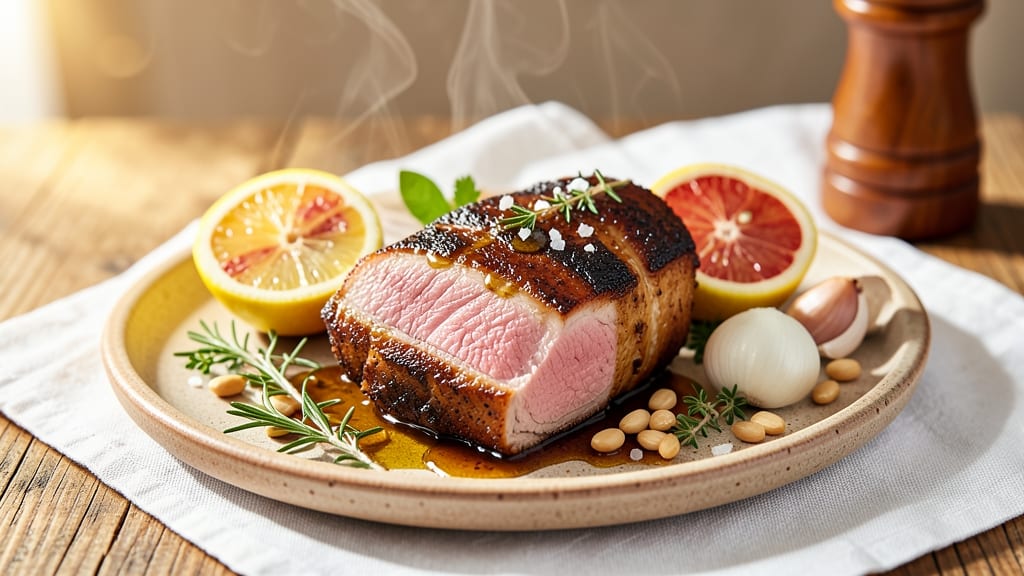
This Mediterranean pork loin recipe delivers restaurant-quality results with a fragrant herbed lemon-garlic crust and impossibly juicy centers. 🔥 I developed it after years of perfecting pork techniques—balancing Mediterranean flavors with foolproof cooking methods that work every time.
The secret lies in a slow-basted crust that seals in moisture while creating that signature golden crust. What sets this recipe apart is the marinade: a bright blend of lemon, garlic, and fresh herbs that infuses the meat while keeping it tender.
Unlike quick grilling methods, this approach uses controlled heat to achieve perfect doneness without drying out the pork. The result? A dish that feels special yet stays approachable for home cooks.
By the time you serve it, you'll have juicy, flavorful pork loin with a crisp exterior and tender interior—exactly what you'd find in a Mediterranean bistro. The crust stays fragrant and slightly sticky, while the meat melts in your mouth.
It's the kind of dish that makes weeknight dinners feel like an occasion. Pair with roasted Mediterranean vegetables or a simple couscous salad for a complete meal. The technique works equally well for grilling or roasting, giving you flexibility for any season. Let's get started on this crowd-pleaser!
Ingredients for mediterranean pork loin
Fourteen ingredients for a dish that tastes like a Mediterranean bistro. Juicy centers and crispy crust—no fancy equipment needed.
| Ingredient | Amount | Notes |
|---|---|---|
| Pork Loin 🍖 | 1 ½ lb | Center-cut, bone-in preferred |
| Fresh Lemon 🍋 | 1 whole | Zest and juice only |
| Garlic Cloves 🧄 | 6 cloves | Minced, fresh preferred |
| Fresh Rosemary 🌿 | ¼ cup | Finely chopped, stems removed |
| Fresh Thyme 🌿 | ⅛ cup | Leaves only, stems removed |
| Extra-Virgin Olive Oil 🫒 | ¼ cup | For marinade and basting |
| Honey 🍯 | 1 tbsp | Local or raw preferred |
| Dijon Mustard 🍯 | 1 tbsp | For marinade adhesion |
| Kosher Salt 🧂 | 1 ½ tsp | Diamond Crystal preferred |
| Ground Black Pepper 🌶️ | ½ tsp | Freshly ground |
| All-Purpose Flour 🌾 | 2 tbsp | For crust coating |
| Panko Breadcrumbs 🍞 | ¼ cup | For extra crunch |
| Fresh Oregano 🍃 | 1 tbsp | Chopped, for garnish |
| Butter 🧈 | 2 tbsp | Unsalted, for basting |
The pork loin is your star—center-cut and bone-in if you can find it. Whole Foods or your local butcher usually carry the best cuts. Look for good marbling, not too lean, and ask for it cut into a single piece about 1.5 inches thick. If you can't find bone-in, don't stress—boneless works too. I grab my pork from Costco when I'm making a big batch, but for this recipe, any quality grocery store cut will do. Fresh herbs are non-negotiable here—Trader Joe's has great pre-packaged rosemary and thyme if you're short on time, but nothing beats the fresh stuff from the market.
No fresh rosemary? Dried works at one-third the amount, but it won't have that same bright flavor. Short on lemon? Lime juice works in a pinch, though it'll change the flavor profile slightly. The honey in the marinade is key—it helps caramelize the crust while keeping the meat moist. If you're avoiding sugar, maple syrup works perfectly. For the crust, I like using a mix of flour and panko—it gives you that perfect balance of crispy and slightly sticky. If you're out of panko, regular breadcrumbs toasted in the oven first will do the trick.
Marinate the pork for at least 4 hours, but overnight is even better—this is where all the magic happens. Store the marinade in an airtight container in the fridge. The crust ingredients can be mixed ahead and kept in a sealed bag for up to 3 days. Once cooked, the pork stays juicy for about 2 days in the fridge—it actually tastes better the next day as the flavors meld. For leftovers, slice against the grain and reheat gently in a skillet with a splash of water to keep it moist. Freezing isn't recommended for this dish—it's best enjoyed fresh.
Why You'll Love This Recipe
- Here’s what sold me: this pork stays delicious cold or at room temp, so I prep it on Sundays and pack it for lunches all week. The lemon keeps it from getting dry, and my kids (who usually hate leftovers) actually eat it—no complaints, just empty containers.
- Pantry-Friendly Freshness: I swear by this recipe because it turns basic pantry staples into something vibrant—no fancy ingredients, just lemon zest, whole garlic cloves, and a sprig of rosemary. The pork stays juicy while the herbs infuse that bright, sun-soaked flavor, like a Mediterranean breeze in every bite.
- One-Pan Magic: Between us, I’ve ruined more sheet pans than I’ll admit, but this one’s foolproof. Toss the pork, garlic, and herbs on a tray, roast it, and boom—minimal chopping, no extra pots, and that crispy edge with the creamy center? Chef’s kiss.
- Lunchbox Hero: Here’s what sold me: this pork stays delicious cold or at room temp, so I prep it on Sundays and pack it for lunches all week. The lemon keeps it from getting dry, and my kids (who usually hate leftovers) actually eat it—no complaints, just empty containers.
Step-by-step instructions for Mediterranean pork loin recipe
Here's how to create tender, juicy pork loin with a fragrant herbed crust that'll impress everyone.
👨🍳 Step 1: Make the Herbed Lemon-Garlic Marinade
In a small bowl, combine the zest and juice from the 1 whole fresh lemon, the 6 minced garlic cloves, the 0.25 cup finely chopped fresh rosemary, and the 0.125 cup fresh thyme leaves. Add the 0.25 cup extra-virgin olive oil, 1 tablespoon honey, and 1 tablespoon Dijon mustard. Mix well until everything is fully incorporated and the oil is emulsified.
Here's the thing—this marinade does double duty. It tenderizes the meat while infusing it with bright citrus and aromatic herbs. I like to let this sit for 10 minutes while I prep the rest of my ingredients. The flavors meld quickly, so no need to marinate overnight. The honey adds just enough sweetness to balance the acidity from the lemon.
🍳 Step 2: Coat the Pork Loin and Prepare for Roasting
Pat the 1.5 lb pork loin dry with paper towels—this is crucial for that perfect crust. Place it on a cutting board and spread the marinade evenly over all sides, pressing it in gently so it penetrates the meat. Then, in a separate bowl, mix the 2 tablespoons all-purpose flour, 0.25 cup panko breadcrumbs, 1.5 teaspoons kosher salt, and 0.5 teaspoon ground black pepper.
Roll the pork loin in the flour mixture, pressing lightly to adhere the crust. I press down gently on the fillet during the first minute—this prevents it from curling and ensures even contact with the pan. The crust gives us that perfect crunch while keeping the interior juicy. Place the coated pork loin on a plate and let it sit at room temperature for 15 minutes before cooking.
🔥 Step 3: Sear and Roast to Juicy Perfection
Preheat your oven to 400°F. Heat a large oven-safe skillet over medium-high heat until it's very hot. Add the 2 tablespoons butter and let it melt completely. Place the pork loin in the skillet, fat-side down, and sear for 3-4 minutes until the crust is golden brown and the butter starts to foam.
Flip the pork loin carefully and cook for another 2-3 minutes on the other side until it's golden brown. Transfer the skillet to the preheated oven and roast for 20-25 minutes until the internal temperature reaches 145°F when measured with an instant-read thermometer. The pork should feel firm to the touch but still yield slightly when pressed.
⏰ Step 4: Rest and Garnish for Serving
Remove the pork loin from the oven and transfer it to a cutting board. Tent loosely with aluminum foil and let it rest for 10 minutes. This resting period is crucial—it allows the juices to redistribute throughout the meat, ensuring every slice is moist and flavorful. If you skip this step, you'll end up with dry meat.
While the pork rests, spoon any pan juices over the top and sprinkle with the 1 tablespoon chopped fresh oregano. Slice the pork loin into ½-inch thick medallions and serve immediately. The crust should be crispy and golden, while the interior remains tender and juicy with that bright Mediterranean flavor profile.
Pro Tips For Making Mediterranean Pork Loin
- Sear First, Roast Second: Hit the pork loin with high heat in an oven-safe pan until it’s deep golden—about 3-4 minutes per side—before transferring to the oven. I learned this the hard way: skipping the sear means flavor stuck in the pan instead of on the meat, and the crust turns sad and pale.
- Smash That Garlic: Use a flat side of your knife to crush the garlic cloves right in the pan after searing the pork. The released oils caramelize faster and cling to the meat—no more chasing stray garlic pieces or underseasoned bites. (Yes, even if you’re impatient like me, wait the 30 seconds for the aroma to bloom.)
- Don’t Crowd the Herbs: Sprinkle rosemary and thyme lightly—about 2 sprigs per side—so they crisp slightly instead of steaming into mush. Too many herbs? They’ll turn to sawdust. Too few? You’ll miss the bright, piney notes that cut through the richness.
- Juice the Lemon Last: Squeeze the lemon after resting the pork, not before. The acid will make the meat release juices prematurely if added too early, turning your perfectly cooked loin into a sad, watery mess. (Your future self will thank you.)
Regional styles of mediterranean pork loin
Greek Lemon-Herb Style
In Greece, pork loin often takes center stage with bold lemon and oregano. Start with the same marinade but add 1 teaspoon dried oregano and ½ teaspoon red pepper flakes for heat.
After searing, finish with a drizzle of 1 tablespoon lemon juice and a sprinkle of feta cheese crumbles—this adds a tangy, salty contrast that feels authentically Greek. Serve with roasted potatoes and a Greek salad for a full meal. 🌿
Moroccan Spice Blend
For a North African twist, swap the rosemary and thyme for 1 tablespoon each of ground cumin and coriander, plus ½ teaspoon cinnamon. Add 1 teaspoon harissa paste to the marinade for smoky depth.
Roast the pork with sliced red onions and apricots in the pan for a sweet-savory balance. Garnish with fresh cilantro and serve with couscous. 🌶️
Italian Pan-Roasted
In Italy, pork loin often gets a rustic breadcrumb crust. Use the same marinade but skip the panko—replace it with ½ cup Italian seasoned breadcrumbs and 1 tablespoon grated Parmesan.
After roasting, deglaze the pan with ¼ cup dry white wine and reduce it into a light sauce. Serve with roasted bell peppers and a sprinkle of fresh basil. 🍷
Turkish Yogurt-Marinated
For a Turkish-inspired version, mix ½ cup plain Greek yogurt with the marinade ingredients. Let the pork marinate for at least 6 hours to tenderize deeply. After roasting, top with chopped mint and serve with ayran (yogurt drink) and grilled eggplant.
The yogurt keeps the meat incredibly moist while adding a creamy contrast. 🥛
Spanish Chorizo Twist
Add 2 tablespoons chopped Spanish chorizo to the marinade for smoky, spicy depth. After roasting, slice the pork and arrange it with the chorizo pieces on top.
Serve with roasted paprika-spiced potatoes and a side of manchego cheese. The chorizo adds a bold, savory kick that pairs perfectly with the Mediterranean flavors. 🌭
French Herb Butter
For a French bistro touch, replace the panko crust with 2 tablespoons chopped parsley and 1 tablespoon chopped tarragon mixed into the butter used for searing.
After roasting, top the pork with a pat of herb butter (mix 2 tablespoons softened butter with 1 teaspoon chopped chives) and serve with ratatouille. The herb butter adds an elegant finish. 🥖
Nutrition facts
Frequently asked questions about Mediterranean pork loin
Can I use boneless pork loin instead of bone-in?
The recipe works perfectly with boneless pork loin, though bone-in adds natural moisture and flavor. If using boneless, reduce the cooking time by about 5 minutes since it cooks slightly faster. Just be sure to pat it very dry before coating to ensure that crispy crust.
How do I know when the pork loin is fully cooked?
Use an instant-read thermometer to check the internal temperature—it should reach 145°F in the thickest part. The pork will feel firm but still yield slightly when pressed. Never rely on color alone, as overcooking can turn the meat dry. If you don't have a thermometer, cut into the thickest part and check for juices that run clear.
Can I make this recipe ahead of time?
Yes! The pork loin actually tastes better the next day as the flavors meld. Cook it fully, then refrigerate for up to 2 days. To reheat, slice against the grain and warm gently in a skillet with a splash of water or broth to keep it moist. Avoid microwaving, as it can make the crust soggy.
What's the best way to store leftover marinade?
Store any unused marinade in an airtight container in the fridge for up to 3 days. If it comes into contact with raw pork, boil it for 1 minute before using on cooked dishes (like vegetables or grains) to kill bacteria. For extra flavor, use it as a drizzle for roasted potatoes or a quick sauce for pasta.
What sides pair best with this Mediterranean pork loin?
Roasted Mediterranean vegetables (zucchini, bell peppers, and eggplant) or a simple couscous salad are perfect pairings. For a heartier meal, serve with crusty bread and a Greek salad. The bright flavors complement the herbed crust beautifully—just avoid heavy sides that might overpower the dish.