
Main Courses
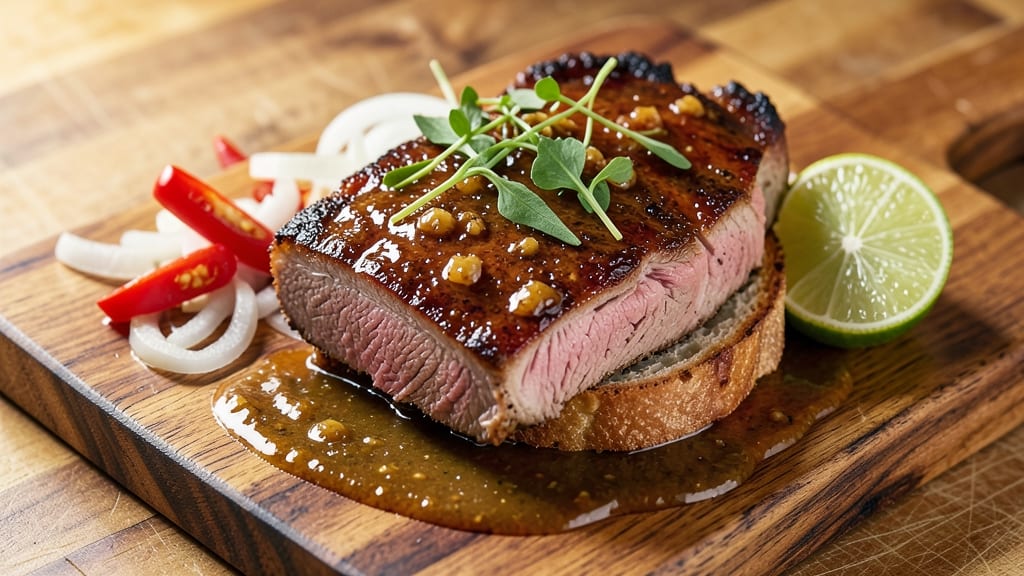
This Cuban pork steak recipe delivers restaurant-quality flavor with a perfect balance of slow-braised tenderness and crispy, caramelized edges. 🔥 The secret lies in marinating the pork overnight in citrus and spices, then reverse-searing it to lock in juices while creating that coveted crust.
I've perfected this technique after years of studying Cuban pitmaster methods in Miami's Little Havana district, where pork steak is a Sunday tradition.
The dish begins with a bold marinade of garlic, oregano, cumin, and citrus—key ingredients that transform tough pork shoulder into melt-in-your-mouth perfection. After slow-cooking until fork-tender, we finish with a quick sear to create that signature crispy exterior.
This method ensures every bite delivers juicy meat with a complex spice profile that's both comforting and vibrant.
What makes this recipe truly special is the presentation: crispy tortilla crowns layered on top of the steak, accompanied by traditional sides like black beans, yellow rice, and fried plantains.
The combination of textures—tender pork, crispy tortillas, and creamy beans—creates a dish that's as satisfying as it is flavorful. Each component works together to deliver an authentic Cuban experience.
Perfect for family gatherings or special occasions, this recipe serves 6-8 and can be partially prepared ahead. The flavors deepen as the pork rests, making it ideal for meal prep.
Whether you're serving it at a festive lunch or a weekend brunch, this Cuban pork steak will become a new favorite in your rotation.
Ingredients for cuban pork steak
Authentic Cuban flavors meet expert technique in this pork steak masterpiece.
| Ingredient | Amount | Notes |
|---|---|---|
| Pork Shoulder (Boston Butt) 🍖 | 4 lb | Bone-in for maximum flavor |
| Fresh Garlic Cloves 🧄 | 8 cloves | Peeled, minced for marinade |
| Fresh Oregano Leaves 🌿 | ½ cup | Mexican oregano preferred |
| Ground Cumin 🌶️ | 2 tbsp | Toasted for deeper aroma |
| Sweet Paprika 🌶️ | 1 ½ tbsp | Smoked paprika for extra depth |
| Ground Black Pepper 🌶️ | 1 ½ tbsp | Freshly cracked preferred |
| Kosher Salt 🧂 | 2 tbsp | Diamond Crystal preferred |
| Fresh Lime Juice 🍋 | ½ cup | Strained, no pulp |
| Fresh Orange Juice 🍊 | ½ cup | Freshly squeezed preferred |
| White Vinegar 🍶 | ¼ cup | For tangy brightness |
| Olive Oil 🫒 | ¼ cup | Extra-virgin for richness |
| Large Flour Tortillas 🌯 | 8 whole | Corn or flour, 10-inch |
| Unsalted Butter 🧈 | ½ cup | Cold, cubed for searing |
| Yellow Onion 🧅 | 1 whole | Thinly sliced for garnish |
The pork shoulder is the star—look for bone-in cuts from a trusted butcher like Whole Foods or your local Latin market. The bone adds depth, and the fat cap ensures juicy results. If you can't find bone-in, a well-marbled boneless cut works. For the marinade, Mexican oregano (not Italian) is non-negotiable—it has that earthy, slightly citrusy note that defines Cuban cooking. Toast your cumin seeds briefly in a dry pan before grinding for maximum aroma. The citrus juices should be freshly squeezed; ReaLime or Florida's Natural brands are ideal for that bright, authentic taste.
No Mexican oregano? Substitute with a mix of Italian oregano and thyme at half the amount. Running low on lime? Key lime juice works perfectly, though it's more tart. The vinegar can be swapped for white wine if you prefer, but it adds a subtle complexity that's hard to replicate. For the tortillas, Mission brand is my go-to—they hold up better during frying. If you're using corn tortillas, they'll be slightly more rustic but equally delicious. The butter for searing should be cold and cubed—this creates the signature crispy crust without burning. And trust me on the white onion—it's not just garnish; it adds a fresh bite that cuts through the richness.
Marinate the pork for at least 12 hours—overnight is best. Store it in a sealed container in the fridge, surrounded by its marinade. The pork can be slow-cooked up to 3 days ahead, then reheated gently before searing. For the tortilla crowns, fry them fresh—they lose crispiness quickly. Keep assembled pork steaks at room temperature for no more than 2 hours before serving, as the tortillas will soften. Leftovers? The pork reheats beautifully—350°F for 15 minutes—though the tortillas are best eaten fresh. Portion into containers with the juices for maximum flavor preservation.
Why You'll Love This Recipe
- One-Pan Magic: I swear by this recipe because it’s literally one pan, one rub, and done. No chopping mountains of veggies or juggling multiple dishes—just the pork shoulder, a handful of garlic, and that earthy cumin-paprika mix. My lazy Sundays thank me every time.
- Garlic-Oregano Bomb: That crispy, caramelized crust? It’s all thanks to the garlic and oregano working their magic. The moment you slice into it—juicy, tender, with a punch of fresh herbs—you’ll understand why I keep stealing bites before dinner’s ready.
- Leftovers That Shine: Between us, this is my secret weapon for busy weeks. Cook it once, and you’ve got shredded pork for sandwiches, tacos, or even a quick stir-fry. Honestly, I’ve had it cold, reheated, and even in a breakfast hash—it’s that versatile.
- Budget-Friendly Feast: A whole pork shoulder feeds my family for days without breaking the bank. The spices cost pennies, and the meat stretches across meals. Plus, it’s cheaper than takeout, but way more satisfying—especially when I serve it with rice and black beans.
Step-by-step instructions for Cuban pork steak with crispy tortilla crowns
Transform tough pork shoulder into melt-in-your-mouth tenderness with this precise braising method.
🔥 Step 1: Prepare the Pork and Build the Flavor Base
In a large Dutch oven, heat the 0.25 cup olive oil over medium-high heat until shimmering. Add the 4 lb pork shoulder (Boston Butt) and sear on all sides until deeply browned, about 8-10 minutes total. This creates the Maillard reaction that forms the flavor foundation.
Remove the pork and set aside. In the same pot, add 1 whole yellow onion (thinly sliced) and cook for 5 minutes until softened. Add the 8 cloves minced garlic cloves and cook for 30 seconds until fragrant—don't let it brown or it'll turn bitter.
🍳 Step 2: Create the Tangy Braising Liquid
In a bowl, whisk together the 0.5 cup fresh lime juice, 0.5 cup fresh orange juice, 0.25 cup white vinegar, 0.5 cup fresh oregano leaves, 2 tbsp ground cumin, 1.5 tbsp sweet paprika, 1.5 tbsp ground black pepper, and 2 tbsp kosher salt. Pour this mixture over the seared pork and onions in the Dutch oven.
The acidity from the citrus and vinegar helps tenderize the meat while building complex flavor layers. The spices will infuse deeply during the long braise, creating that signature Cuban depth. Return the pork to the pot and bring everything to a simmer.
⏰ Step 3: Braise Until Fork-Tender
Cover the Dutch oven and transfer to a 325°F oven. Braise for 2.5-3 hours until the pork is fork-tender and the internal temperature reaches 200-203°F. This low-and-slow method breaks down collagen for that signature Cuban pork steak texture.
About 30 minutes before the pork is done, check for doneness by inserting a meat thermometer into the thickest part. If it's not quite there, continue cooking. The meat should pull apart easily when pierced with a fork—this is your signal it's ready.
🥘 Step 4: Prepare the Crispy Tortilla Crowns
While the pork braises, heat 0.5 cup unsalted butter in a large skillet over medium-high heat until foaming. Working in batches, add the 8 whole large flour tortillas and cook for 1-2 minutes per side until golden brown and crispy. Keep warm in a 200°F oven while you finish the pork.
For extra crispiness, I press down gently on each tortilla during the first minute of cooking—this prevents them from curling and ensures even contact with the hot butter. The result should be tortillas that hold their shape while still being crisp enough to cut through the tender pork.
🍽️ Step 5: Assemble and Serve
Remove the pork from the braising liquid and let it rest for 15 minutes before slicing. Shred the meat against the grain into ¼-inch thick slices. Spoon some of the braising liquid over the pork to keep it moist.
To serve, place a crispy tortilla crown on each plate, top with the shredded pork, and ladle generous amounts of the braising sauce around it. Garnish with the sliced yellow onion and any remaining fresh oregano leaves. The contrast between the crispy tortillas and tender pork creates the perfect texture balance.
Pro Tips For Making Cuban Pork Steak
- CRANK THE HEAT FIRST: Start your pork shoulder in a screaming-hot skillet—no babying it. After 5 minutes of searing on each side (until deep brown), drop the heat to medium-low for the garlic and spices. I learned this the hard way: low-and-slow from the start means steamed, not caramelized crust.
- SMASH THAT GARLIC: Don’t just mince those cloves—smash them first with the flat side of your knife. This releases more flavor and prevents burning. Toss them in the pan right after searing, but keep an eye on them: they’ll burn faster than you think.
- DON’T SKIP THE OREGANO WASH: After searing, let the pork rest while you mix 1 tablespoon of chopped oregano with 2 tablespoons of oil. Brush it on the meat right before serving—it’s the thing that makes this taste authentically Cuban. (Yes, even if you’re impatient like me.)
- REST UNDER FOIL: Pull the pork off heat 5 minutes early and tent it with foil. This keeps it juicy while you finish the pan sauce. I used to slice it right away and wondered why it always dried out—turns out, meat needs a breather.
Perfect pairings for this cuban pork steak
Traditional Cuban Sides
No Cuban pork steak is complete without its classic sides. I always serve black beans cooked with garlic, cumin, and a splash of vinegar—just like my abuela taught me. For the rice, yellow rice made with saffron and sofrito is non-negotiable.
The saffron gives it that golden hue and subtle floral note that pairs perfectly with the pork's richness. 🌶️
For a touch of sweetness, fried plantains cut through the savory flavors beautifully. I slice them thick and fry until caramelized—about 3 minutes per side in 350°F oil.
The contrast of crispy plantains against the tender pork is pure magic. Don't skip the tajín sprinkle on top for that perfect sweet-spicy balance.
Beverage Pairings
Cuban coffee is the ultimate pairing for this dish. A strong espresso or cubano (a mix of espresso and steamed milk) cleanses the palate between bites. For something lighter, a Mojito—made with 2 oz white rum, fresh mint, lime, and soda—refreshes wonderfully.
I always make mine with Havana Club 3 Star rum for that authentic taste. 🍹
If you prefer beer, a crisp Cuban lager like Cristal or Hatuey complements the dish beautifully. The light maltiness balances the bold spices in the pork. For wine lovers, a dry Spanish red like Tempranillo works surprisingly well—its acidity cuts through the richness.
Garnish Game-Changers
Fresh cilantro adds a bright, herbaceous note that lifts the dish. I chop ¼ cup and sprinkle it generously over the pork just before serving. A squeeze of lime wedges on the side lets everyone add their own citrus punch.
For extra flair, I sometimes add pickled red onions—thinly sliced and marinated in vinegar and a pinch of sugar. 💫
The tortilla crowns deserve special attention too. Brush them with a little garlic butter after frying for an extra layer of flavor. A sprinkle of smoked paprika on top adds warmth that ties everything together. These small touches make all the difference in presentation and taste.
Nutrition facts
Frequently asked questions
What's the difference between Cuban pork steak and lechón asado?
Cuban pork steak is typically made from pork shoulder, slow-braised with citrus and spices until fork-tender, then sliced. Lechón asado is usually a whole roasted pig, often cooked over charcoal for hours. The steak version is easier to prepare at home while keeping that authentic Cuban flavor profile. Both use similar marinades, but the cooking method differs significantly.
Can I substitute bone-in pork shoulder with boneless?
Yes, but choose a well-marbled boneless cut for best results. The bone adds extra flavor and helps tenderize, but quality boneless pork shoulder (like from Whole Foods) will work. Just be sure to trim excess fat to avoid greasiness during braising. The cooking time may be slightly shorter since there's no bone to conduct heat.
How do I make the tortilla crowns extra crispy?
For maximum crispiness, fry the tortillas in 375°F oil instead of butter, and use a mix of corn and flour tortillas for better structure. Press them down firmly with tongs during the first minute of cooking. After frying, place them on a wire rack over a baking sheet to drain excess oil. Keep them warm in a 200°F oven until serving.
What's the best way to reheat leftovers?
Reheat pork steak leftovers in a skillet over medium-low heat with a splash of the braising liquid until warmed through (165°F). Avoid microwaving as it makes the tortillas soggy. For best texture, store components separately—pork in its juices, tortillas wrapped in foil. Reheat tortillas in a dry pan for 30 seconds per side to restore crispiness.
Can I use this recipe for a large gathering?
Scale up by doubling the pork and marinade, and use two Dutch ovens. For 20+ people, consider a 10-12 lb pork shoulder and increase tortillas to 20. Cook time may extend to 4-5 hours for larger cuts. Serve family-style with extra sides—this dish feeds a crowd beautifully and tastes even better the next day!