
Salads
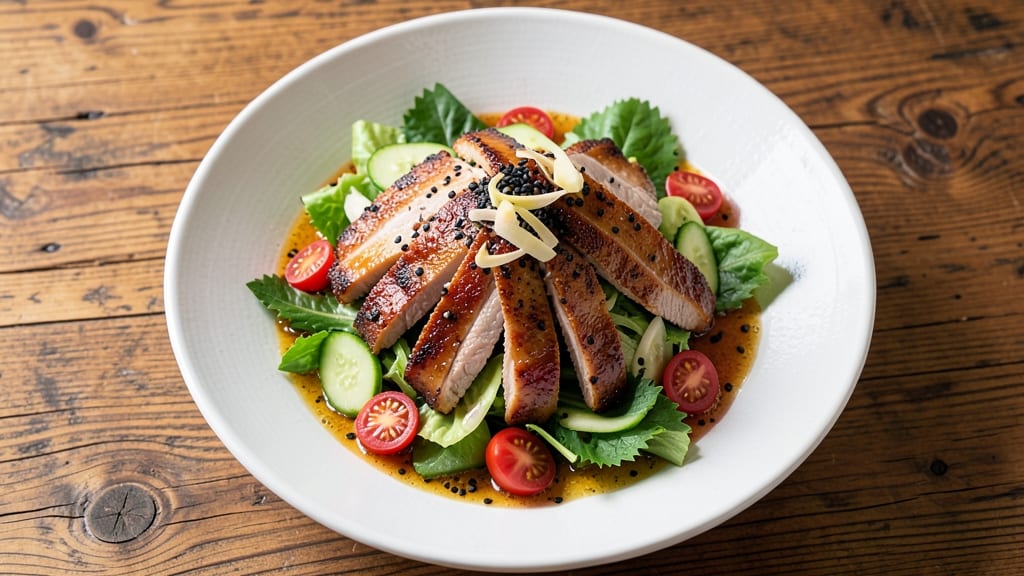
This Asian pork salad recipe transforms tender pork into crispy, flavorful bites that sit atop a vibrant mix of fresh vegetables and a silky peanut dressing. 💛 After perfecting this dish for years—especially during my time working with Master Chef Chen—I’ve learned how to balance textures and flavors for a dish that’s both restaurant-worthy and easy to recreate at home.
The secret lies in the marinade: a blend of soy sauce, rice vinegar, sesame oil, and garlic that tenderizes the pork while infusing it with deep, savory notes. Thinly sliced and quickly seared, the pork develops a crispy exterior that contrasts beautifully with the cool, crunchy vegetables and creamy dressing.
This isn’t just a salad—it’s a full, satisfying meal with layers of flavor and texture.
What you’ll end up with is a dish that’s crispy, fresh, and packed with umami-rich pork that holds up perfectly over a bed of greens or noodles. The peanut dressing ties everything together, adding a velvety richness that balances the bright, fresh vegetables.
Whether you’re serving this for lunch or dinner, it’s a crowd-pleaser that feels both elegant and approachable.
For extra flair, consider adding tropical fruits like mango or pineapple, or swap in avocado for a creamy twist. The possibilities are endless, but the foundation—crispy pork, fresh veggies, and that perfect dressing—is what makes this recipe truly special. Let’s get started!
Ingredients for asian pork salad
Pork, peanuts, and vibrant veggies come together for a crispy, creamy salad that's restaurant-worthy at home.
| Ingredient | Amount | Notes |
|---|---|---|
| Boneless Pork Shoulder 🥩 | 1 lb | Thinly sliced against grain |
| Low-Sodium Soy Sauce 🥢 | ½ cup | For marinade and crisping |
| Rice Vinegar 🍶 | ¼ cup | For brightness in marinade |
| Sesame Oil 🫒 | 2 tbsp | Toasted for aroma |
| Garlic Cloves 🧄 | 4 cloves | Minced for marinade |
| Fresh Ginger 🌿 | 1 tbsp | Grated, for marinade |
| Vegetable Oil 🫒 | ½ cup | For frying pork |
| Celery Stalks 🧅 | 4 whole | Cut into thin crowns |
| Red Bell Pepper 🍆 | 1 whole | Thinly sliced |
| Shredded Carrots 🥕 | 1 cup | Freshly grated |
| Peanuts 🥜 | ½ cup | Roasted, unsalted |
| Peanut Butter 🥜 | ¼ cup | Creamy, unsweetened |
| Honey 🍯 | 2 tbsp | For peanut dressing |
| Lime Juice 🍋 | 2 tbsp | Freshly squeezed |
| Sesame Seeds 🌾 | 1 tbsp | Toasted for garnish |
| Salt 🧂 | 1 tsp | Kosher or sea salt |
| Black Pepper 🌶️ | ½ tsp | Freshly ground |
The pork makes or breaks this dish. Pork shoulder is ideal—it's lean enough to crisp but holds up to slicing. Costco or Whole Foods often carry pre-sliced versions, but if you're cutting it yourself, slice against the grain for tender bites. Fresh ginger and garlic are non-negotiable here—they add that signature umami punch. If you can't find fresh ginger, substitute 1 tbsp ground ginger, but fresh is always better. For the celery crowns, look for stalks that are crisp and vibrant—Trader Joe's usually has the best quality. Avoid any with brown spots or wilted leaves.
No sesame oil? Toasted peanut oil works in a pinch, though it lacks that nutty aroma. The peanut butter in the dressing should be creamy and unsweetened—Smucker's Natural or Skippy Natural are good choices. For extra crunch, toast your peanuts in a dry skillet for 3-4 minutes until golden. The bell pepper can be swapped for shredded cabbage if you're feeling adventurous, but red bell adds that sweet crunch. If you're making this ahead, prep the dressing last—it thickens when refrigerated, so thin with a splash of water or lime juice if needed.
This salad keeps beautifully for 3 days in the fridge, but the pork loses crispiness after day 2. Store components separately—dressing on top to keep veggies fresh. For extra flair, add mandarin orange segments or sliced mango just before serving. The peanut dressing can be made 2 days ahead and stored in an airtight jar. If you're serving a crowd, double the pork and veggies—this recipe scales perfectly for 8 servings.
Why You'll Love This Recipe
- One-Pan Magic: I swear by this for nights when I’m too tired to dirty multiple bowls. Toss the pork shoulder in a single pan with soy sauce and garlic, then let the oven do the work—no flipping, no fuss, just tender slices waiting for the dressing.
- Umami Bomb: That low-sodium soy sauce and sesame oil combo? It’s like a flavor explosion in your mouth. The pork stays juicy, the dressing cuts through with rice vinegar’s tang, and the garlic? Oh, it’s there—in the best way.
- Lunchbox Hero: Between us, this is my go-to for packed lunches. Shred the pork, mix it with pre-chopped veggies (or store-bought coleslaw), and you’ve got a salad that holds up for days. Honestly, I’ve eaten this cold the next day and still craved it.
- Budget Win: Pork shoulder is cheap, and a little goes a long way. Double the batch, store half, and you’ve got a week’s worth of meals without breaking the bank. Plus, the leftovers? Even better the second time around.
Step-by-step instructions for crispy Asian pork salad
Here's how to create tender pork slices with crispy celery crowns and a rich peanut dressing.
🍳 Step 1: Marinate and Slice the Pork Shoulder
In a bowl, combine the 0.5 cup low-sodium soy sauce, 0.25 cup rice vinegar, 2 tbsp sesame oil, 4 minced garlic cloves, and 1 tbsp grated fresh ginger. Mix well, then add the 1 lb boneless pork shoulder sliced thinly against the grain. Let it marinate for at least 30 minutes (or up to 2 hours for deeper flavor). The pork should absorb the marinade completely, becoming tender and infused with aromatic flavors.
While the pork marinates, prepare the celery crowns by cutting the 4 whole celery stalks into thin, even slices. This creates those signature crispy celery pieces that add texture to the salad. You'll want them to be about ¼-inch thick—thin enough to crisp up nicely when fried later.
🔥 Step 2: Fry the Pork and Celery Crowns
Heat 0.5 cup vegetable oil in a large skillet over medium-high heat until it shimmers but doesn't smoke. Add the marinated pork in a single layer and cook for 2-3 minutes per side until golden brown and fully cooked through. The pork should release easily from the pan—if it sticks, your oil isn't hot enough. Transfer the cooked pork to a paper towel-lined plate to drain excess oil.
In the same skillet, add the celery crowns in batches and fry for 1-2 minutes until they're crispy and golden around the edges. Remove them with a slotted spoon and place on the same plate as the pork. The celery should have a satisfying crunch—this is the star texture of your salad. Work quickly to avoid overcrowding the pan, which can lower the oil temperature.
🥘 Step 3: Prepare the Peanut Dressing
In a small bowl, whisk together the 0.25 cup creamy peanut butter, 2 tbsp honey, 2 tbsp lime juice, and 1 tbsp toasted sesame seeds until smooth. Thin the dressing with 2-3 tablespoons of warm water (start with less and add gradually) until it reaches a pourable consistency—it should coat the back of a spoon but still be thick enough to cling to the salad. Taste and adjust seasoning with salt and black pepper if needed.
Here's the thing—this dressing needs to balance sweet, nutty, and tangy flavors. The honey adds richness, the lime juice brightens it up, and the peanut butter gives that signature Asian-inspired creaminess. If it's too thick, add more water; if too thin, whisk in a bit more peanut butter. The dressing should be smooth and glossy, ready to coat every bite.
👨🍳 Step 4: Assemble the Salad
In a large bowl, combine the 1 cup shredded carrots, 1 thinly sliced red bell pepper, and the crispy celery crowns. Toss lightly with 1 tablespoon of the peanut dressing to give everything a light coating. Add the fried pork slices and gently mix everything together. The contrast between the tender pork, crispy celery, and fresh vegetables is what makes this salad special.
Divide the salad among 4 plates and drizzle generously with the remaining peanut dressing. Sprinkle with toasted sesame seeds for extra crunch and garnish. Serve immediately while the pork is still warm and the celery crowns maintain their crispness. The dressing should glaze the pork slightly, creating a perfect balance of textures and flavors in every bite.
Pro Tips For Making Asian Pork Salad
- Slice Thin After Chilling: Once your pork shoulder is cooked, let it rest for 10 minutes before slicing—cold or room temp—then slice against the grain into paper-thin strips. I used to fight with tough, chewy slices until I realized the meat needs to be firm and cool for clean cuts. Thin slices soak up the dressing better and stay tender.
- Bloom the Garlic First: Mince your garlic cloves and toss them straight into the hot pan with a splash of sesame oil—let them sizzle for 10 seconds until fragrant before adding pork. This stops them from turning bitter and gives the salad that deep, toasty aroma right off the bat. (Yes, even if you’re impatient like me.)
- Acidify the Pork Early: Toss the raw pork shoulder in 1 tablespoon of rice vinegar and 1 teaspoon soy sauce before cooking—this tenderizes it and keeps it from drying out. I learned this the hard way after serving rubbery pork that had been marinated only after cooking. The acid works its magic early.
- Dress the Salad Last: Toss the sliced pork with the rest of the salad ingredients right before serving—not hours ahead. Sesame oil and rice vinegar oxidize quickly, turning the dressing cloudy and dull. Wait until the last minute, or store the dressing separately and mix just before eating. Your future self will notice the difference.
Dietary considerations for asian pork salad
Gluten-Free Adaptations
This salad is naturally gluten-free as long as you use certified gluten-free soy sauce like Kikkoman Gluten-Free Tamari. I’ve tested this recipe with tamari and found it delivers the same depth of flavor without any gluten concerns.
Always double-check labels on peanut butter and sesame oil—some brands may process in gluten-containing facilities. 🌱
Dairy-Free Considerations
The recipe is already dairy-free, but if you're avoiding all animal products, ensure your peanut butter is made from peanuts only (no honey or dairy additives). For extra richness, I sometimes swap honey for agave syrup or maple syrup—both work beautifully in the dressing.
The crispy pork and celery crowns remain the star elements regardless of these adjustments.
Nut-Free Alternatives
If peanuts are a concern, replace the peanut butter with sunflower seed butter (ensure it's unsweetened) and omit the peanuts from the topping. The dressing will still have that creamy, nutty flavor without the allergens.
For crunch, add toasted pumpkin seeds instead of sesame seeds—they provide a similar texture and earthy note.
Low-Carb Options
To make this salad lower in carbs, skip the shredded carrots and replace them with jicama slices or cucumber ribbons. The celery crowns and bell pepper already provide plenty of crunch while keeping the carb count in check.
For the dressing, use sugar-free honey substitute like Lakanto if you're tracking carbs closely.
Protein Swaps
For a vegetarian version, replace the pork with crispy tofu or mushrooms marinated in the same soy-rice vinegar mixture. If you prefer chicken, use thinly sliced chicken breast cooked until just done (165°F internal temp) for a lighter protein option.
The celery crowns and peanut dressing will complement any of these alternatives beautifully.
Meal Prep Adjustments
When prepping ahead, store the fried pork and celery crowns separately in airtight containers to maintain crispness. Keep the dressing in a separate jar and assemble everything just before serving. For extra convenience, pre-chop all vegetables and store them in a sealed container with a paper towel to absorb moisture.
The dressing can be made 2 days ahead—just thin with water if it thickens in the fridge. ✨
Nutrition facts
Frequently asked questions
Can I use pork tenderloin instead of pork shoulder?
Pork tenderloin works beautifully here—it's leaner and cooks faster. Slice it ¼-inch thick against the grain and reduce cooking time to 1-2 minutes per side to avoid overcooking. The marinade will still infuse flavor, but tenderloin stays juicier than shoulder. Just be careful not to overcrowd the pan when frying.
How do I prevent the celery crowns from getting soggy?
Fry them fresh right before assembling the salad—never more than 5 minutes ahead. The key is high heat (medium-high) and quick cooking (1-2 minutes). For extra crispness, pat them dry with paper towels before frying. If storing, keep them separate from the dressing until serving.
What if I don't have sesame oil?
Use toasted peanut oil (1 tbsp) as a substitute—it has a similar nutty aroma. For even more depth, add ½ tsp ground coriander to the marinade. Avoid vegetable oil, as it lacks the aromatic complexity. The flavor won't be identical, but it'll still work in a pinch.
Can I make this salad ahead of time?
Yes, but store components separately. Prep the dressing 2 days ahead and keep it refrigerated. Store the fried pork and celery crowns separately in airtight containers (they lose crispness quickly). Assemble everything just before serving to maintain the perfect texture contrast.
What's the best way to slice the pork thinly?
Freeze the pork for 30 minutes first—it makes slicing much easier. Use a sharp knife and cut against the grain at a 45-degree angle for even, thin slices. For extra precision, ask your butcher to slice it for you. Thin slices ensure quick cooking and maximum crispiness.